

Why the Great Migration Is Considered “The Greatest Show on Earth”
The Great Migration is widely described as “the greatest show on Earth” because it is not a single wildlife event, but a continuous, large-scale natural movement involving over a million wildebeest, hundreds of thousands of zebras, and numerous predator species moving across the ecosystems of Serengeti National Park and Maasai Mara National Reserve. It is one of the few remaining intact large mammal migrations on the planet, combining scale, drama, survival, and unpredictability in a way no human-designed spectacle can replicate.
Unmatched Scale of Wildlife Movement
The first reason the migration stands out is sheer scale. At any given moment during peak movement periods, the plains can hold vast herds stretching beyond the horizon.
This includes:
Over a million wildebeest
Hundreds of thousands of zebras
Large populations of gazelles and other herbivores
Unlike static wildlife viewing, the migration is constantly in motion. Entire ecosystems shift across landscapes in response to rainfall and grazing conditions, creating a living, moving phenomenon visible from vast distances.
Constant Drama of Survival
The migration is not just movement—it is survival in real time.
Predators such as lions, cheetahs, hyenas, and crocodiles track the herds closely, creating continuous predator-prey interactions. Every stage of the journey involves risk, especially during river crossings and calving periods.
Key dramatic moments include:
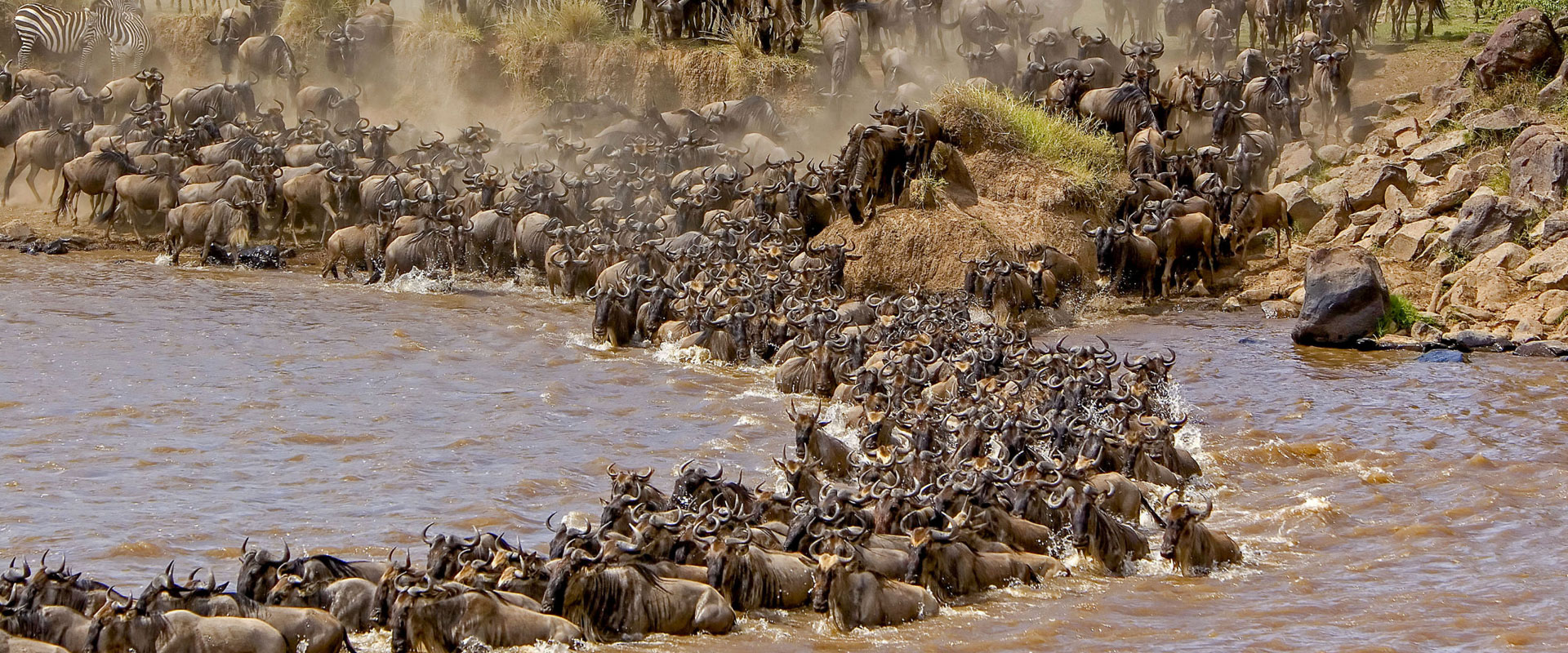
River crossings where crocodiles ambush herds
Calving season where thousands of calves are born daily
Predator hunts triggered by concentrated prey movement
This constant tension between life and death is what gives the migration its emotional intensity.
The Iconic River Crossings
One of the most famous features of the migration is the river crossing, particularly in northern Serengeti zones.
When herds gather at riverbanks, they hesitate before entering water filled with strong currents and predators. Once the crossing begins, chaos unfolds as animals rush across while crocodiles strike from below.
These crossings are unpredictable. They may happen suddenly or after hours of waiting, making each one unique and unrepeatable.
This unpredictability adds to the global fascination.
Seasonal Calving Spectacle
Between December and March, the southern plains of Serengeti National Park become a massive calving ground.
In a short period, hundreds of thousands of calves are born. This creates one of the highest concentrations of newborn wildlife on Earth.
However, it also attracts predators in large numbers, leading to intense survival dynamics. This balance of birth and predation creates a raw, natural cycle of life that is both beautiful and harsh.
Ecosystem in Constant Motion
Unlike most wildlife experiences that are location-based, the Great Migration is a system in motion.
It is driven by rainfall, not fixed geography. As grasslands change, animals follow, meaning the “location” of the spectacle shifts throughout the year.
This dynamic nature makes it unique because no two safari experiences are identical, even in the same season or region.
Immersive Safari Experience
From a traveler’s perspective, the migration offers one of the most immersive safari experiences in the world.
You are not just observing animals in a fixed reserve—you are tracking movement, interpreting patterns, and witnessing large-scale ecological processes.
Game drives become strategic. Guides constantly adjust routes based on herd movement, predator sightings, and weather conditions.
This creates a sense of participation rather than passive observation.
Photographic and Visual Impact
The migration is visually powerful due to its scale and diversity of scenes.
It offers:
Wide landscapes filled with moving herds
Dramatic river crossings and dust-filled chaos
Golden light over open savannahs
Close predator encounters
For photographers, it provides endless opportunities for storytelling through images, from intimate predator moments to sweeping herd panoramas.
Ecological Importance
Beyond spectacle, the migration is a critical ecological process.
It supports:
Grassland regeneration through grazing cycles
Predator population stability
Nutrient distribution across ecosystems
Biodiversity maintenance in East Africa
The movement of such large herbivore populations plays a key role in shaping the structure of the entire Serengeti–Mara ecosystem.
Cultural and Scientific Significance
The migration is also important culturally and scientifically.
For local communities, it has been part of life for generations, influencing pastoral practices and cultural narratives.
For scientists, it is one of the most studied large mammal movements in the world, offering insights into migration behavior, climate response, and ecosystem dynamics.
Why It Feels Like a “Show”
The term “show” is used because the migration unfolds like a natural performance with distinct acts:
Calving season (birth and abundance)
Dry season movement (search for survival)
River crossings (high tension climax)
Predator interactions (constant drama)
However, unlike a staged performance, there is no script. Everything is driven by natural forces, making it unpredictable and authentic.
Final Thoughts
The Great Migration is considered “the greatest show on Earth” because it combines unmatched scale, constant movement, dramatic survival interactions, and ecological complexity in a single continuous natural cycle.
Across landscapes like Serengeti National Park and Maasai Mara National Reserve, it delivers a wildlife experience that is never repeated in exactly the same way.
It is not just a safari highlight—it is one of the last remaining large-scale natural spectacles on the planet, defined entirely by wild processes rather than human design.