11 Days Tarangire to Lake Manyara to Ngorongoro to Serengeti Wildlife Highlights
This 11-day safari itinerary takes you through the heartbeat of Tanzania’s northern circuit, following a logical route from the baobab-dotted Tarangire to the world-famous Serengeti. The journey is designed to maximize wildlife viewing by traveling from one distinct ecosystem to the next, with carefully balanced game drives and travel days .
The following day-by-day breakdown provides a detailed itinerary using a table format, describing the unique highlights and experiences of each day:
| Day | Destination & Region | Key Activities & Wildlife Highlights | Overnight Area |
|---|---|---|---|
| 1 | Arrival – Arusha (Tanzania) | Your journey begins upon arrival at Kilimanjaro International Airport (JRO). You will be met by your safari guide and transferred to your accommodation in Arusha, the vibrant gateway to the northern safari circuit . This is a day for rest and preparation. You can relax and enjoy the hotel’s amenities, perhaps taking in the first views of Mount Meru in the distance. Your guide will provide a safari briefing in the evening, outlining the days ahead and answering any questions you may have. | Arusha |
| 2 | Tarangire National Park | After an early breakfast, you’ll drive to Tarangire National Park, famous for its giant baobab trees and massive elephant herds . The park is centered around the life-giving Tarangire River, a permanent water source that draws a staggering concentration of wildlife, especially during the dry season . Your first game drive will begin in the afternoon after a picnic lunch. Look for large herds of elephants, buffalo, and zebra. The park is also home to lions, leopards, and over 550 species of birds . Enjoy a full day of exploration, culminating in a memorable sundowner as the sun sets over the savannah. | Tarangire Area |
| 3 | Tarangire National Park (Full Day) | Rise early for a morning game drive when animals are most active. The cool morning light is perfect for photography, and you might spot predators like lions or leopards on the hunt . You’ll have a bush breakfast, a classic safari tradition of dining in the heart of the wilderness . Continue exploring the park, potentially driving towards the southern Silale Swamp, which is known for fewer vehicles and excellent birdlife . After a full day of exploration and another spectacular sunset, you’ll return to your lodge. | Tarangire Area |
| 4 | Lake Manyara National Park | Drive to the lush and diverse Lake Manyara National Park. This compact park is dramatically set at the base of the Great Rift Valley escarpment and is renowned for its unique tree-climbing lions, a behavior rarely seen in other parts of Tanzania . After a picnic lunch, enjoy an afternoon game drive through the park’s diverse habitats: groundwater forests, grassy plains, and the shores of the alkaline lake. Spot large troops of baboons, grazing elephants, and the beautiful flamingos that turn the lake’s shore pink . End your day with a sundowner at a scenic viewpoint overlooking the lake . | Lake Manyara Area |
| 5 | Lake Manyara to Karatu / Ngorongoro | Enjoy a free morning at leisure, perhaps taking a nature walk around the lodge or relaxing by the pool. You’ll then drive to the Karatu area, which lies on the outer slopes of the Ngorongoro Highlands . On the way, you will have a unique cultural experience. You’ll visit a local primary school to learn about the educational system in rural Tanzania, a humbling and authentic encounter . Continue to your lodge on the rim of the Ngorongoro Crater. The panoramic views from the rim are breathtaking, and you can spend the evening soaking in the scenery and cool highland air. | Ngorongoro Rim |
| 6 | Ngorongoro Crater (Full Day) | This is one of the highlights of your safari. You will descend over 600 meters into the Ngorongoro Crater, a UNESCO World Heritage Site and the world’s largest intact volcanic caldera. This “Garden of Eden” is home to a dense population of wildlife, including all of the Big Five: lion, elephant, buffalo, leopard, and the critically endangered black rhino . You’ll have a full day game drive across the crater floor, which is a unique ecosystem with grasslands, swamps, and a soda lake. Enjoy a picnic lunch by a scenic hippo pool, often while hippos grunt and splash nearby . After a spectacular day of wildlife viewing, ascend the crater walls and return to your lodge. | Ngorongoro Rim |
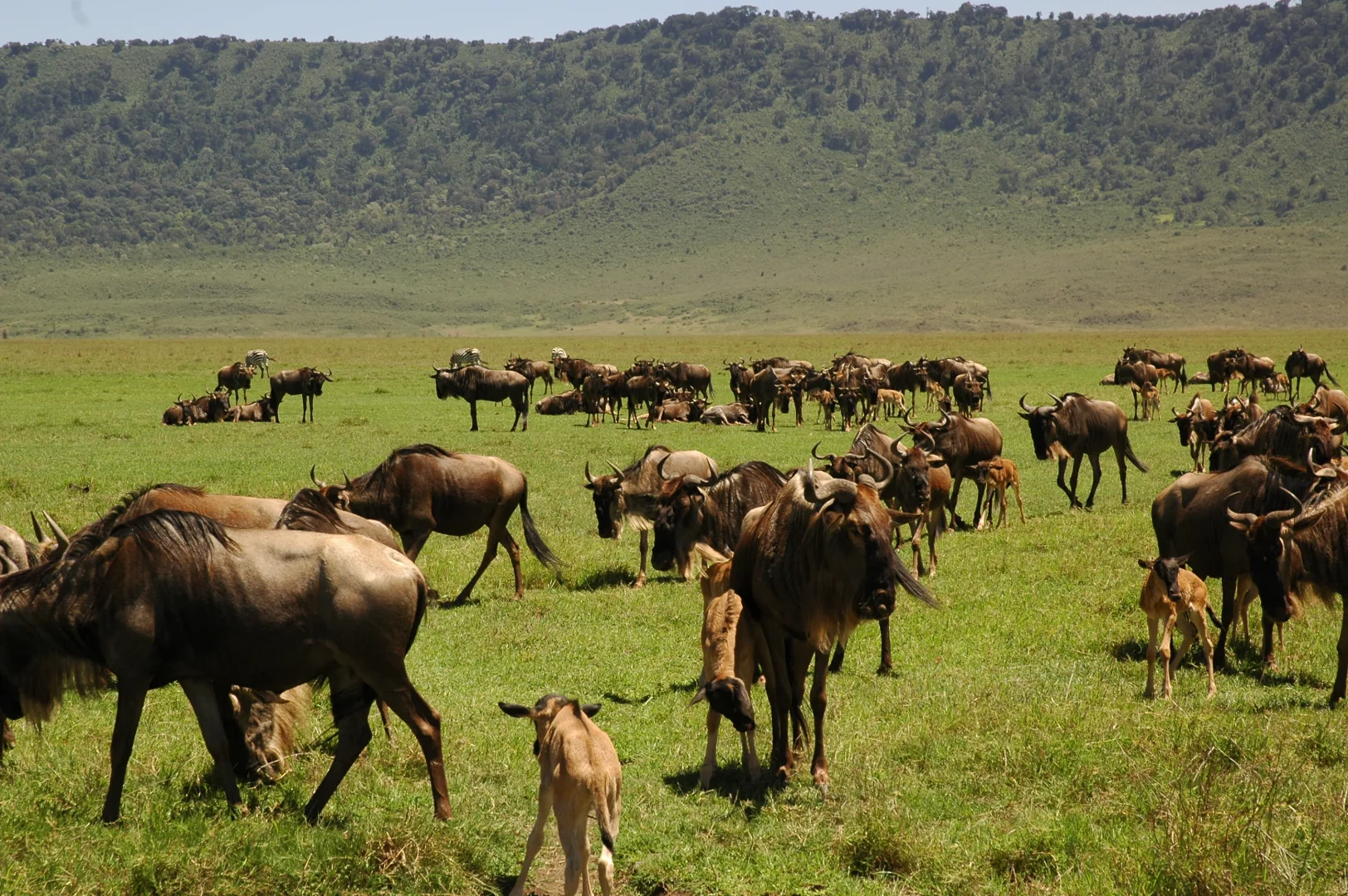
| 7 | Ngorongoro to Serengeti (Ndutu Area) | Depart the Ngorongoro Highlands and travel into the endless plains of the Serengeti. Your destination is the Serengeti’s Ndutu area, which is particularly famous during the green season for being the calving grounds of the Great Migration . This is where tens of thousands of wildebeest give birth, attracting a high concentration of predators. Enjoy an afternoon game drive en route to your camp, exploring the short-grass plains. If the migration is present, this area offers one of the best chances to see dramatic predator-prey interactions, with lions, cheetahs, and hyenas on the prowl for vulnerable newborn calves . | Serengeti (South/Ndutu) |
| 8 | Serengeti National Park (Full Day) | Spend a full day immersed in the Serengeti’s vast ecosystem. The Serengeti is legendary for its immense wildlife populations and the spectacular Great Migration of wildebeest and zebra, which move in search of fresh grazing and water . You’ll travel in a 4×4 vehicle with a pop-up roof for optimal viewing, searching for the great herds and the predators that follow them. Your expert guide will use their knowledge and network to track the movement of the animals, ensuring you have the best possible wildlife encounters. Enjoy a picnic lunch in the bush, surrounded by the sounds of the savannah. | Serengeti (South/Central) |
| 9 | Serengeti National Park (Full Day) | Another full day in the Serengeti allows you to go deeper into the park’s wilderness. Depending on the migration’s location, you might explore the central Seronera area, famous for its high concentration of big cats—leopards, lions, and cheetahs . The riverine areas are also excellent for spotting hippos and crocodiles. Every game drive is unique, as the animals are wild and free. Your guide will choose the best routes based on recent sightings and current wildlife conditions. The Serengeti at sunrise and sunset offers spectacular photographic opportunities. | Serengeti (Central) |
| 10 | Serengeti to Ngorongoro (Karatu) | Enjoy one last morning game drive in the Serengeti, soaking in its magic before beginning your journey back. You’ll travel through the Ngorongoro Conservation Area, a landscape dotted with Maasai bomas and their cattle, providing a cultural contrast to the wild game parks. You’ll have a chance to stop at Olduvai Gorge, the “Cradle of Mankind,” where the Leakey family discovered some of the oldest hominid fossils . Continue your drive to your lodge in the Karatu area, nestled on the outer slopes of the Ngorongoro Crater, where you can reflect on your time in the Serengeti. | Karatu |
| 11 | Return to Arusha / Departure | After a final, leisurely breakfast, you will be driven back to Arusha. Enjoy the scenic drive through the Tanzanian countryside, passing through local villages and farms. Your driver will take you to Kilimanjaro International Airport (JRO) for your departure flight. This marks the end of your unforgettable 11-day Tanzania wildlife safari, leaving you with a treasure trove of memories from the country’s most spectacular parks. | – |
💡 Key Insights for Your Safari
-
The Great Migration: While the Serengeti is always spectacular, the Great Migration’s location is seasonal. The herd typically moves to the southern Serengeti (Ndutu area) from December to March for calving, while it is often found in the northern and western Serengeti from June to October . This itinerary provides flexibility to follow their movement.
-
Tree-Climbing Lions: Lake Manyara is one of the few places in Africa where lions are known to climb trees. However, this behavior is not guaranteed. Sightings are more likely in the southern acacia forests of the park, especially during the dry season .
-
Ngorongoro’s Uniqueness: The Crater is a self-contained world with a high density of permanent wildlife. It’s your best chance to see the endangered black rhino, making it a must-visit destination .
-
Best Time to Visit: The dry season (June to October) is generally considered the best time for wildlife viewing overall, as animals congregate around water sources. The green/calving season (December to March) offers excellent predator action and lush landscapes .