


What Is the Weather Like in Bwindi During Each Season?
What’s the Weather Really Like in Bwindi?
Honestly? You can look at all the weather charts you want, but Bwindi pretty much does whatever it feels like.
I remember my first morning there—I stepped outside my lodge, and it was so crisp and clear I could see every ridge of those misty hills. I thought, “Perfect day for trekking.” By the time I finished breakfast, the clouds had rolled in like someone pulled a blanket over the sun. And by mid-hike? Yep. Raining.
That’s just Bwindi for you.
The park sits way up in the mountains of southwestern Uganda, so it doesn’t get that brutal, baking heat you’d expect from Africa. It’s actually cool most of the time—sometimes downright chilly, especially early in the morning or up in the higher sectors. You’re basically walking through a rainforest that sits on top of the world, which means the weather is about as predictable as a cat.
The “Dry” Season (June to August)
Okay, so everyone will tell you June to August is the best time to go. And they’re not wrong—it’s when the trails are at their easiest. Less mud, less slipping, less of that “I just fell on my butt in front of a gorilla” embarrassment.
Days are warm but not hot, maybe 20 to 25 degrees. Nights? Bring a jumper. It can drop to about 10 degrees, and those lodges up in the hills get properly cold.
But here’s the thing—”dry season” is a bit of a lie. It’s still a rainforest. I had a ranger tell me once, “We have two seasons here: rain and more rain.” Even in the so-called dry months, the sky will randomly open up just to remind you who’s boss. So yeah, pack that rain jacket.
Oh, and one more thing—this is when everyone comes. Permits sell out way in advance, lodges are full, and you’ll hear more English and American accents than you will birdsong. If you’re okay with that, great. Just book early.
The Short Rainy Season (September to November)
Now this—this is when Bwindi gets beautiful.
I’m talking deep, jewel-green forests, waterfalls thundering down the cliffs, and mist so thick it feels like you’re walking through a painting. September to November is the short rainy season, and honestly, if you don’t mind a bit of mud, it’s kind of magical.
The rain comes in bursts—sometimes soft, sometimes heavy, sometimes out of nowhere. And the trails get messy. Like, ankle-deep mud messy. You’ll be sliding around, grabbing onto branches, and wondering why you didn’t bring those fancy trekking poles everyone told you about.
But here’s the upside: there’s barely anyone there. You might have your whole trekking group to yourself. The forest feels quieter, more intimate. And the lodges? They slash their prices. So if you’re on a budget or just hate crowds, this is your sweet spot.
The Second Dry Season (December to February)
December rolls around, and things dry up again. Not completely—because, rainforest—but enough to make hiking a whole lot more pleasant.
This is another popular window, especially for folks tying a gorilla trek into their Christmas or New Year holidays. The weather is lovely, really. Warm days, cool nights, trails that won’t swallow your boots.
But again, the holiday season means everyone is travelling. Flights fill up, lodges are packed, and if you think you can just show up and grab a gorilla permit, think again. You need to plan this for one month.
That said, if you manage to lock it in, it’s a brilliant time to go. Visibility is great, the views are stunning, and you’re not fighting through thick mud just to see the gorillas.
The Long Rainy Season (March to May)
Alright, let’s be real about this one. March through May is wet. Like, properly, thoroughly, “why did I wear these boots” wet.
It rains a lot. Sometimes all day. The trails turn into rivers, the slopes get dangerously slippery, and trekking becomes a full-body workout. You’ll be huffing and puffing, mud up to your calves, wondering if this was a terrible idea.
But here’s the thing—it’s not terrible. It’s just different.
The forest is at its most alive. Everything is blooming, the birds are everywhere, and the gorillas? They’re often hanging out at lower elevations because that’s where the food is. So sometimes, despite the rain, your trek is actually shorter.
And the vibe is completely different. There are hardly any tourists. You get these incredible, dramatic skies, mist swirling around the hills, and a sense of real adventure. Plus, the lodges are cheap—like, genuinely affordable.
I met a couple who went in April, and they said it was the best decision they made. They had the rangers all to themselves, took the most stunning moody photos, and felt like they had the whole forest to themselves. They also looked like drowned rats by the end of each day, but they were smiling.
Every Sector Feels Different
One thing nobody told me before I went—the weather changes depending on where you are in the park.
There are four main trekking areas, and they’re all at different elevations.
Ruhija is way up high, so it’s colder and foggier. You’ll wake up shivering and need extra layers. Nkuringo is also up there—stunning views, but steep, challenging trails. Buhoma sits lower, so it’s a bit warmer and more comfortable. Rushaga gets a lot of rain, but it has the most gorilla families, so you’ve got great trekking options.
The key is layers. You’ll start the morning freezing, strip down to a t-shirt by midday, then bundle back up as the sun goes down. I must have changed clothes three times a day.
Does Rain Actually Ruin Trekking?
Not at all. And I mean that.
The gorillas don’t care if it’s raining. They’re out there, doing their thing, munching on leaves, playing with their babies, living their best lives. Rain doesn’t stop them, and it doesn’t stop the rangers either. Trekking goes ahead every single day, no matter what the sky’s doing.
Yeah, it’s harder. Yeah, you’ll get muddy. But honestly? Some of the best treks happen in the rain. There’s something about the forest when it’s wet—the sounds, the smells, the way everything glistens. It feels more real, more primal.
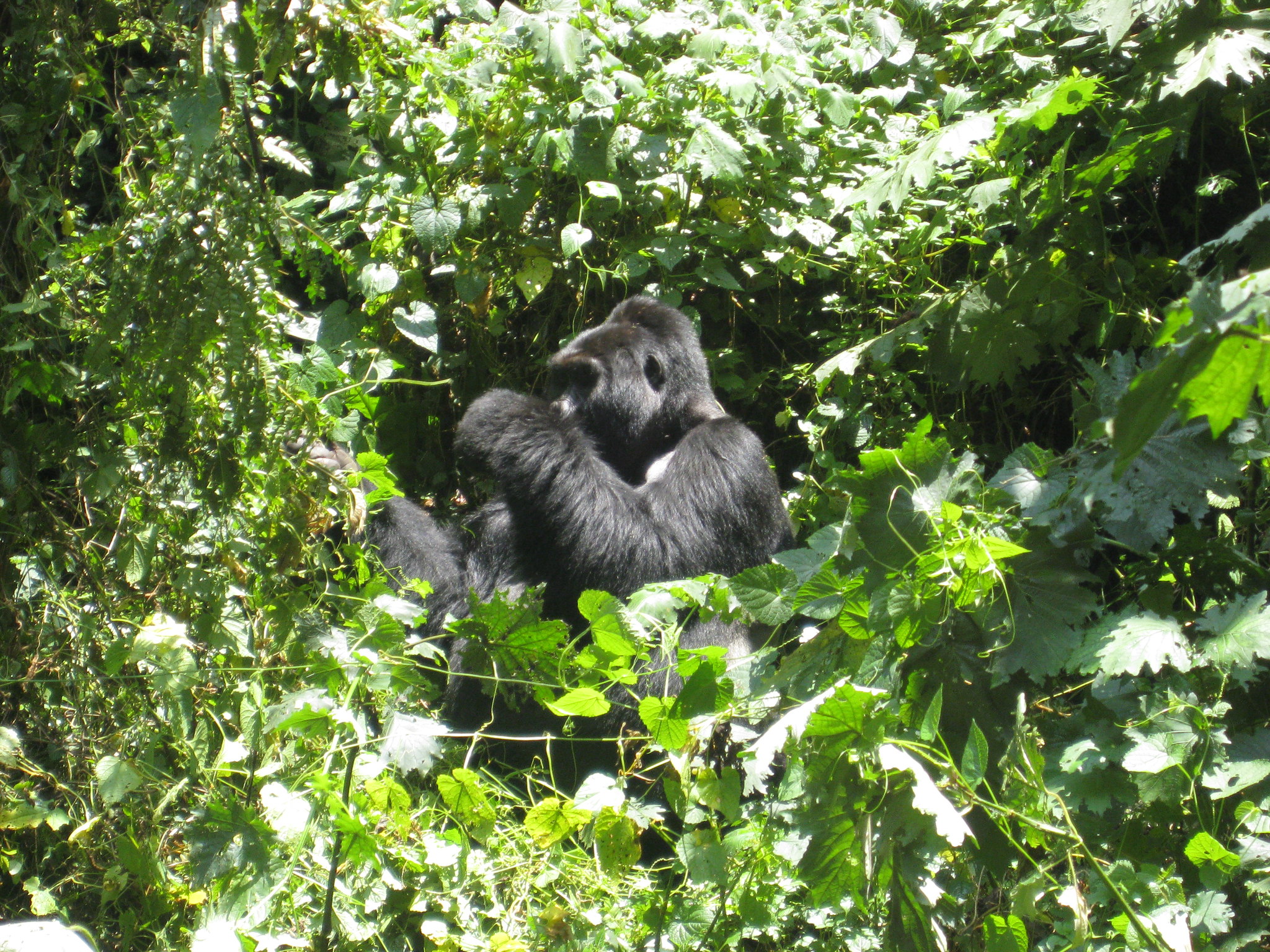
I’ll never forget standing in the pouring rain, watching a silverback just sit there, completely unbothered, while water dripped off his massive shoulders. He didn’t care. Why should I?
Just come prepared. Waterproof boots, a good jacket, dry bags for your camera, and a sense of humour. You’ll be fine.
What to Pack: The Honest Version
Forget those fancy packing lists with 50 items. Here’s what you actually need:
-
A rain jacket that actually works. Not a fashion one. A real one.
-
Boots with a good grip. Your ankles will thank you.
-
Long trousers and sleeves—stinging nettles are everywhere, and they hurt.
-
Layers. Thermals, fleeces, t-shirts. You’ll wear all of them in one day.
-
A cover for your backpack. Wet electronics are no fun.
-
Gaiters. They look silly, but they keep mud out of your boots.
-
Gloves. You’ll be grabbing branches and vines constantly.
And honestly? A change of clothes for the end of the day. Trust me on that one.
When Should You Go?
Look, I can’t tell you there’s one perfect time. It depends on what you want.
If you want easy hiking and good weather, go in the dry seasons—June to August, or December to February.
If you want fewer crowds and lower prices, go in the rainy seasons—March to May, or September to November.
If you want the most stunning, dramatic, lush scenery? Go when it rains. It’s worth every muddy step.
But here’s the truth—the gorillas are there every single day. Rain or shine, mist or sun, they’re just living their lives in that ancient forest. And no matter when you go, that moment when you’re standing a few metres away from a mountain gorilla, looking into its eyes, feeling that connection?
That’s not about the weather. That’s just magic. Pure and simple.
So pack your boots, bring your raincoat, and go. The mud washes off. The memories don’t.