

What Is the Rwanda Gorilla Naming Ceremony (Kwita Izina)?
Someone once described this to me as “a birthday party for baby gorillas that half the country shows up to.” That’s not exactly right, but it gets you close enough. No actual gorillas are on stage. Nobody’s holding a baby gorilla up to a microphone. And yet somehow, when you watch footage of this event, you feel something. A stadium full of people cheering because a ranger just named a gorilla after his grandmother. That’s the Rwanda Gorilla Naming Ceremony (Kwita Izina) in one image, and honestly, it’s a strange and wonderful thing for a country to build its national identity around.
Every September, people gather at the base of the Virunga volcanoes for this. Rangers, scientists, government officials, the occasional Hollywood name. They take turns walking up and announcing what they’ve decided to call a baby gorilla born that year. That’s it. That’s the whole event, dressed up with drumming, dancing, and a crowd that clearly means it.
So Where Does This Tradition Actually Come From
Ask a Kinyarwanda speaker what “Kwita Izina” means and they’ll tell you it’s just “to give a name.” Rwandan families have done this for generations, usually about a week after a baby is born. Relatives gather, argue a bit, throw out suggestions, and eventually the parents pick one. It’s not fancy. It’s the kind of small family ritual most cultures have some version of, the equivalent of arguing over a baby name at Sunday dinner.
What’s interesting is that Rwanda’s conservationists didn’t invent this for gorillas out of nowhere. They borrowed something that already existed.
Rangers Started This Long Before It Was a Show
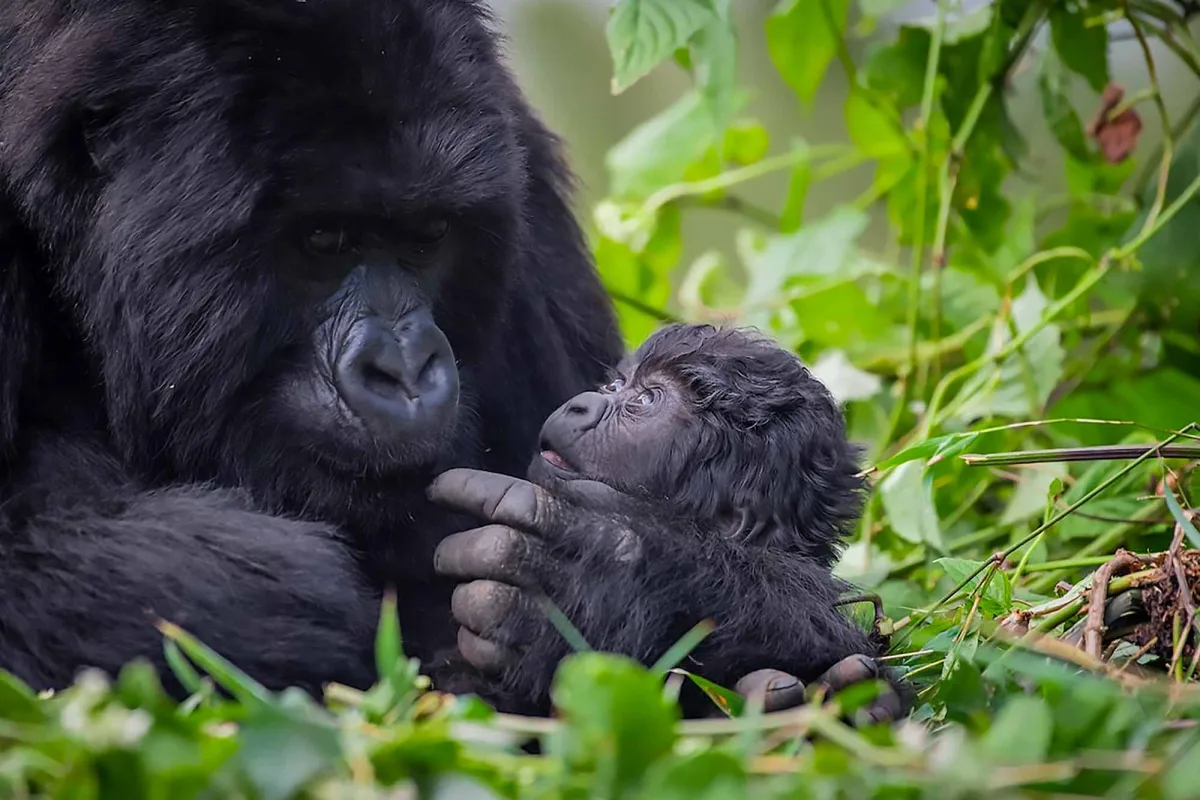
Here’s the part people don’t usually mention. Before any of this was public, rangers were already naming gorillas. Not for ceremony, for practicality. Try tracking dozens of individual gorillas through thick bamboo forest for years at a stretch using nothing but numbers, and you’ll understand why a name sticks in your memory better than “Group 14, Individual C.” Rangers needed a way to talk about “the one with the scarred hand” or “the juvenile who keeps wandering off,” and names did that job quietly for years.
Then in 2005, someone at the Rwanda Development Board looked at this internal habit and thought, why keep this to ourselves? So they opened it up. And that one decision is basically why we’re talking about it today.
It Grew Up Fast
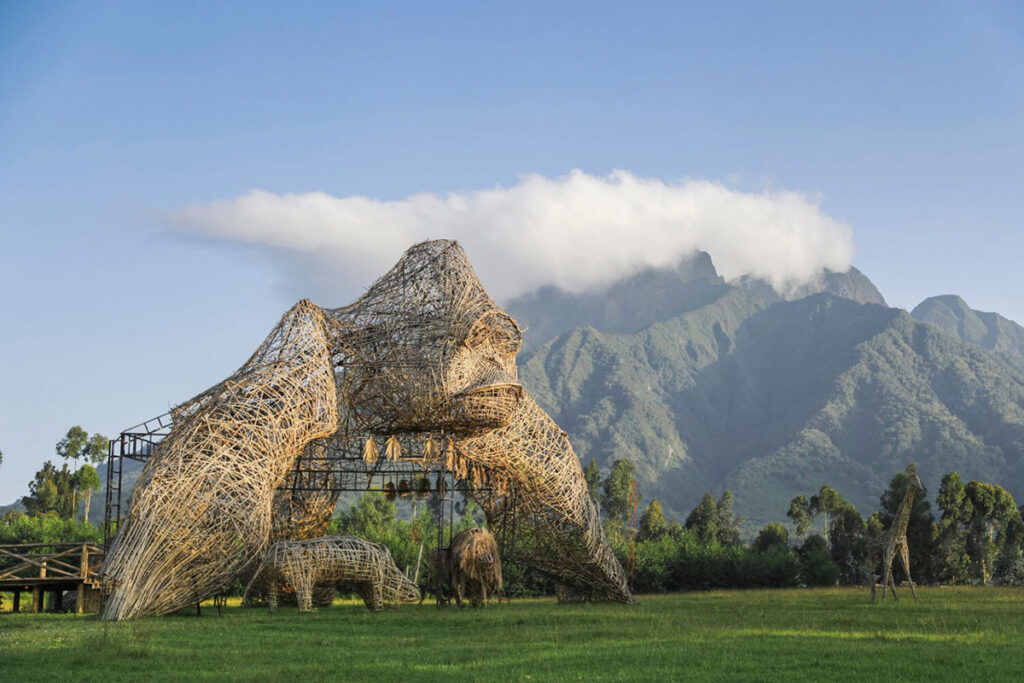
What started as shorthand between rangers is now a full-blown national event. A wooden gorilla statue, taller than a house, stands behind the stage in the village of Kinigi. Officials say thousands show up every year, and that includes actors, athletes, and heads of state who fly in just for this. The same rangers who used to mutter names to each other in the forest are now handed a microphone in front of a crowd that’s watching their every word.
Kind of a wild jump, if you think about it.
What Actually Goes On, Minute by Minute
Namers walk up one at a time. They take the mic, say the name, and explain what it means. Some explanations are quick. Others stretch out for a minute while the whole crowd goes silent to listen, because the story behind the name matters more than the name itself.
The most recent event, the 21st edition, took place on September 4, 2026. Twenty two baby gorillas got their names that day. The year before was even bigger. Rwanda marked the 20th anniversary in September 2025 by naming 40 gorillas at once, the largest group in the event’s history, folding in gorillas that had been born back in 2023 after the 2024 ceremony got postponed.
Not Just Anyone Gets to Do This
You can’t walk up and volunteer. Priority goes to the people who actually work with these animals every day, the rangers and trackers who know which gorilla is stubborn, which one is protective, which one likes to sit closest to the researchers during observation sessions.
One moment from the 2025 ceremony has stuck with me since I read about it. A research assistant with the Dian Fossey Gorilla Fund named an infant “Mushumba Mwiza,” meaning good shepherd, as a quiet nod to the rangers who protect these gorillas daily. It wasn’t a flashy name. It was a thank you note, spoken out loud to a crowd of thousands.
The Names Aren’t Random, and You Can Tell
Nobody picks a name because it sounds pretty. Past names have carried meanings tied to unity, gratitude, resilience, hope. And because namers have to explain their choice on stage, you end up hearing dozens of small personal stories back to back. Some are about a ranger’s late father. Some are about a mother gorilla who nearly didn’t survive childbirth. It adds up to something that feels less like an award show and more like a room full of people being honest for a minute each.
Okay, But Do the Numbers Back Any of This Up
Since 2005, Rwanda has given names to more than 400 baby gorillas. The tally sat at 397 through the end of 2025, and the 22 added this September pushed it past 419. Every single one of those names belongs to a real gorilla that rangers still track, some of them decades later.
Here’s what actually impresses me. Mountain gorillas are one of the only endangered species with a population that’s grown instead of shrunk over the past two decades. I’m not going to claim a naming ceremony alone did that, because it obviously didn’t. But keeping these animals personal and visible to ordinary Rwandans clearly plays some part in why people care enough to protect the forest around them.
Where the Tourism Money Actually Goes
Gorilla trekking brings real money into Rwanda, and a cut of it flows straight back into communities near the parks. Over 18 billion Rwandan francs have gone into more than 1,000 community projects through the country’s revenue-sharing program, things like clean water and farming support. During ceremony week in 2025, officials launched a green agricultural project in Musanze District, timed to land the same week on purpose.
That timing isn’t an accident. Rwanda wants people cheering at the ceremony to connect that applause with something they can actually point to in their own neighborhood.
If You’re Thinking About Going
Dates shift a little year to year, usually landing somewhere in early September, so check with the Rwanda Development Board before you book flights. Musanze, the closest town, fills up fast that week. Rooms go early.
Combine It With an Actual Trek
Most people pair ceremony week with an actual gorilla trek in Volcanoes National Park, and honestly, that’s the right move. Seeing a gorilla in the wild hits differently once you’ve watched, a few days earlier, an entire country stand up and explain, name by name, why that animal’s life is worth protecting.
Twenty one years in, this thing has outgrown its original size by a wide margin. But it hasn’t lost the plot. A ranger’s practical habit of naming animals for tracking purposes turned into something a whole country shows up for, one story and one name at a time. Not bad for something that started as a workaround in someone’s field notebook.