


What Is the Maximum Age Allowed for Gorilla Trekking?
How Old Is Too Old for Gorilla Trekking?
I’ll be honest with you. Before I went gorilla trekking, I spent way too much time on Google trying to find out if I’d even be allowed. I wasn’t young. My knees made noises. And every search seemed to give me a different answer. Then I met Margaret on the trail. She was 74. Her husband had passed the year before, and she said, “I figured I could sit at home and feel old, or I could come here and feel alive.”
So I asked her the same question I’d been asking the internet: What is the maximum age allowed for gorilla trekking?
She laughed. “Honey,” she said, “look around. Nobody’s checking your birthday.”
Turns out she was right. The official rules say you have to be at least fifteen. That’s it. No upper limit. Some parks might want a doctor’s note if you’re over 75, but that’s just common sense—they want to know you can handle a few hours of walking on bumpy ground. I saw an 80-year-old man with a cane make it to the gorillas. I saw a 68-year-old woman turn back halfway because her hip hurt. Age wasn’t the real difference. Attitude was.
What Actually Happens on Trekking Day
You wake up at like five in the morning. It’s dark. You’re nervous. Someone hands you a big wooden walking stick—the kind that looks like a branch someone found five minutes ago. And then you just… start walking. At first, it’s fine. A nice morning stroll. Then the ground starts tilting upward. Then it gets muddy. Then you’re grabbing onto roots and pretending you meant to do that.
The guide stops every fifteen minutes. Not because you’re slow. Because everyone is slow. That’s the secret nobody tells you. Even the fit twenty-year-olds in their expensive hiking pants are huffing and puffing. The guide will say something like “we go at your pace,” and for once, they actually mean it. After an hour or two—sometimes three or four—the trackers radio in. They found them. You put on a face mask (gorillas get our colds, for real), leave your big backpack with a guard, and walk the last bit in near silence.
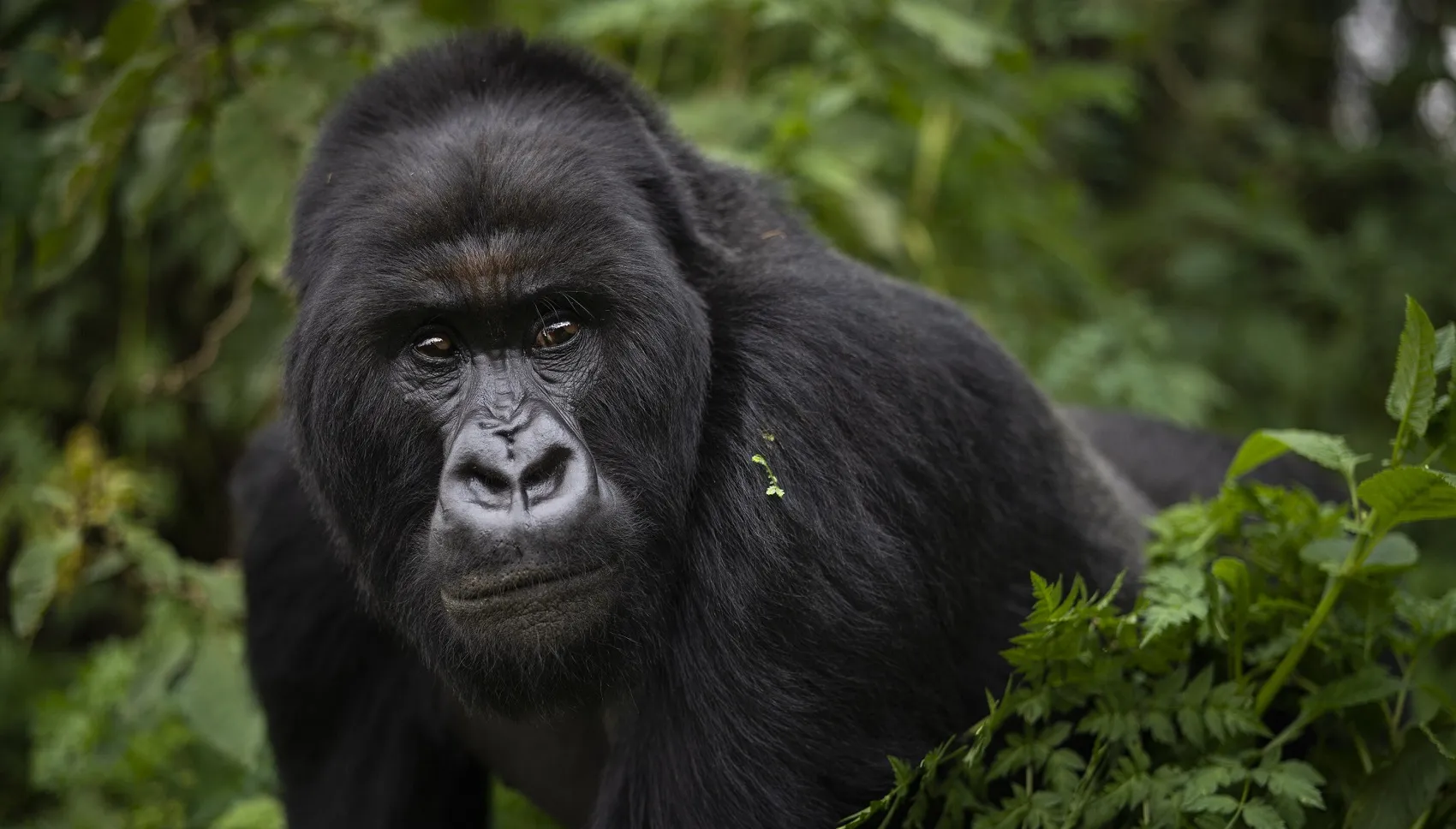
And then. Oh man. Then you see him. A silverback just sitting there, eating a stick, looking at you like you’re the strange one. He doesn’t care how old you are. He doesn’t care if you need a break every ten minutes. He just goes back to his lunch, and you just stand there trying not to cry.
Who You’ll Meet Out There (Not Just Gorillas)
Obviously, the gorillas are the main event. But the forest is packed with other characters. You’ll see golden monkeys doing these crazy flips through the bamboo. There’s a monkey called the L’Hoest’s that has a weird white beard and looks like a grumpy old professor. Birds with colors that don’t even seem real—bright blue and red and green, like someone left the saturation setting way too high.
One time we stopped because the ranger heard something in the bushes. We all froze. And then this massive forest elephant—gray, ancient, with tusks like old ivory—crashed through maybe thirty meters away. Didn’t even look at us. Just kept going like we weren’t worth his time. He was right. We weren’t.
The rangers will also point out chameleons that look like tiny dinosaurs, butterflies the size of your hand, and plants that close up when you touch them. The forest is alive in a way that makes your backyard feel like a parking lot.
The Part That Messes You Up (In a Good Way)
After the trek, you drive to a nearby village. A woman invites you into her home. It’s small. Mud walls. Dirt floor. But she’s smiling like you’re an old friend. She hands you some banana beer in a gourd. You take a sip. It’s weird. Sweet and sour and warm. You drink more anyway because she’s watching you with such hope.
Later, you meet men who used to be poachers. They tell you straight up—yeah, they used to set snares. Killed antelopes, sometimes even gorillas by accident. One guy named Emmanuel said, “I didn’t hate gorillas. I just had hungry kids.” Now he works as a tracker. He knows every gorilla by name. He told me about a silverback he calls Old Man because he moves so slowly and carefully. Emmanuel said that the gorilla reminds him of his own father.
You don’t forget conversations like that. They stick to your ribs.
Best Time to Go (So You Don’t Hate Your Life)
Dry season. I cannot say this strongly enough. June through September, or December through February. The trails are still hard—don’t get me wrong. But there’s a difference between “challenging” and “slipping on your backside every four steps.” Dry trails mean you spend your energy walking, not trying not to fall.
I went once in the rainy season because I got a cheap permit. Big mistake. The mud was up to my calves in some places. My boots filled with water within an hour. And the whole time, the guide kept saying “almost there” while we slid sideways down a hill. We saw the gorillas eventually, and it was amazing, but I would have enjoyed it way more if I wasn’t completely soaked and grumpy.
That said, wet season does have fewer tourists. And the forest looks impossibly green—like someone painted it while you weren’t looking. So if you don’t mind mud and you want to save some money, go for it. Just bring waterproof socks. Actually bring two pairs.
Where You’ll Sleep (From Fancy to Basic)
You’ve got options. On the fancy end, there are lodges with heated floors and fireplaces and people who bring you hot chocolate before bed. It’s lovely. It’s also expensive. But hey, if you just hiked four hours through a jungle, you might feel like you deserve heated floors. I won’t judge.
Mid-range is where I usually land. Places like Mahogany Springs or Four Gorillas Lodge. Hot shower that actually works most of the time. Comfortable bed. A restaurant that serves real food—not just camping rations. And the best part? The staff will pack you a lunch for the trek. A real lunch. Sandwiches, fruit, a hard-boiled egg. It feels like a gift from heaven when you’re sitting on a rock at 8,000 feet, too tired to care about anything except that sandwich.
Budget options exist too. Simple guesthouses run by local families. Sometimes the power goes out. Sometimes the water is cold. But the family will treat you like their own. I stayed at a place once where the grandma brought me tea every morning and refused to let me carry my own bag. She was maybe four feet tall and absolutely terrifying. In the best way.
Back to that question one more time: what is the maximum age allowed for gorilla trekking?
No maximum. That’s the real answer. I met an 82-year-old retired nurse named Helen on the trail. She used two walking sticks and moved slower than anyone. But she never stopped. Not once. When we reached the gorillas, she sat down on a wet log and just watched. After an hour, she turned to me and said, “My grandson thought I was joking when I bought the plane ticket.”
She wasn’t joking. Neither was Margaret, the 74-year-old I met that first morning. Neither are all the other people over 70, over 80, who show up every year with their walking sticks and their doctor’s notes and their stubborn hearts.
The gorillas don’t care how old you are. They don’t care if you need extra breaks. They don’t care if you’re slow. They only care that you sit quietly and watch. That’s it. So if you’re reading this and wondering if you’ve waited too long—you haven’t. The trail will still be there. The gorillas will still be there. The only question is whether you will be. And honestly? I really hope you will be.