


What Is the Gorilla Habituation Experience in Rushaga Sector?
4 Hours with Giants: Why the Rushaga Gorilla Habituation Broke Me
Let’s be honest for a second. The standard gorilla trek is a bucket-list tick. You hike hard, you find the family, you get exactly sixty minutes to stare in awe, and then you hike back out. It’s incredible, but it leaves you wanting more.
That’s why I found myself in the Rushaga Sector, deep in the tangled, misty heart of Bwindi Impenetrable Forest, signing up for something entirely different: the Gorilla Habituation Experience.
I didn’t just want to see them. I wanted to know them. And trust me, four hours changes everything.
The 7:00 AM Reality Check
My day started before the sun even thought about rising. At 7:00 AM, I was standing at the Rushaga briefing center, coffee in hand, heart pounding. They sat us down—just four of us, not the usual eight—and laid down the law.
But here’s the thing that hit me right away: this wasn’t about tourism. This was about joining a research team for the day. We weren’t tourists; we were observers. They explained that the gorilla family we were about to chase down wasn’t fully “habituated” yet. They still weren’t entirely sure about humans.
And honestly? That made it way more exciting.
The Hustle Through the Jungle
Let me paint you a picture of the hike. It isn’t a stroll. It’s a full-body workout. You’re slipping in the mud, grabbing onto vines to pull yourself up hills so steep you question your life choices, and getting whacked in the face by wet leaves. Bwindi is called “Impenetrable” for a reason.
But the second we heard the trackers rustling up ahead, whispering and pointing… every ounce of exhaustion vanished.
Suddenly, there they were. A massive silverback, just lounging against a tree, looking at us like, “Oh, it’s you again.”
The Magic of the Extra Hours
This is where the standard trek ends. But for us? The clock started ticking down a four-hour countdown.
And wow, does time slow down in the presence of gorillas.
At first, they kept their distance. They were wary, watching us out of the corner of their eyes. But as the minutes turned into hours, something shifted. They stopped caring. We stopped being “threats” and just became part of the background noise of the forest.
I watched a juvenile gorilla absolutely lose his mind over a wrestling match with his brother. They tumbled down a small slope, crashing into ferns, looking exactly like my nephews, causing chaos in the living room.
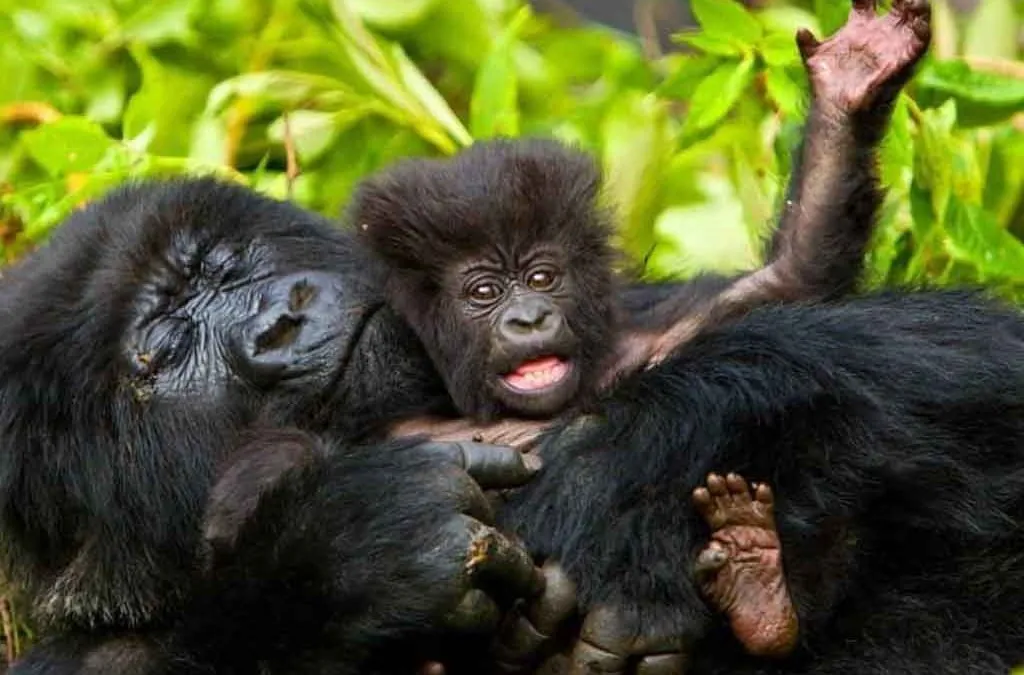
Then, there was the matriarch. She sat just a few meters away, methodically stripping leaves off a branch, stuffing them into her mouth, while her tiny baby clung to her chest. She looked up at me with these deep, chocolate-brown eyes—eyes that looked wise, tired, and gentle all at once. It sounds cheesy, but in that moment, I felt like I wasn’t looking at an animal. I was looking at a person.
Getting a Sneak Peek at Conservation
You know what you don’t get on the one-hour trek? The gossip.
The researchers next to me were quietly whispering to each other, pointing out specific gorillas. “That’s Mwezi, she’s the bossy one,” one tracker whispered. “Look at his nose print—that’s how we tell them apart.”
I felt like I was eavesdropping on a family reunion. I learned about their fights, their friendships, and their little quirks. Watching the researchers take notes, monitor their breathing, and track their movements—it made me realize how fragile this all is. These rangers don’t just work here; they live for these gorillas.
The Silverback Stare Down
About three hours in, the silverback decided we were boring enough to ignore. He stretched out on his back, belly up, and just… chilled. But then, a juvenile got too rowdy near him. The silverback let out a low, rumbling growl that vibrated through my chest.
My guide tensed up next to me and whispered, “Don’t move.”
My heart was in my throat. We stayed frozen. The big guy just looked us over, huffed, and went back to his nap. It was a stark, raw reminder that we were guests in his living room, and he could kick us out anytime he wanted.
Why Photographers Weep (and Smile) Here
If you’re a photographer like me, the first hour is chaos. You’re fumbling with settings, trying to get a clear shot through the branches. By hour three, you’ve calmed down. You’re patient. The light filters through the canopy differently, casting golden spots on the gorillas’ fur.
I managed to capture a shot of a mother grooming her infant. It’s the most tender thing I’ve ever seen. You can’t rush that moment. You need the extra time to just wait for the magic to happen.
The Heavy Emotional Hangover
Leaving was the hardest part.
When the four hours were up, we had to pack up and hike out. I turned back for one last look. The family was just going about their evening routine, completely unfazed by us.
I cried. I’m not ashamed to admit it.
It wasn’t just sad to leave; it was overwhelming. You spend four hours locked into the lives of these animals, and you realize how much they are like us. They love, they play, they get grumpy, and they protect their kids with everything they have.
And then you walk out of the forest, back to civilization, and it hits you: without the insane dedication of those rangers, without the money from these permits, these families might not even exist in fifty years.
My Honest Advice to You
If you’re coming to Uganda, do the standard trek—it’s amazing. But if you have the budget and the fitness, do the habituation.
It’s harder. It’s longer. It’s more expensive. But it’s not a “tour.” It’s a raw, unfiltered peek into the secret lives of the forest kings. You don’t just walk away with photos. You walk away with a story.
Bring good boots, pack your patience, and get ready to have your heart completely stolen. Because once you spend four hours with these guys, you’ll never look at a zoo the same way again.
It’s not just an experience. It’s a piece of your soul you leave behind in that jungle.