


What Conservation Efforts Protect the Great Migration Ecosystem?
The Great Migration is sustained by one of the most complex and carefully protected ecosystems on Earth. Spanning across Serengeti National Park and Maasai Mara National Reserve, this system depends on uninterrupted wildlife movement, healthy grasslands, and coordinated conservation across international borders. Protecting it requires a combination of legal protection, community involvement, scientific monitoring, and sustainable tourism. (What Conservation Efforts Protect the Great Migration Ecosystem? )
Protected Areas and Legal Frameworks
The foundation of conservation lies in formally protected areas.
The Serengeti and Maasai Mara are designated as national parks and reserves where wildlife is legally protected from hunting, settlement expansion, and large-scale agriculture. These designations restrict land use and maintain core habitats for migrating species.
Surrounding these parks are buffer zones and conservation areas, such as the Ngorongoro Conservation Area, which allow controlled human activity while still protecting wildlife corridors.
These legal frameworks ensure that large portions of the migration route remain intact and undeveloped.
Wildlife Corridors and Landscape Connectivity
One of the most critical conservation strategies is maintaining open migration corridors.
The Great Migration depends on free movement between seasonal grazing areas. If these routes are blocked by fencing, roads, or settlements, the entire system can collapse.
Conservation efforts focus on:
Preventing land fragmentation
Protecting traditional migration pathways
Managing infrastructure development
Private conservancies and community lands, especially around the Maasai Mara, play a major role in keeping these corridors open.
Anti-Poaching and Law Enforcement
Poaching remains a threat, particularly for bushmeat and high-value species.
To address this, governments and conservation organizations invest heavily in:
Ranger patrols and surveillance
Use of technology such as drones and GPS tracking
Stronger legal penalties for wildlife crimes
These measures help reduce illegal hunting and protect both migratory herds and predator populations.
Community-Based Conservation
Local communities are central to long-term conservation success.
In areas surrounding Maasai Mara National Reserve, many Maasai landowners participate in conservancy models. They lease land for wildlife conservation in exchange for income from tourism.
This approach creates a direct economic incentive to protect wildlife rather than convert land for agriculture or development.
Community programs also include:
Education initiatives
Revenue-sharing from tourism
Support for sustainable livelihoods
By aligning conservation with local economic benefits, these programs reduce human-wildlife conflict and encourage long-term stewardship.
Sustainable Tourism Management
Tourism plays a dual role—it funds conservation but must be carefully managed to avoid ecological damage.
Efforts include:
Limiting vehicle numbers in sensitive areas
Designating off-road driving zones
Regulating lodge and camp development
Promoting low-impact, eco-friendly tourism practices
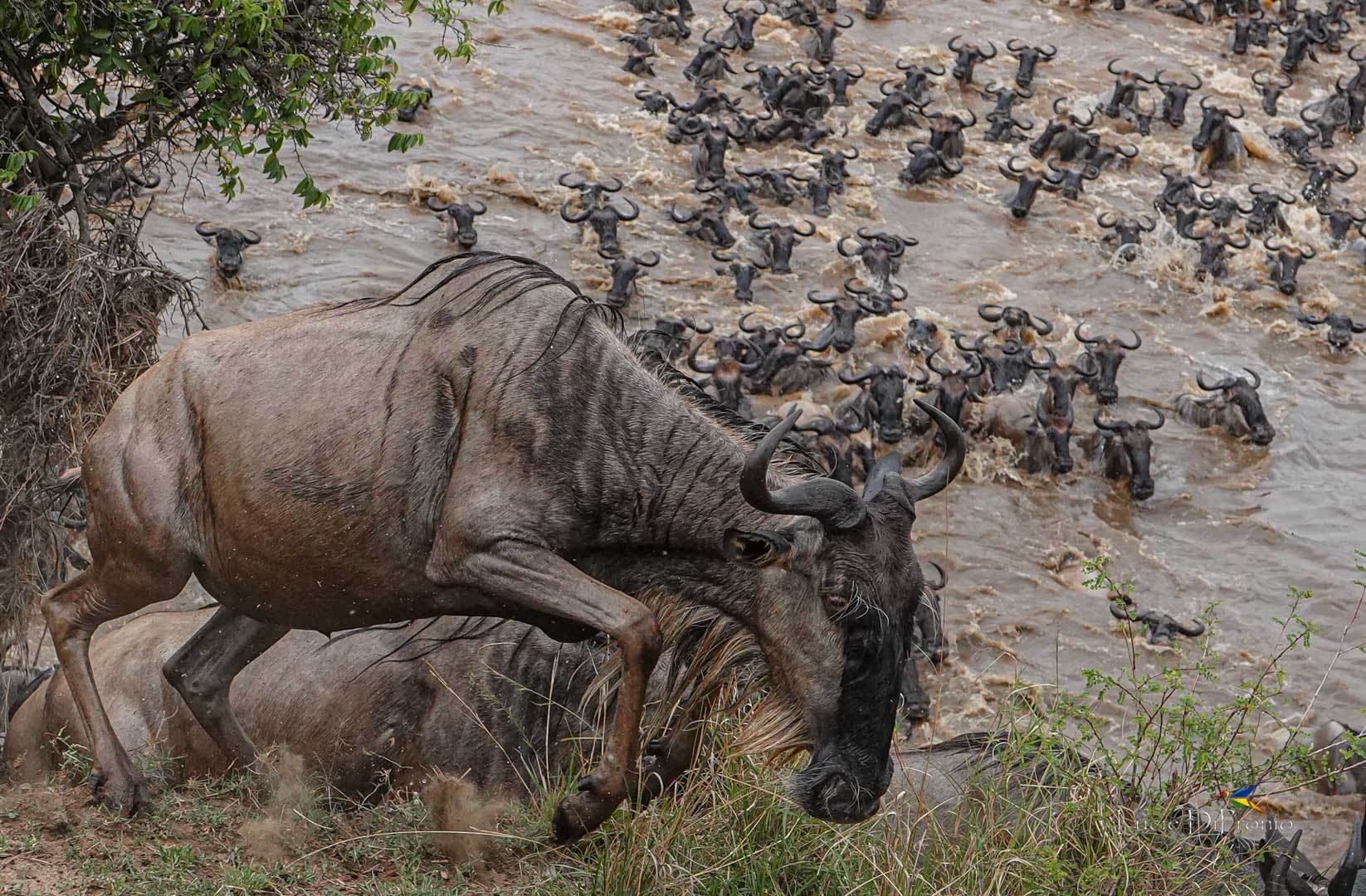
High-quality guiding standards also help ensure that wildlife is not disturbed during critical activities like hunting or river crossings.
Revenue from park fees and tourism operations directly supports conservation funding.
Scientific Research and Monitoring
Ongoing research is essential for understanding how the migration system changes over time.
Scientists use:
GPS collars to track animal movement
Satellite imagery to monitor vegetation and rainfall
Long-term ecological studies
This data helps conservationists respond to emerging threats such as climate change, habitat loss, and disease outbreaks.
Research also informs policy decisions and land management strategies.
Climate Change Adaptation Strategies
Climate change is increasingly affecting rainfall patterns and vegetation cycles.
To address this, conservation efforts focus on:
Protecting large, connected landscapes that allow wildlife to adapt
Monitoring shifts in migration timing and routes
Supporting ecosystem resilience through habitat protection
Maintaining flexibility in the ecosystem is key, as migratory species rely on movement to respond to environmental changes.
Cross-Border Collaboration
The migration ecosystem spans two countries, making international cooperation essential.
Tanzania and Kenya coordinate on:
Wildlife protection policies
Anti-poaching operations
Tourism management strategies
Although each country manages its own parks, collaboration ensures that conservation efforts are aligned across the entire ecosystem.
Role of NGOs and Conservation Organizations
Non-governmental organizations play a major role in supporting conservation efforts.
They provide:
Funding for anti-poaching initiatives
Community development programs
Scientific research support
Advocacy for policy protection
These organizations often act as a bridge between governments, communities, and international stakeholders.
Challenges Facing Conservation Efforts
Despite strong protections, several challenges remain.
Population growth around park boundaries increases pressure on land. Infrastructure development, such as roads, can threaten migration routes. Climate change introduces uncertainty in rainfall patterns and grazing conditions.
Balancing conservation with economic development remains one of the biggest long-term challenges.
The Great Migration ecosystem is protected through a combination of national parks, community conservancies, anti-poaching efforts, scientific research, and sustainable tourism practices. Across regions like Serengeti National Park and Maasai Mara National Reserve, these efforts work together to preserve one of the last large-scale wildlife migrations on Earth.
Its survival depends on maintaining open landscapes, supporting local communities, and adapting to environmental change. Conservation here is not a single action—it is an ongoing, coordinated system that protects both wildlife and the people who live alongside it.