


Walking Safaris Near the Great Migration Route
Walking safaris near the Great Migration route offer one of the most immersive ways to experience East Africa’s wilderness. While most migration viewing happens from vehicles, stepping out on foot changes everything. You are no longer just observing the ecosystem—you are part of it. Every track, sound, and movement becomes more immediate and meaningful.
These experiences are carefully managed and only allowed in specific areas, mainly private conservancies and controlled zones around Serengeti National Park and Maasai Mara National Reserve. Understanding how they work is essential before adding one to your safari itinerary.
What a Walking Safari Actually Involves
A walking safari is a guided bush walk led by a professional guide and an armed ranger. It usually takes place in the early morning or late afternoon when temperatures are cooler and wildlife is more active.
The pace is slow and deliberate. Unlike game drives that cover large distances, walking safaris focus on detail. You will learn to read animal tracks, identify plants, and interpret signs of recent wildlife activity.
You may not see massive herds at close range, but you will understand how the ecosystem functions at ground level. This is the key difference.
Where Walking Safaris Are Allowed
Walking safaris are not permitted everywhere, especially in high-traffic migration zones where large herds and predators are concentrated.
Instead, they are typically conducted in:
Private conservancies bordering the Maasai Mara
Designated areas in the Serengeti ecosystem
Exclusive safari concessions with controlled access
These areas offer lower vehicle density and safer conditions for guided walking experiences.
Wildlife Encounters on Foot
Walking safaris are not about chasing big animals. They are about awareness and controlled encounters.
You may come across:
Giraffes moving quietly through acacia woodland
Zebra or antelope grazing at a distance
Elephants, observed carefully from safe positions
Tracks and signs of predators such as lions or hyenas
Direct encounters with large predators are rare and managed with strict safety protocols. The emphasis is on observation, not proximity.
Safety and Professional Guidance
Safety is the most important aspect of any walking safari.
Guides are highly trained in animal behavior and bush navigation. An armed ranger is always present as a precaution, although firearms are rarely used.
Guests are given clear instructions:
Walk in single file
Stay quiet and attentive
Follow the guide’s direction at all times
These protocols ensure that both guests and wildlife remain safe.
Best Time for Walking Safaris During Migration Season
Timing depends on both weather and migration movement.
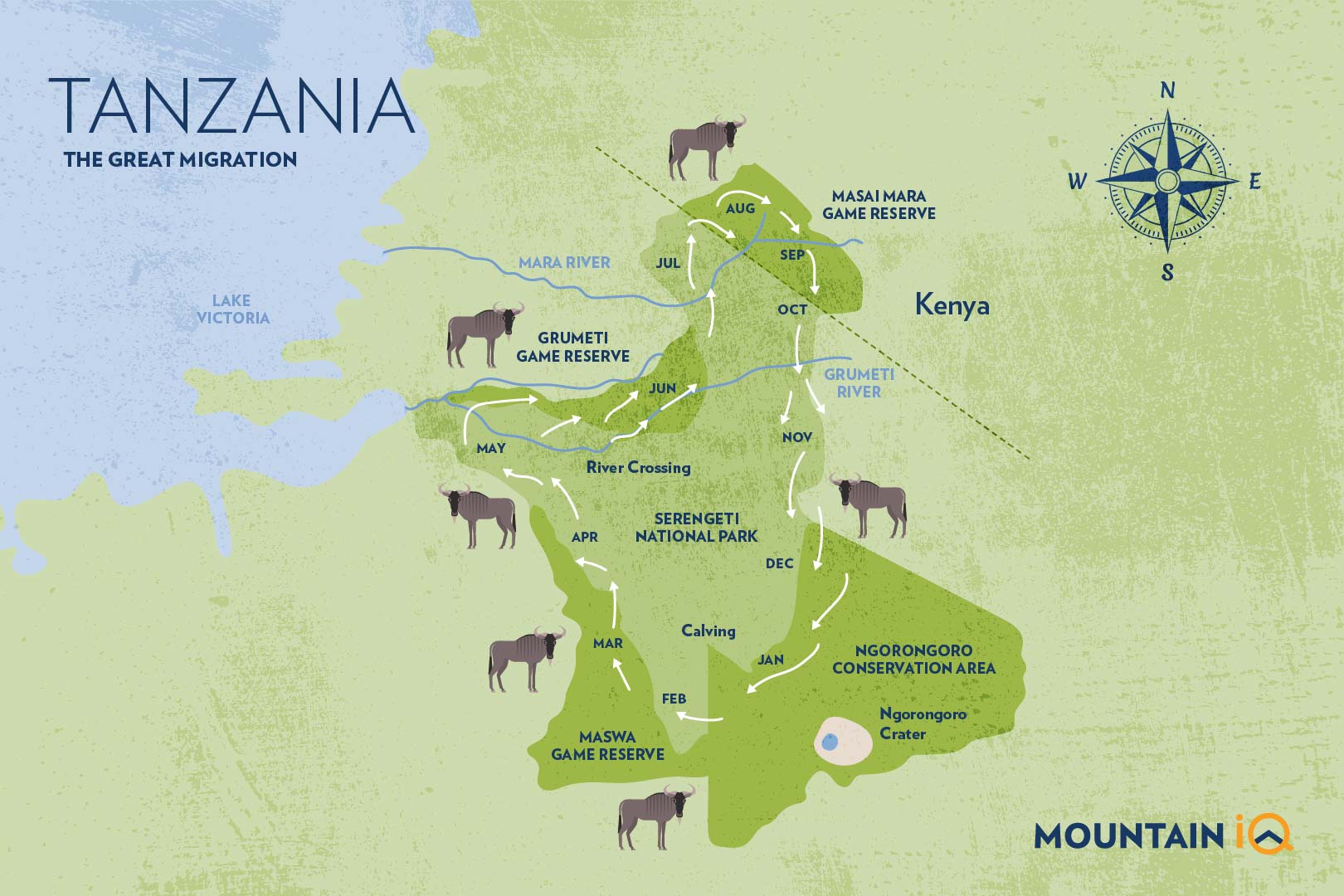
During peak migration months (July to October), walking safaris are often done in peripheral areas rather than directly in high-density herd zones.
In earlier months, such as the calving season in southern Serengeti, walking safaris can be more active due to increased predator presence and diverse wildlife behavior.
Early morning walks provide the best conditions for tracking and cooler temperatures.
What You Learn on a Walking Safari
Walking safaris are highly educational.
You will learn how to identify:
Animal tracks and footprints
Dung and feeding patterns
Bird calls and insect behavior
Plant species and their uses
This transforms your understanding of the safari environment from passive viewing to active interpretation.
Photography on Walking Safaris
Photography is possible but different from vehicle-based safaris.
You will likely use shorter lenses and focus on:
Close-up details
Textures and patterns
Smaller animals and plant life
Large telephoto wildlife shots are less common because distance is maintained for safety.
Physical Requirements and Suitability
Walking safaris require a moderate level of fitness.
Walks typically last between one to three hours and involve uneven terrain, grassland, or light bush.
They are suitable for most adults but may not be ideal for very young children or travelers with limited mobility.
Comfortable walking shoes, neutral-colored clothing, and water are essential.
Why Walking Safaris Add Value to a Migration Trip
The Great Migration is often experienced as a large-scale spectacle—thousands of animals moving across vast landscapes.
Walking safaris provide the opposite perspective. They slow everything down and allow you to understand the smaller details that support the migration system.
You begin to see how soil, plants, insects, and smaller animals all contribute to the larger movement of herds and predators.
This deeper understanding enhances the overall safari experience.
Walking Safari vs Game Drive
Game drives offer:
Speed and coverage
Close-up sightings of large animals
Access to migration herds and river crossings
Walking safaris offer:
Immersion and sensory awareness
Educational insight into ecosystems
A quieter, more personal experience
The two are complementary rather than interchangeable.
Final Thoughts
Walking safaris near the Great Migration route provide a rare opportunity to experience the African wilderness on a more intimate level. They shift the focus from spectacle to understanding, from distance to connection.
While they do not replace traditional game drives, they add depth and perspective to any safari itinerary.
For travelers seeking more than just wildlife sightings—for those interested in how the ecosystem truly works—walking safaris are one of the most rewarding additions to a Great Migration experience.