

Uganda’s Best Photography Spots: A Complete 2026 Guide for Wildlife, Landscapes, and Cultural Photography
Uganda, often referred to as the “Pearl of Africa,” is a photographic gem that offers a wide range of subjects, from mountain gorillas and chimpanzees to savannah elephants, tree-climbing lions, misty lakes, volcanic landscapes, and vibrant local cultures. The country’s compact size, diverse ecosystems, and well-preserved parks make it ideal for photographers who want to capture both wildlife and landscapes in one trip.
In 2026, Uganda has positioned itself as one of East Africa’s top destinations for professional and amateur photographers alike. Its varied terrain includes dense tropical rainforests, highland lakes, savannah plains, wetlands, and volcanic slopes, creating endless opportunities for composition, lighting, and storytelling. This guide explores Uganda’s best photography spots, tips for capturing the perfect shot, and how to plan an immersive photographic safari.
Bwindi Impenetrable Forest: Gorilla Photography Heaven
Bwindi Impenetrable Forest is the crown jewel of Uganda for wildlife photography, especially for mountain gorillas. Covering 321 square kilometers, this UNESCO World Heritage site is a dense rainforest with mossy trees, hanging vines, and misty mornings, providing an atmospheric backdrop for wildlife shots.
Mountain gorillas are the main attraction. Photography permits allow an hour-long session with habituated gorilla families, offering unique opportunities to capture silverbacks, playful juveniles, and feeding behavior. Early morning treks provide soft natural lighting, enhancing the rainforest ambiance. Photographers can experiment with depth of field to separate gorillas from the dense green background, capturing expressions and interactions.
Golden monkeys are another photographic highlight in the nearby Mgahinga Gorilla National Park. Their vibrant orange fur, agile movement, and playful behavior make for dynamic wildlife shots. The volcanic slopes surrounding Mgahinga provide stunning panoramic landscapes to complement wildlife photography.
Photographic Tips for Bwindi:
- Use a telephoto lens (300–600mm) for gorillas while maintaining the recommended distance.
- Include foreground foliage for depth and context.
- Capture interaction and grooming behavior for storytelling shots.
- Shoot in RAW to preserve details in low-light rainforest conditions.
Kibale National Park: Chimpanzees and Primate Diversity
Kibale National Park is known as the primate capital of Africa. It hosts over 13 primate species, including chimpanzees, L’Hoest’s monkeys, red-tailed monkeys, and olive baboons. Dense tropical rainforest, intertwined with streams and ferns, makes Kibale ideal for immersive wildlife photography.
Chimpanzee trekking provides opportunities to capture our closest relatives in social settings. Shots of chimps foraging, playing, or resting in trees create emotional and engaging images. Lenses between 70–200mm are useful for primates in trees, while wider lenses work for group shots in forest clearings.
Bird photography is also exceptional here, with species like the African green broadbill, great blue turaco, and the rare Rwenzori turaco. Early morning light enhances feather details and natural colors.
Photographic Tips for Kibale:
- Use high ISO settings for shaded forest conditions.
- Capture candid primate interactions to convey behavior.
- Incorporate sun rays filtering through the canopy for artistic effects.
- Tripods or monopods help stabilize shots in low-light conditions.
Queen Elizabeth National Park: Savannah and Wetland Photography
Queen Elizabeth National Park offers contrasting photography opportunities compared to rainforest parks. The park spans savannah, wetlands, and crater lakes, creating diverse compositions.
The Ishasha sector is world-famous for tree-climbing lions. Capturing lions in fig trees with surrounding plains creates unique and striking images. Afternoon and sunset game drives provide warm lighting for golden-hour photography. Other savannah wildlife includes elephants, buffalo, Uganda kob, warthogs, hyenas, and leopards.
The Kazinga Channel boat cruise connects Lake Edward and Lake George, providing close-up shots of hippos, Nile crocodiles, and elephants along the banks. Birds like the African fish eagle, kingfishers, herons, and cormorants make for compelling action and wildlife photography.
Photographic Tips for Queen Elizabeth:
- Use telephoto lenses for wildlife in open plains.
- Incorporate water reflections in the Kazinga Channel for artistic shots.
- Shoot from elevated viewpoints for wide savannah panoramas.
- Capture silhouettes of animals during sunrise and sunset for dramatic imagery.
Lake Bunyonyi: Highland Lake and Island Photography
Lake Bunyonyi is an iconic highland lake with 29 islands, surrounded by terraced hills. The lake offers a completely different photography experience, focusing on landscapes, reflections, and cultural elements.
Punishment Island, Bushara Island, and Upside Down Island provide scenic foregrounds for panoramic shots. Canoe trips allow photographers to frame the lake’s reflections, morning mist, and vibrant skies. Local fishermen, floating vegetation, and traditional boats add cultural context to photographs.
Sunrise and sunset over Lake Bunyonyi are magical, casting soft light on the terraced hills and islands. Drone photography is ideal for capturing the full extent of the lake’s mosaic of islands and its unique topography.
Photographic Tips for Lake Bunyonyi:
- Use wide-angle lenses for panoramic shots.
- Incorporate human elements for storytelling.
- Capture reflections on the water for symmetry.
- Morning mist adds atmospheric depth to images.
Murchison Falls National Park: Waterfall and River Wildlife
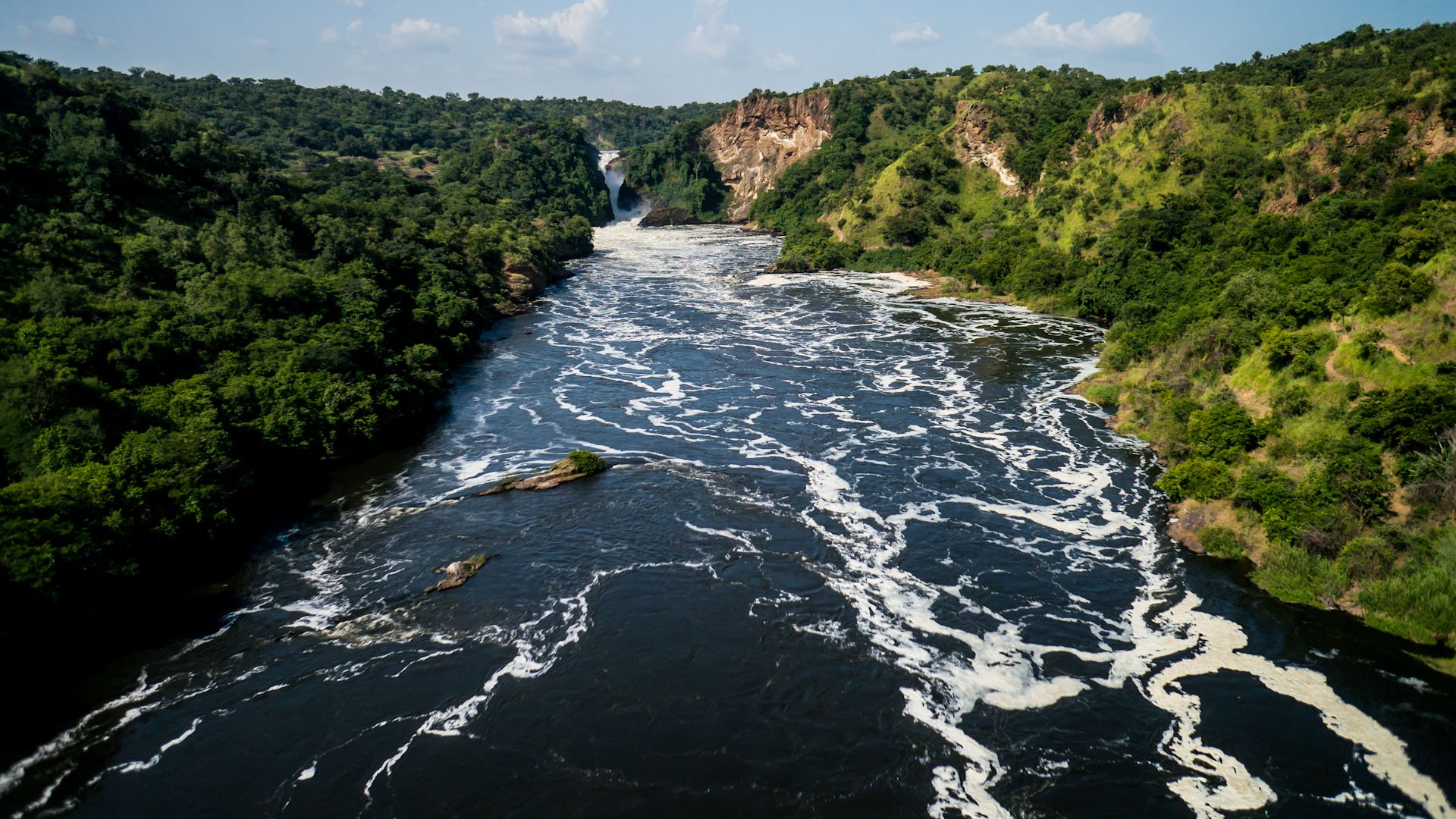
Murchison Falls National Park offers dramatic landscapes and wildlife. The Victoria Nile plunges through a narrow gorge, creating Murchison Falls, an iconic photographic subject.
Boat cruises along the Nile provide close access to hippos, crocodiles, elephants, and waterbirds. Wide-angle lenses are ideal for capturing the waterfall’s scale, while telephoto lenses are necessary for riverbank wildlife. Sunset and sunrise shots along the Nile enhance colors and shadows.
Photographic Tips for Murchison Falls:
- Use neutral density filters for long-exposure waterfall shots.
- Capture wildlife against dramatic landscapes for scale.
- Early morning light enhances mist and river reflections.
- Combine aerial drone shots with close-ups for varied perspectives.
Semuliki National Park: Hot Springs and Congo Basin Biodiversity
Semuliki National Park, located along Uganda’s border with the Democratic Republic of Congo, features dense lowland forests, hot springs, and unique biodiversity. Hot springs create steam and mineral-rich pools that make for striking environmental shots.
Forest elephants, rare antelopes like the sitatunga, and abundant bird species provide wildlife photography opportunities not found in other parks. Photographers can focus on macro shots of insects and flora in this tropical rainforest environment.
Photographic Tips for Semuliki:
- Capture steam and mist from hot springs for atmospheric imagery.
- Use medium telephoto lenses for shy or rare wildlife.
- Macro photography works well for butterflies and unique plant life.
- Early morning light filters through forest canopies beautifully.
Cultural Photography Across Uganda
In addition to landscapes and wildlife, Uganda’s cultural diversity offers photographers unique subjects. Local communities around Bwindi, Bunyonyi, and Queen Elizabeth showcase traditional crafts, ceremonies, and daily life. Capturing interactions, festivals, and traditional attire adds a human dimension to wildlife and landscape portfolios.
Key locations for cultural photography:
- Batwa pygmy communities near Bwindi and Mgahinga
- Fishing communities on Lake Bunyonyi and Victoria Nile
- Local markets in Kabale, Fort Portal, and Masindi
Photographic Tips for Cultural Photography:
- Always seek permission before photographing people.
- Capture candid daily activities for authenticity.
- Use environmental elements to frame portraits, such as huts, banana plantations, or boats.
- Golden-hour light enhances skin tones and textures.
Best Times of Year for Photography
Uganda’s equatorial climate allows year-round travel, but seasonal considerations enhance photographic opportunities:
- Dry Seasons (June–September, December–February): Ideal for savannah wildlife and open landscape photography. Visibility is higher, and roads are easier to navigate.
- Wet Seasons (March–May, October–November): Forests and lakes are lush and green, perfect for rainforest, bird, and landscape photography. Misty mornings create atmospheric shots.
For gorilla and chimpanzee photography, dry seasons make trekking easier, while wet seasons add dramatic rainforest textures. For lakes and waterfalls, wet seasons produce fuller rivers and reflective waters.
Essential Photography Gear for Uganda
To maximize Uganda’s photography potential in 2026, consider the following equipment:
- DSLR or mirrorless camera with high ISO capability
- Telephoto lenses (100–600mm) for wildlife
- Wide-angle lenses (16–35mm) for landscapes and lakes
- Tripod or monopod for low-light rainforest photography
- ND filters for waterfalls and long exposures
- Extra memory cards and batteries due to remote locations
Photography Ethics and Safety
While photographing wildlife, it is essential to maintain ethical practices:
- Keep safe distances from wildlife, especially gorillas and chimpanzees.
- Avoid using flash during gorilla or chimp encounters to prevent stress.
- Respect local customs and communities, seeking consent before photographing people.
- Follow park regulations to minimize environmental impact.
Conclusion
Uganda is unmatched for photographers seeking diversity in a single country. From the intimate encounters with mountain gorillas in Bwindi and playful chimps in Kibale to savannah wildlife in Queen Elizabeth, volcanic landscapes in Mgahinga, and serene highland lakes like Bunyonyi, the country provides endless opportunities for both wildlife and landscape photography.
In 2026, Uganda’s improved infrastructure, conservation initiatives, and growing eco-tourism industry make it easier than ever to access these incredible photography spots. Whether you are a professional, an enthusiast, or a travel blogger, Uganda promises memorable, high-quality images that capture the essence of Africa’s “Pearl of Africa.”