


Uganda Safari Vehicle Types: 4WD Land Cruiser Guide
When people start planning a safari in Uganda, they usually focus on the big experiences first. Gorilla trekking in Bwindi, chimpanzee tracking in Kibale, game drives in Queen Elizabeth National Park. The vehicle rarely gets attention at the beginning.
That changes quickly once the itinerary becomes real.
Distances are long. Roads vary from smooth tarmac to rough gravel. Some parks sit deep in forested or mountainous areas where conditions shift with weather. Rain can turn sections into thick mud. Dry seasons can create dust that reduces visibility.
At that point, the safari vehicle stops being background detail and becomes a major part of the trip.
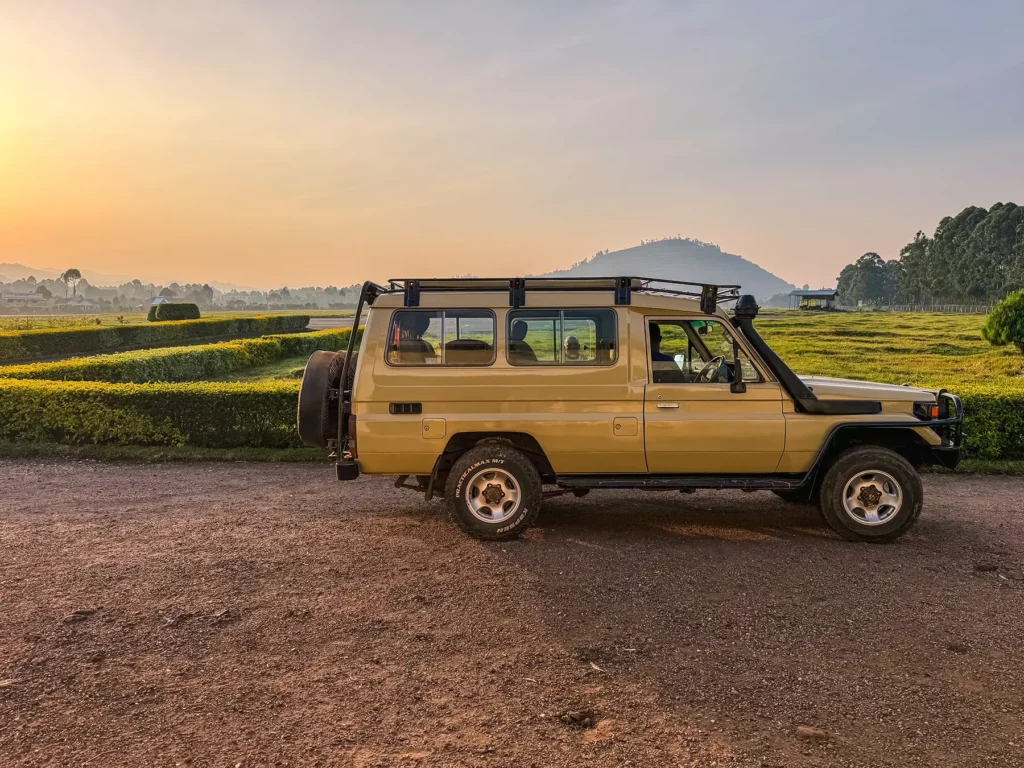
In Uganda, the vehicle that handles all of this is the 4WD Toyota Land Cruiser.
Why safari vehicles matter more than most people expect
Uganda is not a destination where you drive short distances between attractions. A single transfer can take several hours. For example, moving from Entebbe to Bwindi can take most of a day depending on the route and stops. Traveling from Kibale to Queen Elizabeth National Park also involves long stretches of rural road where conditions change without warning.
This is why the vehicle matters.
A standard car struggles in these environments. It can handle paved roads, but it is not built for deep potholes, steep climbs, muddy tracks, or unpredictable terrain.
A safari Land Cruiser is built for exactly those conditions. It is designed to keep moving where normal vehicles slow down or stop completely.
When you are heading into remote areas like Bwindi Impenetrable National Park or Kibale National Park, this difference becomes obvious very quickly.
The Toyota Land Cruiser as the standard safari vehicle
The Toyota Land Cruiser is the backbone of safari transport in Uganda. It is widely used by tour operators because it combines durability, reliability, and off-road capability.
Most safari Land Cruisers in Uganda are not standard factory models. They are modified specifically for tourism use.
The most important upgrade is the four-wheel drive system. This allows power to be distributed across all wheels, improving traction on slippery roads, loose gravel, and uneven surfaces. In practice, it means the vehicle can climb muddy slopes, cross rough tracks, and maintain control in conditions where two-wheel drive vehicles struggle.
This is especially important during the rainy season when rural roads can change within minutes.
Pop-up roof design and game viewing
One of the most recognizable features of safari Land Cruisers is the pop-up roof.
This roof section can be lifted during game drives, allowing passengers to stand and observe wildlife from an elevated position. It is a simple feature, but it changes the entire safari experience.
In open savannah areas like Queen Elizabeth National Park, visibility matters. Animals may be far away or partially hidden by grass. Standing through the roof gives you a wider field of view and helps you follow movement across the landscape.
It also improves photography. You can stabilize your camera, avoid window reflections, and track animals more easily as they move.
Without this feature, game viewing becomes more limited. You rely only on side windows, which restricts angles and reduces reaction time when wildlife appears suddenly.
Interior layout and passenger comfort
Inside a safari Land Cruiser, the layout is designed for long hours on the road.
Seats are usually arranged in forward-facing rows. This helps reduce motion discomfort during long drives and allows all passengers to face the direction of travel.
Space between seats varies depending on whether the vehicle is configured for private safaris or group tours. Private setups often give more legroom and fewer passengers per row. Group vehicles may be more compact, but they still prioritize visibility.
Large windows are another key feature. Uganda safaris involve a lot of observation even while driving between destinations. Elephants near the road, roadside villages, changing landscapes, and occasional wildlife sightings all become part of the journey.
Comfort also depends on ventilation. Many safari vehicles are designed with sliding windows or adjustable openings to manage airflow, especially in hot or dusty conditions.
Suspension built for rough terrain
Road conditions in Uganda can be unpredictable.
Even major routes may have potholes. Rural roads leading to parks often become uneven or muddy. In areas near national parks, roads can be unpaved for long stretches.
Safari Land Cruisers use reinforced suspension systems to handle this.
The suspension absorbs impact from rough surfaces, reducing the shock felt inside the vehicle. This does not eliminate bumps completely, but it makes long journeys significantly more manageable.
This becomes especially important on long transfers between destinations such as Entebbe, Kibale, Queen Elizabeth, and Bwindi. Without strong suspension, fatigue builds quickly. With it, the journey remains tolerable even over several hours.
Four-wheel drive performance in real conditions
Four-wheel drive is not just a technical feature. It is something you notice in real time.
When a road becomes muddy after rain, a 4WD Land Cruiser maintains traction where other vehicles might slip. When climbing steep or uneven terrain, power is distributed across all wheels to maintain stability.
This capability is essential when accessing remote lodges or park entry points that are not connected to paved roads.
It also adds a layer of safety. In areas where roadside assistance is not immediately available, reliability becomes critical. A breakdown in a remote forest area can cause serious delays. Land Cruisers are chosen partly because they reduce that risk.
Fuel capacity and long-distance travel
Safari routes in Uganda often cover large distances without frequent access to fuel stations. Once you leave urban centers, fuel stops become less predictable.
Land Cruisers used for safaris are typically supported by larger fuel tanks or careful fuel planning by guides. Drivers are trained to calculate distances between parks and refueling points to avoid running low in remote areas.
This is especially important when traveling through long routes that connect multiple parks in a single itinerary.
Driver guides and their role in the vehicle experience
The vehicle is only part of the experience. The driver guide is equally important.
Safari drivers in Uganda are trained not only in navigation but also in wildlife awareness, road safety, and mechanical basics. They understand how to read road conditions, adjust speed based on terrain, and handle unexpected challenges.
During game drives, the driver often becomes your eyes on the ground. They spot wildlife, interpret animal behavior, and position the vehicle for the best viewing angles.
In many cases, they know the parks so well that they can predict where animals are likely to appear based on time of day and weather conditions.
This combination of vehicle and driver is what makes safari travel functional in Uganda.
Different safari vehicle setups
While the Toyota Land Cruiser is the most common option, there are variations depending on group size and budget.
Extended safari Land Cruisers are the most widely used for mid-range and luxury safaris. These vehicles are modified with extra seating rows, pop-up roofs, and storage space for luggage. They are ideal for long-distance travel and multi-park itineraries.
Smaller Land Cruiser Prado models are sometimes used for fewer passengers or shorter trips. They offer comfort but have less space compared to the extended versions.
For larger groups, some operators use safari vans or coaster buses. These can work on better roads but are less suitable for rough terrain or deep forest access. For destinations like Bwindi Impenetrable National Park, they are rarely used as the main transport option.
How the vehicle affects your safari experience
Many travelers underestimate how much the vehicle influences the overall safari.
A well-prepared 4WD Land Cruiser reduces stress during long drives. You sit more comfortably, experience fewer disruptions, and spend more energy focusing on the scenery and wildlife rather than road conditions.
It also affects how much you see. With a pop-up roof and wide windows, your ability to spot animals improves significantly during game drives.
On the other hand, a poorly maintained vehicle can turn long transfers into tiring experiences. Small issues like poor suspension, limited space, or restricted visibility can accumulate over several days.
In a destination like Uganda, where travel is part of the safari, that difference matters.
A safari in Uganda is not just about the parks you visit. It is also about how you move between them.
The 4WD Toyota Land Cruiser remains the most trusted safari vehicle because it handles the realities of Uganda’s terrain, weather, and distances. It is built for long hours on the road, rough tracks, and remote destinations where reliability matters.
When you are planning your trip, it is worth looking beyond the itinerary and thinking about transport as part of the experience itself.
A strong safari vehicle does more than move you from one place to another. It supports the entire journey, from city roads in Entebbe to forest tracks in Kibale and steep trails near Bwindi.
In many ways, it is the silent part of the safari that makes everything else possible.