


The Serengeti Migration Calendar: Month by Month Breakdown
The Great Wildebeest Migration is the defining event of Tanzania’s Serengeti National Park and one of the greatest wildlife spectacles on Earth. Every year, more than 1.5 million wildebeest, joined by around 250,000 zebras and hundreds of thousands of Thomson’s gazelles, travel through the Serengeti ecosystem in search of fresh grass and water. This continuous journey covers roughly 800 kilometers and extends into Kenya’s Maasai Mara before returning to Tanzania.
Unlike many people believe, the migration does not happen on fixed dates. The animals respond to rainfall, which determines where nutritious grass grows. While the exact timing changes each year slightly, the overall pattern remains predictable enough for visitors to plan their safari around the experiences they want most.
Whether you hope to witness thousands of calves taking their first steps, dramatic river crossings, or predators stalking enormous herds, every month offers something unique. Understanding the Serengeti migration calendar helps you choose the best time to visit.
How the Great Migration Works
The migration is a year-round cycle rather than a single event. The herds constantly move between the southern plains, central Serengeti, Western Corridor, northern Serengeti, and Kenya’s Maasai Mara before beginning the journey south again.
Fresh grazing is the driving force behind every movement. As seasonal rains arrive, nutritious grass quickly grows across different parts of the ecosystem. Wildebeest follow these changing conditions because fresh pasture provides the energy needed for breeding, calving, and survival.
The migration also supports one of Africa’s richest predator populations. Lions, leopards, cheetahs, hyenas, crocodiles, and African wild dogs rely heavily on the massive concentration of prey throughout the year.
January: The Herds Gather on the Southern Plains
January finds most of the migration spread across the southern Serengeti and the Ndutu area. Recent short rains have transformed the plains into lush grazing grounds, creating ideal conditions for pregnant wildebeest preparing to give birth.
Large herds can be seen feeding across the open grasslands, often stretching to the horizon. Zebra and gazelle accompany the wildebeest, creating one of Africa’s largest wildlife concentrations.
Predators are already active during January. Lions patrol the plains while cheetahs take advantage of the open landscape to hunt. The combination of green scenery, abundant wildlife, and pleasant weather makes January an excellent safari month.
February: Peak Calving Season
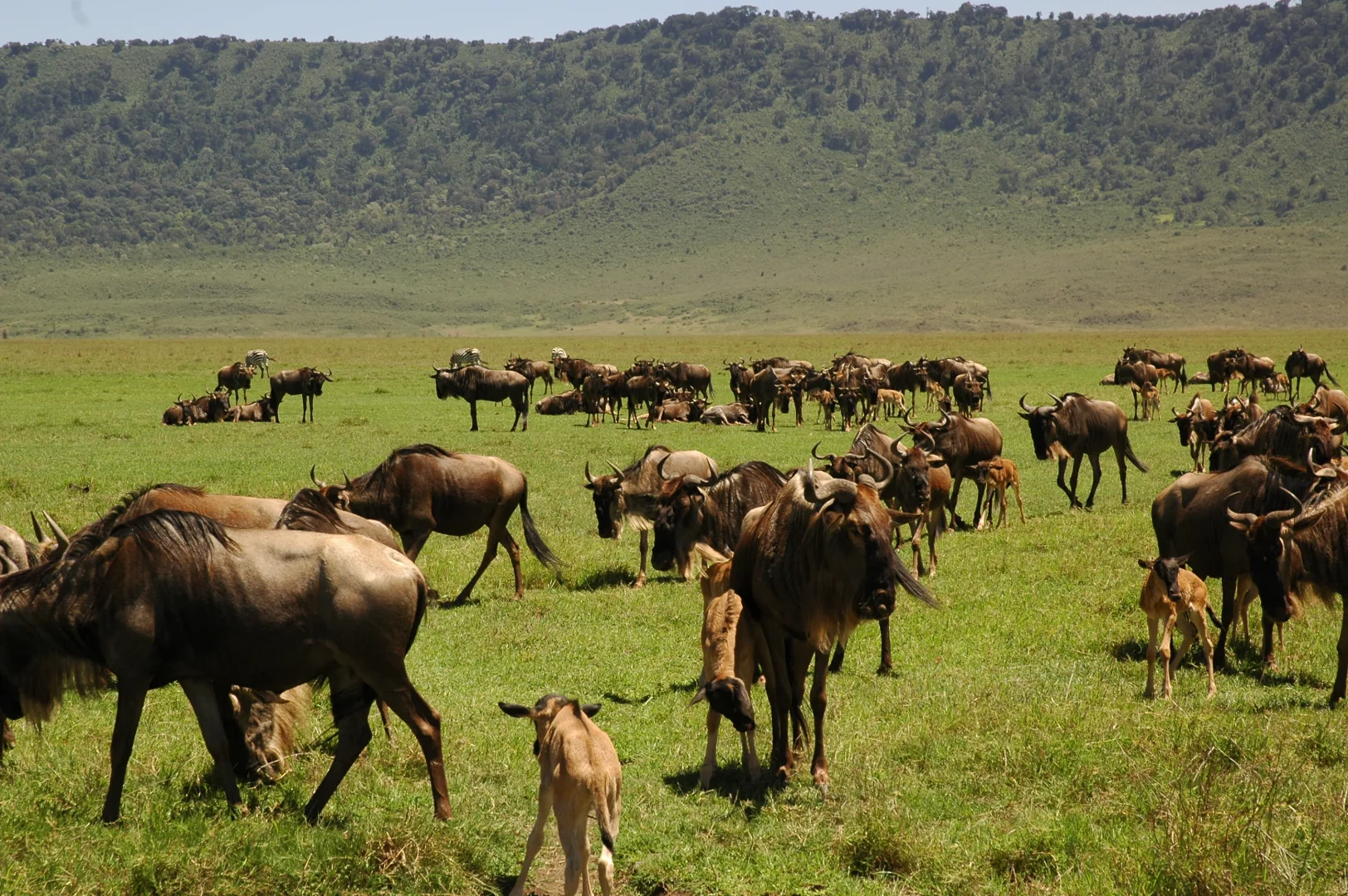
February is one of the most rewarding months for wildlife enthusiasts. During a period of just two to three weeks, nearly 500,000 wildebeest calves are born.
Most calves stand within minutes of birth and begin running within hours. This remarkable adaptation gives them a better chance of escaping predators.
The abundance of vulnerable young animals attracts lions, hyenas, cheetahs, jackals, and leopards. Visitors often witness dramatic predator interactions alongside heartwarming scenes of newborn calves staying close to their mothers.
The lush green plains also create beautiful photography conditions, making February one of the most popular months to visit.
March: Calves Grow Stronger
By March, the youngest wildebeest have gained strength and are capable of traveling with the larger herds. The southern Serengeti still offers excellent grazing, although the migration slowly begins spreading westward.
Predators remain highly active because thousands of young animals are still learning to navigate the challenges of the wild.
March generally experiences warm temperatures with occasional rainfall, helping maintain healthy grasslands while keeping dust levels low during game drives.
April: Movement Toward the Central Serengeti
April coincides with Tanzania’s long rainy season. While some travelers avoid this period, it offers several advantages, including fewer safari vehicles, quieter lodges, and vibrant green landscapes.
The migration gradually leaves the southern plains and moves toward the central Serengeti. Large herds begin forming long lines as they search for fresh pasture.
Wildlife viewing remains excellent despite occasional rain showers. Elephant, giraffe, buffalo, and numerous antelope species are also commonly seen during this period.
May: Long Columns of Wildebeest
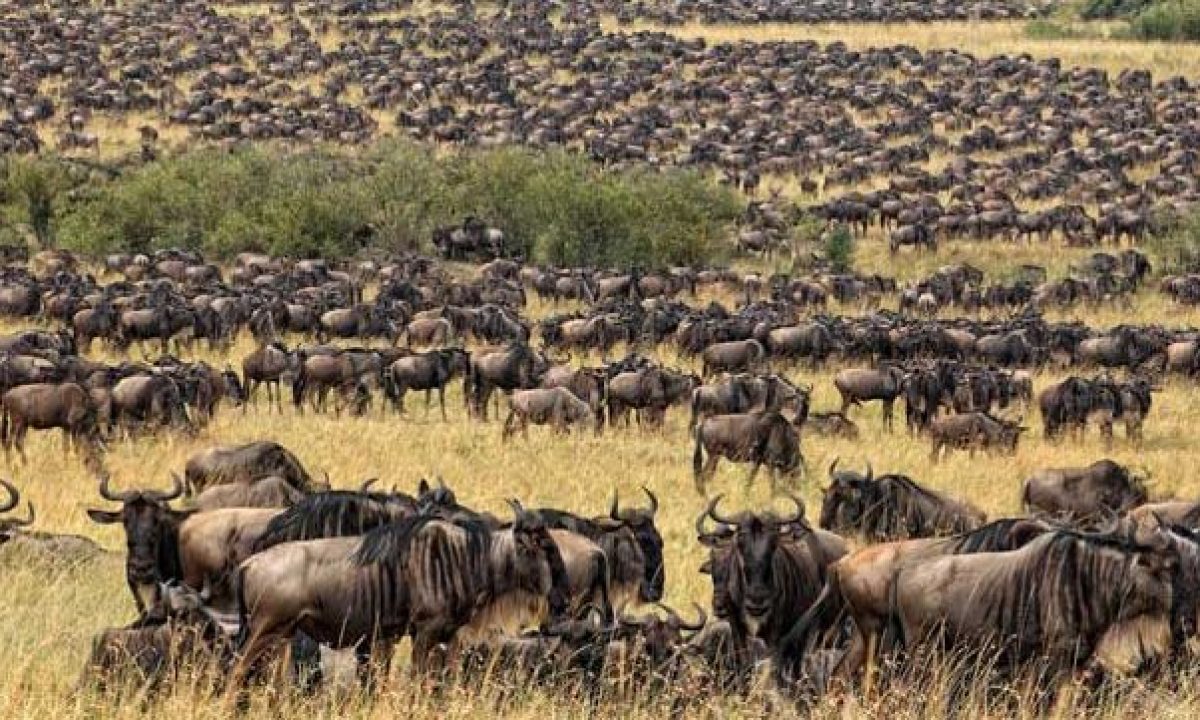
By May, the migration becomes especially impressive as thousands of wildebeest move northwest toward the Western Corridor.
One of the highlights of this month is witnessing seemingly endless lines of animals marching across the plains. Some columns extend for several kilometers, creating unforgettable safari scenes.
This is also the rutting season for wildebeest. Males compete fiercely for breeding opportunities, engaging in short but intense battles that add another layer of excitement to game drives.
Because May falls outside peak tourist season, visitors often enjoy lower accommodation rates while still experiencing exceptional wildlife.
June: Approaching the Grumeti River
June marks the beginning of the dry season. The herds continue through the Western Corridor as they approach the Grumeti River.
Depending on rainfall patterns, the first river crossings may occur during this month. Although these crossings receive less attention than those at the Mara River, they remain dramatic events.
Large Nile crocodiles wait beneath the water while predators patrol both riverbanks. Not every crossing results in predator attacks, but the uncertainty creates unforgettable moments for visitors.
Dry weather also makes travel easier, with improved road conditions across the park.
July: River Crossing Season Begins
July is one of the Serengeti’s busiest safari months. Most migration herds continue moving north toward the Serengeti’s northern region.
River crossings become increasingly frequent as animals face rivers that separate them from fresh grazing.
Crossings rarely happen on schedule. Herds may gather for hours before one brave wildebeest makes the first move, triggering thousands of others to follow.
These crossings provide some of Africa’s most iconic wildlife photography opportunities.
August: The Famous Mara River Crossings
August is widely considered one of the best months to witness the migration. Many herds attempt to cross the Mara River into Kenya’s Maasai Mara.
Strong river currents, steep banks, and massive crocodiles make every crossing dangerous. Confusion often causes animals to turn back before finally committing to the crossing.
While dramatic scenes receive much attention, many crossings occur safely as experienced adults guide younger animals across the river.
Predators remain highly active throughout northern Serengeti during this period.
September: Herds Spread Across the North
During September, many animals remain in the northern Serengeti and the Maasai Mara, feeding on fresh grass after successful river crossings.
River crossings continue but occur less frequently than in August.
The dry season creates excellent visibility for game viewing, as vegetation becomes shorter and wildlife gathers around remaining water sources.
September offers excellent opportunities to see elephants, giraffes, lions, and leopards alongside the migration.
October: Preparing for the Journey South
By October, grazing conditions begin changing once again. Some herds remain in Kenya, while others gradually return toward the northern Serengeti.
The exact timing depends on when seasonal rains begin farther south.
Visitor numbers begin decreasing slightly after the busiest safari season, allowing for a more relaxed wildlife experience while still enjoying outstanding game viewing.
November: The Southward Migration
November usually brings the short rains to Tanzania. Fresh grass starts growing across the eastern and central Serengeti, encouraging the migration to head south.
The herds move steadily through central areas, covering significant distances each day.
The landscape becomes greener after the first rains, while migratory birds return in large numbers, adding excellent birdwatching opportunities.
December: Completing the Annual Cycle
By December, the migration has largely returned to the southern Serengeti and Ndutu region, completing another annual cycle.
Pregnant females once again prepare for calving, and the pattern begins all over again.
The green plains attract enormous wildlife concentrations, creating exceptional game viewing before the next calving season begins.
December is a wonderful month for visitors seeking beautiful scenery, abundant wildlife, and warm weather during the holiday season.
Choosing the Best Month for Your Safari
There is no single best month to visit the Serengeti because each season offers a different experience. If seeing newborn animals and predator action appeals to you, January and February are excellent choices. Travelers hoping to photograph endless herds moving across open plains should consider May and June.
For visitors dreaming of witnessing dramatic river crossings, July through September provides the greatest opportunities, although nature never guarantees when or where crossings will occur. Those who prefer fewer crowds and greener landscapes may enjoy April, November, or December.
The key is matching your travel dates with the wildlife experience you value most.
The Serengeti Migration is far more than a single wildlife event. It is a continuous cycle that shapes one of Africa’s richest ecosystems throughout the year. Every month reveals a different chapter, from the birth of thousands of calves on the southern plains to the nerve-racking river crossings in the north and the long journey back south.
No matter when you visit, the Serengeti offers remarkable encounters with wildlife, changing landscapes, and unforgettable safari experiences. By understanding the migration calendar, you can plan your trip with realistic expectations and increase your chances of witnessing the moments that matter most to you.