


Tarangire’s Elephant herds: When and where to see them
Let’s be honest—you’re not here for a dry list of facts.
You’re here because somewhere inside you, there’s a quiet pull toward something wild. Something ancient. Something that makes your heart beat a little faster when you think about it.
That something is standing under a baobab tree in Tarangire, with dust on its back and a calf tucked close to its side.
Why This Place Feels Different
Tarangire doesn’t shout for attention like the Serengeti. It doesn’t have to.
It just sits there—golden, sprawling, and full of elephants—waiting for those who know where to look.
While most travellers rush toward the famous crater or the great migration, Tarangire quietly offers something rarer: intimacy.
You won’t be one of fifty jeeps surrounding a single lion. Instead, you might find yourself alone with a herd of fifty elephants, watching a matriarch lift her trunk to sniff the wind, her family trusting her completely.
That’s not a safari.
That’s a homecoming.
The Elephants Aren’t Just Here; They Live Here
Tarangire is home to some of East Africa’s largest elephant herds, but calling them “populations” feels cold. These are families.
Real, complicated, loving families.
You’ll see a grandmother—the matriarch—who remembers droughts from decades ago. She knows exactly where the water hides when the skies close up. She leads with quiet authority, and her daughters follow without question. The youngest calves stumble over their own feet, flapping their ears like they’re trying to fly.
And the males? They’re the wanderers. Once they grow up, they leave the family to roam alone or with a few buddies, showing up only when love is in the air.
Spend even an hour watching them, and you’ll forget they’re “animals.” They’ll feel like old souls you’ve somehow known forever.
When Should You Go?
Here’s the truth: there’s no bad time to see elephants in Tarangire. But there is a magical time.
June to October – The Dry Season (Pure Magic)
This is when the park transforms into something biblical.
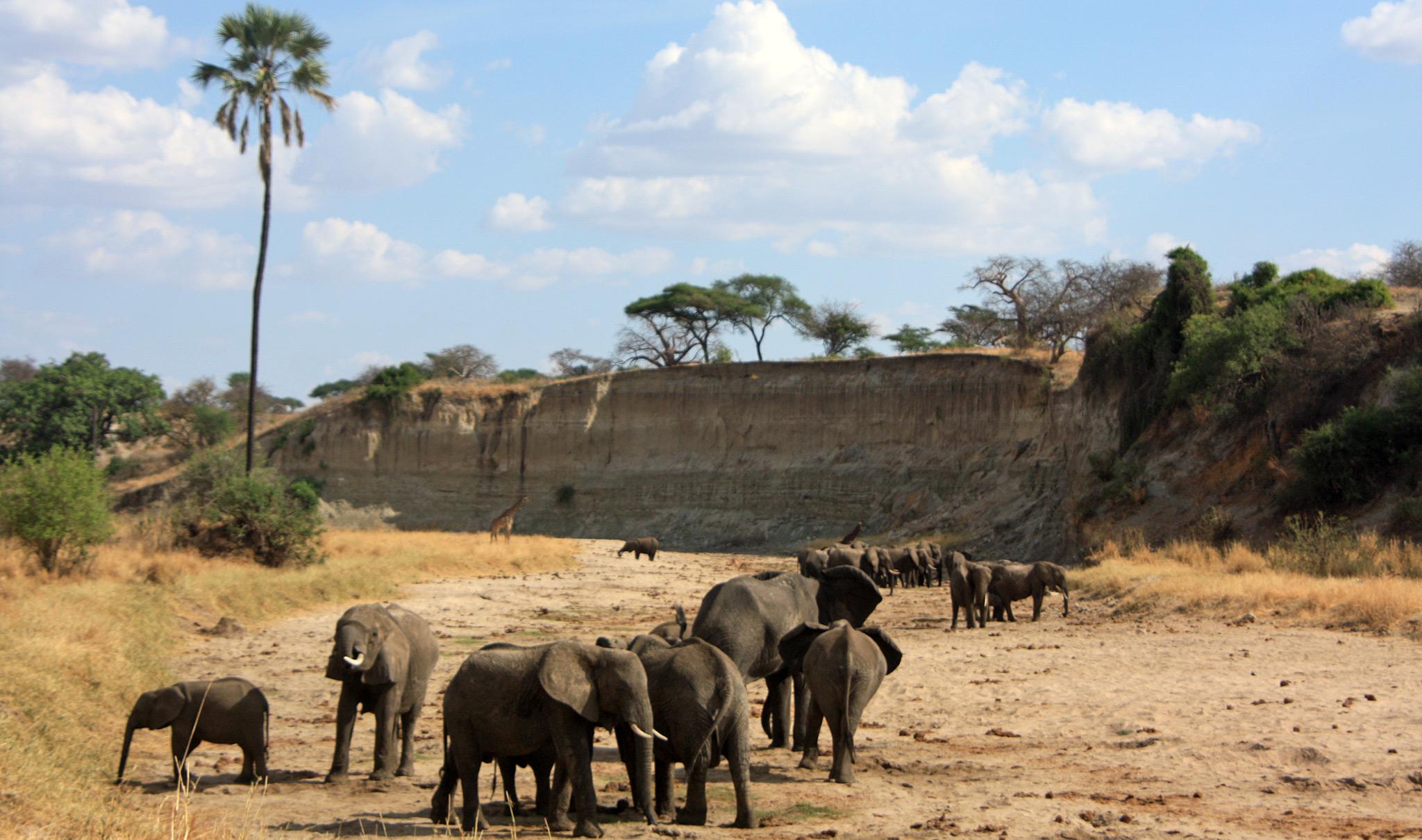
The rains stop. The little ponds vanish. And the Tarangire River—stubborn and steady—becomes the only drink in town.
Elephants start arriving from everywhere. Not dozens. Hundreds.
Families you didn’t even know existed walk out of the bush like they’ve been invited to a reunion. And in a way, they have.
-
July – The first big herds show up. The grass is thinner, so you can actually see them.
-
August & September – Peak madness. You’ll see herds of 100+ elephants along the river, splashing, playing, and drinking like it’s a festival.
-
October – It’s hot, it’s dusty, and it’s breathtaking. The elephants are easier to spot, and the golden light makes everything look like a painting.
November to May – The Green Season (Quiet & Intimate)
This is Tarangire’s secret side.
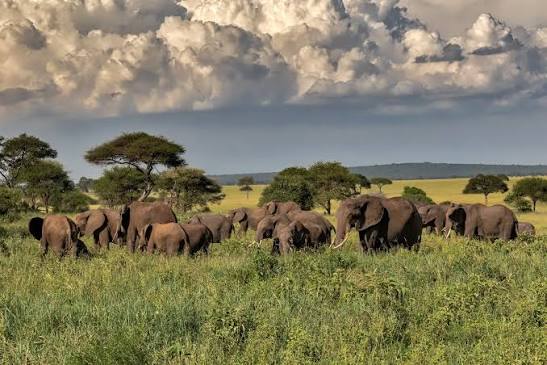
The rains come, the grass grows tall, and the elephants spread out across a much larger area. You won’t see as many in one place—but the ones you do see feel like a private gift.
The landscape is ridiculously beautiful. Bright greens. Dramatic skies. Fewer vehicles.
If you’re the kind of person who hates crowds and loves slow, soulful moments, this might actually be your season.
Where Will You Find Them? (Spoiler: Near Water)
Elephants are creatures of habit, and their habits revolve around one thing: water.
The Tarangire River Corridor
This is the lifeline. The heartbeat of the park.
Morning and evening, you’ll see herds crossing, drinking, and covering themselves in mud like kids at a water park. It’s messy, loud, and utterly joyful.
Silale Swamp
A hidden gem. Even when everything else is dry, this swamp stays green and cool. Elephants love it here—and so do buffalo, zebras, and birds of every colour.
The Woodlands
When the sun gets fierce, the elephants retreat to the shade. They move slowly through acacia forests, stripping bark and munching leaves. It’s quieter here, more intimate. You can almost hear them breathe.
The Baobab Graveyards
Okay, not actual graveyards—but the ancient baobab trees look like they’ve been standing since the beginning of time. Elephants gather beneath them, using their trunks to reach high branches. The photos you’ll take here? Absolute gold.
Open Grasslands Near Water
Early morning and sunset. That’s when the plains come alive. You’ll see elephants walking in single file, silhouetted against a fiery sky. No filter needed.
The Best Time of Day (From Someone Who’s Been There)
-
Sunrise – The elephants are hungry and active. You’ll see them moving with purpose, trunks swinging, ears flapping. The light is soft and golden—perfect for photos and quiet awe.
-
Midday – They slow down. Shade and mud baths become their priority. This is when you’ll find them lounging near the river, looking as lazy as house cats.
-
Sunset – They wake up again. Herds wander back to the water for one last drink before dark. The dust catches the light, and everything feels like a dream.
If you have the time, do a full-day drive. Trust me—you’ll see a whole different side of these gentle giants.
A Note for Photographers (and Dreamers)
You don’t need to be a pro to take stunning photos here.
But if you want to feel something when you look at your pictures later, try this:
-
Wake up before the sun. Be there when the first light hits the elephants’ backs.
-
Find a baobab tree. Wait. Let an elephant walk past it. Click. That’s Tarangire in one frame.
-
Don’t rush. Sit with a herd for 20 minutes. Watch the calves play. Watch the mothers nudge them gently. Those moments—not the photos—are what you’ll carry home.
Please, Love Them Responsibly
These elephants aren’t actors in a show. They’re real, feeling beings with families, memories, and fears.
-
Keep your distance. They’ll let you know if you’re too close.
-
Stay quiet. Loud voices stress them out, especially around babies.
-
Stay in the vehicle unless your guide says otherwise.
-
And remember—your visit helps protect them. Every safari fee goes toward anti-poaching and conservation.
So yes, take photos. But also take a moment to just be with them. That’s the real souvenir.
Why Tarangire Will Steal Your Heart
You might come to Tanzania for the Serengeti.
You might come for the crater.
But you’ll leave talking about Tarangire.
Because there’s something about sitting in silence, watching a family of elephants cross a river, that rewires your soul.
It’s not dramatic. It’s not loud. It’s just… true.
And when that matriarch lifts her head, looks straight at you for one second, and then continues on her way—you’ll feel like she saw you. Really saw you.
That doesn’t happen everywhere.
But it happens here.
If you’re wondering whether Tarangire is worth it—stop wondering.
Pack your bags. Book that trip. Get on that plane.
And when you’re standing there, feeling the African dust on your skin and watching a baby elephant try to figure out how its trunk works, you’ll know exactly why you came.
Because some places don’t just show you wildlife.
They show you yourself—quiet, present, and deeply alive.