


Tanzania Safari Costs: Budget, Mid-Range and Luxury Explained
Tanzania safari pricing varies widely depending on travel style, accommodation level, season, park selection, and how private or exclusive you want the experience to be. The same route through the Serengeti National Park and Ngorongoro Crater can cost three to five times more depending on whether you choose budget camping, mid-range lodges, or ultra-luxury tented camps.
Understanding what actually drives these costs is more important than memorizing price ranges. Safari pricing is not just accommodation—it is a bundled system of logistics, conservation fees, vehicle use, guiding expertise, and remote infrastructure.
What you are really paying for in a Tanzania safari
A Tanzania safari is not priced like a hotel stay. The cost structure is layered and includes several operational components.
The major cost drivers include:
Park entry fees
Conservation and concession fees
Accommodation (lodges or camps)
Internal flights or long-distance transfers
Safari vehicles and fuel
Professional guiding services
In national parks like the Serengeti, operational costs are high due to remote logistics and strict conservation regulations. This is why even “simple” safaris can feel expensive compared to other travel experiences.
Budget safaris in Tanzania: realistic expectations
Budget safaris in Tanzania typically range from approximately $200 to $400 per person per day depending on season and group size.
These safaris usually include:
Basic lodges or permanent tented camps
Shared safari vehicles
Group departures with fixed itineraries
Standard guiding services
Limited exclusivity in wildlife viewing
Accommodation is functional rather than luxurious, often located outside prime wildlife zones or in simpler public camps.
Meals are included but basic, and game drives are shared with other travellers.
Budget safaris still cover the same core parks, but comfort and flexibility are reduced.
The biggest trade-off is privacy and control over the itinerary.
Mid-range safaris: the balance between comfort and cost
Mid-range safaris typically fall between $400 and $800 per person per day.
This is the most common safari category in Tanzania.
It offers a strong balance between comfort and cost without entering luxury pricing levels.
Mid-range safaris usually include:
Comfortable tented camps or lodge rooms
Smaller group sizes or semi-private vehicles
Better located properties inside or near parks
More experienced guiding teams
Improved food quality and service levels
In this category, you begin to see properties closer to prime wildlife areas within the Serengeti ecosystem, which significantly improves game viewing efficiency.
Mid-range safaris are often considered the “best value” option because they deliver strong wildlife experiences without the extreme pricing of luxury lodges.
Luxury safaris: exclusivity, location and experience design
Luxury safaris in Tanzania typically start from $800 per person per day and can exceed $2,000+ per day depending on exclusivity.
This category focuses less on basic comfort and more on experience design, location, and privacy.
Luxury safari camps often include:
High-end tented suites or villas
Prime locations inside wildlife corridors
Private game drive vehicles
Highly trained specialist guides
Fine dining and curated service experiences
In the Serengeti, luxury camps are often mobile or semi-permanent, moving with wildlife patterns to maintain proximity to the migration.
This positioning is a key reason for higher pricing—it places guests directly within active wildlife zones.
Luxury safaris are not just about accommodation quality, but about access, exclusivity, and reduced vehicle density in sightings.
How seasonality affects safari pricing
Safari costs in Tanzania fluctuate significantly depending on time of year.
The highest prices occur during peak wildlife months when conditions are optimal.
From June to October, safari demand increases due to dry weather and high wildlife visibility. This period also overlaps with the migration movement in the Serengeti, which drives pricing upward.
In contrast, the green season (roughly November to March) often offers lower rates, especially in mid-range and luxury camps.
The difference can be substantial, sometimes reducing costs by 20% to 40% depending on lodge and location.
Park fees and conservation charges
Park fees are a fixed structural cost that applies across all safari categories.
In Tanzania, each major park charges daily entry fees per person, with additional conservation levies in certain protected areas.
The Ngorongoro Crater also includes a vehicle entry fee per descent, making it one of the more expensive single-day safari experiences in the country.
These fees directly support conservation, anti-poaching efforts, and ecosystem management.
They are non-negotiable and form a significant portion of total safari cost, especially in short itineraries.
Internal flights vs road transfers
Transport is another major cost factor.
Tanzania safaris can be done via road transfers or internal flights.
Road safaris are more budget-friendly but require long driving times between parks.
Internal flights are faster, more comfortable, and commonly used in mid-range and luxury itineraries.
Flights between Arusha, Serengeti airstrips, and Zanzibar significantly increase total safari cost but improve efficiency and reduce travel fatigue.
The choice between road and air often determines both pricing and overall experience quality.
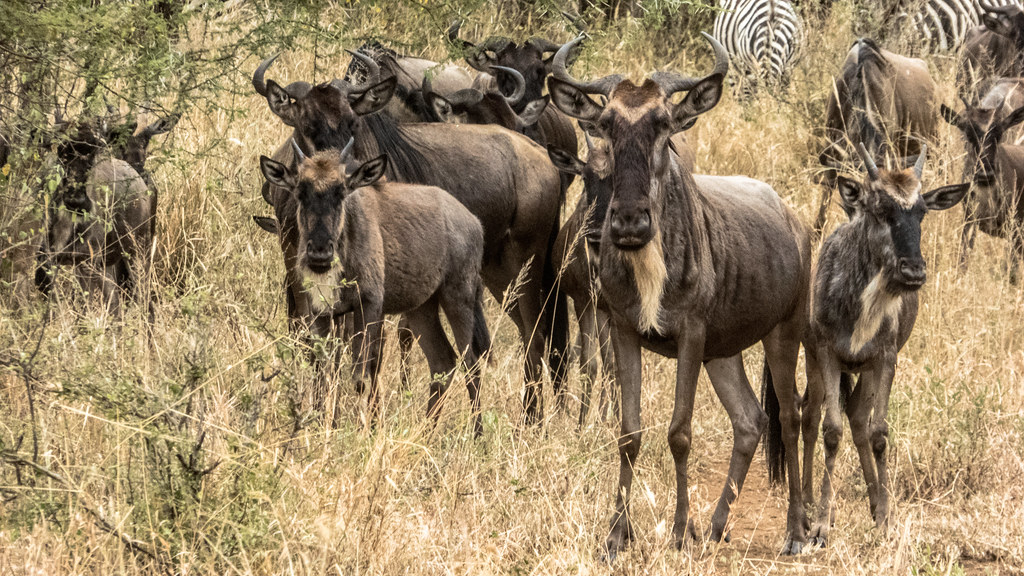
The Serengeti cost factor
The Serengeti is the most influential cost driver in Tanzania safari pricing.
Due to its size, remoteness, and global demand, accommodation inside the park is more expensive than most other regions.
Camps positioned in migration corridors or central wildlife zones typically charge premium rates.
Mobile camps that relocate seasonally are especially expensive because they require constant logistical repositioning.
This is why two safaris in Tanzania can vary dramatically in cost even if they include the same number of days.
What changes between budget, mid-range and luxury (in real terms)
The biggest differences are not just comfort, but control and proximity.
Budget safaris place you in shared experiences with fixed routing.
Mid-range safaris improve comfort and reduce group size while still following structured itineraries.
Luxury safaris focus on exclusivity, private guiding, and strategic positioning inside wildlife zones.
The further you move up the pricing scale, the more control you gain over timing, location, and flexibility in game drives.
Zanzibar extension costs
Many Tanzania safaris include a beach extension to Zanzibar.
Zanzibar adds a separate cost structure depending on resort category.
Budget beach stays are significantly cheaper than safari regions, while luxury beachfront resorts can match or exceed safari lodge pricing.
The addition of Zanzibar typically increases total trip cost but balances the intensity of safari days with coastal relaxation.
Hidden cost factors travellers often overlook
Several cost elements are not always clearly visible in initial pricing.
These include:
Park fee increases during peak season
Internal flight baggage limits and surcharges
Premium supplements for migration-view camps
Single traveller supplements in some lodges
Private vehicle upgrades for flexibility
These can significantly affect final pricing, especially in high-demand months.
Value logic: what determines whether a safari is “expensive”
A Tanzania safari is not just a travel product—it is a logistics-heavy experience operating in remote ecosystems.
Cost is influenced by:
Distance from infrastructure
Conservation protection levels
Seasonal demand pressure
Level of exclusivity and privacy
Quality of guiding and positioning
Two safaris with the same number of nights can feel completely different in value depending on these factors.
Choosing the right category for your safari
Budget safaris work best for travellers prioritizing cost control and shared experiences.
Mid-range safaris suit most travellers who want balance between comfort and wildlife quality.
Luxury safaris are designed for travellers prioritizing exclusivity, positioning, and personalized guiding.
The right choice depends less on price alone and more on how you want to experience Tanzania’s ecosystems.