


Tanzania Northern Circuit vs Southern Circuit: Which Is Right for You?
Tanzania offers two fundamentally different safari systems: the Northern Circuit and the Southern Circuit. Both deliver high-quality wildlife experiences, but they operate on completely different scales, logistics, and safari philosophies. Choosing between them is not about which is “better,” but about aligning the structure of your safari with your expectations, travel style, and priorities in 2026.
The Northern Circuit is the classic, high-density safari route. The Southern Circuit is remote, low-density, and more exploratory. Understanding how they differ at a structural level is the key to making the right decision.
What defines the Northern Circuit
The Northern Circuit is Tanzania’s most established and most visited safari route. It includes a cluster of iconic parks that are relatively close to each other and well connected by road and air.
At the center of this circuit is the Serengeti National Park, one of Africa’s most famous wildlife ecosystems. It is supported by other major destinations such as Ngorongoro Crater and Tarangire National Park.
This circuit is designed for accessibility, density, and variety within a relatively compact area.
What defines the Southern Circuit
The Southern Circuit is a completely different safari system.
It includes vast, less-visited wilderness areas such as Nyerere National Park (formerly part of the Selous Game Reserve) and Ruaha National Park.
These parks are larger, more remote, and far less developed in terms of tourism infrastructure compared to the north.
The Southern Circuit is built around space, isolation, and a slower safari pace.
Wildlife density: concentration versus dispersion
The most immediate difference between the two circuits is wildlife density.
The Northern Circuit, especially the Serengeti and Ngorongoro Crater, offers extremely high concentrations of animals. In certain areas, particularly during the Great Migration, wildlife density can be among the highest in the world.
Game drives are highly productive. It is common to see multiple species within a short period.
In the Southern Circuit, wildlife is more dispersed across larger landscapes. Animals are present in strong numbers, but they are spread out.
This means sightings may take longer to develop, but they often feel more exclusive and less crowded.
The Great Migration factor
One of the defining features of the Northern Circuit is the Great Migration.
The Serengeti hosts this annual movement of wildebeest and zebra, which drives predator activity and creates some of the most dramatic wildlife scenes in Africa.
If witnessing large-scale herd movement and river crossings is a priority, the Northern Circuit is the only option.
The Southern Circuit does not offer this type of migration spectacle.
Safari style: structured versus exploratory
The Northern Circuit is structured.
Routes are well established, distances between parks are manageable, and itineraries follow a predictable flow. This makes it ideal for first-time safari travellers who want a clear, efficient experience.
The Southern Circuit is more exploratory.
Distances are larger, logistics are more complex, and safari activities often go beyond standard game drives. Walking safaris and boat safaris are more common in parks like Nyerere.
The experience feels less like a checklist and more like a wilderness expedition.
Crowd levels and exclusivity
The Northern Circuit attracts the majority of Tanzania’s safari visitors.
During peak season, especially in the Serengeti and Ngorongoro, vehicle density can increase significantly in high-demand areas.
This does not eliminate the quality of the experience, but it does change the atmosphere.
The Southern Circuit operates at much lower visitor volumes.
In parks like Ruaha and Nyerere, it is possible to go entire game drives without seeing other vehicles. This creates a sense of isolation that is difficult to achieve in the north.
Landscape and visual character
The Northern Circuit is visually diverse but generally defined by open savannah, volcanic landscapes, and crater systems.
The Serengeti offers endless plains, while the Ngorongoro Crater provides a contained ecosystem with dramatic topography.
The Southern Circuit offers a different visual experience.
Ruaha is rugged and dry, with baobab-dotted landscapes and river systems. Nyerere combines woodland, wetlands, and large river networks.
The terrain feels wilder and less uniform compared to the north.
Accommodation and infrastructure
The Northern Circuit has a wide range of accommodation options, from mid-range lodges to high-end luxury camps.
Infrastructure is well developed, with reliable road networks and frequent flight connections.
The Southern Circuit has fewer camps, but they are often more exclusive.
Lodges tend to be smaller, more remote, and more integrated into the landscape. Access is typically by light aircraft rather than road.
This difference affects both pricing and logistics.
Activity diversity
The Northern Circuit is primarily focused on game drives.
While some areas offer walking safaris or cultural experiences, the core activity remains vehicle-based wildlife viewing.
The Southern Circuit offers a broader range of activities.
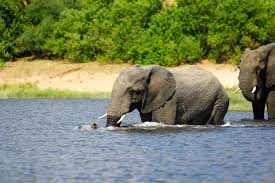
In Nyerere National Park, boat safaris along river systems are a major highlight. Walking safaris are also more common, allowing for a more immersive experience.
This creates a more varied daily structure compared to the north.
Accessibility and travel logistics
The Northern Circuit is easier to access.
Most itineraries begin in Arusha, with road or short flight connections between parks. Travel times are manageable, and routing is straightforward.
The Southern Circuit requires more planning.
Parks are farther apart, and most travel is done by small aircraft. This increases both cost and complexity.
However, it also reduces crowd levels and enhances the sense of remoteness.
Cost comparison
The Northern Circuit offers a wider pricing range.
It is possible to design both mid-range and luxury itineraries depending on accommodation choice.
The Southern Circuit generally operates at a higher cost level due to remote logistics and limited accommodation options.
Flights, exclusivity, and lower visitor numbers all contribute to higher per-night pricing.
Who the Northern Circuit is best suited for
The Northern Circuit is ideal for:
First-time safari travellers
Visitors wanting to see the Great Migration
Travellers seeking high wildlife density
Those looking for efficient, well-structured itineraries
It delivers a classic safari experience with consistent results.
Who the Southern Circuit is best suited for
The Southern Circuit is better suited for:
Repeat safari travellers
Visitors seeking exclusivity and low crowds
Travellers interested in walking and boat safaris
Those prioritizing wilderness over spectacle
It offers a deeper, more immersive experience that moves beyond the traditional safari model.
Combining both circuits
Combining the Northern and Southern Circuits in one itinerary is possible but requires careful planning.
Distances are large, and travel typically involves multiple flights.
Most itineraries focus on one circuit to maintain coherence and reduce logistical complexity.
For travellers with more time, combining a few days in the Serengeti with a remote southern park can create a highly varied experience.
The core decision: intensity versus isolation
The choice between Tanzania’s Northern and Southern Circuits comes down to one core question.
Do you want wildlife intensity or wilderness isolation?
The Northern Circuit delivers density, predictability, and iconic safari moments.
The Southern Circuit delivers space, exclusivity, and a more exploratory safari experience.
Both are exceptional. The difference lies in how you want to experience the wild.