


Serengeti North vs South: Which Zone Should You Choose?
You’ve saved up for years. You’ve got limited vacation days. Everyone keeps saying “you HAVE to see the migration,” but nobody actually explains what that means. And now you’re staring at maps of the Serengeti, completely overwhelmed.
So let’s cut through all the tourist brochure nonsense and have a real conversation. Choosing between the northern and southern Serengeti isn’t like picking vanilla or chocolate. It’s deciding whether you want to witness the miracle of new life or the raw intensity of survival. Both will change you. Both are incredible. But they’re completely different experiences.
Pull up a chair. Let’s figure this out together.
First, Let’s Get Real About How Massive This Place Is
The Serengeti is HUGE. We’re talking 15,000 square kilometers of wild Africa. You could fit four Rhode Islands in here and still have room left over.
Through this massive landscape, 1.5 million wildebeest, hundreds of thousands of zebras, and countless gazelles are constantly on the move. They follow the rain, always chasing fresh grass. And following them? Every predator you’ve ever heard of – lions, cheetahs, leopards, hyenas. It’s nature’s greatest reality show.
But here’s the catch: because the animals are always moving, WHERE you go and WHEN you go matter A LOT. Show up at the wrong time, and you’ll be staring at empty plains wondering what went wrong.
The Southern Serengeti: Where Life Begins
Imagine standing in an endless sea of golden grass stretching to the horizon. The sky is impossibly blue. The air smells like earth and wild herbs. And everywhere you look, as far as you can see, there are animals. Thousands of them, moving together like a slow-motion river.
That’s the southern Serengeti. It’s peaceful in a way that feels almost spiritual. Those open plains make you feel small – but in a good way. Like you’re part of something ancient and meaningful.
The Calving Season – Honestly, It’ll Make You Cry
Between January and March, something magical happens. About 500,000 wildebeest calves are born in just two to three weeks.
I remember watching a newborn wildebeest – maybe an hour old – trying to stand up. Its legs were like noodles. Collapsing, getting up, collapsing again. Its mother stood there gently nuzzling it, making soft grunting sounds like “come on, you can do this.” And all around them? Lions and hyenas watching. Waiting.
It’s beautiful. It’s brutal. You can’t look away.
The predators LOVE calving season. It’s an all-you-can-eat buffet, and the “food” can barely walk. Cheetahs are everywhere. Lions work in teams. It’s raw and intense and the most real thing you’ll ever see.
The Vibe Down South
The southern Serengeti feels peaceful. I know that sounds crazy considering all the predator action, but those wide-open spaces calm your soul. You can finally breathe.
During calving season, the plains are buzzing with life. But it’s not chaotic – it’s organized madness. Mothers are protective. Calves are playful. Predators are patient.
And the light? Golden hour is absolute magic. Everything turns honey-colored and warm. If you’re a photographer, you’ll go through memory cards like crazy.
Wildlife You’ll Actually See
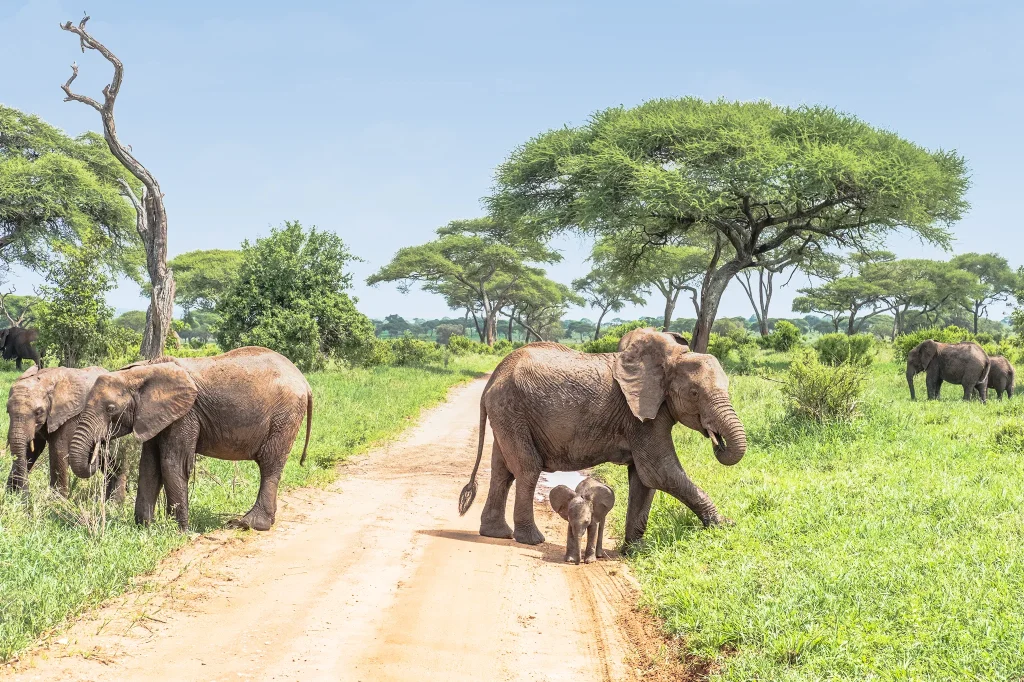
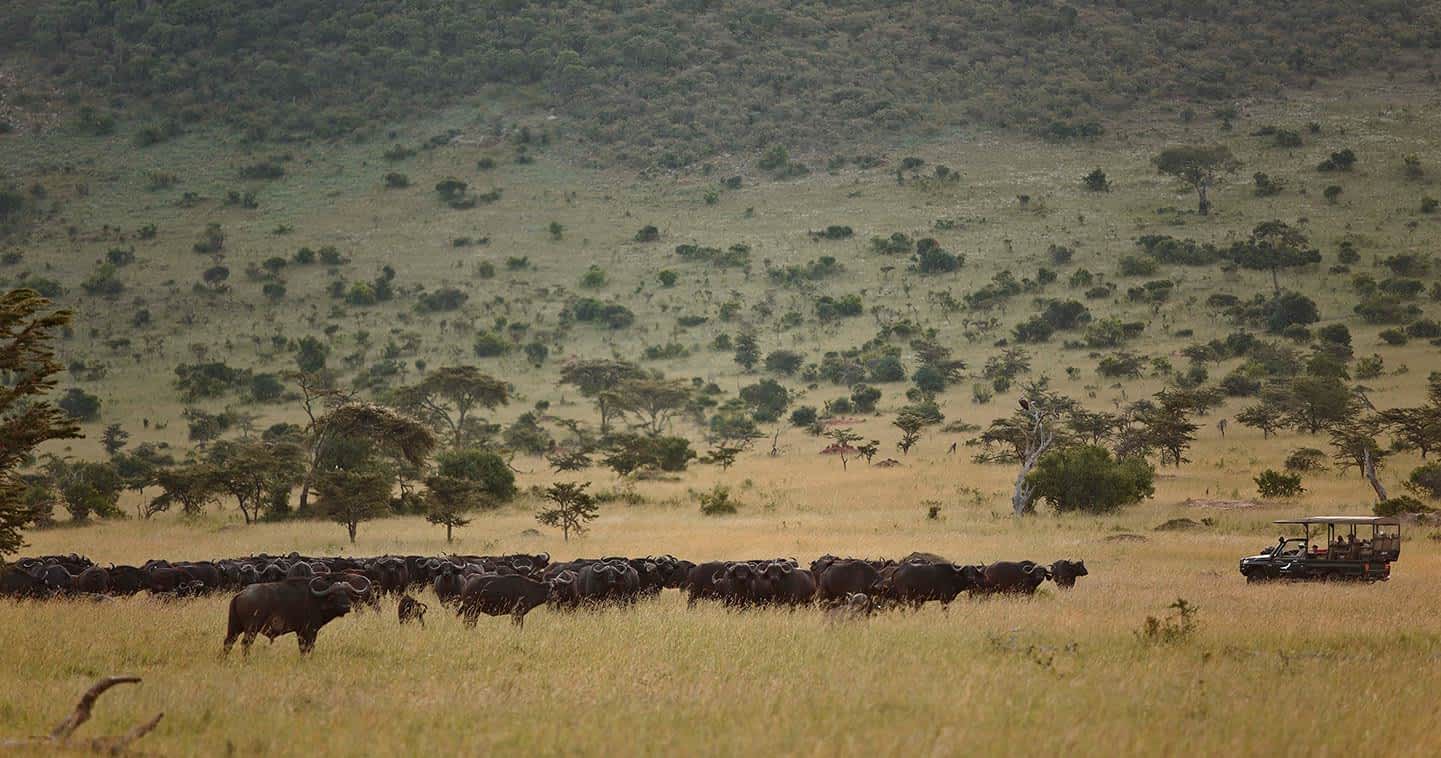
It’s not just wildebeest and zebras. You’ll see giraffes elegantly walking the plains. Massive buffalo herds. Elephants with babies holding their mothers’ tails with their trunks.
And the birds! The wetlands attract flamingos that turn lakes PINK. Pelicans glide overhead. Secretary birds strut around looking like they’re wearing business suits. Hundreds of migratory species that flew thousands of miles to be here.
When to Go South
December through March is your sweet spot. This is when the plains are green, animals are concentrated, and the calving action peaks. It’s busy, sure – but for good reason.
Come outside these months? The herds have moved on. The plains are dry. Still beautiful, but you’ll miss the magic.
The Northern Serengeti: Survival is the Main Event
A Completely Different World
Now let’s travel north – right up to the Kenyan border. Instead of endless flat plains, imagine rolling hills covered in acacia trees. Dramatic rocky outcrops called kopjes. Winding rivers lined with forests.
The north feels more intense. More untamed. Every turn in the road brings something new.
The Mara River Crossings – Pure, Unfiltered Drama
If the south is about new life, the north is about survival. Pure and simple.
Between July and October, something insane happens. Thousands of wildebeest and zebras gather at the Mara River. They’re nervous. Stamping their feet. Terrified of what’s waiting in the water.
And what’s waiting? Nile crocodiles. The biggest in Africa. Six meters long – 20 feet of pure muscle and ancient instincts. They’ve been waiting MONTHS for this moment. They lie motionless in the water, looking exactly like logs.
Then it happens. One brave wildebeest takes the plunge. Suddenly, all hell breaks loose. Animals leaping. Crocodiles exploding into action. The river is churning with bodies and panic. Some make it. Many don’t.
I’ll never forget my first crossing. I was gripping the safari vehicle, knuckles white. Heart pounding. When a wildebeest got pulled under, I actually gasped. When a group scrambled up the opposite bank alive, I found myself CHEERING. In the middle of the African wilderness.
The Drama Keeps Going
But the river crossings are just the beginning. Predators patrol the banks, waiting for exhausted survivors. Lions know the crossing takes everything out of the animals – they’re weak, easy targets. Leopards watch from trees. Hyenas scavenge what’s left.
Every game drive feels like an adventure. You might round a bend and find a leopard in a tree, or elephants bathing in the river, or lions sleeping off a heavy meal.
Fewer People, More Magic
Here’s what I love about the north – it’s so much quieter. Most tourists gravitate toward the south or central areas. The north feels like a secret.
During peak season, instead of sharing the riverbank with twenty vehicles, you might have it almost to yourself. It makes the whole experience more intimate. More exclusive.
And because the terrain is so varied, every day is different. One morning, you’re in the woodlands watching elephants. The next day, you’re following the river. The day after, you’re climbing a kopje for panoramic views. It never gets boring.
Wildlife You’ll See Up North
All the usual suspects – lions, leopards, elephants, buffaloes – but somehow they feel more special here. Maybe it’s the varied landscape. Maybe it’s being in a less-visited area. But animals seem more relaxed. Less stressed by humans.
And of course, the crocodiles. The Mara River has Africa’s largest population of Nile crocodiles. Seeing them up close is humbling. They’ve been around since the dinosaurs. They look the part. Terrifying and fascinating at the same time.
When to Go North
July through October is prime time. This is when the herds are around the Mara River, and crossings happen regularly. September and October are particularly good because herds move back and forth.
Come outside these months? The migration has moved south. You’ll still see wildlife, but no dramatic river crossings. It’s like showing up for the opening act instead of the headliner.
The Great Migration – Two Different Stories
The Southern Chapter: New Beginnings
When you visit the south during calving season, you’re witnessing the start of the migration story. These wobbly calves will grow up and make the same journey their parents did. A cycle repeated for thousands of years.
There’s hope in the southern Serengeti. Despite the predators, despite the harshness, life finds a way. Thousands of babies born. Enough survive to keep the species going. It’s a testament to nature’s resilience.
The Northern Chapter: The Ultimate Test
The Mara crossings are the migration’s ultimate test. The survivors are the strong ones, the lucky ones, the ones with the best instincts. It’s a real-life survival show.
There’s a reason this is considered one of Earth’s greatest wildlife spectacles. The tension, the drama, the scale – it’s humbling. Documentaries don’t prepare you. Nothing prepares you.
How to Actually Choose
Ask Yourself: What Moves You?
Do you tear up at baby animals taking their first steps? Do you get emotional about new life? The south is calling your name.
Or do you love action? Does your heart race during intense moments? Do you appreciate raw survival? You belong in the north.
Neither answer is wrong. They’re just different parts of who you are.
Consider Your Travel Style
Love wide-open spaces where you can see for miles? The south will speak to your soul. Prefer exploring, always wondering what’s around the corner? The north is your jam.
Be honest about crowds, too. The south during calving season gets busy. The north is less crowded but still popular.
Photography Matters
South is all about epic landscapes and intimate animal portraits. Golden hour light on the plains? Chef’s kiss. Baby animals with mothers? Pure gold.
North is action photography. Capturing that split-second leap into the water. Freezing the crocodile’s attack. The chaos and drama.
How Flexible Are You?
Fixed dates? You need to be realistic. Is Only March available? You’re heading south. Only August? You’re going north.
Flexible schedule? Oh, the possibilities. You can time it perfectly.
Comfort Level Matters Too
The north is more remote. More basic accommodations (though luxury options exist). Rougher roads. If you want a comfortable, easy safari, the south might suit you better. If you’re up for adventure, the north is calling.
The Honest Truth: Neither Choice is Wrong
I’ve been lucky enough to experience both. I genuinely love them both. The south touched my heart with tender new life. The north got my adrenaline pumping with raw survival.
The south gives you peaceful mornings watching baby animals learn to walk. The north gives you heart-stopping moments of pure drama. One celebrates new life. One showcases survival. Both are essential parts of the same incredible story.
What About Doing Both?
If you’ve got time and budget, honestly? Do both. A comprehensive safari, including both the southern plains and northern river country, is the ultimate experience. You see the full circle – from birth to survival to everything in between.
It requires at least 7-10 days and more money, but absolutely worth it. You’ll come away with a complete understanding of the Serengeti ecosystem and memories that last a lifetime.
My Heart-to-Heart Advice
Here’s what it really comes down to: what do YOU want from this experience?
I’ve met people who visited the south and cried with joy watching a newborn calf take its first steps. I’ve met people who visited the north and couldn’t sleep for days because the intensity stayed with them. Both groups came back changed. Both said it was the trip of a lifetime.
So think about what makes YOUR heart beat faster. What do you want to remember? What stories do you want to tell?
Do you want to tell people about the miracle of new life? About watching thousands of babies being born? Then you’re a southern Serengeti person.
Do you want to tell people about the raw intensity of survival? About watching thousands risk everything to cross a crocodile-filled river? About nature at its most brutal and most beautiful? You belong in the north.
Either way, I promise you this: you’re going to have the experience of a lifetime. The Serengeti is one of the last great wild places on Earth. Any part of it will change you forever.
Practical Tips
Check current migration patterns. Animals don’t read guidebooks. Sometimes they move earlier or later than expected.
Talk to safari operators who are on the ground and can give real-time information. Ask lots of questions. Be specific.
Choose your operator carefully. A great guide can make a good safari incredible. A bad one can ruin it. Read reviews. Ask for recommendations.
The Serengeti is waiting. Whether you choose the south or the north, you’re about to have one of the most incredible experiences of your life. You’ll see things that stay with you forever. You’ll feel things you’ve never felt before. You’ll come back different – in the best possible way.
So take a deep breath. Trust your gut. Book that trip.
The wildebeest are moving. The predators are hunting. And somewhere out there in that endless sea of grass, your adventure is waiting.
Pack your bags. Charge your camera. Get ready for the trip of a lifetime.
The Serengeti is calling. And honestly? It’s going to answer in ways you never expected.