


Rwanda vs Uganda Gorilla Permit: $1,500 vs $700 — Worth the Difference?
The first time someone told me Rwanda’s gorilla permits cost $1,500, I laughed. Not because it was funny. Because I thought they were joking. Fifteen hundred dollars. For one hour. With one gorilla family. Plus the flight, the accommodation, the guide, the tips, the everything else.
Then they told me Uganda’s permits cost $700. Less than half. Same gorillas. Same mountains. Same hour. Just on the other side of an invisible line that gorillas don’t even know exists.
I sat there, doing the math. $800 difference. That’s a lot of money. That’s a flight. That’s a week of accommodation. That’s three nice dinners and a bottle of wine to celebrate afterwards. So which one did I choose? Both. Eventually. And that’s why I can write this post.
I’ve trekked in Rwanda. I’ve trekked in Uganda. I’ve paid the $1,500. I’ve paid the $700. And I’ve got thoughts. Here’s the honest breakdown.
The Quick Answer (For Impatient People)
Is Rwanda worth the extra $800? It depends.
If you want easier trekking, shorter drives, better infrastructure, and a more polished experience — and you have the money — yes. Rwanda is worth it.
If you want better value, more adventurous trekking, and a less crowded experience — and you want to save money for other things — no. Uganda is the better choice.
If you’re on a strict budget, Uganda wins. No contest. If money is no object, Rwanda wins. But that’s true of everything. Most people fall somewhere in the middle. And for most people, Uganda offers 90% of the experience for half the price. That’s the short answer. Here’s the long one.
The Permit Price: What You’re Actually Paying For
Let’s start with the numbers, because they’re important.
Rwanda: $1,500 per person. Sometimes more during peak season, but $1,500 is the standard.
Uganda: $700 per person for foreign non-residents. Residents pay less. East African citizens pay even less.
That’s an $800 difference.
For one hour.
Now, here’s what that $800 buys you in Rwanda.
Closer access to the gorillas. Rwanda’s volcanoes are closer to the international airport — about a 2.5 hour drive from Kigali. Uganda’s Bwindi is a 7-9 hour drive from Entebbe, or a shorter flight plus driving. Your $800 saves you a day of travel.
Shorter treks. Rwanda’s gorilla families are generally closer to the trailheads. The hikes are often 1-2 hours instead of 2-4 hours. Your $800 saves you some leg pain.
Easier terrain. Rwanda’s volcanoes are steep but the vegetation is less dense than Bwindi. The trails are better maintained. Your $800 saves you from being whipped by stinging nettles.
Better infrastructure. Nice lodges. Good roads. Reliable electricity. Hot water. Your $800 buys you comfort.
Lower risk of a bad trek. Rwanda’s gorilla families are highly habituated and well-monitored. The success rate is essentially 100%. Your $800 buys you certainty.
Does that sound worth it? For some people, yes. For others, no.
Here’s the thing about that $800. In Uganda, that money could pay for your entire trip — accommodation, food, transport, guide, and permit. In Rwanda, that’s just the permit. But let me back up and compare everything side by side.
The Gorillas Themselves (Spoiler: They’re the Same)
Here’s what you need to understand. The gorillas don’t know about the border.
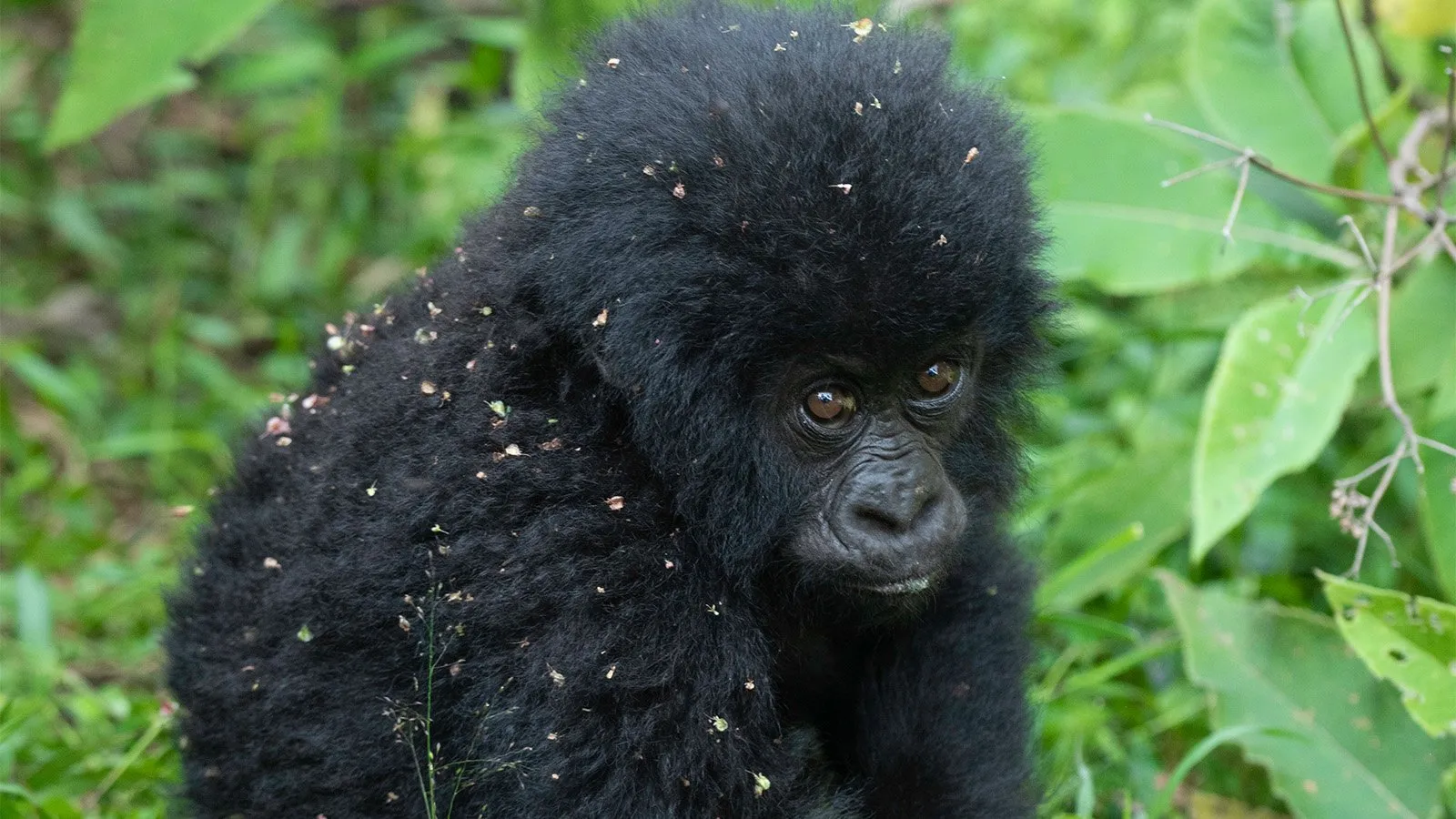
Mountain gorillas live in two populations. One in the Virunga Massif — which spans Rwanda, Uganda, and the Democratic Republic of Congo. One in Bwindi Impenetrable National Park — which is entirely in Uganda. Genetically, they’re the same species. Behaviorally, they’re the same. Socially, they’re the same.
The gorillas you see in Rwanda are not better than the gorillas you see in Uganda. They’re not friendlier. They’re not more photogenic. They’re not more habituated in any meaningful way. They’re gorillas.
The only difference is where they happen to be standing when you find them.
I’ve seen gorillas in both countries. The experience was equally magical in both places. A silverback staring at you doesn’t care which country you paid. So if you’re choosing based on the animals themselves — there’s no difference. Choose based on everything else.
The Trekking Experience: Rwanda vs. Uganda
This is where the real differences appear.
Rwanda’s Volcanoes National Park
The terrain is volcanic — steep slopes, rocky ground, thin soil. But the vegetation is less dense than Bwindi. You can see farther. The trails are better maintained.
The hikes are generally shorter. Most treks are 1-2 hours each way. Some are shorter. A few are longer, but the average is noticeably less than Uganda.
The altitude is higher — you’re trekking at 7,000 to 8,000 feet. That means thinner air. You’ll get winded faster, even on shorter hikes.
The views are spectacular. On clear days, you can see across the volcanoes, into the Congo, over the farmland below. It’s stunning.
Uganda’s Bwindi Impenetrable National Park
The name says it all. Bwindi is impenetrable. The vegetation is thick — vines, nettles, bamboo, dense forest that blocks the sun. You’ll be pushing through leaves, ducking under branches, and watching rangers slash paths with machetes.
The hikes are longer. Average is 2-4 hours each way. Some are shorter. Some are much longer — I’ve heard of six-hour treks in Bwindi.
The terrain is steep — ridges and valleys, up and down, never flat. The mud is legendary. In wet season, you’ll slip constantly.
The altitude is lower than Rwanda — 5,000 to 7,000 feet. Still high, but less punishing on your lungs.
The forest is beautiful in a wild, chaotic way. You feel like you’re exploring something untouched.
My honest take
Rwanda’s trekking is easier. Not easy — still a challenge — but easier. Shorter hikes, better trails, less vegetation.
Uganda’s trekking is harder. More physically demanding. More unpredictable. More mud.
Some people prefer easier. Some people prefer harder. The harder treks feel more like an accomplishment. The easier treks leave you with more energy to enjoy the gorillas.
Rwanda
Fly into Kigali International Airport. The airport is modern, efficient, and surprisingly pleasant. Immigration is smooth. Baggage claim is fast.
From Kigali to Volcanoes National Park is about 2.5 hours by car. The roads are good — paved, well-maintained, with actual lines on them.
You can do a gorilla trek as a day trip from Kigali if you’re willing to wake up at 3:00 AM. Most people stay closer to the park. There are lodges and hotels in the town of Musanze.
Uganda
Fly into Entebbe International Airport. Entebbe is fine — smaller than Kigali, less modern, but perfectly functional.
From Entebbe to Bwindi is a journey. Driving takes 7-9 hours, depending on traffic and road conditions. The roads are paved part of the way, but the last few hours are rough dirt roads.
You can fly from Entebbe to Kisoro or Kihihi, which are closer to Bwindi. The flight is about an hour. Then it’s a 1-2 hour drive from the airstrip to your lodge. This is faster but more expensive.
Most people break up the drive. Stay somewhere near Lake Mburo or in Mbarara overnight. Break the journey into two days.
My honest take
Rwanda wins on logistics. No question. The airport is better. The roads are better. The drive is shorter. You can fly in, trek the next morning, and be back in Kigali for dinner.
Uganda requires more patience. More planning. More time. But that time is also an opportunity — you’ll see more of the country, pass through beautiful farmland, maybe stop for a boat safari on Lake Mburo. If you’re short on time, choose Rwanda. If you have time to spare, the drive to Bwindi is part of the adventure.
The Infrastructure: Lodges, Roads, and Comfort
Rwanda
Rwanda has invested heavily in tourism infrastructure. The lodges near Volcanoes National Park are excellent — some are world-class. Bisate Lodge. Singita Volcanoes. Sabyinyo Silverback Lodge. These are beautiful, luxurious, expensive properties.
Mid-range options exist but are fewer. Budget options are limited.
The roads are good. Electricity is reliable. Internet works. Hot water is hot.
Uganda
Uganda’s lodges near Bwindi range from basic to beautiful. There are luxury options — Clouds Mountain Gorilla Lodge, Bwindi Lodge, Sanctuary Gorilla Forest Camp — but they’re generally less polished than Rwanda’s top end.
Mid-range and budget options are plentiful. You can find comfortable accommodation for $50-100 per night. Camping is available for even less.
The roads are rough. Electricity can be unreliable — bring a headlamp. Hot water might be solar-powered, meaning it’s not always hot when you want it. Internet is spotty.
My honest take
If you want luxury — the kind where everything works, the service is flawless, and you don’t have to think about anything — Rwanda is better.
If you’re fine with good-enough — comfortable but not perfect, hot water most of the time, internet when it works — Uganda is fine. And much cheaper.
The Cost Breakdown (Real Numbers)
Let me give you a realistic comparison for a 3-day gorilla trekking trip.
Rwanda
-
Permit: $1,500
-
Accommodation (2 nights, mid-range): $400
-
Transport to/from park (shared): $100
-
Guide fees: $200
-
Tips, meals, extras: $150
-
Total: approximately $2,350
Uganda
-
Permit: $700
-
Accommodation (2 nights, mid-range): $150
-
Transport to/from park (shared, longer drive): $200
-
Guide fees: $150
-
Tips, meals, extras: $100
-
Total: approximately $1,300
That’s over $1,000 difference.
For a couple, that’s $2,000. That’s another safari. That’s a flight to Zanzibar. That’s a lot of money.
Now, if you choose luxury accommodation in either country, the numbers shift. But the permit difference remains.
What About the Other Gorilla Destination?
There’s a third option. The Democratic Republic of Congo. Permits there cost about $400. Even cheaper than Uganda. But here’s the honest truth. Virunga National Park has been closed to tourism at various times due to security concerns. The region is unstable. Kidnappings have occurred. It’s not safe for most tourists.
I haven’t trekked in Congo. I probably won’t. The risk isn’t worth it for me. Some adventurous travelers do it. They say the gorillas are incredible, the experience is wild, and the price is unbeatable. But I can’t recommend it to the average traveler. Not in good conscience. Stick with Rwanda or Uganda.
Who Should Choose Rwanda?
People with limited time. If you only have a few days in East Africa and gorillas are your priority, Rwanda is more efficient. Fly in, trek, fly out. Done.
People who want a luxury experience. Rwanda’s top lodges are spectacular. If you want champagne and gourmet food and a spa after your trek, Rwanda delivers.
People who are less physically fit. The shorter, easier treks in Rwanda are gentler on your body. Not easy — but easier.
People who want certainty. Rwanda’s infrastructure is reliable. The treks are well-organized. The success rate is 100%. You know what you’re getting.
People with money to burn. If $800 doesn’t matter to you, choose Rwanda. The experience is slightly better in every way except price.
Who Should Choose Uganda?
People on a budget. $700 is a lot of money. But it’s less than half of $1,500. If saving $800 matters to you — and for most people, it does — choose Uganda.
People who want an adventure. Bwindi is wilder. The treks are harder. The mud is real. Some people prefer that. It feels more like an accomplishment.
People who want to stretch their trip. The $800 you save on a permit can pay for a week of safari in Queen Elizabeth or Murchison Falls. You can see gorillas and lions and elephants for the same price as Rwanda’s permit alone.
People who don’t care about luxury. If you’re fine with basic accommodation, spotty internet, and solar-heated water, Uganda works perfectly well.
People who want fewer crowds. Rwanda gets more tourists. Uganda is less busy. Not empty — but quieter.
A Story From Both Sides
Let me tell you about my two treks.
Rwanda: I woke up at 5:00 AM. Ate a beautiful breakfast at a lovely lodge. Drove 20 minutes to the park headquarters. Had a thorough briefing. Drove another 10 minutes to the trailhead. Hiked for 1.5 hours on a well-maintained trail. Found the gorillas easily. Spent an incredible hour watching a silverback and his family. Hiked back. Drove to the lodge. Had a hot shower. Ate a delicious lunch. Was back in Kigali by dinner.
Everything worked. Everything was comfortable. The gorillas were amazing.
Uganda: I woke up at 4:00 AM. Ate a simple breakfast at a basic lodge. Drove 45 minutes to the park headquarters on a bumpy dirt road. Briefing. Then a 2.5 hour hike through thick forest, up and down steep slopes, slipping in mud, grabbing branches to steady myself. Found the gorillas — but they had moved overnight, so the trackers had to find them while we waited. Spent an incredible hour watching a silverback and his family. Then a 3 hour hike back, the last hour in the dark. Reached the lodge exhausted, covered in mud, too tired to even want a shower. Ate a simple dinner. Fell asleep immediately.
It was harder. It was messier. It was also unforgettable. Which one was better? Honestly? Both. The Rwanda trek was easier and more comfortable. I felt pampered. The Uganda trek was harder and more raw. I felt like I’d earned it. Neither is better. They’re just different.
The Bottom Line
If you have $1,500 to spend on a permit — and you’re comfortable spending it — go to Rwanda. The experience is smoother, easier, and more polished. You won’t regret it.
If $1,500 makes you wince — and for most people, it should — go to Uganda. You’ll see the same gorillas. You’ll have an incredible experience. And you’ll save $800 to spend on other adventures.
Here’s a third option no one talks about. Do both. Trek in Uganda first. It’s cheaper. It’s harder. It’s a great introduction. Then, if you fall in love with gorillas — and you probably will — go back to Rwanda for a luxury trek. Compare them yourself. See the same species from different sides of the border. That’s what I did. And I’m glad I did both.
The gorillas don’t care which country you choose. They don’t know about permits and prices and borders. They just know that humans show up sometimes, sit quietly for an hour, and then leave. Whether you pay $700 or $1,500, the moment a silverback looks at you — really looks at you — will feel exactly the same. That moment is priceless. Everything else is just logistics.