


Rwanda Safety for Tourists 2026: Is Rwanda Safe?
The first time someone asked me if Rwanda was safe, I hesitated. Not because I’d felt unsafe there. Because I knew what they were really asking.
They’d seen the news. They’d read about the conflict in the eastern Democratic Republic of Congo. They’d maybe even confused Rwanda with its neighbor, or assumed that a country with such a painful history must still be dangerous. So I told them the truth.
Rwanda is one of the safest countries I’ve ever visited. And I say that as someone who’s been three times, who’s walked the streets of Kigali at night, who’s driven through the countryside, who’s trekked through forests and slept in lodges near borders that supposedly weren’t safe. But I also told them the truth about the borders. Because that’s the part you need to know. Here’s the honest breakdown.
The Question Everyone Asks
“Is it safe?”
I get it. You’re planning a trip. You’re spending thousands of dollars. You’re going to a country that most people in your life have never been to. And you want to know if you’re going to be okay.
The short answer is yes. For almost all tourists, especially those sticking to the main gorilla trekking and safari routes, Rwanda is safe. Very safe. But the longer answer has some nuance.
There are areas near the borders with the Democratic Republic of Congo and Burundi where the situation is more complicated. There’s a risk of armed conflict spilling over. Official government travel advisories mention this. Some of them use strong language — “do not travel” or “reconsider travel.”
And then there’s Kigali, which is safer than most American cities I’ve been to. There are petty crimes. Some late-night robberies. But compared to other major cities in the region? Rwanda is exceptional.
The security situation has also led the U.S. State Department to assess that Kigali is a high-threat location for crime directed at official U.S. interests. That’s diplomatic language for “be careful if you’re an embassy employee.” For tourists? It means exercise normal caution. Don’t flash cash. Don’t walk alone in dark alleys at 2 AM.
Common sense, basically.
What the Official Advisories Actually Say
Let’s be honest about what the travel advisories really mean.
In 2026, the U.S. State Department has issued a Level 3 advisory for Rwanda — “Reconsider Travel” — with a specific Level 4 “Do Not Travel” warning for areas within 10 kilometers of the DRC border.
But here’s what that Level 3 actually covers: crime, unrest, and health risks. The crime part is mostly petty theft — pickpocketing in urban areas. The unrest part is about the potential for regional conflict to spill over, not about active fighting inside Rwanda. And the health part? That’s about Ebola outbreaks in neighboring DRC and Uganda, not about anything specific to Rwanda itself.
Other governments have more balanced advice. Australia recommends “exercise normal safety precautions” overall, with higher warnings only for specific border areas. New Zealand similarly recommends “normal safety and security precautions” for most of the country. Ireland advises a “high degree of caution” but notes that Rwanda “is generally safe and crime levels are relatively low.”
What does this all mean for you?
It means you shouldn’t ignore the warnings about the border zones. But it also means you shouldn’t panic. The “reconsider travel” label isn’t a “do not go” for the entire country. It’s a “be careful” for the whole country, with a “seriously, stay away from this specific area” attached to the DRC border.
The Border Situation (The Honest Truth)
Here’s where the situation gets more complicated. The conflict in the eastern Democratic Republic of Congo is real. It’s been going on for years. Rebel groups are fighting the Congolese army. Civilians are suffering. The situation is fluid and dangerous.
Rwanda shares a border with that region. Specifically, the Rubavu district near Gisenyi, the Musanze district, and the Rusizi district further south.
The U.S. government says “do not travel” within 10 kilometers of the DRC border. Australia says the same thing, adding that the border crossings between the DRC and Rwanda have closed to most travelers. Ireland advises against all but essential travel to the Rusizi District. But here’s the thing.
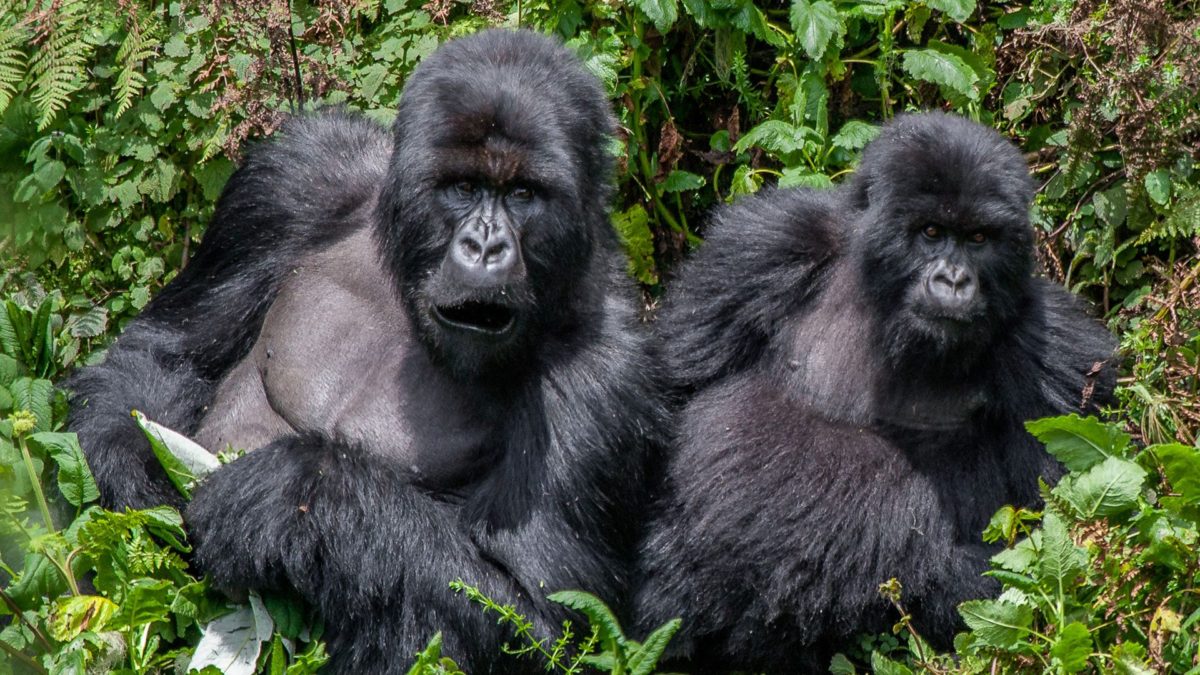
Volcanoes National Park — where you go for gorilla trekking — is not included in the high-risk border area. The U.S. State Department specifically notes that Volcanoes National Park is not included in the area of increased risk. The same applies to Nyungwe Forest National Park, though a permit is required for entry.
Does that mean gorilla trekking is dangerous? In my experience, no.
The Rwandan armed forces patrol the border constantly. They’re serious about security. The park itself is well-guarded. Tourist treks are carefully managed. You’re not wandering into a conflict zone. You’re going into a protected national park with armed rangers and clear protocols. But the risk of a cross-border incident — a stray bullet, a rebel incursion — is not zero. It’s low. Very low. But not zero.
That’s why official advisories mention it. That’s why you should be aware of it. That’s why you should listen to your guides and tour operators, who are in daily contact with authorities and know the current situation.
I’ve trekked twice in Volcanoes National Park. Both times, I felt completely safe. The only danger was the steep mud slopes and the stinging nettles, not anything political.
But I also checked the news before I went. I asked my guide about the border situation. I made an informed decision. You should too.
Kigali (The Safest City You Never Expected)
Let me tell you about Kigali. It’s clean. I mean really clean. The streets are swept. There are no plastic bags fluttering in the wind — they’re banned. There are public bins everywhere. Someone actually cares about how the city looks.
It’s orderly. Traffic flows. People wait at crosswalks. There’s a sense of discipline that’s rare in African cities. It’s also safe.
I’ve walked through Kigali at night. Not in sketchy alleys, but in the main areas — the hotel district, the restaurants along KG Avenue, the hillside neighborhoods with views of the city lights. I never felt threatened.
Rwanda is consistently ranked as one of Africa’s safest countries, with crime rates lower than many American cities. One American expatriate who relocated to Rwanda put it simply: “It feels safer than the U.S. We have peace of mind here.” But let me be honest about crime.
It exists. Petty theft, mostly. Snatch-and-grabs. Pickpocketing in crowded markets. More serious incidents are less common but can happen — burglaries, targeted theft. There have been reports of late-night assaults and robberies involving pedestrians walking alone in poorly lit neighborhoods in Kigali. Residential burglaries are also a concern, though burglars tend to target homes when residents aren’t present. For tourists? It means you should exercise normal urban caution.
Don’t walk alone at 2 AM in poorly-lit areas. Don’t flash expensive jewelry. Don’t leave your phone on the table at a sidewalk café. Don’t count out a huge stack of cash in public.
Do use hotel safes. Do take registered taxis. Do keep your bag zipped. Do walk with purpose. That’s not different from any other major city in the world.
And honestly? Compared to Johannesburg, Nairobi, or even parts of Paris or London, Kigali feels remarkably safe. There’s a visible police presence. There are checkpoints. The government has made security a priority.
It shows.
The Police, The Military, and What Not to Do
Rwanda has a visible security presence. Police officers are on the streets. Military checkpoints are common on major roads. The government has an interest in maintaining control and security.
What does that mean for you? It means you don’t take photos of military installations, government buildings, or anything that looks sensitive. It means you don’t joke about security. It means you don’t argue with police or military personnel.
This is not a country where you challenge authority. The police are professional. They’re usually helpful. But they’re also strict. If you get stopped at a checkpoint, be polite. Show your passport or ID if asked. Answer questions calmly. Don’t be aggressive.
I’ve been stopped at checkpoints. They look at my passport, ask where I’m going, wave me through. It takes two minutes. No problem.
But I’ve also seen tourists who got annoyed. Who tried to argue. Who demanded to see a supervisor.That doesn’t go well.Rwanda is a disciplined country. Respect that. It’s part of why it’s safe.And one more thing: plastic bags are banned in Rwanda. They may be confiscated upon arrival. Leave them at home.
Health Safety (The Hidden Danger)
Let me talk about something that doesn’t get enough attention in safety discussions. Health. Rwanda is safer than most countries in Africa when it comes to malaria. The altitude in the gorilla trekking areas is high enough that mosquitoes are less common. But Akagera — the savannah park on the eastern border — is low-lying and has mosquitoes. Malaria is a risk there. Take precautions. Use repellent. Wear long sleeves at dawn and dusk. Consider anti-malarials. Talk to your doctor.
There are other diseases to be aware of.
Yellow fever is required if you’re coming from an endemic country. Get the vaccine. Keep the certificate in your passport. I’ve seen people turned away at immigration because they didn’t have it.
Ebola is a real concern in the region. In 2026, the World Health Organization declared an Ebola outbreak in the DRC and Uganda a Public Health Emergency of International Concern. Rwanda has responded by implementing strict entry requirements. As of 2026, all foreign nationals who have traveled to or transited through the DRC within 30 days of their travel to Rwanda are being denied entry. Rwandan nationals and foreign residents with proof of residency can enter but are subject to mandatory quarantine procedures.
If you’re arriving in Rwanda from an Ebola-affected area, you’ll be required to undergo thermal scanner screening. The border crossings between the DRC and Rwanda are closed to most travelers.
Other insect-borne diseases also occur. Mpox (formerly monkeypox) is present in some areas of Central and East Africa. Rwanda has screening measures at airports and border crossings. It’s not a major concern for tourists, but it’s something to be aware of.
Drink bottled water. Or boiled water. Don’t drink tap water. The water in Kigali is treated and technically safe, but your stomach isn’t used to it. Stick to bottled water for the whole trip.
Food is generally safe. Rwandan food is simple and well-prepared. But if you’re eating street food, use your judgment. If something looks like it’s been sitting out for hours, skip it.
In a medical emergency, Rwanda has decent healthcare in Kigali. The King Faisal Hospital is the best. It’s modern and staffed with trained doctors. But if you have a serious issue, you might need evacuation to Kenya or South Africa. That’s expensive. Get travel insurance. Don’t skip it.
Practical Tips for Your Visit
Here’s what I actually do when I travel to Rwanda.
Before I go: I check the travel advisories. I read the news. I talk to my tour operator. I ask if there are any security concerns I should know about. I make sure my travel insurance covers medical evacuation. I check for any Ebola-related entry requirements.
When I land: I have a driver waiting. I don’t take random taxis. I don’t walk through unfamiliar neighborhoods at night.
In Kigali: I walk during the day. I take taxis at night. I keep my phone in my pocket. I don’t flash cash. I know where my hotel is and how to get back.
In the parks: I follow my guide’s instructions. If they say stay in the vehicle, I stay in the vehicle. If they say don’t approach the animals, I don’t approach the animals. This is for my safety and theirs. I only visit as part of an organized tour group, which is what official advisories recommend.
At the border zones: I don’t go. Simple as that. No day trips to the DRC border. No wandering into towns near the frontier. The land border between Rwanda and Burundi has been closed since 2024, and border crossings between Rwanda and DRC could close without notice.
With health: I drink bottled water. I use insect repellent. I take malaria pills. I have travel insurance with medical evacuation coverage.
With police: I’m polite. I show my passport. I answer questions. I don’t argue. There have been reports of grenade attacks, so I’m security-conscious in public and crowded places.
And one more thing: I don’t photograph anything related to the military, government buildings, or airports. That’s a sensitive issue in Rwanda.
I’ve been to Rwanda three times. The first time, I was nervous. My friends asked why I was going to a “dangerous” country. My family worried. I had to explain, over and over, that the Rwanda of 1994 was not the Rwanda of today.
The second time, I wasn’t nervous. I knew what to expect. I knew how safe it was. I spent my evenings walking through Kigali, eating at rooftop restaurants, feeling completely comfortable.
The third time, I brought my partner. She had the same fears I used to have. And like me, she realized she was worrying about nothing.
Rwanda is safe.Safe in the way that a real country is safe. Where people live and work and raise families. Where the streets are clean and the police are present and the government actually tries to keep its citizens safe.You won’t find that everywhere in Africa.
You will find it in Rwanda. So don’t let the headlines scare you. Don’t let the travel advisories panic you. Do your research. Take precautions. Listen to the official warnings about the border zones. And then go. The gorillas are waiting. And honestly? They’re not the only thing worth seeing.