


Ruaha National Park: Tanzania’s Best Kept Safari Secret
Ruaha National Park is often described as Tanzania’s last true wilderness safari destination, but that label only partially captures its significance. What makes Ruaha exceptional is not just its size or remoteness—it is the ecological intensity combined with remarkably low visitor density. While most travelers focus on the northern circuit of Serengeti National Park and Ngorongoro Conservation Area, Ruaha operates on a completely different scale and rhythm.
It is here that you encounter one of East Africa’s largest elephant populations, one of the highest lion densities on the continent, and a convergence zone where eastern and southern African ecosystems overlap. The result is a safari experience defined by depth, unpredictability, and space rather than checklist-style wildlife viewing.
Geographic Position and Why It Matters
Southern Tanzania’s Core Wilderness
Ruaha is located in southern Tanzania, forming part of a vast protected landscape that includes surrounding reserves and conservation areas. This region is far less developed for tourism compared to the north, which immediately reduces vehicle density and human pressure.
The park’s scale is significant. It is one of the largest national parks in East Africa, meaning wildlife movement is not constrained by boundaries in the way it is in smaller or more visited parks.
The Ruaha River System
At the center of the park lies the Great Ruaha River, the primary water source that shapes animal movement and seasonal behavior.
During the dry season, this river becomes a critical lifeline. Wildlife concentrates along its banks, creating high-density viewing zones in an otherwise vast landscape.
This dynamic is similar in principle to the Tarangire River in Tarangire National Park, but on a much larger and less crowded scale.
The Elephant Stronghold
One of East Africa’s Largest Populations
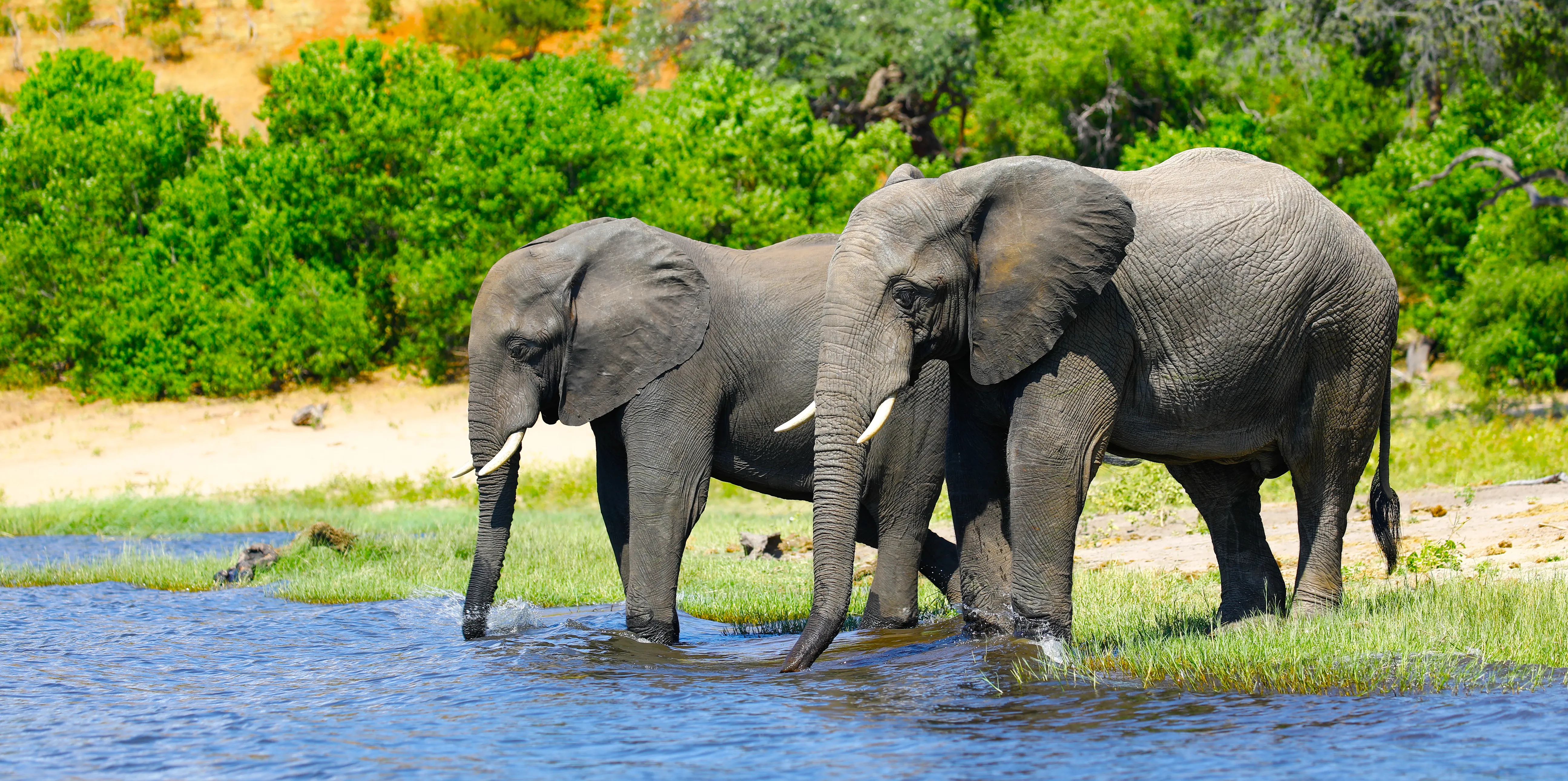
Ruaha supports a substantial elephant population, with large herds moving across the park’s varied terrain.
During the dry season, elephants gather along the Ruaha River, creating extended viewing opportunities where multiple herds interact within the same area.
Behavioral Depth
Because of low vehicle pressure, elephant behavior in Ruaha tends to be more relaxed and natural.
You can observe feeding patterns, social interactions, and movement without the disruption often seen in more crowded parks.
This creates opportunities for long-duration observation rather than brief sightings.
Lions: High Density, Distinct Behavior
Large Prides and Hunting Strategy
Ruaha is known for its strong lion population, with prides that can be larger than those typically seen in northern Tanzania.
These lions operate in a landscape where prey distribution is influenced heavily by water availability, creating predictable hunting zones along river systems.
Unique Adaptations
In some areas of Ruaha, lions have been observed hunting larger prey such as buffalo with coordinated group strategies.
This reflects a predator population adapted to the specific conditions of the park.
Predator Diversity Beyond Lions
Leopards and Cheetahs
Leopards are present throughout Ruaha, particularly in riverine areas where trees provide cover.
Cheetahs are less common but can be seen in open sections of the park.
African Wild Dogs
One of Ruaha’s most significant conservation highlights is the presence of African wild dogs, one of the continent’s most endangered predators.
The park and surrounding ecosystem provide critical habitat for these animals, making sightings possible for those with time and patience.
The Baobab and Woodland Landscape
Visual Identity of the Park
Like Tarangire, Ruaha is characterized by baobab trees, but here they exist within a broader mosaic of miombo woodland, open plains, and rocky outcrops.
This creates a visually complex environment where landscapes change gradually rather than abruptly.
Ecological Function
These woodlands support a wide range of species, from large herbivores to birdlife, and provide shade and feeding opportunities across seasons.
The diversity of vegetation types contributes directly to the park’s wildlife richness.
Seasonal Dynamics in Ruaha
Dry Season Concentration
The dry season is the most productive time for wildlife viewing.
As water sources diminish, animals concentrate along the Ruaha River, increasing encounter rates and making predator activity more visible.
Vegetation thins out, improving sightlines across the landscape.
Wet Season Expansion
During the wet season, the park transforms.
Water becomes widely available, and wildlife disperses across the landscape.
This reduces density but enhances scenery, birdlife, and photographic conditions.
Why Ruaha Remains “Undiscovered”
Limited Access
Reaching Ruaha requires either a long overland journey or a domestic flight from major hubs such as Dar es Salaam.
This logistical barrier naturally limits visitor numbers.
Low Lodge Density
The number of lodges within the park is relatively small compared to northern destinations.
This restricts overall capacity and maintains a low-impact tourism model.
Absence of Mass Tourism
Ruaha has not been developed for high-volume tourism, which preserves its wilderness character.
Game drives often occur without encountering multiple vehicles at a single sighting.
Safari Experience: What It Feels Like
Space and Solitude
One of the defining features of Ruaha is the sense of space.
You can spend hours on a game drive without seeing another vehicle, which is increasingly rare in more popular parks.
Unscripted Wildlife Encounters
Because the park is so large and less trafficked, wildlife encounters feel less predictable and more organic.
Tracking animals becomes part of the experience rather than following established sighting routes.
Extended Observation
Low vehicle density allows for longer, uninterrupted viewing of animal behavior.
This is particularly valuable for photography and behavioral study.
Accommodation Style in Ruaha
Remote Safari Camps
Accommodation in Ruaha tends to focus on small, remote camps designed to blend into the environment.
These camps prioritize location and access to wildlife areas rather than scale.
Integration With the Landscape
Many lodges are positioned near river systems or key wildlife corridors, allowing immediate access to productive game viewing zones.
How Ruaha Fits Into a Tanzania Safari
As a Standalone Destination
Ruaha can function as a complete safari destination on its own, particularly for travelers seeking depth rather than variety.
Combined With Southern Circuit Parks
It is often paired with parks such as Nyerere National Park to create a southern circuit itinerary that avoids the northern tourism flow.
Comparing Ruaha to Northern Tanzania Parks
Versus Serengeti
Serengeti offers large-scale migration and high visibility.
Ruaha offers lower density but more intimate, less crowded encounters.
Versus Ngorongoro
Ngorongoro delivers concentrated wildlife in a confined space.
Ruaha delivers dispersed wildlife across a vast wilderness.
Experience Trade-Off
Choosing Ruaha over northern parks is not about better or worse—it is about preference for solitude and depth over spectacle and predictability.
Field Reality of Ruaha National Park
In practical safari terms, Ruaha is not designed for first-time travelers seeking guaranteed sightings of specific animals within a short timeframe.
It is designed for those who value process over outcome—tracking, observing, and understanding wildlife within a largely untouched environment.
Its reputation as a “best kept secret” is less about marketing and more about structural reality. Limited access, low visitor numbers, and vast space ensure that it remains one of the few places in East Africa where a safari still feels exploratory rather than curated.
For travelers willing to invest time and accept unpredictability, Ruaha offers one of the most authentic and least crowded safari experiences available in Tanzania.