


Ruaha National Park: Tanzania’s Overlooked Giant Explained
Before I visited Ruaha, I thought I knew what a safari was. I’d done the Serengeti. I’d done Ngorongoro. I’d done the whole “check-the-box” northern circuit thing.
And don’t get me wrong—those places are incredible. They’re famous for a reason. The wildlife is spectacular, the landscapes are jaw-dropping, and you absolutely should see them at least once in your life.
But here’s what nobody warned me about
I’m not exaggerating when I say I’ve sat in safari “traffic jams.” Vehicles lined up bumper to bumper, all jostling for the same lion sighting. Radios crackling. Guides shouting over each other. It started to feel less like a wilderness experience and more like a theme park.
And I remember thinking: Is this it? Is this what safari has become?
Then someone told me about Ruaha.
The First Time I Felt Truly Alone in the Wild
Ruaha is tucked away in southern Tanzania. It’s the country’s largest national park—over 20,000 square kilometres of raw, untamed Africa.
But here’s the thing. Most tourists have never even heard of it.
Getting there takes effort. You can’t just hop on a direct flight and be there in a few hours. You have to really want to go. You have to be willing to take the road less travelled—literally.
And that’s exactly what makes it so special.
I’ll never forget my first morning there. I was sitting in an open safari vehicle, still groggy from a 5 a.m. wake-up call, clutching a thermos of coffee like it was my lifeline.
And then I looked up.
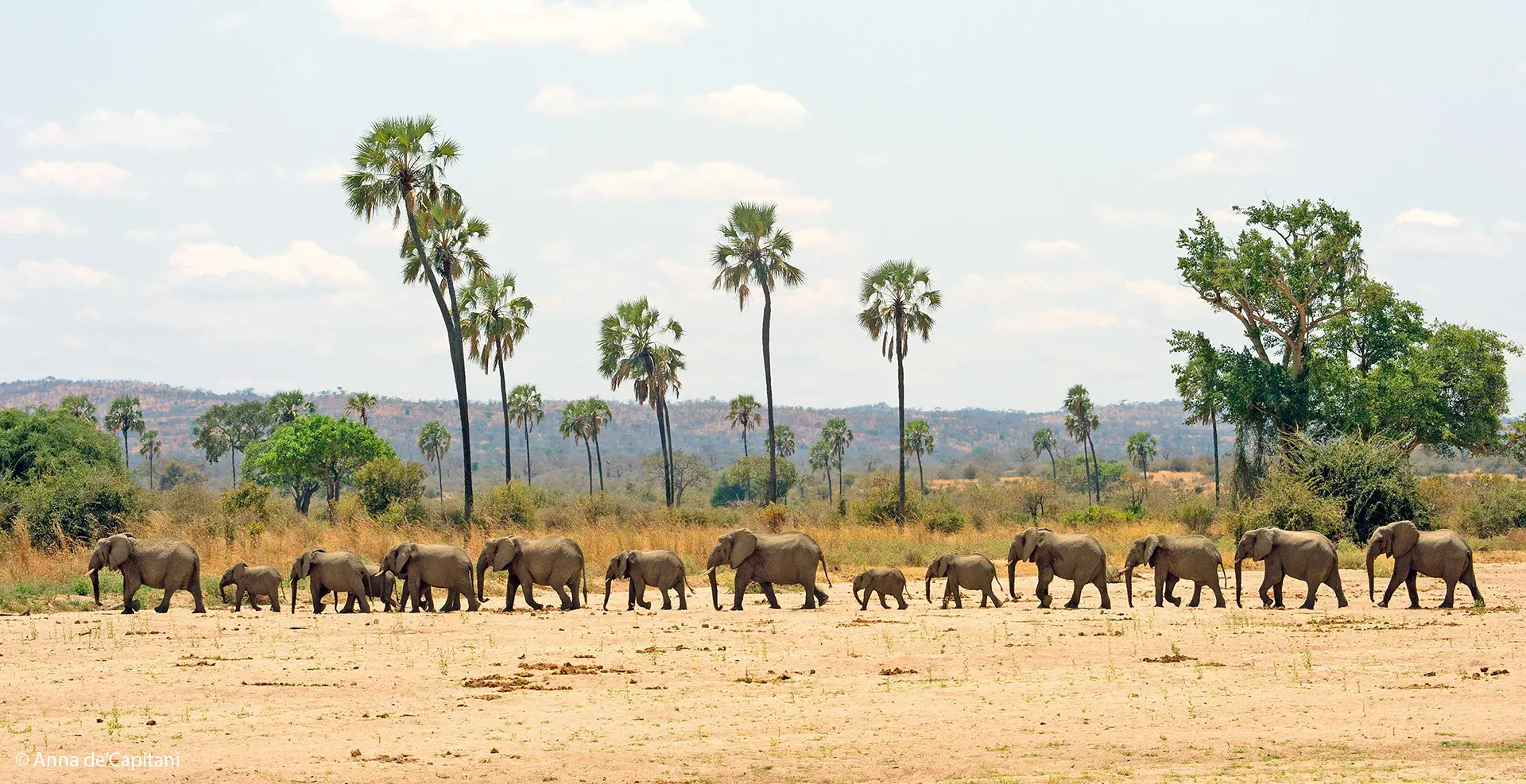
The sun was just starting to peek over the horizon, painting the baobab trees in shades of gold and amber. A herd of elephants—maybe 200 of them—was moving slowly across the plains, kicking up dust that caught the light like glitter.
And there was nobody else around.
No other vehicles. No radios. No chatter.
Just me, my guide, and the elephants.
I sat there for a solid hour, not saying a word. Just watching. Just breathing. Just being.
The River That Holds the Whole Park Together
If Ruaha has a heartbeat, it’s the Great Ruaha River.
During the dry season—roughly June to October—this river becomes the centre of everything. As smaller waterholes dry up, every single animal in the park converges on its banks.
I spent hours just sitting by the river, watching the show unfold.
Hippos grunting and splashing in the deeper pools. Crocodiles lying so still you’d swear they were logs. Herds of buffalo come down to drink, their hooves kicking up mud. And always, always, the elephants—families upon families, matriarchs leading the way, babies stumbling over their own feet.
One evening, I watched a pride of lions stalk a herd of impalas along the riverbank. The tension was unbearable. Every muscle in my body was tensed. I found myself whispering, “Go, go, go,” under my breath, like I was watching a sports match.
The lions didn’t catch anything that night. But honestly? It didn’t matter. Just being there, witnessing that raw, unfiltered moment—that was everything.
The Elephants Here? They’ll Ruin You Forever
Ruaha is home to over 10,000 of them. That’s one of the largest populations in East Africa.
And when I say you’ll see elephants, I don’t mean a few here and there. I mean herds. Massive, moving, dusty herds of 300 or more, stretching across the landscape like a slow-motion river.
I remember standing there, watching them pass, and feeling so incredibly small. In the best way possible.
There was one moment that stays with me. A baby elephant—maybe a few months old—kept tripping over its own feet as it tried to keep up with the herd. Its mother would stop, turn around, and gently nudge it with her trunk, like she was saying, “Come on, little one. You’ve got this.”
There’s something about elephants. They’re so intelligent, so emotional, so human in their behaviour. Watching them in Ruaha—without the crowds, without the noise—felt like being invited into their world.
The Lions Are Everywhere. And I Mean Everywhere.
Ruaha has around 2,000 lions. That’s a lot of lions.
Because there are fewer vehicles, the lions actually behave like lions. They’re not stressed. They’re not distracted. They just… live.
I watched a pride of lions lounge under a baobab tree for an entire afternoon. Cubs tumbling over each other. Mothers dozing in the shade. One young male is practicing his roar, sounding more like a squeaky door than a king of the jungle.
My guide and I sat there for hours, just watching. No rush. No pressure to move on to the next sighting.
That’s the Ruaha difference.
The Wild Dogs Will Haunt You (In a Beautiful Way)
If you don’t know about African wild dogs, let me introduce you.
They’re among the most endangered predators on the planet. Finding them anywhere is incredibly rare.
But Ruaha? It’s one of the best places in Africa to see them.
I got lucky on my second visit. A pack of about 20 dogs crossed our path just as the sun was setting. They were hunting—moving as one, communicating with high-pitched whistles and yips, flanking a herd of impalas with terrifying precision.
It was like watching a perfectly choreographed dance. Every dog knew exactly where to be. Every movement was intentional.
When they finally made their move, the speed was unbelievable. I couldn’t keep my eyes on all of them at once. They were everywhere, working together, and within seconds, they had made a kill.
It was brutal. It was raw. It was the most incredible thing I’d ever seen.
And when it was over, they sat together, panting, covered in blood, and started grooming each other as if nothing had happened.
I sat there in complete silence, my heart pounding, my hands shaking.
My guide looked at me and just smiled. “Welcome to Ruaha,” he said.
I Accidentally Became a Birdwatcher
Before Ruaha, I couldn’t tell you the difference between an eagle and a vulture. I’d never owned a pair of binoculars. I’d never even considered birdwatching as a hobby.
But Ruaha has over 570 species of birds. And somehow, without me even noticing, I started paying attention.
The fish eagles, sounding like they’re laughing at you from the treetops. The lilac-breasted rollers, flashing electric blues and purples as they dive through the air. The ground hornbills, stomping around like grumpy old men who’ve had enough of everyone’s nonsense.
By day three, I was asking my guide, “Wait, what’s that yellow one?” By day five, I was keeping a list.
It just happens. The birds are so colourful, so lively, so everywhere you can’t help but get drawn in.
When Should You Go? Here’s the Truth.
It depends on what you’re looking for.
Dry Season (June to October)
This is peak season. The bush is thinner, water is scarce, and animals crowd around the river. Wildlife sightings are at their absolute best.
Days are warm and sunny. Mornings are chilly—bring a jacket.
If you want the highest chance of seeing predators hunt, this is your window.
Green Season (November to May)
This is the rainy season. And I know “rainy season” sounds off-putting. But honestly? It’s magical.
The landscape turns impossibly lush and green. Baby animals are everywhere—tiny zebras, wobbly giraffes, adorable elephant calves. Migratory birds flood the park. The skies are dramatic, the lighting is soft, and the crowds are even thinner.
The catch? Roads get muddy, and wildlife spreads out because water is plentiful.
But if you ask me? The solitude and the beauty are absolutely worth a bit of mud.
What Makes Ruaha So Different?
In the northern parks, you feel like part of a machine. You check in, you check out, you follow the herd. Everything is efficient. Everything is predictable.
In Ruaha, you feel like an explorer.
You don’t rush from one highlight to the next. You sit quietly, watching a leopard blink lazily in a tree. You stop for a picnic lunch under a baobab that’s been standing for centuries. You swap stories with your guide around a campfire. You fall asleep listening to the distant roar of a lion.
It’s slower. Quieter. More personal.
And that’s exactly why people who’ve been on multiple safaris often call Ruaha their absolute favourite.
Getting There: Yes, It Takes Effort
But honestly? That’s part of what makes it so special. The effort you put in makes the reward that much sweeter.
-
By Air: Most international visitors fly into Dar es Salaam and take a small charter flight to one of Ruaha’s airstrips. The flight is about 2–3 hours, and the views from above are stunning.
-
By Road: You can drive from Iringa. The road is bumpy and dusty, but it gives you a real taste of the remote beauty that awaits.
Where to Stay: Nothing Fancy, And That’s the Point
Ruaha’s accommodation is refreshingly low-key.
No massive resorts. No neon lights. No, anything that takes away from the wilderness.
-
Luxury Camps: Spacious safari tents with private verandas, gourmet meals, and river views. If you want a little pampering, this is it.
-
Mid-Range Lodges: Comfortable, welcoming, well-guided. Perfect for most travellers.
-
Budget Campsites: Basic public sites near the park entrance. Bring your own gear and sleep under a blanket of stars.
Ruaha is for you.
It’s for the photographer who wants clean, uncompromised shots. It’s for the couple seeking romance and solitude. It’s for the family that wants their kids to actually feel the wild.
And honestly? It’s for anyone who wants to fall in love with Africa all over again.
Your Visit Actually Matters
Ruaha faces real challenges. Climate change. Human-wildlife conflict. Historical poaching pressures.
But the park works hand-in-hand with local communities, researchers, and responsible operators to protect this fragile ecosystem.
By choosing to visit, you’re contributing directly to conservation. You’re creating jobs for people who live around the park. You’re helping protect one of Africa’s last great wildernesses.
Your tourism dollars matter here. More than you might realise.