


Nyungwe Forest: Chimpanzees and Canopy Walks in Rwanda
The first thing you notice about Nyungwe isn’t the chimpanzees. It’s the sound. Not animal sounds, exactly. Though there are plenty of those — birds calling, monkeys chattering, something buzzing that you hope stays away from your face. It’s the sound of the forest itself. The creak of trees. The drip of water from leaves that never quite dry out. The rustle of something moving in the undergrowth that you never quite see.
I remember standing at the trailhead, looking up at the canopy. You can’t see the sky in Nyungwe. Not really. Just layers and layers of green, filtering the light into something soft and almost gray.
My guide, a woman named Claudine who’d been working in the forest for over a decade, watched me staring. “First time in a rainforest?” she asked.
I nodded. “Stick close to me,” she said. “And don’t touch the nettles.”That was my introduction to Nyungwe. And honestly? It set the tone for everything that followed.
What Is Nyungwe, Anyway?
Most people come to Rwanda for the gorillas. I get it. The gorillas are incredible. Life-changing, even. But Nyungwe? Nyungwe is different. It’s not about one animal. It’s about the whole experience — the forest, the sounds, the feeling of being somewhere that humans haven’t fully tamed.
Nyungwe National Park is in southwestern Rwanda, about a four or five hour drive from Kigali. It’s one of the oldest rainforests in Africa — so old that it survived the last ice age when most other forests turned into savannah. That means plants and animals evolved here that don’t exist anywhere else.
The park is huge. About 400 square miles of dense, mountainous rainforest. It’s got over a thousand plant species. Over three hundred bird species. Dozens of mammal species, including thirteen kinds of primates.
But let’s be honest. Most people come for two things. Chimpanzees. And the canopy walk.
The Chimpanzees (If You’re Lucky)
Tracking chimpanzees is not like tracking gorillas. Gorillas are big. They’re slow. They leave obvious trails. When you find them, they usually stay put, eating or resting, giving you time to sit and watch. Chimps are the opposite.
They’re fast. They’re loud. They move constantly — swinging through trees, climbing vines, disappearing into the canopy for twenty minutes before reappearing somewhere you didn’t expect.
And they don’t stay still. Ever. I learned this the hard way.
We started at 5:30 AM. That’s when the chimps are most active — they wake up early, start calling to each other, and begin their day of moving and feeding. Claudine had a radio. Trackers had gone into the forest before dawn to find the chimpanzee group we were assigned to. They found them. Barely.
By the time we reached the trackers’ coordinates, the chimps had already moved a kilometer. We followed. They moved again. We followed again. This went on for about two hours.
I was sweating. My legs were burning. I’d slipped on mud twice and grabbed a stinging nettle once — Claudine was right about those, by the way. They hurt for hours. Then, finally, we heard them. Not saw them. Heard them.
Pant-hoots. That’s what researchers call it. A series of loud, rising calls that start low and build into something almost like a scream. It’s one of the most incredible sounds I’ve ever heard. Like they’re announcing themselves to the whole forest.
We stood there, breathing hard, listening. The calls moved through the trees — close, then farther, then close again. “They’re playing,” Claudine whispered. “Or arguing. Hard to tell with chimps.”
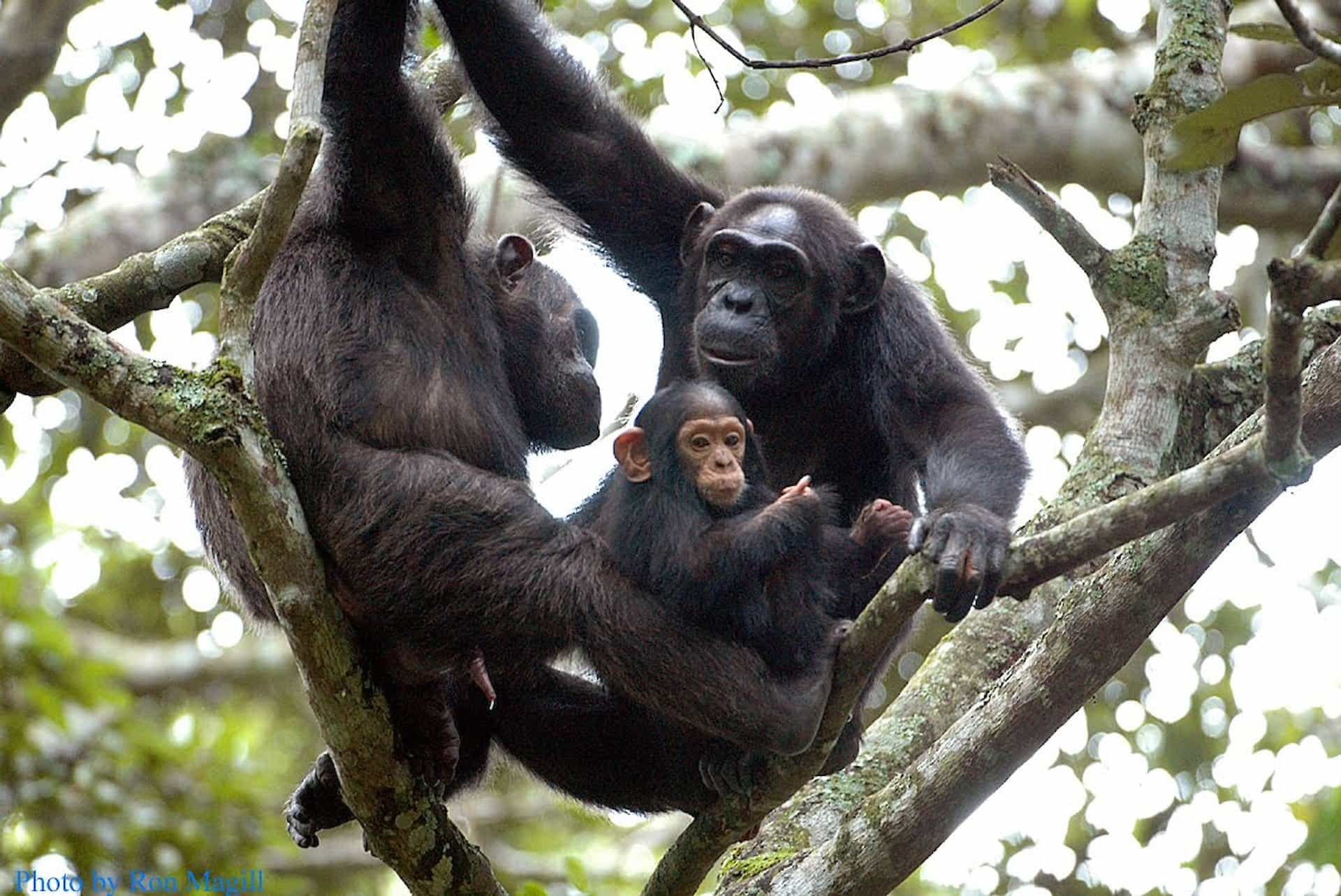
We finally saw them about twenty minutes later. A group of maybe a dozen chimps — adults, juveniles, one tiny baby clinging to its mother’s belly. They were in the trees, maybe fifteen meters up, moving from branch to branch like it was nothing.
One juvenile stopped. Looked down at us. Made eye contact for maybe three seconds. Then grabbed a vine and swung away. Claudine smiled. “He was showing off,” she said. “They do that.”
We watched for about an hour. The chimps fed, played, groomed each other, argued about who got which branch. A few times, they came lower — close enough that I could see their faces, their expressions, the way they looked at each other and at us.
Then, just as quickly as they’d appeared, they were gone. Moved deeper into the forest, leaving nothing but rustling leaves behind. Claudine checked her watch. “Time to head back,” she said. I didn’t argue. I was exhausted. But I was also smiling.
The Canopy Walk (If You’re Brave)
The canopy walk is not for everyone. I don’t mean that as a brag. I mean it literally. If you’re afraid of heights, this will be a problem.
It’s a suspension bridge. A long one — about 90 meters, which is almost 300 feet. It’s suspended about 50 meters above the forest floor, which is about 160 feet. That’s roughly the height of a 15-story building.
The bridge is made of metal cables and wooden planks. There are nets on the sides. It sways when you walk. Not a lot, but enough to notice.
I’m not afraid of heights. Or I wasn’t before I stepped onto that bridge.
The first few steps are fine. The forest floor is still visible below you. You can see the trees, the vines, the occasional monkey moving through the branches. Then you get to the middle.
That’s when you realize how high up you are. The trees that seemed so tall from the ground are now below you. You’re walking through the canopy — the actual canopy — surrounded by leaves and branches and birds that are flying at your eye level And the bridge sways.Not dangerously. It’s engineered to be safe. But it sways.
I stopped halfway across. Just stood there, gripping the nets on both sides, breathing. Not because I was scared. Because it was overwhelming. The view. The height. The realization that I was standing in a place where almost no one ever stands — up here, in the treetops, in the middle of an ancient rainforest.
Claudine was behind me. She’d done this a hundred times. “First time?” she asked. I nodded. “Keep walking,” she said. “It gets easier.” She was right. The second half was easier. By the time I reached the other side, I was already thinking about doing it again.
What You’ll See (Besides Chimps)
Nyungwe isn’t just about chimpanzees. The forest is full of other primates — over a dozen species, in fact. You’ll almost certainly see Colobus monkeys. They’re black and white, with dramatic white fur that looks like a cape. They travel in large groups and move through the trees with this effortless grace that makes you jealous.
You might see blue monkeys. They’re smaller, gray-blue in color, and harder to spot because they stay higher in the canopy.If you’re lucky, you might see the gray-cheeked mangabey. I didn’t. Claudine said they were shy.
And then there are the birds. Nyungwe is a birdwatcher’s paradise. Over 300 species, including 27 that are native to the Albertine Rift — meaning you can’t see them anywhere else. The great blue turaco is the showstopper — bright blue and green with a red patch on its head, looking like something a child drew.
I’m not a bird person. But even I stopped to watch the turacos. They’re that striking.
The forest itself is worth the trip. Nyungwe is one of the few places in Africa where you can walk for hours without seeing another human, just surrounded by trees and birds and monkeys. The trails are well-maintained but not crowded. Most days, you’ll have them almost to yourself.
The Trails (Because You’ll Be Hiking)
You don’t just show up at Nyungwe and see things from your car. This isn’t a savannah safari. You hike.
There are over a dozen trails, ranging from easy one-hour walks to full-day treks that will leave your legs trembling.
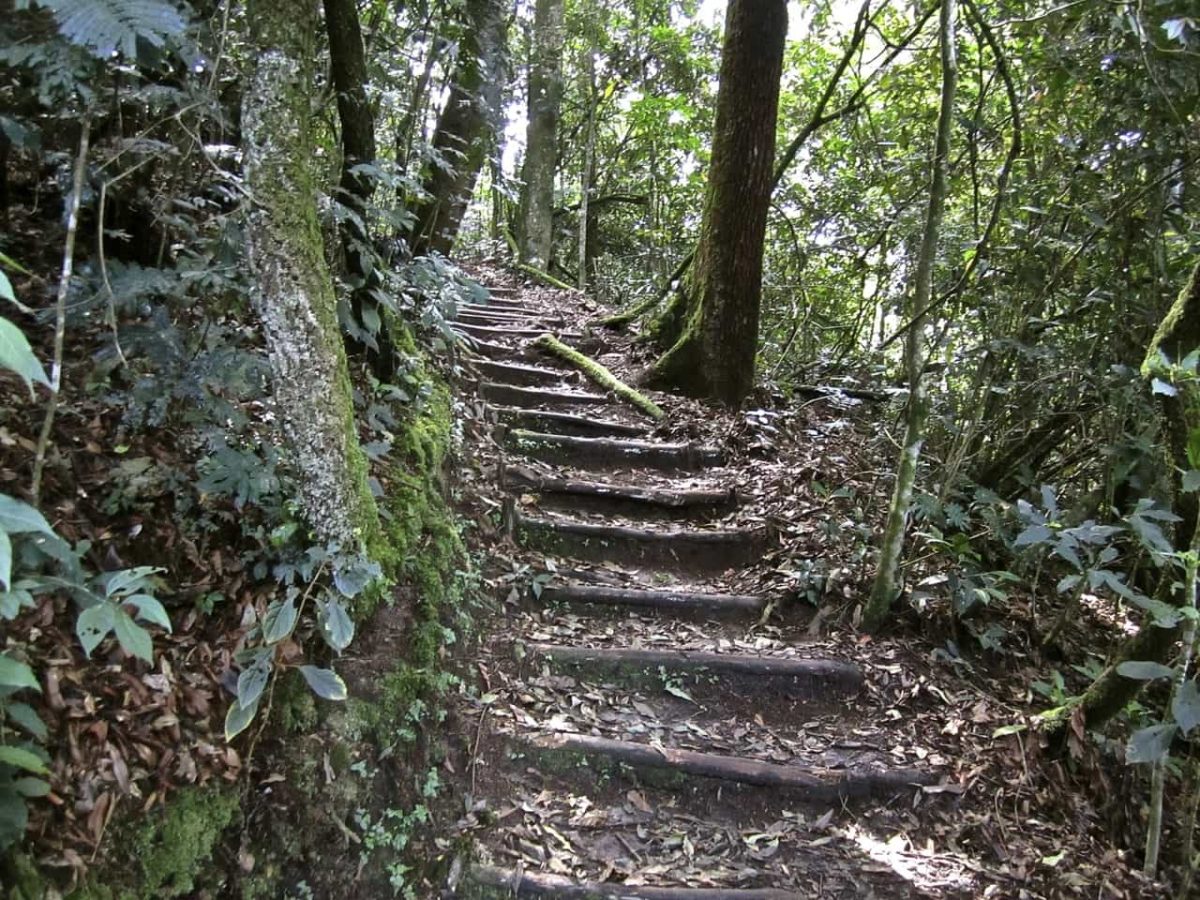
The Igishigishigi Trail is the most popular — partly because it’s the one that leads to the canopy walk. It’s about two hours round trip, with some steep sections but nothing impossible. You’ll walk through ferns, bamboo, and thick forest before reaching the bridge.
The Kamiranzovu Trail is longer — about four hours. It leads to a massive marsh in the middle of the forest, surrounded by mountains. The birdlife here is incredible. I saw a crowned crane and what I think was a hornbill. Claudine named about twenty other birds that I immediately forgot.
The Isumo Trail leads to a waterfall. About three hours. The waterfall itself is beautiful — about 50 meters high — but the real draw is the walk through the forest. You’ll pass through sections of bamboo so thick you can barely see the sky.
If you’re fit and ambitious, you can combine trails. I met a couple who did an eight-hour trek, covering most of the southern part of the park. They looked exhausted but happy. Not my idea of a good time, but everyone’s different.
When to Go
Dry season — June to September and December to February — is the best time for chimpanzee tracking. The trails are drier (though still muddy), the chimps are easier to find because they move less in dry conditions, and the canopy walk is less slippery.
Wet season — March to May and October to November — is greener, quieter, and cheaper. The forest is lush and beautiful, but the trails can be treacherous. Mud everywhere. Slippery roots. And the chimps are harder to find because they move more when food is abundant.
I went in August. It was perfect. Still muddy — this is a rainforest, after all — but not impossible. And the crowds were manageable.
Chimpanzee Trekking: What You Need to Know
Here’s the honest truth about chimp trekking in Nyungwe. It’s not guaranteed. Gorilla trekking has a 99% success rate. The gorillas are habituated, they stay put, and the trackers are incredibly good at finding them.
Chimps are different. They move fast. They cover large distances. Even with trackers in the forest before dawn, there’s no guarantee you’ll find them. The success rate is still high — over 90% on most days. But some tourists come back without seeing chimps. It happens. If that sounds stressful to you, adjust your expectations before you go. You’re not paying for a guarantee. You’re paying for a chance.That said, most people see them. And the experience — when it works — is unforgettable.Some practical things:
Permits are about $100 per person. That’s much cheaper than gorilla permits, which cost ten times that. You book through the Rwanda Development Board or a tour operator.
Groups are small — usually six to eight people. You’ll be assigned a guide and armed rangers. The rangers carry guns, not for the chimps but for other animals (forest elephants, buffalo) that you might encounter on the trail.
The hike can be anywhere from one to four hours each way, depending on where the chimps are. You need to be reasonably fit. Not marathon-level, but comfortable walking uphill on uneven ground.
What to wear — long pants, long sleeves, sturdy hiking boots, rain jacket, gloves if you’re worried about stinging nettles. The forest is wet and the vegetation is thick.
What to bring — water, snacks, insect repellent, camera. Binoculars help. Walking stick is useful (guides can provide them).
The Canopy Walk: What You Need to Know
The canopy walk is less physically demanding than chimp trekking, but more mentally demanding if you’re scared of heights.
The bridge is about 90 meters long and 50 meters high. It’s suspended between two hills, crossing a deep valley. The views are incredible — you’re looking out over the forest canopy, with mountains in the distance. Some practical things:
You need a guide. You can’t just walk onto the bridge by yourself. Guides accompany small groups and explain the forest as you go.
The walk takes about two hours round trip, including the hike to the bridge and the crossing itself. The trail to the bridge is steep in sections but manageable for most fitness levels.
Best time is morning. The light is better, the birds are active, and the crowds are smaller.
Cost is included in your park entry fee, or available as an add-on if you’re doing other activities.
Don’t bring loose items. Hats, sunglasses, phones — anything that could fall through the gaps in the bridge. There are lockers at the trailhead.
If you’re scared of heights, you can still do it. The bridge is stable. The nets on the sides make it feel secure. And you can always turn back if you get halfway across and decide it’s too much. No shame in that.
Where to Stay
You have options, from basic to luxurious.
Nyungwe House is the fancy one. It’s actually a tea plantation lodge, not deep in the forest, but it’s beautiful. Pool. Spa. Excellent food. Expensive — hundreds of dollars per night. But if you want to splurge, this is the place.
One&Only Nyungwe House is even fancier. Same tea plantation setting, even more luxurious. Prices are eye-watering. For most travelers, not worth it unless money is truly no object.
Nyungwe Top View Hill Hotel is mid-range. Basic but comfortable. Great views of the forest and mountains. Good value for money.
Gisakura Guesthouse is the budget option. Simple rooms, basic facilities, right near the park entrance. This is where I stayed. It’s fine. Clean. Hot water sometimes. The food is simple but good. And the location can’t be beat — you can walk to the trailhead.
Camping is available at the park headquarters. Very basic. But cheap. And you’ll fall asleep to the sounds of the forest.
A Story From the Trail
I was walking the Igishigishigi Trail, heading toward the canopy walk. The trail was wet — it had rained the night before — and I was concentrating on not slipping. Claudine stopped suddenly. Held up her hand. I froze. She pointed up. Way up. Into the canopy. At first, I didn’t see anything. Just leaves and branches and shadows.
Then something moved. A group of Colobus monkeys — maybe fifteen of them — were crossing from one tree to another. They moved in a line, leaping from branch to branch, their white capes trailing behind them like something out of a dream.
One of them stopped. Looked down at us. Then kept going. Claudine smiled. “They’re not scared of us,” she said. “Just… curious.” We stood there for maybe five minutes, watching them pass. Then the forest went quiet again. “You see that often?” I asked.“Every day,” she said. “Different animals. Different moments. But every day, something.”
That’s Nyungwe. It’s not about one animal or one experience. It’s about being in a place where things are still wild, still moving, still surprising you. Nyungwe isn’t for everyone. If you want easy wildlife viewing — guaranteed sightings, comfortable vehicles, short walks — go to Akagera. Or go to the savannah parks in Kenya or Tanzania.
Nyungwe is different. It’s harder. It’s wetter. It’s less predictable. But if you’re willing to hike, to get muddy, to wake up at 5:00 AM and walk for hours without knowing what you’ll find — Nyungwe rewards you. A chimpanzee making eye contact for three seconds before swinging away. A Colobus monkey leaping through the canopy, white fur trailing behind like a ghost.
A suspension bridge swaying in the wind, 50 meters above the forest floor, with nothing but green in every direction. Those moments are not guaranteed. But when they happen? They’re worth every slippery step, every stinging nettle, every early morning. Claudine said something to me on the last day. “You came for the chimps,” she said. “But you’ll remember the forest.”
She was right. I remember the chimps. I remember the canopy walk. But what I really remember is standing in the middle of the trail, surrounded by green, listening to the sounds of a forest that has been here for millions of years.That feeling doesn’t leave you.