


Nyerere (Selous) Game Reserve: Boat Safaris and Walking
Nyerere National Park—formerly part of the vast Selous Game Reserve—represents one of Africa’s most distinctive safari environments. Unlike the vehicle-dominated experiences of Serengeti National Park or the contained intensity of the Ngorongoro Conservation Area, Nyerere is built around movement on foot and by water. It is one of the few places in East Africa where boat safaris and guided walking safaris are not optional extras—they are core to how the ecosystem is explored.
The park is defined by the Rufiji River system, a network of channels, lakes, and floodplains that shape wildlife behavior and create opportunities for close-range, low-impact encounters. This is not a high-density, checklist-style safari destination. It is a process-driven landscape where observation, tracking, and environmental awareness take priority over rapid sightings.
The Rufiji River System: Foundation of the Experience
A Dynamic Water Network
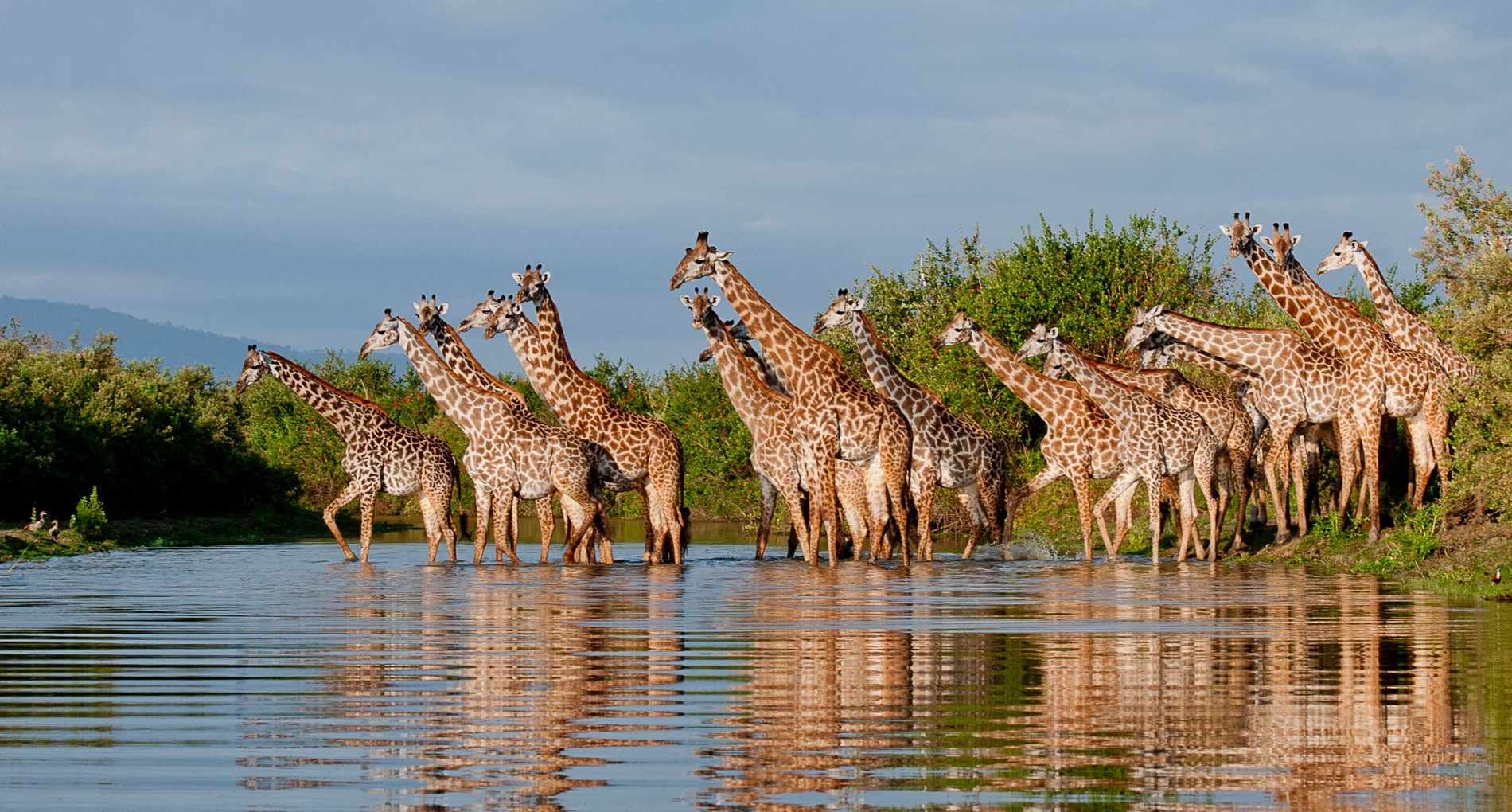
The Rufiji River is the central artery of Nyerere National Park, branching into a series of channels, lagoons, and oxbow lakes.
Unlike seasonal rivers that fluctuate dramatically, parts of this system retain water year-round, supporting consistent wildlife presence along its banks.
This creates a linear concentration of animals that is best explored by boat rather than vehicle.
Floodplains and Habitat Variation
Surrounding the river are floodplains that expand and contract depending on rainfall.
During wetter periods, these areas become lush and expansive, supporting grazing species and birdlife.
During drier periods, water recedes, concentrating wildlife along remaining channels and making sightings more predictable.
Boat Safaris: A Different Safari Perspective
Why Boat Safaris Define Nyerere
Boat safaris are one of the most distinctive features of Nyerere National Park.
Instead of approaching wildlife across open plains, you move along waterways where animals come to drink, feed, or cross between habitats.
This creates a different type of encounter—closer, quieter, and often more continuous.
Wildlife You See From the Water
Boat safaris commonly reveal:
Hippos in large pods occupying river channels
Nile crocodiles basking along sandbanks
Elephants approaching water to drink or bathe
Buffalo and antelope moving along river edges
Because animals are less disturbed by boats than vehicles, behavior often appears more natural and sustained.
Birdlife and Aquatic Species
The river system supports a high diversity of bird species, including fish eagles, kingfishers, herons, and storks.
Boat safaris allow for detailed observation of bird behavior that is difficult to achieve during standard game drives.
Movement and Silence
One of the defining characteristics of a boat safari is the reduced noise and smoother movement.
This allows for closer approach distances and longer observation periods without disrupting wildlife.
Walking Safaris: Ground-Level Engagement
The Core of Southern Tanzania Safaris
Walking safaris are a defining feature of southern Tanzania and are central to the Nyerere experience.
Unlike short guided walks in other parks, these are structured, ranger-led excursions that focus on tracking, interpretation, and situational awareness.
What You Learn on Foot
Walking safaris shift focus from large animals to environmental detail.
You begin to interpret:
Animal tracks and movement patterns
Feeding signs and vegetation use
Bird calls and insect activity
Micro-ecosystems within the landscape
This creates a deeper understanding of how the ecosystem functions beyond visible wildlife.
Safety and Structure
Walking safaris are conducted with trained guides and armed rangers.
Group sizes are small, and movement is controlled to ensure both safety and minimal environmental impact.
Encounters with large animals are managed through distance and positioning rather than proximity.
Wildlife in Nyerere National Park
Elephants and Riverine Movement
Elephants are frequently seen along the Rufiji River, particularly during the dry season.
Their movement is closely tied to water availability, making riverbanks key observation zones.
Buffalo and Grazing Herds
Large buffalo herds are common, often moving between floodplains and water sources.
Their presence also influences predator activity.
Predators and Elusive Species
Lions are present but less predictable than in high-density northern parks.
Leopards and African wild dogs are also part of the ecosystem, though sightings require time and patience.
Hippos and Crocodiles
Aquatic species are among the most consistently observed animals in Nyerere.
Hippos dominate river channels, while crocodiles occupy shoreline zones and sandbanks.
Why Nyerere Feels Different From Northern Parks
Multi-Modal Safari Experience
Most safari destinations rely heavily on vehicle-based game drives.
Nyerere combines vehicles, boats, and walking into a single itinerary, creating varied perspectives on the same ecosystem.
Lower Visitor Density
The park is significantly less crowded than northern circuit destinations.
This reduces vehicle congestion and allows for more private wildlife encounters.
Emphasis on Process Over Sightings
Nyerere is not structured around guaranteed sightings.
It emphasizes tracking, observation, and understanding of ecological systems.
Best Time to Visit Nyerere
Dry Season Advantage
The dry season offers the best conditions for wildlife viewing.
Water sources become limited, concentrating animals along the Rufiji River.
Vegetation thins out, improving visibility.
Wet Season Transformation
During the wet season, parts of the park may become inaccessible due to flooding.
However, the landscape becomes greener, and birdlife activity increases significantly.
Accommodation and Safari Style
River-Based Camps
Many lodges in Nyerere are located along the Rufiji River or its channels.
This positioning allows immediate access to boat safaris and wildlife-rich areas.
Small, Low-Impact Camps
Accommodation tends to be smaller and more integrated into the environment compared to large lodges in northern Tanzania.
This supports the park’s low-density tourism model.
How Nyerere Fits Into a Tanzania Safari
Southern Circuit Strategy
Nyerere is often combined with other southern parks such as Ruaha National Park to create a less crowded alternative to the northern circuit.
Standalone Experience
For travelers seeking a slower, more immersive safari, Nyerere can function as a standalone destination.
Comparing Nyerere to Other Safari Destinations
Versus Serengeti
Serengeti offers large-scale wildlife movement and open plains.
Nyerere offers water-based exploration and close-range encounters.
Versus Ngorongoro
Ngorongoro provides concentrated wildlife in a confined space.
Nyerere provides dispersed wildlife across a vast river system.
Experience Difference
Nyerere is defined by interaction and perspective rather than density and spectacle.
Field Reality of Nyerere National Park
In practical terms, Nyerere is one of the most versatile safari environments in Africa.
Its combination of boat safaris and walking safaris creates a layered experience where the same landscape can be explored in multiple ways.
Wildlife viewing is less predictable but often more rewarding due to reduced pressure and more natural behavior.
This is not a destination for rapid, high-volume sightings. It is a destination for travelers who want to understand how ecosystems function, how animals move within them, and how different modes of exploration reveal different aspects of the same environment.