


Ndutu Area: Why It’s the Best Place to See Newborn Wildebeest
The Ndutu Plains: Where Africa’s Greatest Baby Boom Unfolds
Imagine standing in the middle of nowhere. The sky is so big it feels like it’s swallowing the earth. The wind carries the smell of dust and damp grass. And then, you hear it—a low, rumbling hum that vibrates through the soles of your feet. You turn around, and your jaw drops.
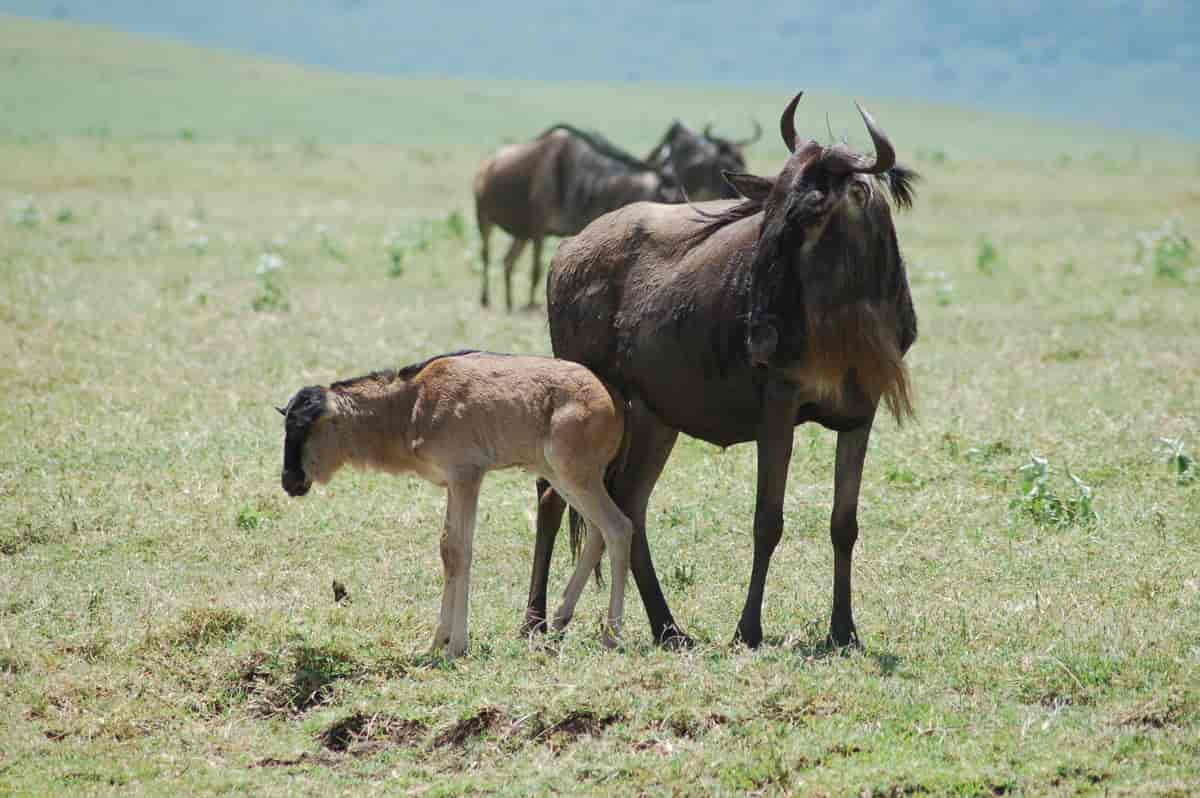
Thousands upon thousands of wildebeest are spreading across the plains like a moving river. And scattered among them? Tiny, wobbly-legged newborns, still slick from birth, are trying to figure out how to stand up in a world that’s already moving at full speed.
Welcome to Ndutu. This isn’t just a safari destination. This is nature’s delivery room.
The beauty of this landscape is not only found in the large herds moving across the plains but also in the fragile moments of birth and survival. Every year, visitors arrive to witness the beginning of a new generation of wildebeest and experience a period when the African wilderness feels especially active.
The area offers some of the closest wildlife encounters in Tanzania because animals remain concentrated around the short green grasses that appear after the rains.
Why Here? Why Ndutu?
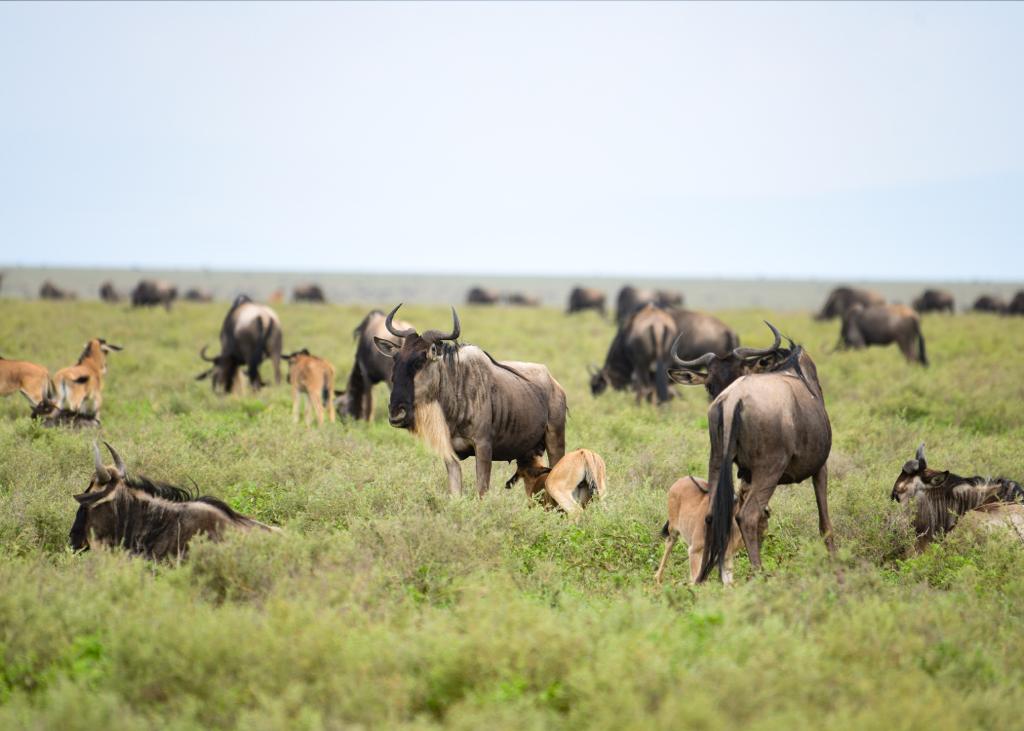
Ndutu isn’t famous because of a fancy lodge or a paved road (spoiler: there aren’t any). It’s famous because Mother Nature got the recipe exactly right here.
Tucked right between the southern Serengeti and the Ngorongoro Crater, this patch of Tanzania has volcanic soil that’s so rich that it grows grass that pregnant wildebeest literally crave. When the short rains hit, the plains turn into a lush, green buffet. And where there’s good food, the herds follow.
But here’s the magic part: because the landscape is so open, you don’t need binoculars to see the action. You’re right there. A few meters away. A mother nudging her calf. A newborn taking its first shaky steps. A cheetah is sizing up the scene from a nearby termite mound. It’s not a nature documentary. It’s real life, happening in high definition right in front of your vehicle.
The Calving Season: It’s Pure, Beautiful Chaos
If you want to catch the main event, plan your trip between January and March. But honestly? February is when the fireworks happen.
Picture this: over 8,000 calves are born every single day during the peak. The plains turn into a massive, moving nursery. You’ll see a mother lying down, straining, and within minutes—a new life slides into the world. The calf doesn’t get a break. Within five minutes, it’s trying to stand. Within an hour, it’s walking. Within a day, it’s running alongside the herd.
Why the rush? Because in the wild, standing still means becoming lunch. It sounds harsh, but that urgency is what makes watching this so gripping. You’re not just observing nature; you’re rooting for these little guys. Every step a calf takes is a small victory. Every time a mother chases away a hyena, you’ll feel your heart pound. Trust me—you’ll get emotionally invested.
The Predators: The Other Side of the Coin
Let’s be real for a second. Where there are tender, vulnerable babies, there are also hungry hunters. The calving season turns Ndutu into a predator’s paradise, and while it’s hard to watch a lioness separate a calf from its mother, it’s also impossible to look away.
-
Cheetahs dart across the plains with explosive speed, targeting the stragglers.
-
Lions lounge in the grass, watching the herds with lazy eyes—until they don’t.
-
Hyenas laugh in the distance, always circling, always waiting for an opportunity.
It’s the circle of life in all its brutal, stunning glory. You’ll feel a rollercoaster of emotions: awe, tension, sadness, and relief—sometimes all in the span of five minutes. And honestly? That emotional whiplash is what makes a Ndutu safari so deeply unforgettable.
It’s Not Just About the Wildebeest
While the wildebeest are the headliners, Ndutu has a seriously talented supporting cast.
Zebras trot alongside them, munching on the tougher grass that wildebeest don’t like. They’ve basically worked out a “you eat your side, I’ll eat mine” agreement, and it’s adorable. Gazelles leap gracefully across the plains. And if you’re lucky, you’ll spot a herd of elephants dust-bathing in the distance or a giraffe stretching its neck to nibble on an acacia tree.
For the bird nerds out there (and I mean that affectionately), the seasonal lakes are a haven. Flamingos paint the water pink. Raptors soar overhead. It’s a birder’s dream.
For the Photographers (and the Phone Snappers)
Even if your camera is just an iPhone, Ndutu makes you look like a pro.
-
Golden hour hits differently here. The sunsets paint the plains in shades of orange and purple.
-
The green grass against the deep blue sky creates a contrast that almost looks fake.
-
And the subjects? They don’t pose. They don’t perform. They just live—and that’s what makes the photos so powerful.
My advice? Put the camera down for a few minutes. Just watch. Absorb the sounds—the grunts, the birdsong, the silence between the gusts of wind. Some memories don’t need a lens.
Practical Bits (Because You Actually Have to Get There)
Okay, so you’re sold. You want to go. Here’s the inside scoop:
-
When to go: January to March. Book February if you want the peak madness.
-
Where to stay: Choose a seasonal tented camp right on the plains. Waking up to the sound of grunting wildebeest is weirdly magical.
-
Pack wisely: Layers. It’s hot during the day, but mornings can be chilly. Bring a good pair of binoculars and a healthy dose of patience.
-
Get a great guide: The roads are rough, and the animals move. A local guide who knows these plains like the back of their hand is worth their weight in gold.
Most people combine Ndutu with a trip to the Ngorongoro Crater or the Serengeti. But honestly? Ndutu holds its own. It feels less touristy, more raw, more real.
The Truth About This Place
Here’s the thing about Ndutu that doesn’t make it into the glossy brochures.
It’s not just about seeing animals. It’s about feeling something. It’s about watching a newborn calf wobble to its feet and realizing you just witnessed the same struggle for life that’s been playing out on these plains for millions of years. It’s about sitting in complete silence as a lioness walks past your vehicle, so close you can hear her breathing. It’s about looking up at the Milky Way at night, so bright and clear that you forget stars like that even exist.
Ndutu gets under your skin. It changes the way you see the world. It reminds you that we’re just tiny guests in a wild, unpredictable, beautiful universe.
The Ndutu Area: Why It’s the Best Place to See Newborn Wildebeest is based on more than the presence of large herds. It represents a rare moment when the cycle of life becomes visible across the plains. From the first steps of newborn calves to the movements of predators searching for survival, Ndutu reveals the constant balance that defines the African wilderness.