


Mahale Mountains: Chimpanzee Trekking on Lake Tanganyika
Mahale Mountains National Park is one of the most remote and ecologically distinct safari destinations in Africa, positioned along the eastern shores of Lake Tanganyika. Unlike the savannah-driven wildlife systems of Serengeti National Park or the river-based experiences of Nyerere National Park, Mahale is defined by steep forested mountains descending directly into one of the world’s deepest freshwater lakes.
This geography creates a rare combination: high-density primate habitat paired with a tropical lakeshore environment. The result is a safari experience that revolves around chimpanzee trekking, forest immersion, and water-based relaxation rather than traditional game drives.
Mahale is not designed for volume tourism. It is structured around small numbers, long stays, and a strong emphasis on ecological immersion and behavioral observation.
Geographic Isolation and Access
Remote Western Tanzania Location
Mahale lies in western Tanzania, far from major tourism hubs. There are no direct road connections suitable for standard safari itineraries.
Access typically involves a domestic flight followed by a boat transfer across Lake Tanganyika to reach lodges within or near the park.
This layered access structure is one of the primary reasons visitor numbers remain low.
Natural Barriers and Conservation Value
The surrounding mountains and lake create natural barriers that limit human encroachment.
This isolation has allowed chimpanzee populations in Mahale to remain relatively stable compared to other regions where habitat pressure is higher.
The Mahale Landscape: Forest Meets Water
Mountain Rainforest Ecosystem
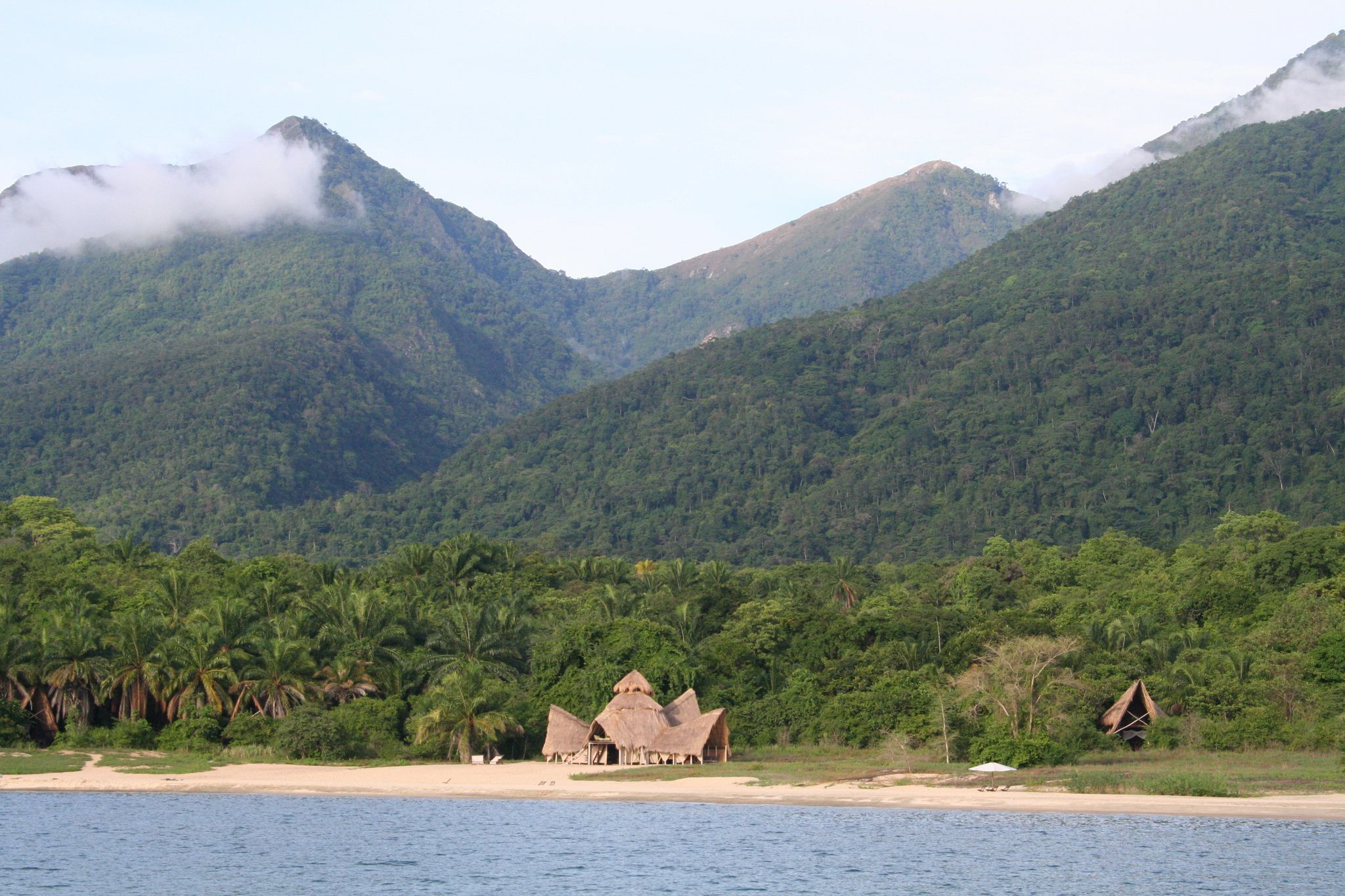
The Mahale Mountains rise steeply from the lake, creating dense tropical forest habitats that are ideal for chimpanzees and other primates.
The terrain is rugged, with narrow trails, thick vegetation, and significant elevation changes during treks.
Lake Tanganyika Shoreline
At the base of the mountains lies Lake Tanganyika, one of the oldest and deepest lakes in the world.
Its clear waters and sandy beaches provide a stark contrast to the dense forest above.
This dual environment allows visitors to transition from physically demanding treks to low-impact lakeside recovery within the same day.
Chimpanzee Trekking: The Core Experience
Habituated Chimpanzee Groups
Mahale is home to several habituated chimpanzee communities that are monitored and protected.
These groups are accustomed to human presence, allowing for controlled observation without significantly altering natural behavior.
Trekking Dynamics
Chimpanzee trekking in Mahale is highly variable.
Unlike gorilla trekking in Bwindi Impenetrable National Park, where group locations are relatively stable, chimpanzees are highly mobile.
Treks can range from short forest walks to several hours of tracking depending on the movement of the group.
Behavioral Observation
Once located, chimpanzees offer some of the most dynamic wildlife viewing in Africa.
You may observe:
Social grooming and bonding
Vocal communication across the forest
Feeding behavior in fruiting trees
Territorial movement and group coordination
The experience is active and unpredictable, requiring constant attention and adaptability.
Physical Demands of Trekking in Mahale
Terrain and Elevation
The forest terrain is steep and uneven, with frequent elevation gain and descent.
Trails can be slippery, particularly after rain.
This makes Mahale more physically demanding than many other safari activities.
Fitness Considerations
Visitors should be prepared for sustained walking and moderate to high physical exertion.
Proper footwear, hydration, and pacing are essential for a successful trek.
Wildlife Beyond Chimpanzees
Other Primates
Mahale supports a range of primate species, including red colobus monkeys, blue monkeys, and baboons.
These species are often encountered during treks, adding to the overall forest experience.
Limited Large Mammals
Unlike savannah parks, Mahale does not offer high visibility for large mammals such as lions or elephants.
The focus remains on primates and forest ecology.
The Lake Experience: Recovery and Contrast
Post-Trek Environment
After trekking, Lake Tanganyika provides a low-energy environment for recovery.
Swimming, kayaking, and shoreline relaxation are common activities.
Aquatic Ecology
The lake supports diverse fish species and birdlife, creating additional ecological interest beyond the forest.
The clarity of the water makes it one of the most visually striking freshwater environments in Africa.
Why Mahale Feels Different From Other Safaris
No Game Drives
Mahale does not rely on vehicle-based wildlife viewing.
All primary activities are conducted on foot or by boat.
Small Visitor Numbers
The park operates with extremely low visitor capacity, often hosting only a handful of guests at any given time.
This creates a highly private and immersive experience.
Focus on One Species
Unlike multi-species safari parks, Mahale is centered around chimpanzees.
This singular focus allows for deeper understanding of behavior and ecology.
Best Time to Visit Mahale
Dry Season Advantage
The dry season offers more stable trekking conditions and easier forest navigation.
Chimpanzees may be easier to locate due to more predictable movement patterns.
Wet Season Challenges
Rain increases vegetation density and makes trails more difficult.
However, the forest becomes greener and more vibrant, and food availability for chimpanzees increases.
Accommodation and Safari Style
Remote Lakeside Lodges
Accommodation in Mahale is limited to a small number of high-end lodges positioned along the lake.
These lodges are designed to blend into the environment and provide direct access to both forest and water activities.
All-Inclusive Structure
Due to the park’s remoteness, most stays are fully inclusive, covering accommodation, meals, guiding, and transfers.
How Mahale Fits Into a Tanzania Safari
Standalone Destination
Mahale is typically visited as a standalone destination rather than combined with multiple parks.
The travel logistics and focus on chimpanzee trekking make it a specialized experience.
Combined With Western Circuit Parks
For extended itineraries, it can be paired with Katavi National Park to create a remote western circuit safari.
Comparing Mahale to Other Primate Experiences
Versus Gorilla Trekking
Gorilla trekking in Bwindi Impenetrable National Park involves more stable group locations and shorter tracking times.
Chimpanzee trekking in Mahale involves greater movement, longer treks, and more dynamic behavior.
Experience Difference
Mahale emphasizes activity and unpredictability, while gorilla trekking emphasizes proximity and stability.
Field Reality of Mahale Mountains National Park
In practical terms, Mahale is one of the most immersive wildlife experiences available in Africa.
It strips away the conventional safari structure and replaces it with a focused, physically engaging, and ecologically rich encounter centered on chimpanzees and forest systems.
The combination of mountain trekking and lakeside recovery creates a rhythm that is fundamentally different from traditional safari itineraries.
Mahale does not aim to offer variety—it offers depth within a specific ecological niche. For travelers willing to commit to its logistical complexity and physical demands, it delivers one of the most distinctive and least crowded wildlife experiences on the continent.