


Lake Eyasi: Visiting the Hadza and Datoga Tribes
The Day I Stopped Being a Tourist
I didn’t go to Lake Eyasi for the photos.
I went because I was tired. Not tired from the safari—although, God, those 5 AM game drives were brutal—but tired of watching. Tired of being a passive observer. Tired of looking at incredible things through a camera lens and feeling… nothing.
You know that hollow feeling? When you’re standing in front of something spectacular, and your brain just goes, “Yeah, okay, cool. What’s for lunch?”
That was me. After three days of lions and elephants and sunsets that looked photoshopped, I felt like I was checking boxes. Saw the Big Five. Drank sundowner gin. Took 400 photos I’ll never look at again.
I needed something that would actually hit me. Not in the intellect. In the gut.
So I drove four hours off the main road to a dying salt lake called Eyasi.
The Walk That Changed My Pulse
The morning I walked with the Hadza, I almost didn’t go.
It was 4:30 AM. Cold. I was wrapped in three layers and still shivering. My lodge bed was warm. My pillow was soft. The sensible part of my brain whispered, Stay. Sleep. You paid for this room. Use it.
But I dragged myself out anyway, because I’m a people-pleaser and the guide had already packed the car.
The Hadza don’t do welcomes. No dances. No singing. No “cultural performance” with a donation box at the end. They just… looked at us. Nodded. And started walking.
I remember thinking, Is that it? Are we going?
They moved like ghosts. Barefoot. Silent. Six men, ranging from maybe 18 to 70, threading through thorny scrub that would’ve had me bleeding in five seconds. Their feet were leather. Their eyes were everywhere—scanning the ground, the trees, the horizon.
Within ten minutes, I was out of breath. My fancy hiking boots were slipping on rocks. I was sweating. I felt like a clumsy giant next to these wiry, quiet men who seemed to glide.
One of them—the elder, I think, though I never got his name—stopped. He crouched. Ran his thumb over a tiny depression in the dirt. Then he looked at me.
He didn’t speak English. He just pointed at the print, then at his own feet, then at a thicket about fifty meters away.
Something was in there.
No one said a word. They fanned out. Bows came up. Arrows—tipped with poison made from a desert plant, I’d later learn—were notched.
My heart was pounding. Not from fear, but from the sheer primitive electric shock of it. This wasn’t a zoo. This wasn’t a documentary. This was real.
The elder drew his bow. Paused. Listened.
And then… he let the arrow go.
It whizzed into the thicket, and whatever was in there—a small antelope, probably—bolted. Gone in a flash of brown.
The hunters looked at each other.
Then the elder laughed. A huge, wheezing, open-mouthed laugh that showed every gap in his teeth. He slapped his thigh, looked at me, and patted his stomach. Guess we’re eating roots today.
And right there, I fell in love with him.
Not because he was “exotic” or “primitive” or any of those gross words we use. But because he was human. He missed his shot, shrugged it off, and laughed about it. I saw my own grandfather in that moment. My own uncles. The same universal gesture of oh well, better luck tomorrow.
That’s when I stopped being a tourist.
The Camp That Wasn’t “Picturesque”
After the hunt—or, well, the non-hunt—they invited us to their camp.
And I need to be honest here. It wasn’t beautiful.
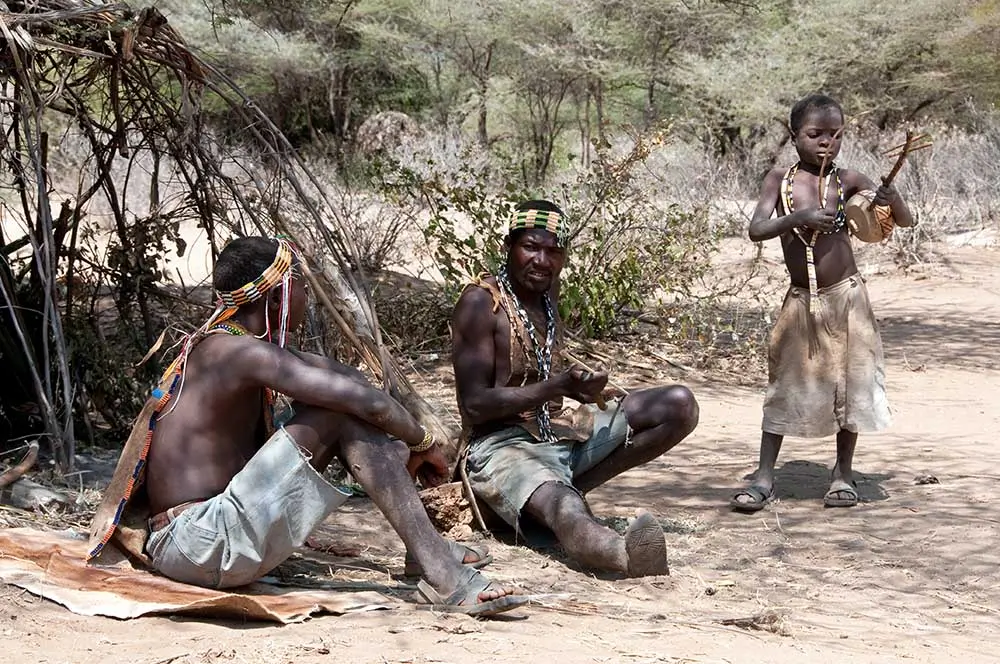
It was a cluster of grass huts. They looked like overturned baskets. The kids had distended bellies from a diet that was mostly wild fruit and honey. There was a fire smoldering in the middle, surrounded by empty cans and bones.
My first thought—and I’m ashamed to admit this—was: This is poverty.
But then I looked closer.
I watched a grandmother hand a piece of roasted baobab fruit to a toddler. The toddler bit into it, grinned, and toddled off to poke a stick at a beetle.
I watched a young man sit cross-legged, patiently whittling a new arrow shaft, while his friend hummed a tune I’ve never heard and will never forget.
I watched two women sit in the dust, chatting and laughing, while they sorted berries. Their faces were lined. Their bodies were thin. But they weren’t sad. They weren’t waiting for rescue.
They were just… living. Together. With no screens, no ads, no calendar reminding them of deadlines.
And for the first time in months, I wasn’t anxious.
The silence there isn’t like our silence. Our silence is a void we fill with scrolling. Their silence is full. Full of birdsong. Full of the crackle of fire. Full of the quiet hum of people who have nowhere to be and nothing to prove.
I sat on a rock and just watched for an hour. No phone. No notebook. No agenda.
I don’t remember the last time I did that.
The Blacksmith Who Held Fire
A few hours later, I met the Datoga.
They’re the neighbors. Pastoralists. Herders. The exact opposite of the Hadza in almost every way—except they share the same dust, the same sun, the same stubborn will to survive.
But the thing I’ll never forget isn’t the cattle. It’s the blacksmith.
This man—I’ll call him John, because I can’t pronounce his real name—sat under a thatched roof, surrounded by the tools his ancestors have used for centuries. A charcoal fire. A skin bellows. A hammer made from a rock.
I watched him take a piece of scrap metal—literally a rusted bit of truck chassis that had been lying in the dirt—and feed it to the fire.
He pumped the bellows with his foot. The fire glowed. Orange. Then yellow. Then white-hot.
And then he pulled it out, plopped it on an anvil made from a train rail, and started hammering.
Sweat poured down his face. The muscles in his arms were like steel cables. He was in his 50s, maybe, but he moved like a man half his age.
In fifteen minutes, he turned garbage into a knife. A real, functional, beautiful knife with a curve in the blade and a wooden handle that he whittled on the spot.
I bought it. Not because I needed it—I don’t hunt; I can barely cut an onion—but because I wanted to carry a piece of that fire with me.
He didn’t charge me much. A few dollars. But when I handed him the money, he didn’t look at it. He looked at me. Grabbed my hand. Squeezed. Held eye contact for just a second too long.
And I realized: He didn’t care about the money. He cared that I saw him. That I watched his hands do their sacred work and didn’t just snap a photo and walk away.
That moment cost me five dollars. It was worth everything.
The Uncomfortable Truth Nobody Talks About
Okay. I’m gonna be real with you.
Visiting Lake Eyasi is uncomfortable.
You’re going to feel guilty. You’re going to feel like a rich outsider poking your nose into a world that has nothing to do with you. You’re going to see things—hunger, hard labor, children without shoes—that will make you want to donate all your money and cry in the shower.
And you know what? That’s okay.
But here’s the thing I figured out: The Hadza and Datoga don’t need your guilt. They don’t need your pity. They don’t need you to “save” them.
What they need is respect. They need you to stop taking photos without asking. They need you to listen instead of lecture. They need you to buy their crafts because you genuinely like them, not because you feel bad.
And most of all? They need you to see them. Not as a “tribe.” Not as an “experience.” As people.
I sat with a Hadza woman for twenty minutes. She didn’t speak English. I didn’t speak her language. We just sat. She was weaving a basket. I was watching. Occasionally, she’d look up, smile, and point at something—a bird, a cloud, a child falling over in the dust.
We didn’t “communicate.” We connected.
And that’s what tourism should be. No transaction. Connection.
The Way Home
Driving back to Arusha, I didn’t look at my phone for three hours.
I just stared out the window, watching the landscape change from parched lakebed to green highlands, and I replayed the morning in my head.
The missed arrow. The laughing hunter. The blacksmith’s fire. The grandmother is sorting berries. The toddler is poking a beetle. The silence. Oh God, the silence.
I thought about my life. My apartment full of stuff I don’t need. My phone buzzes every thirty seconds. My job that pays well and empties my soul. My constant, grinding, exhausting need to be busy.
And I realized: I don’t know how to be still. I don’t know how to just sit and be with people. I don’t know how to laugh when I miss the target.
The Hadza do. The Datoga do.
They’re not better than me. They’re not “noble savages.” They’re just… connected. To the earth. To each other. To the present moment.
And I left Lake Eyasi feeling like I’d been given a gift I didn’t deserve.
Should You Go?
But not because it’s “authentic” or “off the beaten path” or any of those buzzwords.
Go because you want to be humbled. Go because you want to remember what it feels like to be alive—really, viscerally, dirt-under-your-nails alive. Go because you’re tired of the artificial bullshit and you need a reminder that humanity existed before Wi-Fi.
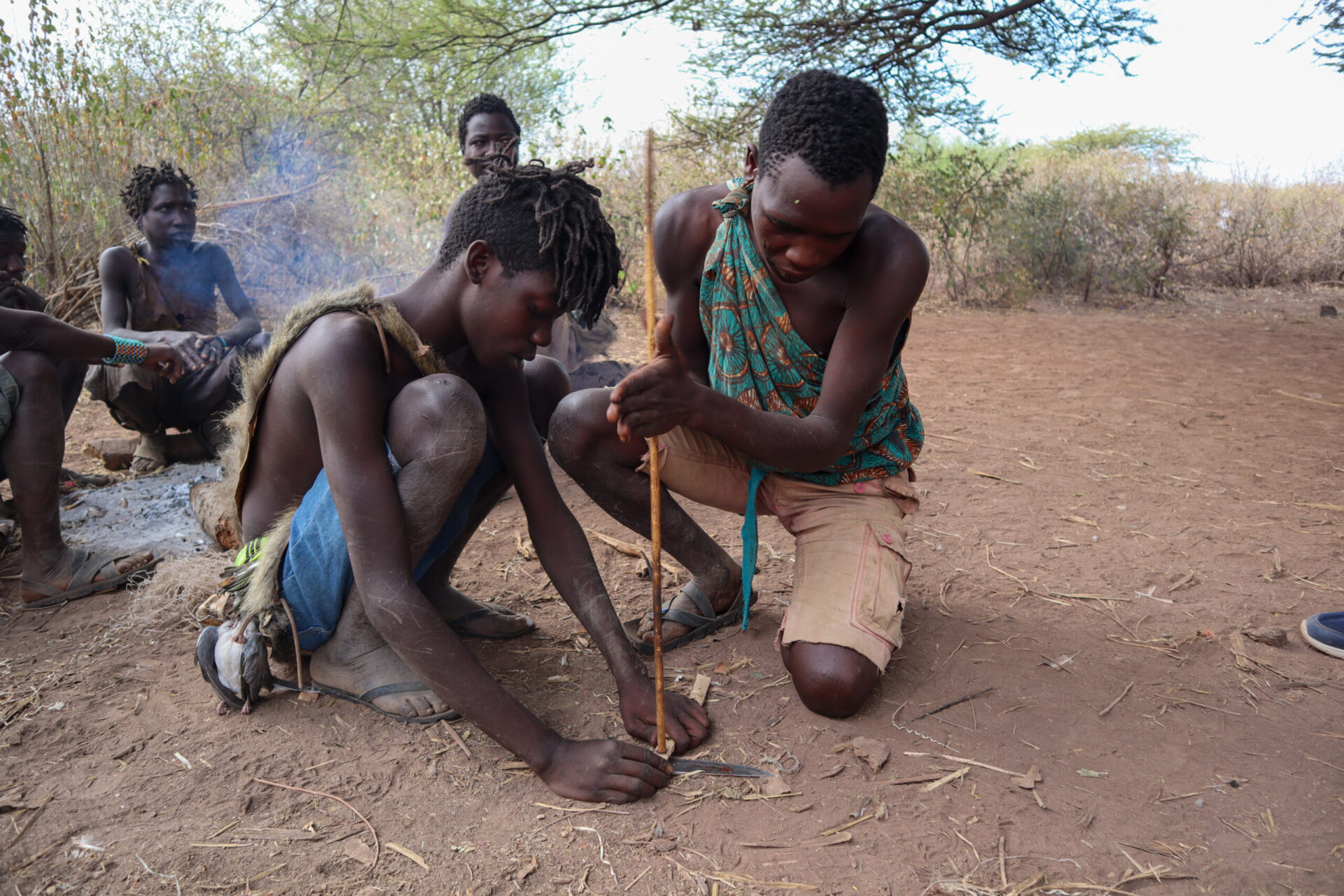
Stay in a small lodge. Wake up before dawn. Walk with people who’ve been walking for ten thousand years. Watch fire turn metal into art. Sit in silence. Miss the shot. Laugh anyway.
And when you leave, bring a piece of that silence home with you.
Because the lions? The elephants? The sunsets?
You’ll see them again. On YouTube. In National Geographic.
But the sound of a Hadza elder laughing at his own missed arrow?
That’s something you can’t download.
That’s something you have to earn.
By showing up. By being quiet. By being human.