


Kigali City Guide: What to See Before Your Rwanda Safari
The first time I landed in Kigali, I expected chaos.
I’d been to other African cities. The noise, the traffic, the dust, the crowds pressing in from every direction. I’d braced myself for the same.
Instead, I stepped out of the airport and thought, “What is this place?”
The air was clean. The streets were spotless. There were flower beds along the boulevards — actual flower beds, not weed-choked patches of dirt. People walked calmly, not rushing. No one shouted at me. No one tried to sell me anything.
I stood there, blinking in the sun, and realized I’d been completely wrong about what Rwanda would be like.
That’s the thing about Kigali. It surprises everyone.
Most travelers treat it as a transit point. Fly in, spend one night, head straight to the gorillas. Maybe they visit the genocide memorial, maybe they don’t. Then they leave, never really seeing what the city has to offer.
I did that on my first trip. Regretted it. On my second trip, I gave Kigali two full days. On my third trip, I added another.
Now I tell everyone the same thing. Don’t rush through Kigali. It’s not just a place to sleep before your safari. It’s a city with stories to tell — about resilience, about rebuilding, about a country that decided to become something completely different.
Here’s what you shouldn’t miss.
The Kigali Genocide Memorial
I’m putting this first because it’s the most important thing you’ll do in Rwanda.
Not the most pleasant. The most important.
The memorial sits on a hill overlooking the city. It’s quiet up there. Peaceful, even. You wouldn’t guess what’s inside.
I walked through the exhibits slowly, reading everything. The photographs of children. Their names, their ages, their favorite foods, what they wanted to be when they grew up. And then the explanation of how they died.
There’s a room filled with skulls. I wasn’t prepared for that. I stood there, staring, not sure what to feel.
And then there’s the garden outside. A place to sit and breathe. I sat on a bench for maybe twenty minutes, not really thinking about anything. Just feeling. Heavy and grateful and confused all at once.
Here’s what I didn’t expect. The memorial doesn’t end with the genocide. It continues into the rebuilding. The reconciliation. The country’s determination to become something else. It’s not a memorial to death. It’s a memorial to survival.
When I left, I felt like I understood Rwanda better. Not fully — you can never fully understand something like that. But better.
Visiting the memorial is not optional. It’s essential. You can’t understand this country without knowing what happened here. And you can’t appreciate how remarkable it is now without knowing what it came from.
The Old Town of Nyamirambo
Most tourists don’t go to Nyamirambo.
I almost didn’t. It wasn’t on any of the standard itineraries. But someone told me it was the oldest neighborhood in Kigali, and I was curious.
I’m so glad I went.
Nyamirambo is different from the rest of Kigali. The streets are narrower. The buildings are older, more colorful, more worn. There are women in headscarves, shops selling spices and fabrics, small mosques tucked between buildings.
It’s the most Muslim part of the city. You hear the call to prayer. You smell cooking from tiny restaurants. Children run through the streets, laughing.
I hired a guide from a local women’s cooperative. She took me through the markets, the tailor shops, the tiny restaurants serving brochettes and beans. She showed me the community center where women learn to sew. She introduced me to a man who’d lived there his whole life, who told me stories about the old days, before the genocide, when the neighborhood was even more mixed.
Nyamirambo feels like a real neighborhood. Not polished for tourists. Not fake. Just… alive.
If you want to see how Kigali actually lives, go to Nyamirambo.
The Inema Arts Centre
I found Inema by accident.
I was walking through a quiet neighborhood, looking for coffee, and saw this colorful building with a mural on the outside. I walked in out of curiosity.
It’s an art gallery, studio, and performance space. Two brothers started it, and it’s become one of the most important cultural spaces in the city.
The art is incredible. I’m no art expert, but I know what I like. There were paintings that made me stop and stare. Sculptures that I wanted to touch. Mixed media pieces that I couldn’t quite understand but couldn’t look away from.
A guide walked me through the gallery, explaining the pieces. The political ones — about memory, reconciliation, identity. The purely beautiful ones — landscapes, portraits, abstract works.
I wasn’t planning to buy anything. But I ended up buying a small painting for about $30. It was by a young artist, and it had this joyful, chaotic energy that I loved. It’s hanging in my living room now.
They have an outdoor café too. I sat there, drinking coffee, listening to the birds, and felt like I was in a completely different city from the one I’d arrived in.
Go to Inema. Even if you’re not an art person. It’s worth it.
The Kimironko Market
I almost skipped Kimironko.
I’m not a market person. They’re overwhelming. You don’t know the prices. You don’t know how to bargain. You’re worried about being ripped off.
But someone told me it was the largest open-air market in Kigali, and I figured I’d at least take a quick look.
I ended up spending two hours there.
Kimironko is chaos. Beautiful chaos. Stalls packed together in narrow aisles. Mountains of vegetables. Fresh meat hanging from hooks. The smell of fish and spices and something deep-frying.
I walked through the vegetable section. Tomatoes and onions and cassava and beans — everything piled high, colorful, fresh. The vendors called out to me, but not aggressively. They were friendly. They smiled.
I watched a woman haggle for spices. She and the vendor laughed and argued and finally settled on a price. It felt like a performance.
I ended up buying some dried beans and peppers from a woman who reminded me of my grandmother. She threw in an extra handful of peppers, winking. “For later,” she said.
Kimironko is the real Kigali. The one you don’t see from the hotel window.
Mount Kigali
I almost skipped Mount Kigali.
I was tired. My feet hurt. I’d been walking all day. But someone told me the view was worth it, so I dragged myself up the hill.
They were right.
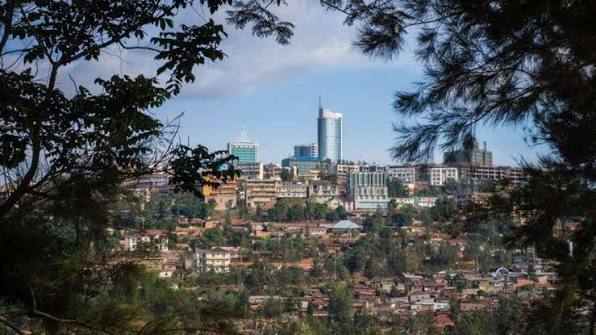
Mount Kigali is the highest point in the city. From the top, you can see everything. The hills stretching out in every direction. The valleys between them filled with houses and streets and trees.
I arrived just before sunset. The light turned everything golden. I sat on a bench and watched the city get ready for nightfall.
There’s a quiet memorial at the top. A place for reflection. I didn’t stay long — I was too busy looking at the view.
The photos are spectacular. But it’s more than that. It’s about perspective. Seeing the city from above, after spending the day in it, gives you a sense of the whole.
The Rwanda Art Museum
I wasn’t sure about this one.
The Rwanda Art Museum is housed in the former presidential palace. Yes, that one.
It’s a weird place for an art museum. But it works.
You can see the wreckage of the presidential plane — the one that was shot down in 1994, the event that sparked the genocide. It’s preserved. Protected. There are signs explaining what happened.
Then you walk into the museum itself. The art is modern. Contemporary. Some of it is challenging. Some of it is beautiful.
The building is something else. A brutalist monument to a president who was beloved by some and reviled by others, now repurposed as a place for art and reflection.
It’s strange. Uncomfortable. But deeply Rwandan. A country that doesn’t pretend its past didn’t happen. A country that finds new uses for old things.
The Local Food
Rwandan food doesn’t get enough love.
It’s not fancy. It’s simple, straightforward, and filling.
The staple is ugali — a thick paste made from cassava or maize flour. You eat it with stews — beans, greens, meat, fish. Grilled meat is everywhere. Brochettes are small skewers — goat, beef, chicken — served with grilled plantains.
I had some of the best grilled meat of my life at a tiny roadside restaurant near the airport. No sign. Just a grill outside and plastic chairs. The owner was a woman who’d been grilling meat for thirty years.
For something nicer, there are restaurants that serve traditional food with a modern twist. The café at Inema is good. The restaurant at The Retreat — a hotel in Kacyiru — is fantastic, with a garden setting.
And coffee. Rwandan coffee is excellent. You can find good coffee everywhere. Some cafes roast their own beans.
Try fresh passionfruit juice. The goat stew is delicious. And banana beer — it’s weird and sour and strangely addictive. Not for everyone, but worth a sip.
Walking Through the City
Kigali is walkable.
Not the whole city — it’s too hilly. But the main neighborhoods are safe and pleasant. Clean streets. Wide sidewalks. People who don’t bother you.
I walked a lot. Just wandering. Seeing where the streets led. Stopping at cafes. Sitting in parks and watching people go by.
There’s a park in the city center where people sit on benches and eat lunch. There’s a quiet garden near the hotel district where someone was reading, someone else was just looking at the flowers. I spent an hour in a park in the center of town, reading, watching families and couples stroll by.
No one approached me. No one asked for money. It was just… peaceful.
I didn’t expect peace in a city. But Kigali has it.
The Nightlife
I don’t go out much.
But Kigali’s nightlife surprised me.
There’s a street in Kacyiru with several bars and restaurants. Modern, stylish, filled with young Rwandans having a good time. Nothing feels dangerous. Just people enjoying themselves.
I sat at a bar on a Saturday night. A group of students invited me to join their table. We talked about the gorillas, about the memorial, about how they felt about Rwanda’s future.
One of them said something I still think about. “We’re building something here,” he said, gesturing around the room. “It’s not perfect. But it’s ours.”
That’s Kigali. A city of young people, building something together, welcoming strangers into their world.
Practical Stuff
Getting around: Register a taxi app. It’s the easiest way. Moto-taxis are everywhere — cheap, fast, and terrifying. Wear a helmet.
Money: Credit cards work at hotels and nicer restaurants. For markets and street food, bring cash — Rwandan francs.
Safety: Kigali is safe. Don’t walk alone in dark alleys at 2 AM. Don’t flash cash. Don’t photograph military or government buildings.
Dress: Kigali is more conservative than Europe or the US. Women, covering knees and shoulders is respectful, especially at the memorial.
Language: English and French are widely spoken. Kinyarwanda is the local language. A few words go a long way — “muraho” (hello) and “murakoze” (thank you).
Thought
I didn’t expect to love Kigali.
I expected it to be a stopover. A necessity before the gorillas. A city to pass through.
Instead, it became one of my favorite places in Africa.
Not because of the memorials or the museums or the views — though they’re all wonderful. Because of the feeling. The peace. The sense of a country that has been through hell and decided to come out different.
You can feel it on the streets. In the way people greet each other. In the quiet discipline of the traffic. In the art that challenges you. In the food that fills you.
Kigali is a statement. A proof that something better is possible.
Spend time there. Not just a night. Give it a day. Maybe two.
You’ll see the gorillas. They’re incredible. But Kigali will stay with you too.