


Kenya in the Green Season: The Honest Case for Visiting January to March
The green season in Kenya, spanning January to March, is one of the most misunderstood periods for safari travel. It sits between the short rains of November–December and the long rains that typically begin in April. Landscapes are fresh, wildlife behavior shifts in subtle but important ways, and visitor numbers remain relatively low compared to peak migration months.
For many travellers, especially first-time visitors, these months are overlooked in favor of July to September. However, January to March offers a different type of safari experience—one that is quieter, more photographic, and often better value without sacrificing wildlife quality in key regions such as the Masai Mara National Reserve.
This is not a compromise season. It is a different safari style that rewards travellers who understand what it offers.
What “green season” actually means in Kenya
The term “green season” does not mean constant rain.
In Kenya, January to March is largely a dry period following the short rains. The landscape remains green and vibrant, but rainfall is minimal or intermittent. Grass is still relatively lush, and water sources are more widely distributed than in peak dry months.
This creates a different ecological balance.
Wildlife is not as tightly concentrated around water as it is during the dry season, but it is still present in strong numbers. Movement patterns are more natural and less forced by environmental pressure.
The result is a safari experience that feels more relaxed and less compressed.
January: fresh landscapes and strong wildlife viewing
January is one of the most underrated months for safari in Kenya.
The landscape is still green from recent rains, creating a visually rich environment that contrasts sharply with the dry-season browns of mid-year.
Wildlife viewing remains strong, particularly in the Masai Mara and surrounding conservancies. Predators are active, and herbivores are widely distributed across the plains.
Because water is still available across multiple areas, animals move more freely rather than clustering in specific zones.
This can make sightings feel more natural, even if they require slightly more tracking effort.
For photographers, January offers a unique combination of green landscapes and good light conditions.
February: peak of the green season advantage
February is often considered the best month within the January–March window.
Rainfall is typically low, skies are clearer, and vegetation begins to thin slightly compared to January.
This improves visibility while maintaining the lush, green aesthetic that defines the season.
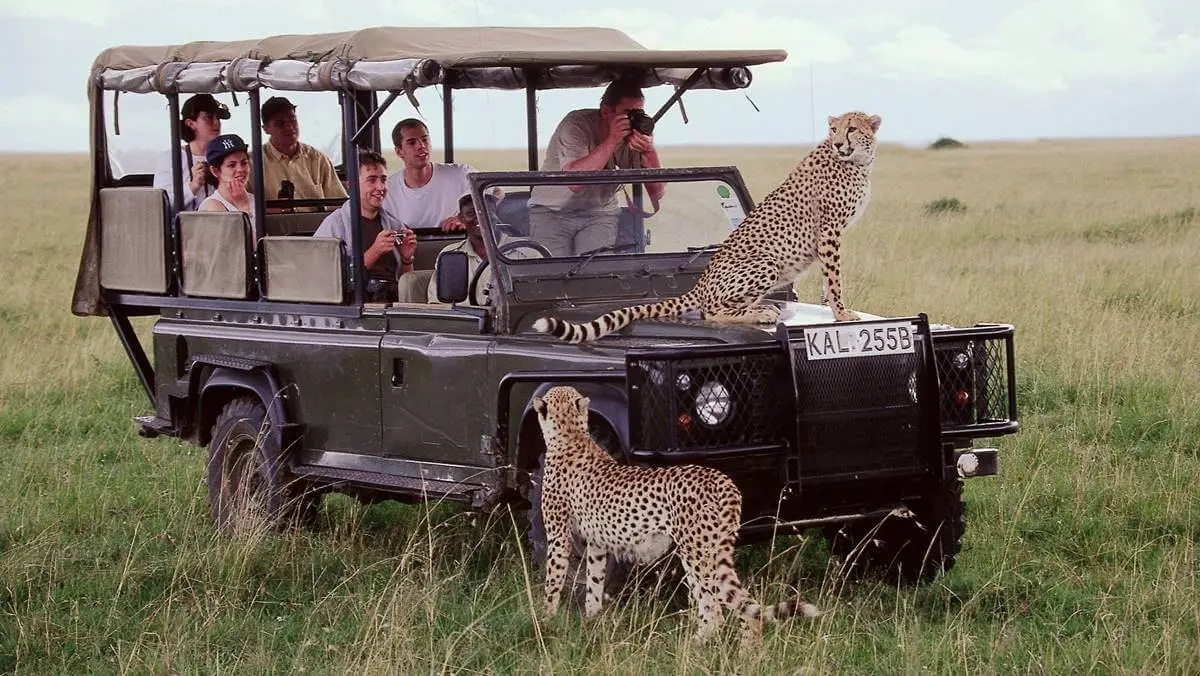
Wildlife viewing becomes more consistent, especially for predators such as lions and cheetahs. In many areas, this is also a strong period for big cat activity, as prey remains abundant and conditions are favorable for hunting.
February strikes a balance between:
Good visibility
Healthy landscapes
Lower visitor numbers
This makes it one of the most strategically strong months for travellers seeking quality without peak-season pressure.
March: transition toward the long rains
March marks the beginning of a transition period.
Early March can still offer excellent safari conditions, but rainfall begins to increase toward the end of the month.
Vegetation thickens again, and wildlife disperses slightly more as water becomes widely available.
This does not eliminate wildlife viewing, but it changes the dynamic. Game drives require more patience, and sightings may take longer to develop.
However, the landscape becomes even more dramatic, with deep green tones and heavier skies that appeal to photographers.
March is best suited for travellers who prioritize scenery and atmosphere over maximum wildlife density.
Wildlife behavior during the green season
One of the key differences in the green season is how animals behave.
During dry months, wildlife is forced to concentrate around limited water sources. This creates predictable patterns but also compresses animal movement.
In the green season, water is more widely available. This allows animals to spread out and follow more natural grazing patterns.
Predators continue to hunt, but encounters are less concentrated around specific locations.
This creates a safari experience that feels less staged and more organic.
It also means that guiding quality becomes more important, as tracking skills are needed to locate wildlife in a less concentrated environment.
Predator activity and big cat sightings
A common misconception is that predator sightings decline during the green season.
In reality, predator activity remains strong, particularly in regions like the Masai Mara.
Lions, cheetahs, and leopards are still present and active. In some cases, hunting conditions improve due to taller grass and increased cover.
This allows predators to approach prey more effectively, leading to dynamic interactions.
However, visibility can be slightly reduced compared to dry months, which changes how sightings are experienced rather than eliminating them.
Birdlife and seasonal migration
January to March is one of the best periods for birdwatching in Kenya.
Migratory bird species from Europe and Asia are present during this time, increasing overall bird diversity.
Wetland areas and open plains become active with birdlife, making this season particularly appealing for birding-focused travellers.
The green landscapes also enhance the visual appeal of bird photography.
Fewer crowds and a more exclusive experience
One of the biggest advantages of the green season is reduced visitor numbers.
Compared to peak months like August, safari vehicles are fewer, camps are quieter, and game drives feel less crowded.
This has a direct impact on the quality of the experience.
Wildlife sightings can be enjoyed without multiple vehicles competing for position, and camps feel more relaxed and personalized.
For travellers who value space and privacy, this is a major benefit.
Cost advantages and value for money
Pricing during January to March is generally lower than peak migration months.
Accommodation rates are reduced, and there is more flexibility in availability. This allows travellers to access higher-end camps at more accessible price points.
Flights and logistics may also be easier to manage due to lower demand.
This makes the green season one of the best periods for value-focused luxury travel in Kenya.
You are not paying for migration timing, but you are still receiving high-quality wildlife experiences.
Photography conditions in the green season
The green season offers some of the most visually striking photography conditions in Kenya.
Landscapes are lush and vibrant, with rich color contrast that is absent during dry months.
Lighting conditions can vary, with occasional cloud cover creating softer, more diffused light. This can be beneficial for certain types of photography.
Dramatic skies, especially toward March, add depth to images.
While wildlife may be slightly harder to spot in dense vegetation, the overall photographic output often benefits from the improved scenery.
Regional performance during the green season
Not all regions perform equally during January to March.
The Masai Mara remains a strong choice due to its year-round wildlife population, even without the migration.
Laikipia also performs well, offering stable wildlife viewing and conservation-driven experiences that are less dependent on seasonal movement.
Samburu provides consistent sightings of northern species and is less affected by rainfall patterns compared to southern Kenya.
This regional flexibility ensures that Kenya remains a viable safari destination during the green season.
Travel logistics and ease of planning
Planning a safari during the green season is generally easier than during peak months.
Availability is higher, which allows for more flexibility in choosing camps and travel dates.
Booking timelines are less restrictive, and last-minute adjustments are more feasible.
This reduces planning pressure and makes the overall process smoother.
Who the green season is best suited for
The January to March window is ideal for travellers who prioritize experience quality over peak-season spectacle.
It suits:
Photographers seeking vibrant landscapes
Travellers looking for fewer crowds
Visitors aiming for better value
Repeat safari travellers exploring different seasons
It may be less suited for those specifically targeting migration events or maximum wildlife concentration.
The shift in safari expectations
Visiting Kenya in the green season requires a shift in expectations.
The focus moves away from high-density wildlife scenes toward a more balanced and natural safari experience.
You are less likely to see massive herds, but more likely to experience quiet, uninterrupted wildlife encounters.
The pace is slower, the landscapes are richer, and the overall experience feels less pressured.
Why January to March deserves more attention
The green season represents a different side of Kenya.
It is not defined by scarcity of wildlife, but by abundance of space, color, and flexibility.
It offers a version of safari travel that is quieter, more personal, and often more visually rewarding.
For travellers willing to move beyond the idea that peak season is the only “good” time to visit, January to March becomes one of the most compelling windows in the Kenya safari calendar.