


Katavi National Park: Hippos, Crocs and Almost No Tourists
Katavi National Park is one of the least visited national parks in Africa, not because it lacks wildlife, but because it sits far outside Tanzania’s main tourism circuits. Its isolation has preserved something increasingly rare in modern safaris: scale without infrastructure pressure, wildlife without vehicle congestion, and ecological processes that play out with minimal human interruption.
Katavi is not a park built around variety. It is built around intensity. During the dry season, it becomes one of the most concentrated wildlife environments in East Africa, particularly along its shrinking river systems and floodplains. Hippos and crocodiles dominate the narrative, but their presence is part of a broader ecological compression that defines the park’s character.
Understanding Katavi requires shifting expectations away from predictable sightings and toward seasonal extremes, where water dictates everything.
Geographic Isolation and Why It Matters
Western Tanzania’s Remote Core
Katavi lies in western Tanzania, far from the more developed northern and southern safari circuits. Access typically requires a charter or scheduled light aircraft flight, followed by a transfer into the park.
This logistical barrier is the primary reason visitor numbers remain extremely low.
Absence of Tourism Pressure
Unlike parks such as Serengeti National Park or Ngorongoro Conservation Area, Katavi operates with minimal tourism infrastructure.
Game drives often take place without encountering other vehicles, which fundamentally changes the pace and feel of the experience.
The Katuma River System: Seasonal Compression
Lifeline of the Park
The Katuma River and its associated floodplains are the central ecological features of the park.
During the wet season, water spreads across the plains, dispersing wildlife over a wide area.
During the dry season, this system contracts dramatically, concentrating animals into shrinking pools and channels.
Floodplain Dynamics
As water recedes, grazing areas become limited, and animals are forced into closer proximity around remaining water sources.
This compression is what creates Katavi’s reputation for intense wildlife encounters.
Hippos: Extreme Density and Competition
Dry Season Crowding
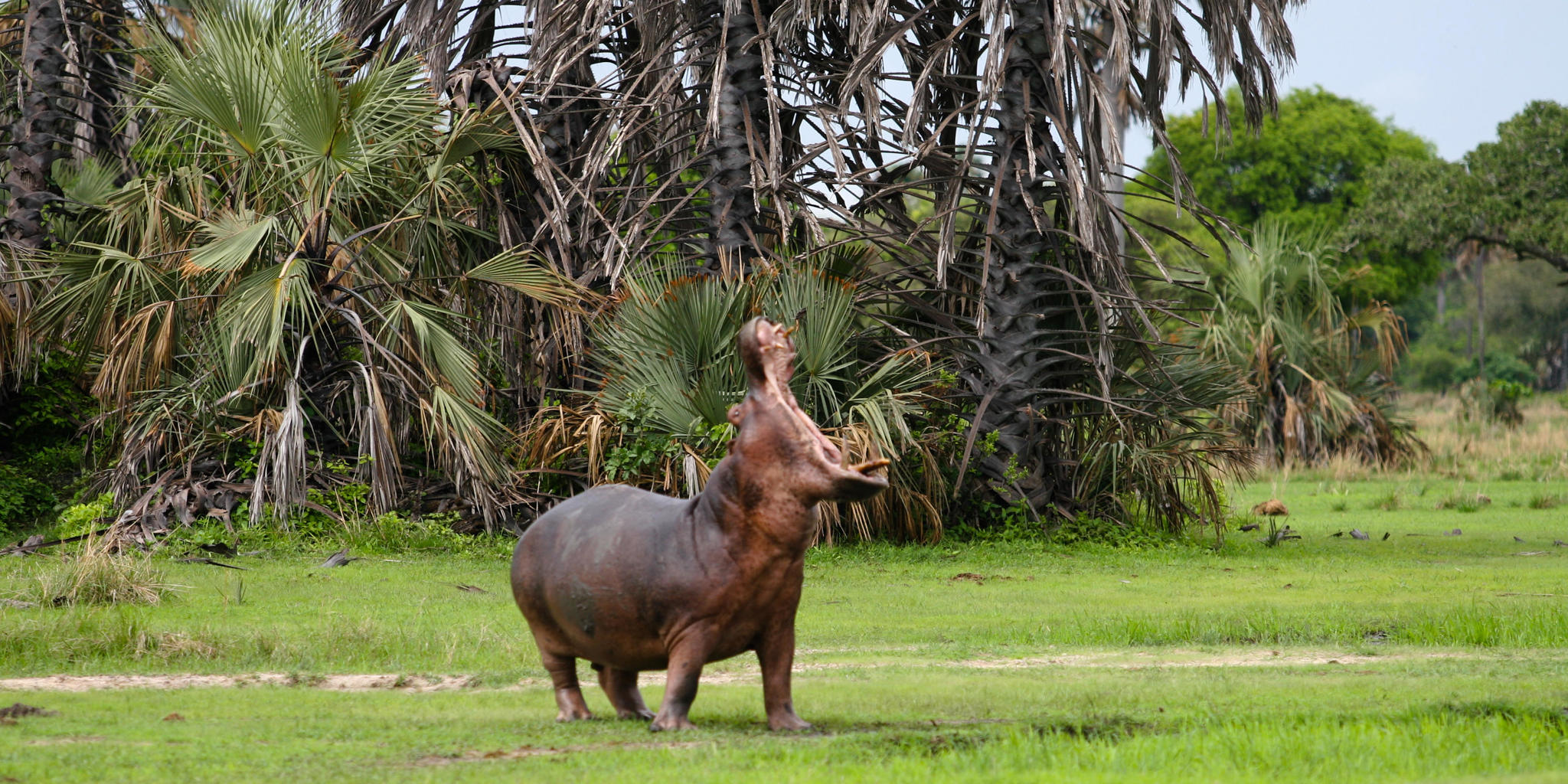
Katavi is known for hosting some of the largest hippo concentrations in Africa during the dry season.
As water levels drop, hundreds of hippos may be forced into small, muddy pools that were once expansive waterways.
Behavioral Intensity
This overcrowding leads to increased aggression and competition.
Hippos are territorial by nature, and limited space amplifies conflict between dominant males.
Encounters can include vocal displays, physical clashes, and constant repositioning within shrinking water bodies.
Observational Value
For travelers, this creates one of the most dynamic hippo viewing experiences available.
Unlike more dispersed populations elsewhere, Katavi offers sustained observation of behavior driven by environmental pressure.
Crocodiles: Opportunistic Predators in a Shrinking System
Concentration Along Riverbanks
Crocodiles in Katavi follow the same water dynamics as hippos.
As rivers shrink, crocodiles gather along remaining pools and channels.
Feeding Opportunities
The concentration of herbivores and the stress of dry conditions increase opportunities for predation.
Crocodiles take advantage of animals coming to drink, as well as weakened individuals struggling with resource scarcity.
Visibility and Behavior
Because water bodies become smaller, crocodiles are easier to locate and observe compared to larger river systems.
Their basking behavior along exposed banks provides consistent viewing opportunities.
Large Mammals Beyond the Water
Buffalo Herds and Grazing Pressure
Katavi supports large buffalo populations, particularly during the dry season when grazing areas are limited.
These herds often move between remaining water sources, creating predictable movement patterns.
Elephants and Water Dependence
Elephants are present throughout the park and rely heavily on the Katuma River system during dry periods.
Their movement often aligns with water availability, making river zones key observation areas.
Predator Activity
Lions are the primary predators in Katavi, often following buffalo herds and other large prey.
Because prey species are concentrated, predator activity can be intense and sustained.
Why Katavi Feels So Different
Scale Without Infrastructure
Katavi is vast, but unlike more developed parks, it has very few lodges and limited road networks.
This creates a sense of exploration rather than structured game driving.
Lack of Vehicle Density
It is common to spend an entire day without seeing another safari vehicle.
This absence of crowding allows for uninterrupted observation of wildlife behavior.
Raw Ecological Processes
Katavi is defined by natural cycles rather than curated experiences.
Drought, resource competition, and predator-prey interactions are visible in their most direct form.
Best Time to Visit Katavi
Dry Season: Peak Intensity
The dry season is when Katavi reaches its most dramatic state.
Water scarcity drives wildlife concentration, making sightings more frequent and behavior more intense.
This is the period when hippos and crocodiles dominate the landscape.
Wet Season: Dispersal and Accessibility Challenges
During the wet season, wildlife disperses across the park as water becomes widely available.
This reduces concentration but enhances scenery and birdlife.
However, access can become difficult due to road conditions and flooding.
Accommodation and Safari Style
Limited Camps, High Exclusivity
Katavi has a small number of camps, which limits visitor numbers and maintains exclusivity.
These camps are often positioned near key river systems to maximize wildlife access.
Focus on Immersion
Safaris in Katavi emphasize time and patience.
Game drives are not about covering large distances quickly but about staying in productive areas and observing behavior over time.
How Katavi Fits Into a Tanzania Safari
As a Specialist Destination
Katavi is best suited for experienced safari travelers who have already visited more accessible parks.
It offers depth and intensity rather than variety.
Combined With Remote Circuits
It can be combined with other remote parks such as Ruaha National Park to create a low-density, high-immersion itinerary.
Comparing Katavi to Other Parks
Versus Serengeti
Serengeti offers large-scale migration and high species diversity.
Katavi offers concentrated wildlife driven by extreme seasonal pressure.
Versus Nyerere National Park
Nyerere National Park focuses on river systems with boat and walking safaris.
Katavi focuses on dry season compression and land-based observation.
Experience Trade-Off
Katavi sacrifices accessibility and variety for intensity and solitude.
Katavi National Park
In practical safari terms, Katavi is one of the most uncompromising wildlife environments in Africa.
It does not adapt to tourism expectations—tourism must adapt to it.
Wildlife encounters are shaped by environmental extremes rather than predictability, and the absence of crowds allows those processes to unfold without interruption.
For travelers willing to go beyond the standard safari circuit, Katavi offers a level of immersion that is increasingly difficult to find elsewhere.
It is not defined by what it promises, but by what it reveals when conditions align.