


Kakamega Forest Reserve: Kenya’s Last Remnant
If you drive west from Kisumu for about an hour, you will see the landscape change suddenly. The farmland will give way to trees, thick vines, and a very dense canopy. This is Kakamega Forest Reserve, the tropical rainforest left in Kenya. Kakamega Forest Reserve is a special place. Everything around Kakamega Forest Reserve, from Uganda to the Congo Basin, used to be part of one forest. Now Kakamega Forest Reserve is all that is left on the soil, and it reminds us of the past.
You should visit Kakamega Forest Reserve if you care about places. It is not the forest, but it is special because it has survived near farms, roads, and growing towns. When you walk into Kakamega Forest Reserve, you will feel the temperature drop. The air will smell like bark and leaves. You will hear birds calling from above. You will realize you are in a part of Africa that is very rare nowadays.
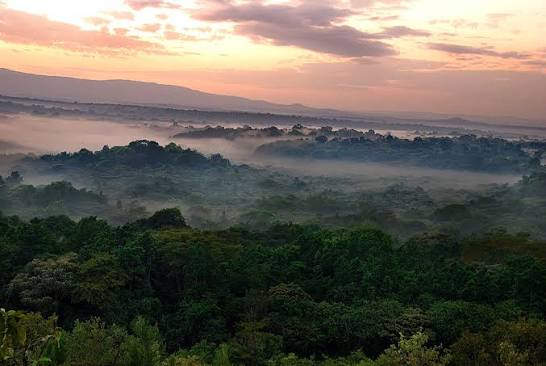
A Forest Unlike Any Other in Kenya
Most of the protected areas in Kenya are grasslands or savannas. Kakamega Forest Reserve is different. Scientists say it is a Guineo-Congolian rainforest, which’s the same type of forest found in Central and West Africa. This tells us something about Kakamega Forest Reserve. A long time ago, this type of forest was much bigger and covered more of the continent. As the climate changed and people settled, the forest got smaller. Kakamega Forest Reserve is part of a much bigger forest system that used to exist.
You can see how isolated Kakamega Forest Reserve is by looking at the plants. There are over 380 species of trees, shrubs, and vines in Kakamega Forest Reserve, and some of them are found only in Kakamega Forest Reserve. Trees like the Elgon teak and fig trees are very tall. Can reach 30 meters or more. If you walk on the trails like the Isiukhu or Buyangu routes, you will see trees that were already old when the first roads were built in this area.
Kakamega Forest Reserve is at an altitude of around 1,500 to 1,600 meters, which means it has a cooler and wetter climate than most of Africa. It rains in Kakamega Forest Reserve for over 200 days a year, which keeps the canopy thick. The undergrowth is tangled. This is why Kakamega Forest Reserve has many different types of plants and animals in such a small space.
The Wildlife You Won’t See Anywhere Else in the Country
Kakamega Forest Reserve has around 400 types of butterflies, over 300 types of birds, and seven types of primates. These numbers are very impressive for a reserve of this size. You could visit Kakamega Forest Reserve three times. Still see something new each time.
Birds That Draw Watchers From Around the World
People come to Kakamega Forest Reserve to see birds that are found in Kakamega Forest Reserve. The great blue turaco is a bird that people want to see with its blue and green feathers. You might also see the grey parrot, the black-and-white-casqued hornbill, or the Turner’s eremomela. The best time to see these birds is early in the morning, around 6:30 a.m. Guides can help you find the birds you want to see, and a guided walk can be very helpful.
Primates and the Sounds of the Canopy
Seven kinds of primates live in Kakamega. You can find the tailed monkey, the blue monkey, and the black-and-white colobus. The colobus is the one that most people remember. It has a white tail, and it jumps from branch to branch really high up. You will often hear the colobus before you see it. You will hear the leaves moving. Then a loud noise when it lands on a lower branch.
It is not easy to see the potto and the bushbaby.. You can see them if you go for a walk at night. Some hotels near the forest organize night walks for their guests. If you have time, you should go on one of these walks. The forest sounds really different at night. You can hear insects making noise. Sometimes you can hear a tree hyrax barking. The tree hyrax is an animal, but it can be really loud.
Walking Through the Forest Yourself
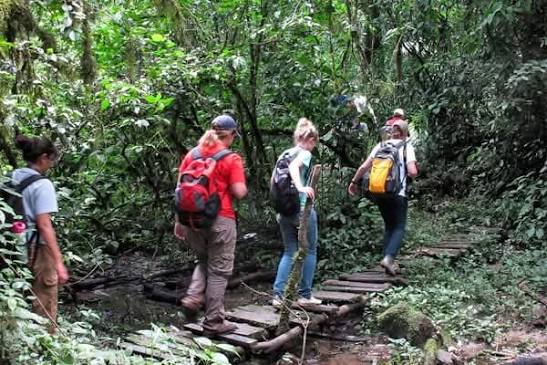
You do not have to be a hiker to walk in Kakamega. The forest has trails that are easy to walk on. Most of the trails take two to four hours to walk, depending on how you walk and how often you stop to look around. The Buyangu area is on the side of the forest. It has roads, and it is easy to get to from Kakamega town, which is about 20 kilometers away. The Isecheno side is on the side of the forest. It is more remote. It is popular with people who like to study birds.
You should wear shoes when you walk in the forest. The trails can get muddy when it rains. It is also a good idea to bring a rain jacket even if it is not raining. Kakamega forest gets rain every week. If you hire a guide, it can be really helpful. They can show you the animals. Keep you safe.
There is a place called Rondo Retreat that’s inside the forest. You can sleep there. Wake up to the sound of birds. There are also hotels in Kakamega town that are cheaper. If you stay near the forest for at least one night, you can go for a walk in the morning and in the evening. These walks are really different. You can see different things.
Why This Remnant Needs You
Kakamega Forest Reserve is in trouble. People are living near the forest, and they need land to farm and wood to build houses. This has been happening for a long time, and it has hurt the forest. Studies have shown that the forest is getting smaller. People are still cutting down trees. Taking land from the forest. This is a problem for the people who take care of the forest.
You can help the forest by visiting it and paying to get in. The money you pay helps to protect the forest. Some groups take care of the forest, and they need your help. You can help by buying things they make and hiring guides. If you stay in hotels that are run by people, you can help them too.
Local groups also plant trees. Take care of the forest. They welcome volunteers to help them. If you help them for one afternoon, it can make a big difference. Kakamega Forest Reserve is a place. It is one of the places like it in Kenya. It is still here because people are taking care of it. You can help by visiting and taking care of it too. Go see it before it’s too late. The forest is still beautiful. The birds still sing in the morning. There are no places like this left in Kenya.