


Is the Susa Group Still the Largest Gorilla Family in Rwanda?
If you’ve spent more than five minutes researching a gorilla trek in Rwanda, you’ve probably seen the name “Susa” pop up. It’s everywhere. And honestly? For good reason.
But here’s the question everyone keeps asking me: Is the Susa group still the largest gorilla family in Rwanda
The straightforward answer is no. It hasn’t been for a while. But if you stop there, you’re missing the whole point of why this family is such a big deal—and why people still fight over permits to go see them.
Why Everyone Fell in Love with the Susa Group in the First Place
Back in the 1970s, this group wasn’t famous—they were just fascinating. Dian Fossey spent years camped out in the misty bamboo forests, watching them, taking notes, and basically teaching the world how gorillas actually live. She named them after the Susa River, and the rest is conservation history.
But what really put them on the map was their sheer size. At one point, this single family had over forty members. Forty! That’s unheard of. For context, most gorilla families hover around 10 to 15. So yeah, they were a massive outlier—and researchers, photographers, and eventually tourists, couldn’t get enough.
A female gave birth to two surviving babies—Byishimo and Impano—which is incredibly rare. And when they thrived? People went nuts. The Susa Group became the rockstars of Volcanoes National Park.
So What Changed?
Nature happened.
You see, gorilla families aren’t permanent. They’re more like sprawling, dramatic soap operas. When a family gets too big, younger silverbacks start getting restless. They want their own territory. Their own females. Their own shot at being the boss.
And that’s exactly what went down with Susa.
Over the years, the original mega-group fractured. Some of the younger males peeled off and started their own families—groups you might have heard of, like Karisimbi, Igisha, and Isimbi. Each new family took a chunk of the original with them.
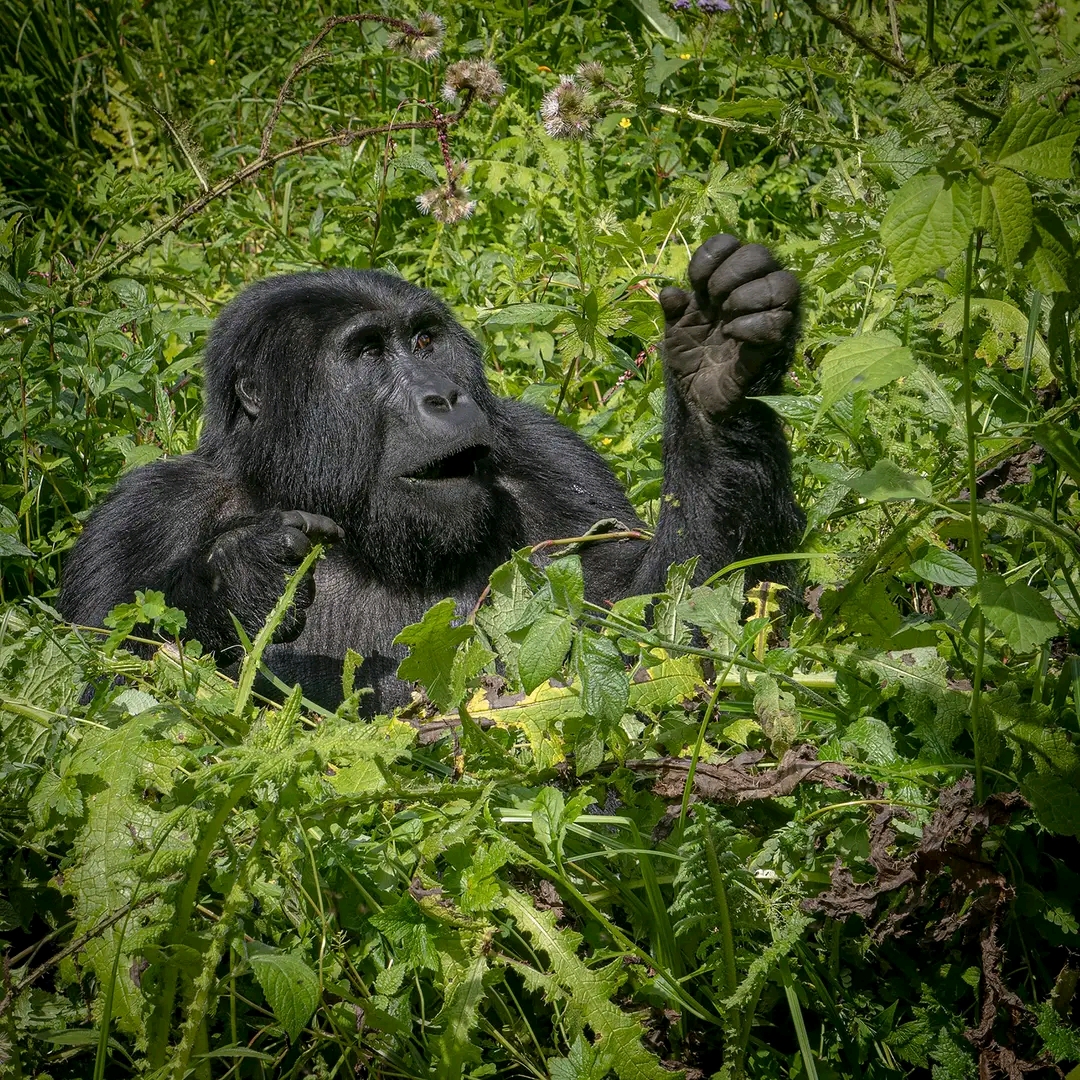
Today, you’ll find the core Susa family hovering around 15 to 23 members. Still a great-sized group. But nothing like the giant clan that made history.
Here’s the Cool Part, Though
This isn’t a sad story. It’s actually the opposite.
A group splitting up is a good sign. It means the population is healthy. It means there are enough gorillas out there that they can afford to diversify. In conservation terms, that’s a huge win.
So when people ask me, “Isn’t it a shame they got smaller?” I always say no. It’s proof that all that park protection and permit money is actually working.
Which Gorilla Family Is the Largest Right Now?
Unlike a static record on a wall, the hierarchy of gorilla families is a constantly shifting narrative. We’re talking about living, breathing communities where the only constant is change. One group might hold the title of the largest gorilla family this month, only to see that crown pass to another by next season.
Here’s why there is no single “biggest” family that stays that way forever:
-
New Beginnings: Gorilla babies are born year-round, instantly increasing a troop’s numbers.
-
Power Struggles: Dominant silverbacks are frequently challenged by younger males. A successful takeover can split a group or lead to the exile of several members.
-
Group Dynamics: Families often merge for protection or fracture due to internal conflict. It is a fluid, natural process.
The Reality of Tracking the Population
While travelers often ask for the “record holder,” rangers and researchers in the Virunga Massif (which spans Rwanda, Uganda, and the DRC) don’t keep a weekly leaderboard. Why? Because their priority is the health and behavioral welfare of the endangered mountain gorillas, not bragging rights.
Tracking size is just one small part of their daily data collection. The primary focus remains on:
-
Habituation: Getting the gorillas accustomed to human presence for tourism and protection.
-
Health Checks: Monitoring for respiratory illnesses or injuries.
-
Genetic Diversity: Ensuring breeding groups remain stable for the long-term survival of the species.
What Is the Current Record?
Historically, groups like the Susa family in Rwanda’s Volcanoes National Park have been known to swell to over 40 members, making them one of the largest habituated families ever recorded. However, due to the natural splits mentioned above, their numbers fluctuate.
As of recent counts, other groups in the Bwindi Impenetrable Forest (Uganda) and the slopes of Mount Mikeno (DRC) have frequently boasted populations in the high teens to low twenties.
If you are planning a gorilla trekking adventure and want to see a large, bustling troop, remember this: size doesn’t guarantee a better experience. A smaller, more compact family often offers clearer viewing angles and more intimate interactions.
Instead of chasing a number, focus on the behavior. The true “king” isn’t the largest group—it’s the dominant Silverback who successfully protects and leads his family, regardless of whether that family numbers 8 or 30.
Is Trekking the Susa Group in Rwanda Still Worth It in 2026?
The short answer is: Absolutely, yes. But let’s be clear—this isn’t a trek for numbers or bragging rights. If you are visiting Volcanoes National Park purely to check a box, you might miss the point. The Susa Group offers something far rarer: a profound, deeply personal connection to the wild.
Here is why this specific gorilla family should be at the top of your bucket list, despite the challenging hike.
The “Susa Challenge”: Why the Hike is Tougher
Let’s address the elephant—or rather, the silverback—in the room. The Susa group resides high on the slopes of Mount Karisimbi, Rwanda’s highest volcano. This means your trek is not a casual stroll; it is a genuine high-altitude mountaineering experience.
-
The Terrain: You will push through thick, misty bamboo forests, scramble over volcanic rock, and navigate muddy ridges.
-
The Physical Toll: Expect a solid 2 to 4 hours of uphill climbing. Your legs will burn, and the thin air will test your lungs.
However, this physical effort is a feature, not a bug. As you ascend, the crowds thin out, the air gets crisper, and the panoramic views of the Virunga Massif become breathtaking. You earn every minute you spend with the gorillas.
Why the Susa Family is the “Crown Jewel” of Gorilla Trekking
When you finally reach the Susa group, you aren’t just seeing gorillas; you are walking into a living legacy. This is the family that Dian Fossey famously studied and protected, and their history is etched into the very soil you stand on.
-
The “Fossey Connection”: You are standing in the same forest where primatology changed forever. Observing the descendants of the most studied gorilla family on Earth adds a layer of history that no other group can offer.
-
Unique Behavioral Insights: Because of their long history with researchers, the Susa gorillas are incredibly habituated. You aren’t just watching them; you are observing their intricate social dynamics up close.
Beyond the Numbers: What You Actually See
Some travelers worry about the size of the group (which fluctuates around 15 members). But let us be brutally honest: the number doesn’t matter.
It doesn’t matter if there are 12 or 30 gorillas. The experience hits the same emotional chord. You will witness moments that no camera can truly capture:
-
The Silverback Stare: A massive silverback locking eyes with you with a patient, ancient, and knowing gaze that feels almost human.
-
The Maternal Bond: A mother cradling her infant as if it were the most precious treasure in the universe.
-
Juvenile Chaos: Young gorillas wrestling, tumbling, and play-fighting like toddlers on a sugar rush, completely oblivious to the humans watching in awe.
-
Is It Worth the Effort?
-
100% Yes.
If you are looking for a quick, easy hike, choose a lower-altitude family. But if you are seeking soul, history, and an adventure that feels like a true expedition, the Susa Group is unmatched. Leave your expectations at the base of the mountain, bring your stamina, and prepare for a once-in-a-lifetime encounter that stays with you long after you descend.
A Little Honest Advice
If you’re the type of traveler who chases checkboxes, you might be disappointed. This isn’t about seeing the biggest.
But if you’re after something deeper—a trek that connects you to conservation history, that challenges you physically, and that leaves you breathless in more ways than one—then the Susa Group is still one of the best choices you can make.
Book early, though. People know the name, and permits vanish fast.