


How Far Is Volcanoes National Park from Kigali Airport?
If you’re flying all the way to Rwanda to see mountain gorillas, the last thing you want is another marathon travel day. You want to get off the plane, shake off the jet lag, and actually arrive somewhere that feels like the start of your adventure.
Good news: Volcanoes National Park is surprisingly close to Kigali Airport. Like, “you can land, have lunch, and still make it to your lodge before sunset,” close.
The Simple Answer
The park is roughly 105 to 120 kilometers from the airport. That usually translates to about 2.5 to 3 hours on the road, depending on traffic, weather, and exactly where your lodge is.
That might sound like a decent chunk of time. But here’s the thing—this isn’t a boring highway slog. It’s one of those drives that actually feels like part of the trip.
What the Drive Really Feels Like
I’ll be honest: I wasn’t expecting much from a “transfer.” I thought it’d be a necessary evil before the real adventure began.
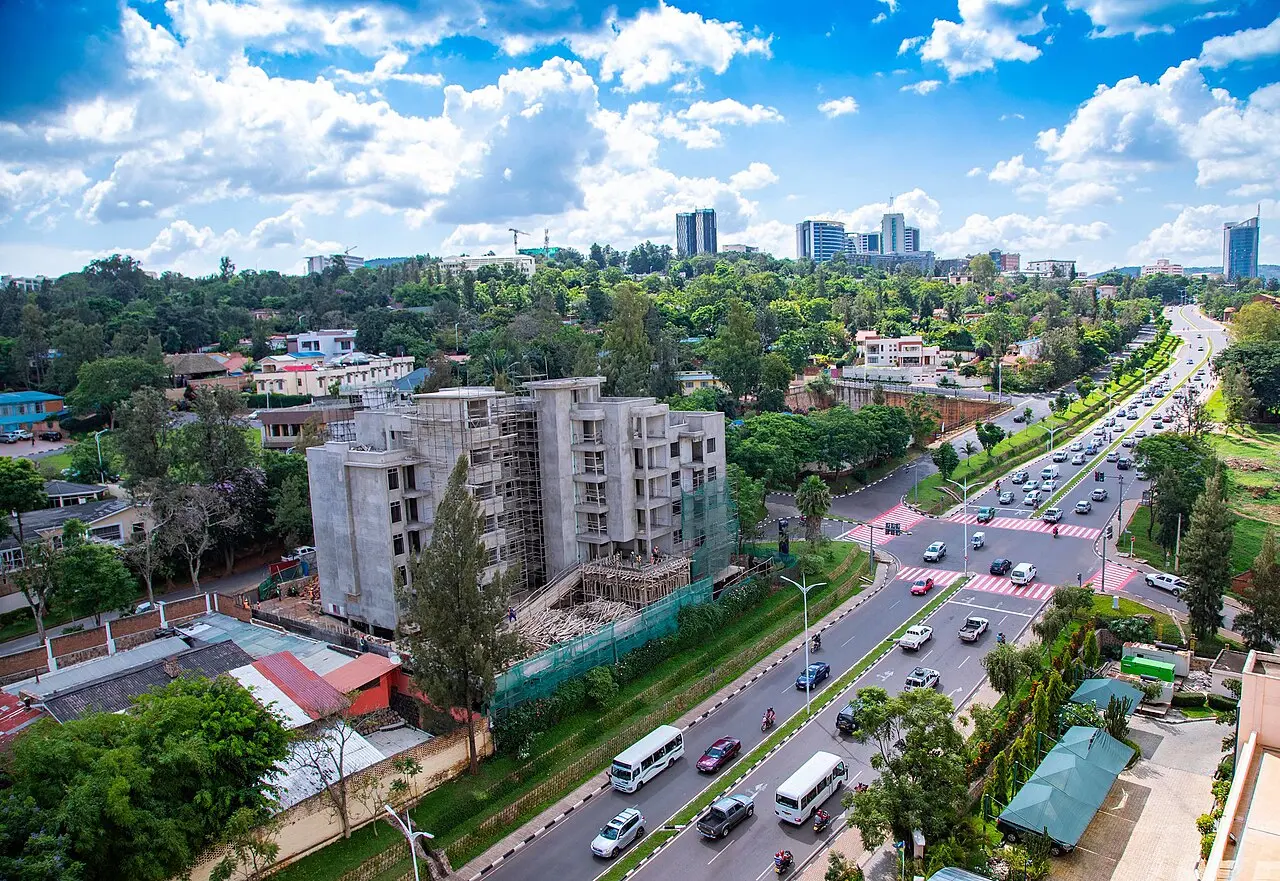
But within 20 minutes of leaving Kigali, the city melts away, and suddenly you’re climbing into these ridiculous green hills that go on forever. Rwanda calls itself the “Land of a Thousand Hills,” and yeah—they’re not exaggerating.
You’ll pass terraced farms clinging to mountainsides, little kids waving at every car, women balancing baskets on their heads, and the occasional herd of goats casually blocking the road. Tea plantations roll by in neat green carpets. Eucalyptus trees line the route, and the air starts to feel fresher the further north you go.
And then, somewhere near Musanze, the clouds part just enough and boom—there they are. The Virunga Volcanoes. Massive, misty, and ancient-looking. That’s when it hits you: you’re actually here.
Can You Make It on the Same Day You Land?
Absolutely. In fact, most people do.
If your flight gets in during the morning or early afternoon, you can easily be at your lodge with time to spare. Unpack, take a hot shower, sit on the deck with a cup of tea, and just stare at the mountains. You’ll have a full night to rest before your gorilla trek the next morning.
I’ve met people who literally flew in, slept, trekked, and flew out the next day. Not my style—but it shows how doable it is.
Getting There: Your Options
1. Private Driver (The Most Popular & Hassle-Free Choice)
This is the gold standard for 90% of travelers, and for good reason. When you book a private airport or hotel transfer through your tour operator (or a local DMC), you are buying more than just a ride—you are buying peace of mind.
-
The Meeting Process: Your professional, English-speaking driver will be waiting for you just beyond the baggage claim, holding a clear sign with your name. They will assist you with your heavy trekking bags, hiking boots, and camera equipment without you lifting a finger.
-
Onboard Comfort: Vehicles are typically 4×4 Land Cruisers or safari vans equipped with Wi-Fi, charging ports, and air conditioning. You’ll be offered chilled bottled water upon entry—a lifesaver after a long flight.
-
The Scenic Advantage: Unlike driving yourself, a private driver allows you to fully immerse yourself in Rwanda’s “Land of a Thousand Hills.” The route winds through tea plantations and vertiginous valleys; with a local at the wheel, you can keep your eyes on the views and your hands free for photography.
-
Flexibility: Need to stop at the famous Iby’Iwacu Cultural Village? Want to grab fresh roadside avocados or take a photo of the twin lakes of Burera and Ruhondo? With a private car, you dictate the itinerary. You can stop anytime for snacks, restroom breaks, or panoramic snaps.
-
Cost: Typically ranges from $250 to $400 per vehicle (round trip), depending on vehicle size and operator. It is the most expensive option, but exponentially safer and more relaxing.
2. Lodge Transfer (The Premium “White-Glove” Service)
If you have booked a stay at one of the high-end eco-lodges near the park (such as Bisate Lodge, Sabyinyo Silverback Lodge, or Virunga Lodge), chances are transport is already included in your package.
-
What to Expect: These lodges send their own branded, well-maintained 4×4 vehicles to collect you. The service runs like clockwork. Drivers are often ranger-trained and will provide exceptional commentary on the local flora and fauna before you even reach the park.
-
The Perks: These trips often include a gourmet picnic lunch or snack hamper for the journey. It is seamless, luxurious, and requires zero planning on your part. Just confirm your flight details with the lodge 48 hours in advance.
3. Renting a Self-Drive Car (For the Independent Adventurer)
Yes, it is technically possible to rent a car and drive yourself from Kigali to Musanze. The main roads (the RN1 and RN4) are well-paved, tarmacked, and clearly signed.
-
The Reality Check: While the roads are decent, Rwandan roads are notoriously winding, steep, and frequently shared with pedestrians, livestock, and heavy trucks. Overtaking requires local knowledge.
-
The Big “But”: Honestly, we strongly advise against this. Here is why:
-
Navigation: While GPS works, local roadblocks and speed cameras are strictly enforced.
-
The Lost Experience: If you are driving, you are watching the tarmac. If you hire a local driver, you are watching the scenery. Local drivers act as impromptu guides—they know the best viewpoints, the history of the villages, and the secret spots for the best coffee.
-
Paperwork: You will need a valid International Driving Permit (IDP) and a credit card for a hefty deposit.
-
Cost: Rental rates start at around $60-$80 per day, but factor in fuel (approx. $30-$40) and the stress of navigating rural roads after a long-haul flight. It is rarely worth the saving.
-
4. Public Bus (The Budget “Local” Option)
For the ultra-budget backpacker, there are public buses (usually operated by companies like Volcanoes Express or RFG) that depart from the Nyabugogo Bus Terminal in Kigali to Musanze.
-
Cost: Incredibly cheap, at roughly $5 to $10 per person, one-way.
-
The Downside: This is where the savings end.
-
The Hassle Factor: Buses are often packed to the brim. If you are carrying large trekking duffels and rigid camping gear, space in the luggage hold is extremely limited and not always secure. Buses run on “African time”—meaning they leave when full, not necessarily on schedule. If you have a strict trekking permit time (usually 7:00 AM at the park headquarters), you risk missing your slot, which is non-refundable.
-
Who it’s for: This option is only suitable for solo travelers with light backpacks who are not on a tight trekking schedule and are staying in Musanze town for a few days prior.
The Verdict: Which should you choose?
-
Choose a Private Driver if you value convenience, safety, and storytelling.
-
Choose a Lodge Transfer if it is included in your luxury package.
-
Avoid Self-Drive unless you are a confident off-road driver with no time constraints.
-
Avoid the Public Bus if you have expensive camera gear or critical trekking permits on the line.
Book your private transfer at least 2 weeks in advance during the peak trekking seasons (June–September and December–February) to secure the best vehicle and driver. Always confirm if the price includes park entry fees and waiting time for your return journey.
Why the Short Distance Is Such a Big Deal
Here’s the thing about gorilla trekking in Rwanda: the convenience is part of the magic.
In Uganda, for example, you’re looking at an 8–10 hour drive from the airport to Bwindi. That’s a full day in a car. In Rwanda? You’re there in under three hours. That means:
-
Less exhaustion. You just flew across the world. You don’t need another marathon.
-
Shorter trips become possible. You can literally do a long weekend and see gorillas.
-
More money stays in your pocket. No domestic flights. No extra hotel nights.
This is exactly why Rwanda’s gorilla permits are pricier—you’re paying for the convenience. And honestly? For a lot of people, it’s worth every dollar.
A Little Advice Before You Go
-
Leave some wiggle room. If your flight lands at noon, don’t book a trek for 6 AM the next day if you can avoid it. Give yourself time to breathe.
-
Bring a light jacket. It gets cooler the closer you get to the volcanoes. That evening breeze hits different up there.
-
Ask your driver to stop. Seriously. The roadside markets are colorful, the views are insane, and some of my favorite photos from the trip were taken during the drive, not the trek.
-
If you have time, explore Kigali first. The Genocide Memorial is heavy but important. A quick city tour adds so much context to your visit.
Is the Drive Worth It?
Look—2.5 hours is 2.5 hours. But this isn’t the kind of drive where you’re staring at the clock, wondering when it’ll end.
It’s the kind where you’re pressing your face to the window, watching the hills roll by, snapping photos of kids playing soccer in red dust, and slowly feeling the city stress leave your body.
And when those volcanoes finally come into view—tall, green, draped in mist—you’ll realize the journey was part of the story all along.