


How Far in Advance Should You Book a Great Migration Safari? (Complete 2026 Planning Guide)
Planning a Great Migration safari is not a casual booking decision. It is a strategic process that directly affects where you stay, what you see, and how immersive your experience becomes. Unlike standard holidays where availability is flexible and predictable, the Great Migration operates within a dynamic ecosystem where timing, location, and limited infrastructure all intersect. This makes advance booking one of the most critical factors in determining the quality of your safari.
Across key destinations such as Serengeti National Park and Maasai Mara National Reserve, demand for migration safaris continues to grow each year. At the same time, the number of camps remains intentionally limited to protect the ecosystem. This imbalance between supply and demand is the primary reason why booking timelines matter so much.
Understanding how far in advance to book requires a deeper look at migration patterns, seasonal demand, accommodation capacity, and traveler expectations. It is not simply about securing a reservation. It is about positioning yourself in the right place at the right time within one of the most dynamic wildlife systems on Earth.
Understanding the Nature of the Great Migration
The Great Migration is not a fixed event. It is a continuous cycle of movement driven by rainfall, grass growth, and water availability. Wildebeest, zebras, and gazelles move across the Serengeti–Mara ecosystem in search of fresh grazing. This means the location of the herds changes throughout the year, and safari planning must align with these movements.
Because the migration follows environmental patterns rather than a strict calendar, predicting exact wildlife locations months in advance is not always precise. However, general seasonal patterns remain reliable enough to guide booking decisions. This is why early booking focuses more on securing strategic locations rather than guaranteeing specific sightings.
Why Booking Early Is So Important
The most important factor in booking a migration safari is not wildlife availability but accommodation capacity. Safari camps in prime migration areas are deliberately small. Many camps have between ten and twenty tents, and some luxury properties have even fewer. This limited capacity ensures low environmental impact but creates high competition for space.
During peak migration periods, especially in areas known for river crossings, these camps are often fully booked months or even a year in advance. Travelers from around the world plan their safaris well ahead of time, and many return to the same camps repeatedly, securing bookings early.
Waiting too long does not mean you cannot go on safari. It means you lose control over key elements such as camp location, travel dates, and overall experience quality. Early booking gives you options. Late booking forces you to accept what remains.
Booking Timelines by Migration Season
The timing of your booking depends heavily on when you plan to travel. Each phase of the migration has its own level of demand and availability.
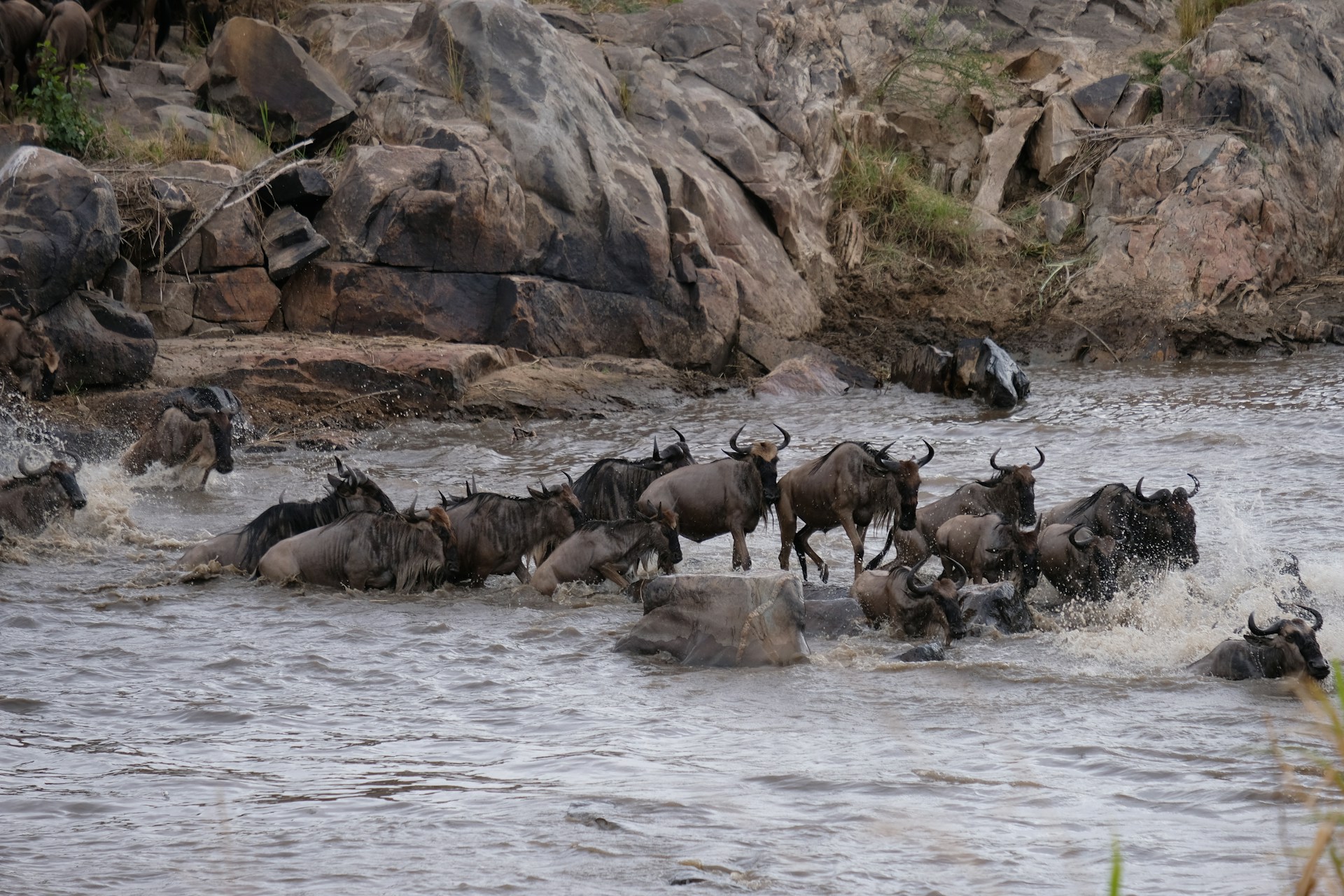
The period from July to October is widely considered the peak season. This is when herds move toward the northern Serengeti and cross into the Maasai Mara, creating the famous river crossing events. Because these crossings are among the most sought-after wildlife experiences in the world, camps in these areas fill extremely quickly. Booking nine to twelve months in advance is strongly recommended, and in some cases, even earlier booking may be necessary for top-tier camps.
The calving season, which occurs between December and March in the southern Serengeti, is another popular time. During this period, thousands of wildebeest calves are born, attracting predators and creating intense wildlife interactions. While demand is slightly lower than during river crossing season, it is still significant. Booking six to nine months in advance is typically sufficient to secure good options.
The green season and shoulder months, covering April to June and November, offer more flexibility. These periods see fewer tourists, and while the migration continues, it is less concentrated in dramatic events. Travelers during these months can often secure quality camps within three to six months. However, even during these quieter periods, the best-located camps still benefit from early booking.
How Travel Style Affects Booking Time
The type of safari you choose also influences how far in advance you should book. Luxury travelers face the most competition for space because high-end camps have very limited capacity and strong repeat clientele. Many luxury camps are fully booked well in advance, making early planning essential. Waiting too long can mean missing out on preferred properties entirely.
Mid-range travelers have slightly more flexibility, as there are more options available in this category. However, during peak migration periods, these camps also fill quickly. Booking at least six to nine months in advance ensures better availability and location alignment.
Budget travelers and those joining group safaris may find more flexibility, especially outside peak months. Group departures sometimes allow for shorter booking windows, but even these can fill up quickly during high-demand periods. Early booking remains beneficial regardless of budget level.
The Reality of Last-Minute Bookings
While last-minute bookings are possible, they come with limitations. Availability is often restricted to less popular camps or locations that may not align perfectly with migration activity. Travelers may need to adjust their itinerary, accept different accommodation standards, or shift travel dates.
In some cases, last-minute bookings can still deliver excellent experiences, particularly during off-peak seasons. However, success depends heavily on flexibility and the ability to confirm bookings quickly when opportunities arise.
The key takeaway is that last-minute booking is a reactive approach, while early booking is a proactive strategy that gives you greater control.
The Role of Flexibility in Safari Planning
Flexibility is one of the most valuable assets when planning a migration safari. Even with early booking, the migration’s unpredictable nature means that exact wildlife sightings cannot be guaranteed. Being open to slight changes in travel dates, camp locations, and daily schedules increases your chances of having a successful experience.
Travelers who remain adaptable can take advantage of real-time adjustments made by experienced guides. These adjustments are often the difference between average sightings and exceptional wildlife encounters.
Why the Migration Cannot Be Fully Guaranteed
It is important to understand that booking early secures logistics, not certainty. The migration is driven by environmental factors, and while general patterns are predictable, exact timing and location can vary.
Rainfall may arrive earlier or later than expected, affecting herd movement. River crossings may not occur on a specific day, even if herds are present. Wildlife distribution can shift based on grazing conditions and predator activity.
This uncertainty is part of what makes the Great Migration so unique. It is a natural system, not a scheduled event. Booking early positions you closer to the action, but it does not create guarantees.
Balancing Expectations and Reality
One of the most important aspects of planning a migration safari is aligning expectations with reality. Many travelers focus heavily on specific events such as river crossings, but these moments are unpredictable and cannot be scheduled.
A successful safari is not defined by a single event. It is defined by the overall experience, including wildlife diversity, landscape, guiding quality, and immersion in the ecosystem.
Booking early increases your chances of being in the right place at the right time, but maintaining realistic expectations ensures a more satisfying experience regardless of specific sightings.
The Strategic Advantage of Early Booking
Early booking offers several advantages beyond availability. It allows for better itinerary design, ensuring that travel routes, camp locations, and activity timing are optimized. It also provides access to preferred guides and vehicles, which can significantly enhance the safari experience.
Additionally, early planning allows travelers to secure better rates before seasonal price increases. Many camps adjust pricing based on demand, and booking early can help lock in more favorable rates.
Working with Experienced Safari Operators
Partnering with a knowledgeable safari operator is essential, especially when planning far in advance. Experienced operators understand migration patterns, camp locations, and logistical considerations. They can recommend the best options based on your travel goals and ensure that your itinerary aligns with seasonal conditions.
They also provide valuable guidance on timing, helping you choose travel dates that maximize your chances of experiencing key migration phases.
Final Thoughts
The question of how far in advance to book a Great Migration safari does not have a single answer, but clear patterns emerge. The more specific your expectations and the more competitive the season, the earlier you should book.
Across destinations like Serengeti National Park and Maasai Mara National Reserve, availability is the limiting factor, not wildlife. Early booking provides control, flexibility, and access to the best locations.
While last-minute options exist, they require adaptability and often involve compromises. For travelers who want the best possible experience with minimal uncertainty, planning well in advance remains the most effective strategy.
Ultimately, booking a migration safari is about more than securing accommodation. It is about positioning yourself within one of the most extraordinary natural systems on Earth, where timing, location, and preparation come together to create an unforgettable journey.