


How Do I Get from Entebbe to Bwindi Impenetrable Forest by Road?
So, You’re Driving from Entebbe to Bwindi?
First off—congrats. You’re about to go see mountain gorillas, which is literally a bucket-list dream for so many people. But right now, you’re probably sitting in Entebbe, staring at your phone, and thinking: “Okay… but how do I actually get to that forest?”
You’ve got two options. Fly, or drive.
And yeah, flying is quick. But driving? That’s where the real Uganda shows up. It’s cheaper, sure, but more than that—it’s how you get to peel back the layers of this incredible country. You’ll roll past roadside markets, wave at kids chasing your car, stop for roadside roasted plantains, and watch the landscape shift from busy towns to rolling hills to misty mountains that look like they belong in a painting.
It’s a long haul, no sugarcoating it. But honestly? Most people finish the drive and say it was one of their favorite parts of the whole trip.
Let me walk you through it, so you know exactly what you’re signing up for.
Okay, But How Long Are We Actually Talking?
Here’s the thing—Bwindi isn’t just one dot on the map. It’s a massive, ancient rainforest split into four different trekking areas: Buhoma, Ruhija, Rushaga, and Nkuringo.
Depending on which one you’re headed to, you’re looking at roughly 450 to 550 kilometers from Entebbe.
And time-wise? Anywhere from 8 to 11 hours.
-
Going to Buhoma? That’s the most popular one—about 8 to 9 hours.
-
Heading to Rushaga or Nkuringo? Those are deeper in the south, so pack your patience—you’re looking at 9 to 11 hours, especially with stops.
I know, I know—that sounds like a lot. But here’s the secret: the drive feeds you. Every hour brings a new view, a new village, a new “wow” moment. You’re not just staring at a highway; you’re watching Uganda unfold in slow motion.
Hitting the Road: The Early Morning Hustle
Most people start right from Entebbe—either from the airport if you land early, or from your hotel after a good night’s sleep.
If you can, leave by 7 AM. I cannot stress this enough. Why? Because Kampala traffic is an absolute beast, and those winding mountain roads are no joke after dark. Getting an early start means you can take your time, stop for photos, enjoy a long lunch, and still roll into Bwindi while the sun’s still out.
Your tour operator will usually hook you up with a 4×4 and a local driver-guide. And honestly? These guys are gold. They know every pothole, every secret coffee stop, and every spot where you’ll want to pull over and just stare at the view. Plus, they handle all the stressful stuff—navigation, fuel, permit checks—so you can just enjoy.
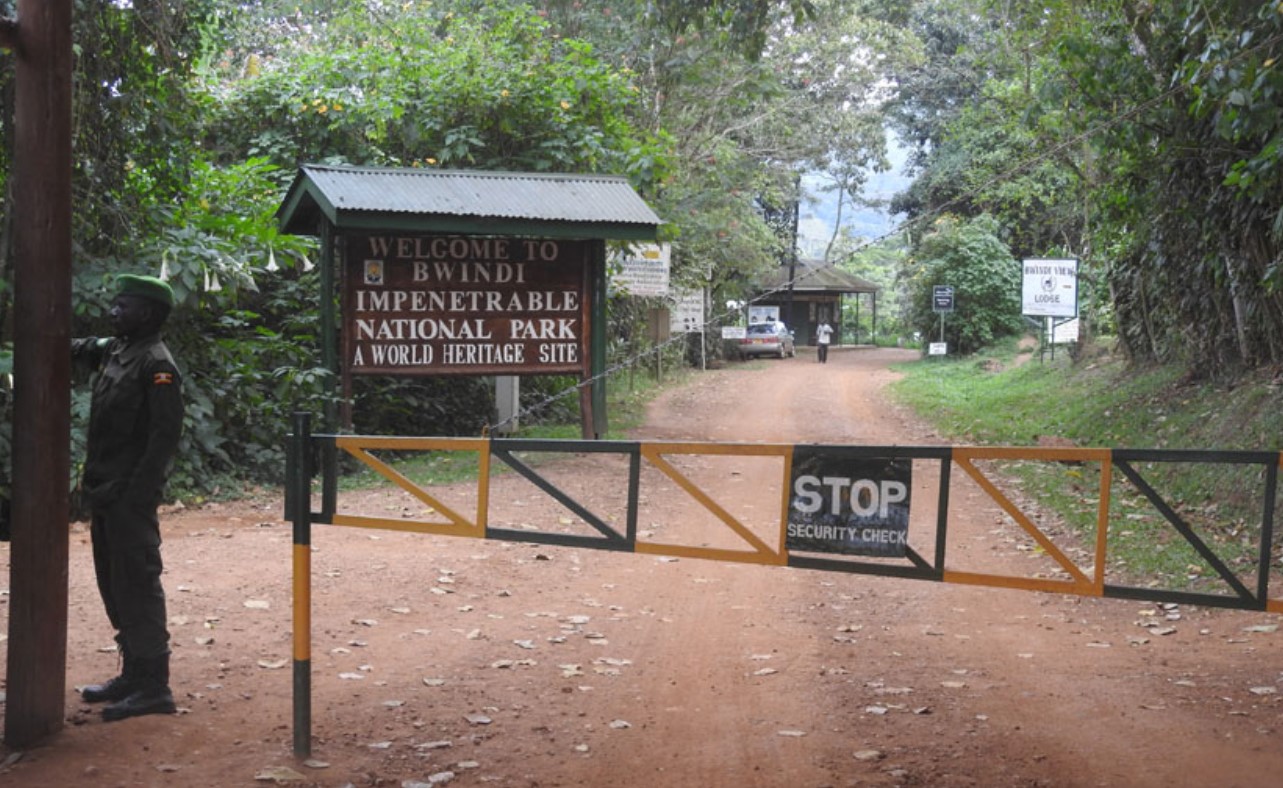
The Route: Towns, Twists, and Tons of Tea
Entebbe → Kampala → Masaka → Mbarara → Ntungamo → Kabale → Bwindi
The first few hours—through Kampala, Masaka, and Mbarara—are on proper, paved highways. You’ll be cruising comfortably, watching the city chaos slowly fade into wide-open countryside.
But somewhere after Mbarara, the real adventure begins. The roads start to curl and climb. You’ll pass through misty hills, tea plantations so green they almost hurt your eyes, and tiny villages where kids run out to wave at every car that passes.
And yes—some stretches are bumpy. Especially if it’s been raining. That 4×4 isn’t just for show; you’ll be grateful for it when you hit a muddy patch.
The Little Moments That Make It All Worthwhile
Standing on the Equator
Somewhere between Kampala and Mbarara, you’ll cross the Equator line near Kayabwe. It’s become this fun little ritual—everyone stops, gets out, takes the classic “one foot in each hemisphere” photo. There’s even a local guy who does a water demo showing how it swirls clockwise on one side and counterclockwise on the other. It’s touristy, sure, but it’s also genuinely cool. Grab a coffee, browse the souvenir stalls, and stretch your legs.
Lunch in Mbarara
By the time you hit Mbarara, you’ll be ready for food. It’s the biggest town in western Uganda, and there are plenty of places to grab a proper meal. Your guide will know a good spot. And while you’re eating, keep an eye out for the Ankole cattle—those massive, regal beasts with horns that look like they belong in a fantasy movie. They roam all around here.
The “Switzerland of Africa” Moment
As you approach Kabale, the landscape transforms. Suddenly, you’re surrounded by terraced hills, misty valleys, and cool mountain air. It’s so stunning that locals call it the “Switzerland of Africa.” And honestly? It lives up to the name. You’ll find yourself rolling down the window just to breathe it in.
The Final Stretch
If you’re heading to Rushaga or Nkuringo, the last couple of hours are a visual feast—steep hills, dramatic ridges, and views that stretch all the way to the Virunga mountain range. It’s the kind of scenery that makes you forget you’ve been in a car for hours.
Which Part of Bwindi Are You Going To?
This matters because each sector has its own vibe:
-
Buhoma: The classic. Most established, tons of lodges, great for first-timers. Drive time ~8–9 hours.
-
Ruhija: Quieter, cooler, and perfect for bird nerds. Higher altitude, so pack a sweater. ~9 hours.
-
Rushaga: The place to be if you want the Gorilla Habituation Experience—you get up to 4 hours with the gorillas. Drive is longer (~9–11 hours) but so worth it.
-
Nkuringo: Stunning views, challenging treks, and luxury lodges. The most remote, so plan for ~10–11 hours.
Should You Drive Yourself? (Honest Answer)
Look—you can self-drive. But should you?
Unless you’re used to African roads, I’d strongly recommend hiring a guide. Not just for safety, but for sanity. Navigating those mountain roads after a long flight, with dodgy GPS and sudden rainstorms? Stressful.
A local driver takes all that off your plate. Plus, they’re an amazing company—they’ll tell you stories about the villages, the wildlife, the history. It turns the drive from a chore into an experience.
If you absolutely want to self-drive, rent a proper 4×4 and drive very, very carefully—especially in the rainy seasons (March–May and October–November). Some roads turn into slippery red mudslides.
Real Talk: A Few Tips From Someone Who’s Done It
-
Pack snacks and water. There are stops, but you’ll thank me when you hit a long stretch with nothing around.
-
Dress like you’re on a road trip. Comfy pants, layers, shoes you can kick off.
-
Bring motion sickness meds if you’re prone to it. Those winding roads are no joke.
-
Charge your phone and camera. You’ll be stopping constantly for photos.
-
Take breaks. Stretch, breathe, chat with locals. Don’t just barrel through.
-
Download offline maps. The signal drops out once you leave the main towns.
Want to Make It a Two-Day Trip? Do It.
Honestly? A lot of people break this drive into two days. And I think it’s a brilliant idea.
You can stop overnight near Lake Mburo National Park—it’s right on the way—and do a game drive or a boat safari the next morning. Then you continue to Bwindi feeling fresh, not frazzled.
It’s especially great if you’re traveling with kids, or if you just prefer a slower, more relaxed pace.
Why Not Turn It Into a Whole Safari?
Since you’re already on the road, why stop at Bwindi? So many travelers combine it with:
-
Lake Mburo for wildlife viewing
-
Queen Elizabeth National Park for tree-climbing lions and boat cruises
-
Kibale Forest for chimpanzee tracking
It turns your road trip into a full-on Ugandan safari circuit—and honestly, you’ll get so much more out of your trip.
Arriving at Bwindi: The Magic Kicks In
When you finally roll into your lodge—exhausted, dusty, but buzzing—it feels like an achievement.
The lodges here range from cozy budget spots to breathtaking eco-retreats tucked right into the forest. They’ll welcome you with a warm drink, a hot meal, and a quick briefing about tomorrow’s trek.
You’ll fall asleep to the sounds of the forest—birds, insects, maybe even a distant gorilla chest-beat if you’re lucky. And you’ll wake up before sunrise, ready for one of the most incredible days of your life.
So, Is the Road Trip Worth It?
I’ve met so many travelers who were nervous about the drive. They dreaded the long hours, worried about the roads, stressed about the planning.
And then, after they’ve done it? They tell me it was one of their favorite parts. Not because the roads were smooth—they aren’t. But because they got to see Uganda. They felt it. They connected with it.
The drive isn’t just a transfer. It’s the warm-up act. It’s the story you’ll tell before you even get to the gorillas.
So take a deep breath, pack your sense of adventure, and hit the road. You’ve got this—and it’s going to be unforgettable.