


Great Migration and Lake Natron: Flamingo and Wildebeest Combo
Combining the Great Migration with a visit to Lake Natron creates one of the most unusual and visually diverse safari itineraries in East Africa. This pairing moves beyond the classic Serengeti circuit and introduces a striking contrast between mass wildlife movement and one of Africa’s most extreme and otherworldly landscapes.
On one side, you have the dynamic spectacle of wildebeest herds moving across Serengeti National Park. On the other, you have a remote alkaline lake that hosts one of the largest breeding populations of flamingos in the world. Together, they deliver a safari experience that blends scale, color, geology, and ecology in a way few itineraries can match.
Why Combine the Migration with Lake Natron
Most travelers focus only on the Serengeti when planning a migration safari. While this delivers excellent wildlife viewing, it can feel one-dimensional if you are looking for broader ecological diversity.
Adding Lake Natron introduces a completely different environment. The Serengeti is open savannah with large mammals and predators. Lake Natron is a harsh, mineral-rich landscape dominated by salt flats, volcanic terrain, and birdlife.
This contrast enhances the overall safari experience. You move from the noise and motion of thousands of animals to the stillness and surreal beauty of a lake that appears almost alien.
What Makes Lake Natron Unique
Lake Natron is not a typical freshwater lake. It is highly alkaline, with mineral-rich waters that can appear red or pink depending on algae and seasonal conditions.
The lake is located at the base of Ol Doinyo Lengai, an active volcano that contributes to the region’s unique geology. The surrounding landscape is dry, dramatic, and sparsely populated.
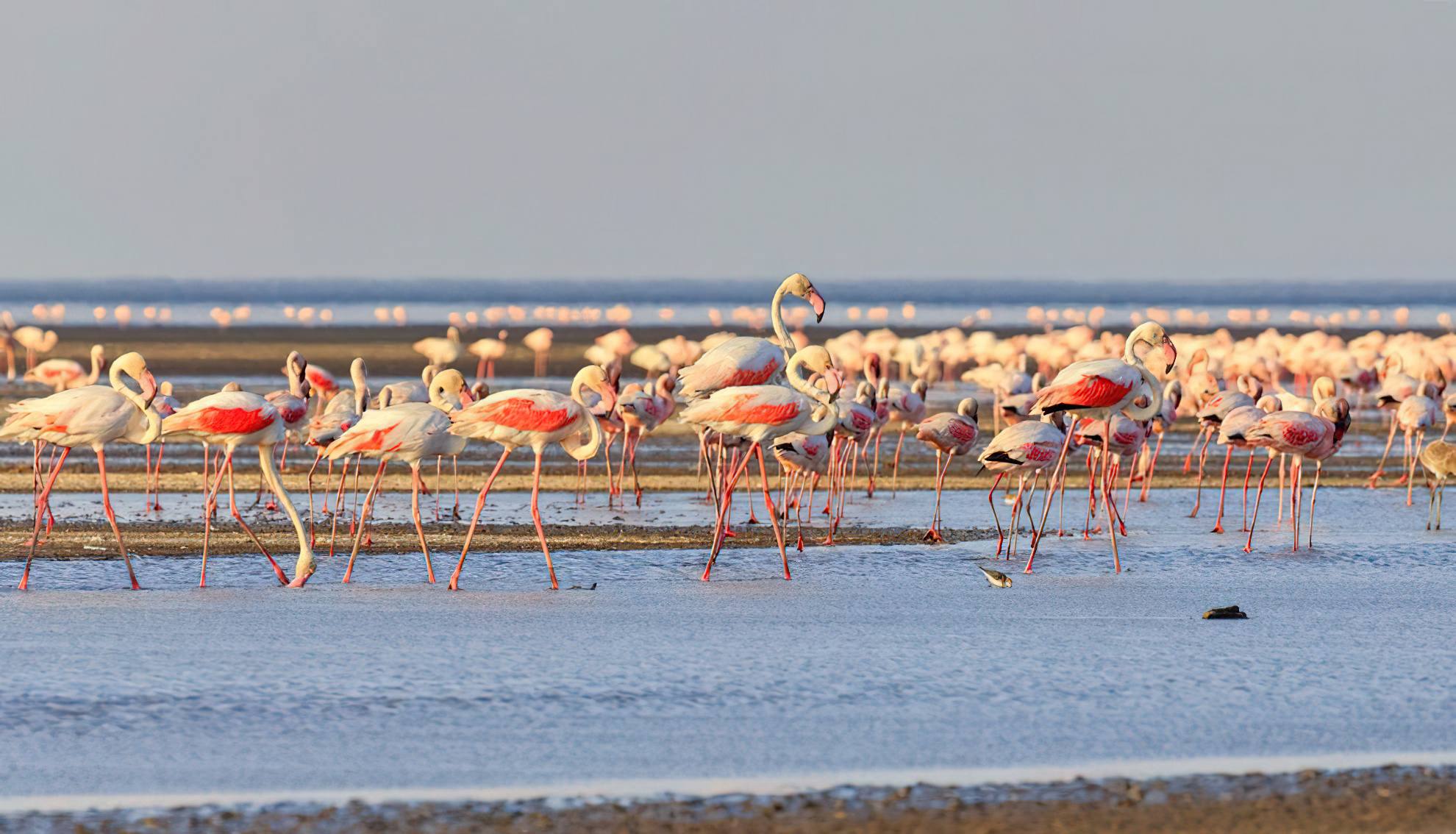
Despite its harsh conditions, the lake is one of the most important breeding grounds for lesser flamingos in Africa. Millions of flamingos gather here seasonally, feeding on algae and nesting on isolated salt islands.
This makes it one of the best places in East Africa to observe flamingo behavior in a natural, undisturbed setting.
The Flamingo Experience
Flamingos are the primary attraction at Lake Natron.
During peak periods, the lake can host vast flocks that create a pink haze across the horizon. The birds move in synchronized patterns, feeding and resting in shallow waters.
Unlike more accessible lakes where flamingos are seen from a distance, Lake Natron offers a more raw and intimate viewing experience. There are fewer crowds, minimal infrastructure, and a stronger sense of isolation.
The experience is less about close-up photography and more about scale, color, and atmosphere.
How the Migration Fits into This Itinerary
The Great Migration is a moving system, so timing determines how it aligns with Lake Natron.
This combination works best when the herds are in the southern Serengeti, typically between December and March. During this period, the plains are filled with wildebeest, and calving season attracts high predator activity.
Lake Natron is geographically closer to these southern areas, making travel more efficient and logical.
Outside this period, combining the two destinations is still possible but may require longer travel distances depending on herd location.
Sample 7-Day Itinerary Structure
Day 1: Arrival in Arusha
Your journey begins in Arusha, where you prepare for the safari and rest after arrival.
Day 2: Arusha to Lake Natron
You travel north toward Lake Natron through Maasai land and volcanic landscapes. The drive itself is part of the experience, offering views of remote terrain and traditional pastoral life.
Day 3: Explore Lake Natron
This day is dedicated to exploring the lake and surrounding area.
Activities may include guided walks to flamingo viewing points, visits to waterfalls hidden in rocky gorges, and optional hikes near the base of Ol Doinyo Lengai.
The focus is on landscape, birdlife, and cultural interaction rather than large mammals.
Day 4: Lake Natron to Serengeti
You travel toward the southern Serengeti, transitioning from volcanic terrain to open savannah.
Game viewing begins as you approach migration areas.
Day 5: Full Day in the Serengeti
You spend the day tracking wildebeest herds and observing predator-prey interactions.
During calving season, this can include large concentrations of newborn animals and increased predator activity.
Day 6: Another Full Day in the Serengeti
A second day allows deeper exploration and increases the chances of witnessing key migration moments.
Day 7: Return to Arusha
After a morning game drive, you return to Arusha for departure.
Wildlife and Landscape Contrast
This itinerary stands out because of its diversity.
In the Serengeti, you experience movement, density, and classic safari wildlife including lions, cheetahs, and large herbivore herds.
At Lake Natron, you experience stillness, color, and birdlife in a landscape that feels almost untouched.
The combination creates a more layered understanding of East Africa’s ecosystems.
Who This Safari Is Best For
The Great Migration safari is one of the most iconic wildlife experiences in the world, but it is not equally suited to every type of traveler. Because it involves long game drives, seasonal wildlife movement, and varying comfort levels depending on budget, understanding who benefits most from it helps you plan a more satisfying trip.
The migration takes place across ecosystems like Serengeti National Park and Maasai Mara National Reserve, meaning travel style, timing, and expectations play a major role in shaping the experience.
First-Time Safari Travelers
The Great Migration is ideal for first-time safari visitors because it delivers high wildlife density and classic African safari scenery in one trip. Seeing vast herds of wildebeest, zebra, and gazelles moving across open plains creates an immediate “wow” factor that defines the safari experience.
It also introduces travelers to core safari elements such as early morning game drives, expert guiding, and varied landscapes. For many, it becomes the benchmark against which all future safaris are measured.
Wildlife Enthusiasts and Nature Lovers
For travelers deeply interested in wildlife behavior, the migration offers unmatched ecological storytelling. It is not just about seeing animals but understanding movement patterns, predator-prey dynamics, and seasonal cycles.
You can observe:
Large herbivore migrations across open savannahs
Predator interactions involving lions, cheetahs, and hyenas
River crossing behavior during peak migration months
This makes it especially appealing for those who value natural history and animal behavior over luxury or relaxation-focused travel.
Photographers and Content Creators
The Great Migration is one of the most photogenic wildlife events on the planet.
Photographers benefit from:
Dramatic river crossings and action scenes
Golden light over open plains
High-density wildlife compositions
Wide-angle landscape opportunities
However, it also requires patience and timing. Wildlife movement is unpredictable, so successful photography depends on staying flexible and working closely with experienced guides.
Honeymoon and Romantic Travelers
Couples often choose the migration for its dramatic scenery and emotional impact. Luxury camps in regions like Serengeti National Park offer private experiences, candlelit dinners, and sunrise balloon safaris.
The combination of exclusivity, wilderness, and shared adventure makes it a strong honeymoon destination, especially for couples seeking something beyond traditional beach holidays.
Families with Older Children
The migration can be suitable for families, but it depends on age and travel style.
Older children and teenagers tend to enjoy it more because they can appreciate long drives, wildlife tracking, and educational aspects of the safari.
Family-friendly lodges often provide shorter game drives, flexible schedules, and educational guiding to keep younger travelers engaged.
However, very young children may struggle with long travel times and early morning starts.
Luxury Travelers
High-end travelers are strongly drawn to the Great Migration because it offers access to premium tented camps, private guides, and exclusive conservancy areas.
Luxury safaris may include:
Fly-in transfers between camps
Private game drives
High-end lodges with full amenities
Hot air balloon safaris over migration routes
This group often prioritizes comfort while still wanting close wildlife encounters.
Adventure Seekers
For travelers who prefer immersive and active experiences, the migration offers plenty of adventure.
This includes:
Long game drives across remote terrain
Tracking herds based on movement patterns
Occasional walking safaris in controlled zones
Early morning and late evening wildlife viewing
The unpredictability of wildlife movement adds a sense of exploration and discovery.
Budget-Conscious Travelers
The migration can still be accessible on a budget, but it requires careful planning.
Travelers in this category typically stay in basic tented camps or group safari packages. While comfort levels are simpler, wildlife viewing remains excellent because nature is the same regardless of accommodation type.
The key trade-off is fewer luxury amenities in exchange for access to one of the greatest wildlife spectacles on earth.
Who It May Not Be Ideal For
The Great Migration may be less suitable for travelers who prefer:
Fixed, predictable sightseeing schedules
Minimal travel time between locations
High urban comfort and luxury without wilderness exposure
Short, single-location holidays
Because the migration is seasonal and mobile, flexibility is essential.
Cost Expectations for 2026
Lake Natron is remote, with limited infrastructure. Travel times can be long, and road conditions vary.
Temperatures can be high, especially during the day, so early morning and late afternoon activities are preferred.
Accommodation is more basic compared to the Serengeti, though some comfortable camps are available.
Despite these challenges, the reward is a unique and uncrowded experience.
Final Thoughts
A Great Migration and Lake Natron safari offers a rare combination of movement and stillness, wildlife and landscape, intensity and isolation.
It moves beyond the standard safari formula and introduces a broader perspective on East Africa’s natural diversity.
For travelers willing to step slightly off the main tourist path, this itinerary delivers one of the most distinctive and memorable safari experiences available in 2026.