


Gombe Stream: Where Jane Goodall Studied the Chimps
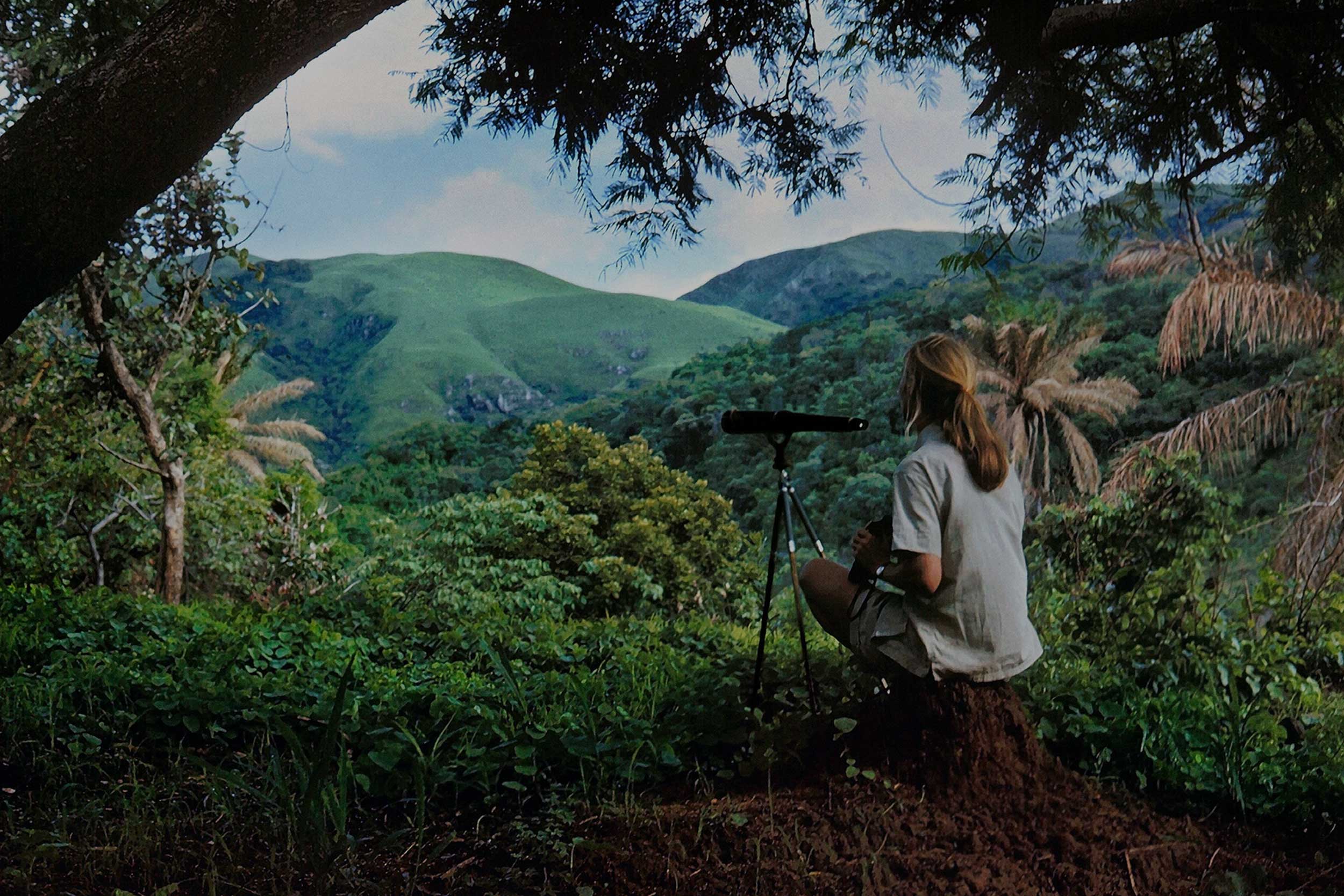
Gombe Stream National Park is one of the most important wildlife research locations in the world and the place where Jane Goodall began her groundbreaking study of chimpanzees in 1960. For travellers in 2026, this small and remote park offers something completely different from a traditional safari. There are no sweeping savannahs or big game drives here. Instead, the experience is focused, intimate, and rooted in one of the most influential scientific journeys ever undertaken.
This is where our understanding of chimpanzees changed forever, and where safari travel shifts from observation to deeper ecological and behavioral insight.
The origin of chimpanzee research at Gombe
When Jane Goodall first arrived at Gombe, chimpanzees were widely considered primitive animals with limited intelligence. Scientific understanding at the time underestimated their social and cognitive abilities.
Her early observations overturned that perception.
She documented chimpanzees using tools, most famously modifying twigs to extract termites from mounds. This discovery fundamentally challenged the definition of what separated humans from other animals. At the time, tool-making and tool use were considered uniquely human traits.
Goodall also observed complex social hierarchies, family bonds, emotional expression, and even conflict between chimpanzee groups. These findings introduced a new way of understanding primates—not as simple creatures, but as highly intelligent beings with structured societies.
Gombe became the starting point for decades of continuous chimpanzee research, making it one of the longest-running wildlife studies in history.
The landscape: a forest instead of a savannah
Gombe Stream National Park is dramatically different from classic East African safari destinations.
Instead of wide-open plains like the Masai Mara National Reserve, Gombe is a dense tropical forest ecosystem. The terrain consists of steep valleys, ridgelines, and thick vegetation that slopes down toward Lake Tanganyika.
The park is small, covering roughly 52 square kilometers, but its compact size creates a more concentrated and immersive environment.
There are no roads for game drives. Movement is entirely on foot.
This changes the entire structure of the safari experience. Instead of scanning landscapes from a vehicle, visitors move through the forest itself, guided by trackers who follow chimpanzee movements.
Chimpanzee tracking: the core experience
The main activity in Gombe is chimpanzee tracking.
This is not a passive experience. Visitors hike through forest terrain, sometimes for several hours, depending on where chimpanzee groups are located on a given day.
Once the chimpanzees are found, the experience becomes highly intimate. You observe them at close range as they move, feed, groom, and interact within their social groups.
Unlike savannah safaris, where animals are often observed at a distance, Gombe creates proximity. You are inside the environment rather than looking at it from outside.
Chimpanzees in Gombe are habituated to human presence due to decades of research, which allows for natural behavior to continue even when observers are nearby.
The scientific legacy that still continues
The research initiated by Jane Goodall did not end with her early discoveries. It evolved into a continuous, multi-generational study of chimpanzee behavior.
Through decades of observation, researchers documented complex social dynamics, including alliances, leadership struggles, maternal care, and intergroup conflict.
One of the most significant findings was evidence of organized aggression between chimpanzee groups, sometimes referred to as the Gombe Chimpanzee War. This challenged earlier assumptions that such behavior was uniquely human.
Today, research at Gombe continues under the Jane Goodall Institute, making the park both a travel destination and an active scientific research site.
How Gombe differs from other chimpanzee destinations
Gombe is often compared to other primate destinations such as Kibale Forest in Uganda.
The key difference lies in scale and context.
Kibale offers higher chimpanzee density and easier accessibility, making sightings more predictable. Gombe, by contrast, offers a more historically significant and research-driven experience.
It is less about quantity and more about depth.
Visitor numbers in Gombe are also lower due to its remote location, which creates a quieter and more exclusive environment.
Access and remoteness
Getting to Gombe requires deliberate planning.
There are no direct road connections into the park. Travellers typically fly to western Tanzania and then take a boat along Lake Tanganyika to reach the park.
This multi-step journey is part of what keeps Gombe relatively untouched by mass tourism.
The remoteness adds logistical complexity, but it also preserves the integrity of the environment and the authenticity of the experience.
Accommodation and stay experience
Accommodation in Gombe is limited compared to mainstream safari destinations.
Visitors stay in small lodges or simple camps that prioritize proximity to chimpanzee tracking areas rather than large-scale luxury infrastructure.
The experience is quiet, low-impact, and focused on nature rather than amenities.
This aligns with the park’s identity as a research and conservation site rather than a commercial safari hub.
Physical demands and preparation
Chimpanzee tracking in Gombe requires a moderate level of physical fitness.
The terrain is uneven, often steep, and can be humid. Trekking duration varies depending on chimpanzee location, which can change daily.
Visitors should be prepared for hiking conditions rather than vehicle-based sightseeing.
Proper footwear, lightweight clothing, and basic endurance are important for a comfortable experience.
Why Gombe remains relevant in modern safari travel
In 2026, safari travel is increasingly focused on meaningful experiences rather than just wildlife quantity.
Gombe represents this shift clearly.
It offers a connection to one of the most important scientific stories in wildlife research while providing a deeply immersive primate experience.
Most safari destinations focus on observation—seeing animals in their natural environment.
Gombe goes further.
It allows visitors to engage with decades of scientific knowledge while observing the same chimpanzee communities that shaped our understanding of primates.
This transforms the experience from simple wildlife viewing into something more analytical and reflective.
Who Gombe is best suited for
Gombe is best suited for travellers who value depth over variety.
It appeals to those interested in primates, conservation, and the history of wildlife research rather than traditional big game safaris.
It is also ideal for repeat safari travellers looking to expand beyond savannah ecosystems into forest-based experiences.
For first-time visitors expecting classic safari imagery, Gombe may feel very different—but for the right traveller, that difference is exactly its value.
Why Gombe stands apart from classic safari destinations
Gombe Stream National Park exists outside the typical safari framework.
It does not compete with places like the Masai Mara or Serengeti in terms of wildlife density or dramatic landscapes.
Instead, it offers something rarer: a direct connection to one of the most important chapters in wildlife science.
The experience is quieter, more focused, and more intellectually engaging.
It is where safari becomes study, and where travel intersects with one of the most influential conservation stories ever told.