


Golden Monkeys Rwanda: Volcanoes National Park Experience
The first time I saw a golden monkey, I thought I was hallucinating.
We’d been hiking through Volcanoes National Park for about an hour. The bamboo forest was thick, the mist was rolling in, and I was focused on not slipping in the mud. I wasn’t expecting anything spectacular—just another forest hike, just another primate sighting.
Then my guide stopped. Pointed up.
I looked.
And there, in the bamboo, was a creature so beautiful I couldn’t believe it was real.
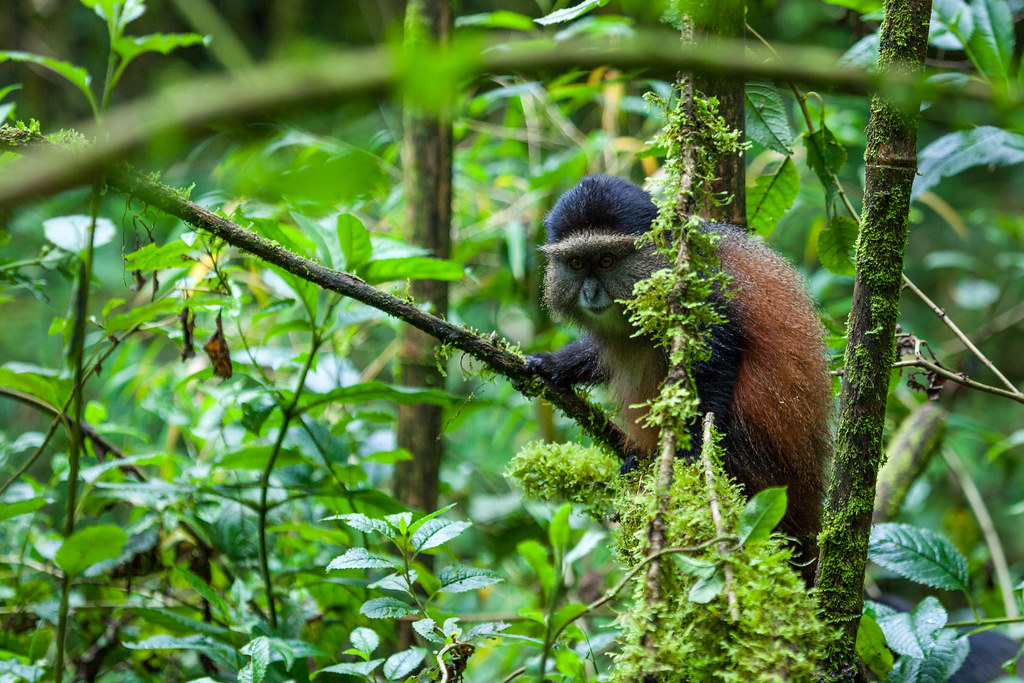
A golden monkey. Bright orange-gold fur, a black face, and a tail longer than its body. It was sitting on a bamboo branch, watching us with the same curiosity I was watching it.
I’d seen plenty of monkeys before. I’d never seen anything like this.
For the next hour, we watched a troop of golden monkeys move through the bamboo. They leaped from stalk to stalk, eating leaves, grooming each other, playing with their young. They were so close I could hear them chewing. The babies tumbled through the vegetation like tiny acrobats, and the adults watched over them with patient eyes.
It was one of the most magical experiences of my life.
Here’s what you need to know about golden monkey trekking in Volcanoes National Park.
What Are Golden Monkeys?
Golden monkeys are a rare subspecies of the blue monkey. They’re found only in the Albertine Rift, a biodiversity hotspot that stretches through Rwanda, Uganda, the Democratic Republic of Congo, and a few other countries.
They’re small—about the size of a domestic cat. Their fur is bright orange-gold, which is how they got their name. They have dark faces, pale blue patches around their eyes, and long tails that help them balance as they leap through the bamboo.
They’re social animals, living in troops of up to thirty individuals. The troops are matriarchal, led by a dominant female who makes decisions about where the group travels and feeds. The males are larger and more colorful, with brighter golden fur that helps them attract mates.
They eat bamboo leaves, fruits, and insects. Their diet is specialized—they get most of their nutrition from bamboo, which means their habitat is limited to areas where bamboo is abundant.
And they’re endangered. There are only a few thousand left in the wild. The biggest threats are habitat loss, poaching, and disease. As human populations grow and forests are cleared for agriculture, golden monkeys are losing their homes.
Volcanoes National Park in Rwanda is one of the best places to see them. The park has several habituated troops that are used to human presence, making trekking a reliable experience. Conservation efforts in the park have helped stabilize the population, but they’re still vulnerable.
What Makes Golden Monkeys Special?
They’re rare. They’re beautiful. And they’re incredibly active.
Unlike gorillas, which tend to sit still and eat, golden monkeys are constantly moving. They leap from bamboo to bamboo, play in the branches, and groom each other. Watching them is like watching a circus act. They never stop.
They’re also surprisingly curious. They’ll sometimes come closer to get a better look at you—though not too close, as they’re still wild animals. On my trek, a young monkey came within a few meters of our group, tilting its head and studying us with obvious interest. It was a moment of connection that I’ll never forget.
The experience is intimate. There are no large groups, no long distances. You’re right there with them, in their world, watching them go about their daily lives.
And the setting is spectacular. Volcanoes National Park is one of the most beautiful places in Africa. The mountains are dramatic, the forest is lush, and the mist adds an air of mystery. It’s the kind of place that feels like it belongs in a fantasy novel.
How to Trek Golden Monkeys
Trekking golden monkeys is different from gorilla trekking. Here’s what you need to know.
When to go
Golden monkeys are active year-round. The best time to see them is during the dry season—June to September and December to February—when the vegetation is thinner and the trails are drier.
That said, I’ve trekked in the wet season and still had a wonderful experience. The forest is greener, the monkeys are just as active, and there are fewer tourists. Just bring good rain gear and be prepared for mud.
How long it takes
The hike is usually shorter than gorilla trekking—around one to three hours, depending on where the monkeys are. The trails are steep but manageable, and you’ll be moving at a slower pace to observe the monkeys.
How much it costs
The permit costs around $100 per person in Rwanda. That’s significantly less than gorilla permits, which are $1,500. If you’re on a budget, golden monkey trekking is a fantastic alternative.
What to bring
-
Hiking boots with good tread—the mud is real
-
Long pants and long sleeves to protect from stinging nettles
-
Rain jacket—it will rain, probably
-
Insect repellent—the flies can be annoying
-
Camera with a good zoom lens—you’ll want to capture these beautiful creatures
-
Water and snacks—there are no refreshment stands in the forest
-
Binoculars—helpful for spotting monkeys in the canopy
What to expect
You’ll start at the park headquarters in Musanze for a briefing. The guide will explain the rules, assign you to a troop, and answer any questions. Then you’ll drive to the trailhead and start hiking.
The hike is beautiful, with views of the volcanoes and the surrounding countryside. When you find the monkeys, you’ll have one hour with them. One hour to watch, photograph, and soak in the experience.
The monkeys are habituated, but they’re still wild. Keep your distance. Don’t make loud noises. Don’t try to touch them. Respect them.
The Monkeys Themselves
The golden monkeys of Volcanoes National Park are highly habituated. They’re used to human presence, but they’re still wild.
You’ll observe them up close. The adults will move through the bamboo, eating leaves and shoots. The babies will tumble and play. The dominant male will watch over the troop, occasionally calling out to keep everyone in line.
Their feeding behavior is fascinating. Golden monkeys specialize in eating bamboo, pulling young leaves and shoots with their hands. They’re careful and methodical, never wasting food. They also eat fruits and insects, but bamboo is their main staple.
Watching a troop move through the bamboo is like watching a choreographed dance. They leap from stalk to stalk, never touching the ground unless they have to. The babies are especially entertaining—they tumble, chase each other, and practice their jumping skills.
Why They Matter
Golden monkeys are an important part of the ecosystem. They help disperse seeds and maintain the health of the bamboo forest.
They’re also an indicator species. Their presence means the forest is healthy. Their decline would signal problems with the ecosystem.
By visiting them, you’re supporting conservation efforts. The revenue from permits goes directly to protecting the monkeys and their habitat. It funds anti-poaching patrols, research, and community development projects.
Golden monkeys are a key reason why Volcanoes National Park is protected. If tourists weren’t coming to see them, the forest might be logged or cleared for agriculture. Your visit helps ensure their survival.
Thought
The golden monkeys of Volcanoes National Park are a must-see for any visitor to Rwanda.
The hike is easier than gorilla trekking, the experience is more active, and the monkeys are absolutely beautiful.
Golden monkeys have a life that’s full of energy and beauty. Watching them move through the bamboo is like watching a dance—graceful, playful, and entirely wild.
I’ve visited Volcanoes National Park three times, and each time, I’ve made the trek to see them. They never disappoint.