


Fort Jesus, Mombasa: UNESCO World Heritage Coastal Fort
If you stand on the walls of Fort Jesus, Mombasa, in the morning, you can see fishing boats moving out of the harbor. The stone walls have been warmed for four centuries by the sun. This is Fort Jesus, Mombasa. It has a lot of history. The Portuguese built it in 1593. The fort has seen empires come and go on the coast. It is still standing today because it was built to last.
You do not have to like history to feel something when you are here. When you walk through the gates, you are walking into a building that has been through a lot. It has been controlled by people nine times. It has been under attack many times. It has survived weather for centuries. This says a lot about the people who built it and the people who have protected it.
The story of Fort Jesus, Mombasa,
starts with trade. Mombasa is a place where people from parts of the world come to buy and sell things.
The Portuguese wanted to control this place so they could get some of the wealth.
They asked an architect named Giovanni Battista Cairati to design a fort that could protect the harbor.
The fort was finished in 1593. Named after Jesus Christ. This was because the Portuguese wanted to spread their religion. The fort was not a peaceful place.
For 300 years it was controlled by people, including the Portuguese, the Omani Arabs and local rulers. There was an attack in 1696 that lasted for almost three years. The Omani forces surrounded the fort until the Portuguese soldiers were too weak to fight.
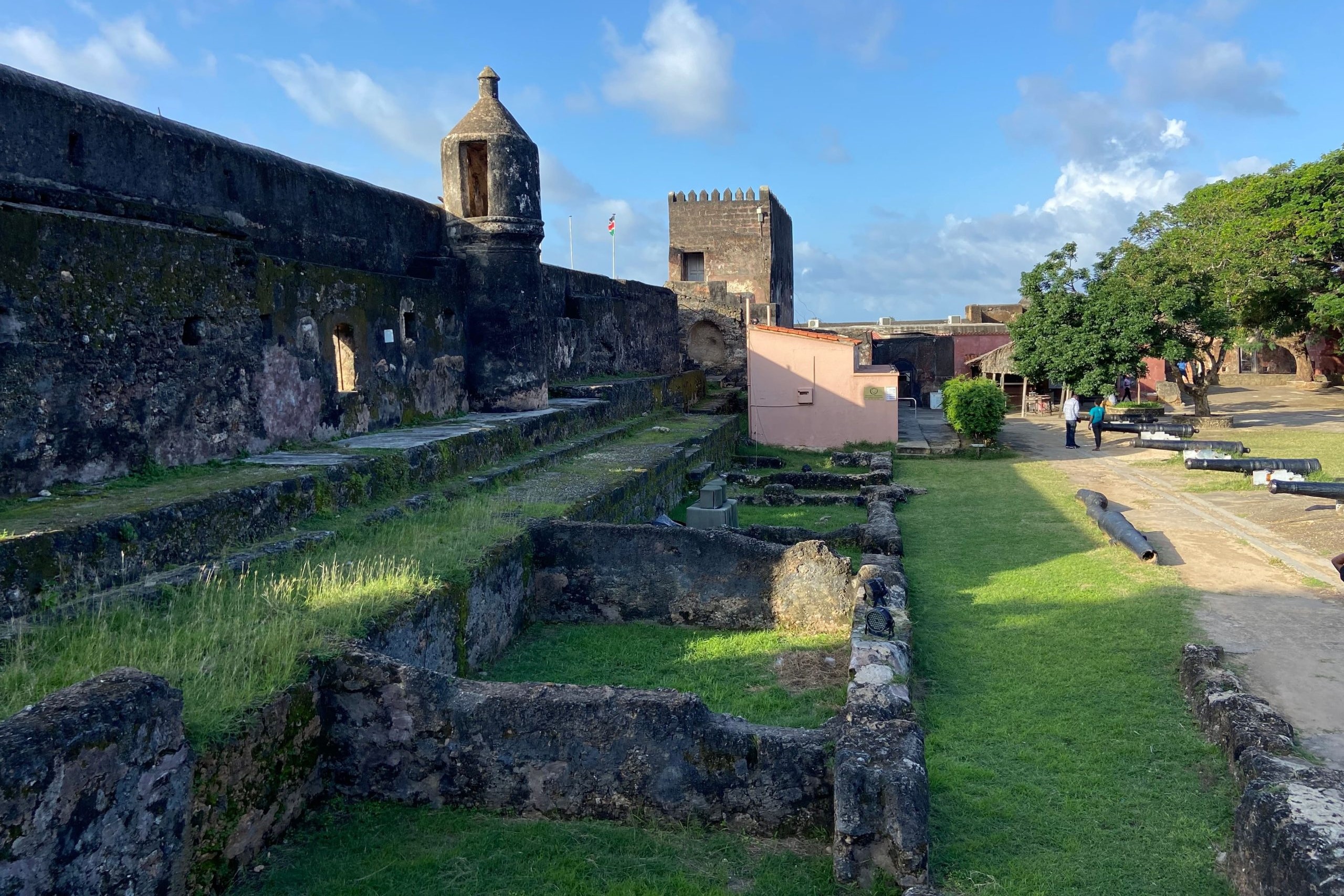
You can still see signs of these attacks today. There are marks on the walls where cannonballs hit. There are gun ports that face the harbor. When you walk through the fort, you can see how much planning and hard work went into building it.
In the century, the fort was used as a prison. Later, the British used it for their offices. Each group of people left their mark on the fort. This is what makes Fort Jesus Mombasa such a great place to visit. You are not just looking at one moment in time. You are looking at four centuries of history.
Architecture and Design of the Fort
The fort is built on 2.36 hectares of land and is shaped like a man. This design was popular in Italy during the Renaissance. The architect used coral stone to build the fort. The stone is white or orange depending on the time of day and the sun.
The walls are very thick, up to 2.7 meters in some places. They were built to withstand attacks from ships in the harbor. There are four parts of the fort, each with its own name. If you climb to the top, you can see the town and the ocean.
Fort Jesus in Mombasa is a place because of its history and design. Inside the fort, you can see the construction and later additions. There is a chapel and storage rooms. There is also a well that provided water during attacks. One part of the fort has carvings made by soldiers in the 1600s. These carvings show ships, symbols, and names.
Fort Jesus Mombasa: UNESCO World Heritage Coastal Fort in Every Wall and Stone
This is why Fort Jesus, Mombasa, is a UNESCO World Heritage site. It is an example of military design that has been adapted over time. The fort shows how different cultures have interacted on the African coast. The museum inside the fort has artifacts from the site and from shipwrecks. These artifacts show how connected this place was to the rest of the world centuries ago.
is it worth it
Fort Jesus Mombasa is a special place. If you go there early in the morning, you can see fishing boats going out to sea. The sun has been shining on the stone walls of Fort Jesus Mombasa for a long time, so they are warm. This is a place with a lot of history. Fort Jesus Mombasa was built a long time ago in 1593 by the Portuguese. They built it to last. It is still standing today.
You do not have to know a lot about history to feel something when you are at Fort Jesus Mombasa. When you walk through the gates, you are walking into a building that has been through a lot. It has been controlled by people many times, and it has been attacked many times. It is still standing. That says a lot about the people who built it and the people who have taken care of it over the years.
The story of Fort Jesus, Mombasa, starts with trade.
Mombasa is a place where a lot of trade routes meet. The Portuguese wanted to control this place so they could get some of the wealth that was being traded. They asked an architect named Giovanni Battista Cairati to design a fort that could protect the harbor. The fort was finished in 1593. It was named after Jesus Christ.
Even though it was named after Jesus Christ, it was not a peaceful place. Over the years, Fort Jesus, Mombasa, was controlled by people, including the Portuguese, the Omani Arabs, and the local rulers of Mombasa. There was a bad attack in 1696 that lasted for almost three years. The Omani forces surrounded the fort, and the Portuguese had to give up because they were starving and sick.
You can still see signs of these attacks today. There are marks on the walls where cannonballs hit them. There are gun ports that face the harbor, and they are still in the same position that they were in centuries ago. When you walk through the fort, you can see how much planning and hard work went into building it.
Let’s talk about Fort Jesus, Mombasa
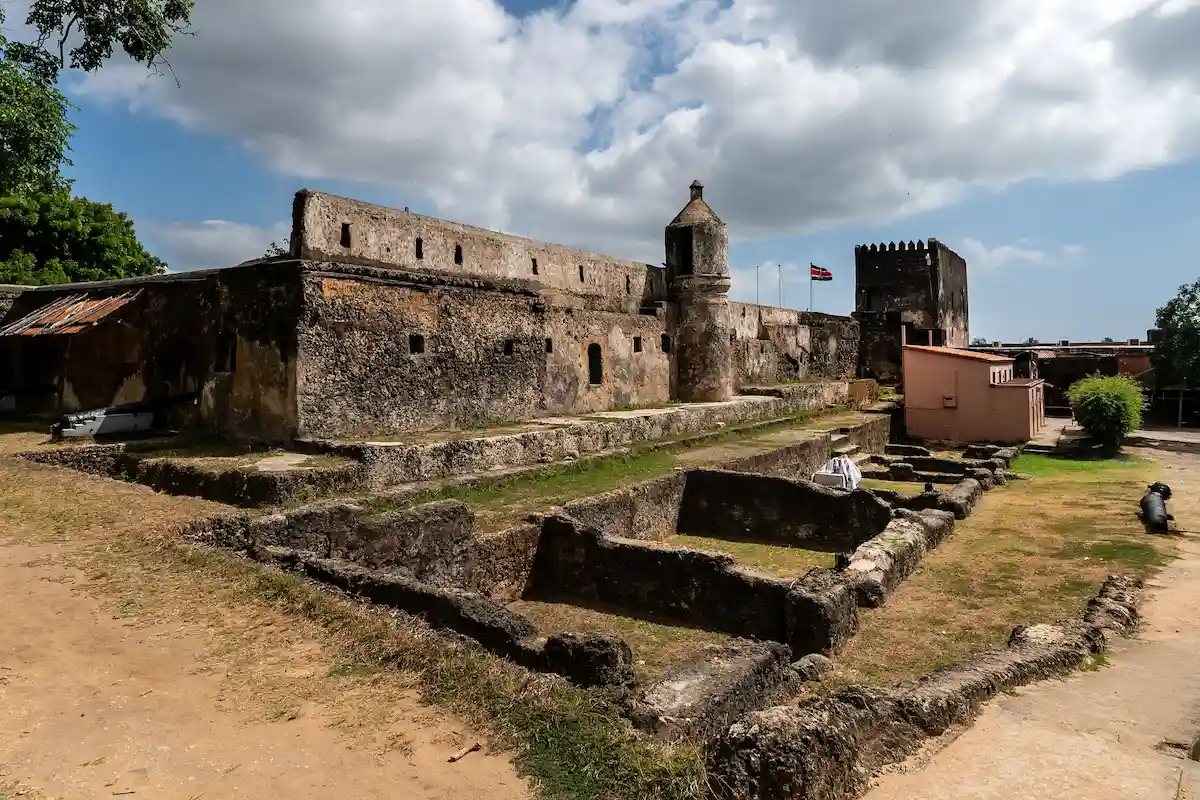
The fort was used as a prison, and then the British used it for administrative purposes. Each group of people who controlled the fort left their mark on it. They built things, fixed old things, and sometimes they just left it alone. All of these things together make Fort Jesus Mombasa an interesting place to visit. You are not just looking at one moment in time; you are looking at centuries all stacked up.
The fort is pretty big; it covers about 2.36 hectares. It was built in the shape of a man, which was a design idea in Italy during the Renaissance. The architect, Giovanni Battista Cairati, used ideas that he had used in forts that the Portuguese had built. He used rock from the area to build the fort, which is why it changes color at different times of day.
Fort Jesus Mombasa: UNESCO World Heritage Coastal Fort as a Lesson in Resilience
The walls of the fort are really thick, up to 2.7 meters in some places. They were built to withstand attacks from ships in the harbor. There are four bastions or strong points that anchor the corners of the fort. Each one is. They are positioned so that defenders can shoot at attackers from many different angles. If you climb to the top of one of the bastions, you can see the city of Mombasa, the harbor, and the Indian Ocean.
Fort Jesus Mombasa is a special place, and you can see that in every wall and every stone. Inside the fort, you can see a mix of new things. There is a chapel and storage rooms that used to hold food and supplies.
There is also a well that provided water during attacks. One of the bastions, the San Filipe Bastion, has some of the preserved parts of the original fort. You can see carvings that soldiers made in the 1600s, including pictures of ships and names and dates.
fort jesus mombasa
This mix of new things is why Fort Jesus, Mombasa, is a UNESCO World Heritage site. UNESCO said that it is an example of a 16th-century Portuguese fort and that it shows how different cultures can come together and create something new.
The fort is a symbol of the connection between European, Arab, and African cultures on the African coast.
There is a museum inside the fort that has artifacts from the site and from shipwrecks in the area. You can see ceramics, coins, and weapons that show how connected this place was to the rest of the world. If you spend some time in the museum, you can start to understand how important this place was centuries ago.