


Do I Need to Be Very Fit to Go on a Gorilla Trek?
I’ll be honest with you. Before I went, I nearly talked myself out of it. I kept seeing these adventure blogs with photos of people in expensive hiking gear, looking like they’d just summited Everest. And there I was, someone who gets winded carrying groceries up one flight of stairs. So I asked myself the same thing you’re probably asking: Do I need to be very fit to go on a gorilla trek?
What to expect
Here’s what I learned the moment I actually got there. Not at all. The morning of my trek, I met my group. There was a retired nurse from Ohio who had two replaced hips. A young couple who admitted they hadn’t hiked a day in their lives. And a grandfather carrying a small backpack with extra socks for his wife.
Every single one of us made it. Not because we were in amazing shape, but because the guides don’t rush you. They stop. They wait. They point out a cool mushroom or a distant bird call while you catch your breath.
And if the mud gets really bad—which it does—you can hire a local porter for basically pocket change. This person will literally hold your arm, pull you up the slippery parts, and carry your bag. So, worry about fitness? It melts away about ten minutes into the forest.
animals to expect
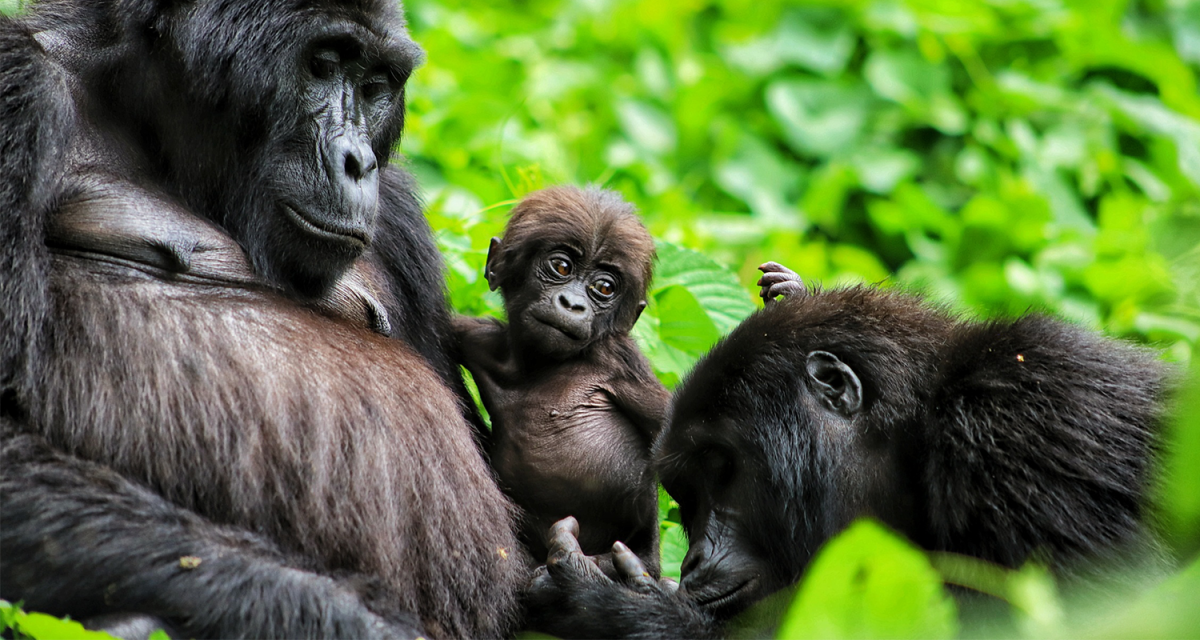
Now let me tell you about the animals, because this is the part that still gives me chills. You walk through this thick, misty jungle for a while, and then your guide stops. He holds up his hand. And then you hear it—a rustle, a low grumble, the snap of a branch.
And suddenly there they are. A whole family of mountain gorillas just living their lives. I’ll never forget the silverback. He was massive, I mean, truly huge, but he moved so gently.
He sat down right in front of us like a tired dad coming home from work. A baby crawled over his belly. Two females sat nearby picking leaves off each other.
Nobody performed for us. Nobody ran away. They just… existed. And you get to sit there for one full hour. One hour that feels like five minutes. You might also see golden monkeys if you’re lucky—little electric-orange creatures that bounce between trees like popcorn. But honestly? You won’t care about anything else once those gorillas show up.
Birds: Albertine Rift Endemics – the forests are a premier birding destination. Look out for the Rwenzori Turaco, Shelley’s Crimsonwing, and various sunbirds, hornbills, and barbets.
Reptiles & Amphibians: Chameleons and Frogs – colorful tree chameleons and unique amphibians are often spotted by eagle-eyed local guides on the trek.
the cultural experiences
The cultural part surprised me the most. I went in thinking, “Okay, see the gorillas, check the box, go home.” But the night before our trek, we visited a small village.
A group of Batwa women came out singing. Not like a performance—more like they were just happy someone came to visit. They pulled us into a circle, and we all danced terribly, in my case. They laughed so hard.
Then an old man showed us how they used to build fires without matches, and a little girl handed me a flower she’d picked from somewhere. No one asked for money. No one rushed us.
We just sat together for a while, sharing roasted bananas and listening to stories about the forest. That stuck with me longer than any hike ever could.
2. The Bakiga Village Walk (Lake Bunyonyi, Uganda)
After the intensity of the forest, Lake Bunyonyi offers a gentle reset. Just a few hours from Bwindi, this is where the Bakiga people turn steep hillsides into art—each terrace a family’s story written in soil and sweat.
You’ll hop into a dugout canoe to reach an island where a local elder might show you how coffee beans become a morning brew.
Or walk through the farms, pausing to help a grandmother carry firewood or share a quiet laugh with children who run to hold your hand. No rush. No script. Just life happening.
3. Azizi Life Experiences (Rwanda)
Trekking in Volcanoes National Park? Take a short detour to Ruhondo, but leave your expectations behind.
This isn’t a performance—it’s a Wednesday. You might find yourself knee-deep in a potato field, learning why Rwandans plant in mounds. Or sitting on a mat, struggling to make a sisal basket while a woman half your age finishes hers in minutes, grinning.
The quiet power here is in the conversations: a widow and her neighbor’s son, from opposite sides of the genocide, sharing a meal they cooked together. You won’t just witness reconciliation—you’ll taste it.
The best time to trek
So when’s the best time to go? Look, I went during the rainy season because that’s when I could get time off work. And yes, it was muddy. So muddy that at one point my boot got stuck and I had to pull it out with both hands. But here’s the upside—there were hardly any other tourists.
The forest was shockingly green, like someone turned up the color dial. And the gorillas were actually easier to find because they don’t wander as far when it’s wet.
If you want dry trails and easy walking, aim for June through September or December through February. Just know that everyone else has the same plan. Permits cost more, and they sell out fast. But honestly? A little mud never hurt anyone. Pack good boots, accept that you’ll be dirty, and go whenever you can.
As for places to sleep, you don’t need anything fancy. I stayed at this tiny lodge run by a family—just four little cabins with mosquito nets and a shared bathroom.
The mom cooked dinner over a charcoal stove. Rice, beans, and some kind of chicken stew that I still dream about. After the trek, they brought me a bucket of hot water for a shower. A bucket! And it was perfect. Cost me about thirty-five dollars.
There are luxury places, too, with wood-burning fireplaces, massages, and views of the volcanoes. But here’s the truth—everyone ends up the same way at the end of the day. Exhausted. Covered in mud. Grinning like an idiot. Doesn’t matter if you paid thirty dollars or three hundred.
So please, stop worrying about your fitness level. Do I need to be very fit to go on a gorilla trek? No.
You need a little patience, a sense of humor, and maybe a spare pair of socks. The guides have seen everything. The porters have helped everyone. And the gorillas don’t care how fast you walked up that hill. They just care that you showed up. Go. You won’t regret it.