


Can I Fly to Bwindi Impenetrable Forest Instead of Driving?
You’re actually doing this. You’re going to see the gorillas.
I mean, stop and think about that for a second. You’re about to walk through a misty jungle and come face to face with a mountain gorilla. That’s not a holiday—that’s a life event. And honestly? I’m a little jealous. That first time? You never forget it.
But okay. Let’s get practical for a minute. Because there’s one big question everyone asks once they’ve booked their permits and started getting excited: how the hell do I actually get to Bwindi?
And I’m not gonna lie to you—it’s not exactly around the corner.
Bwindi is buried deep in the southwest of Uganda, right up against Rwanda and the DRC. It’s gorgeous, wild, and properly remote. If you’re coming from Kampala or Entebbe, you’re looking at a drive that’ll take you anywhere from eight to ten hours. And that’s if everything goes smoothly. No flat tyres. No sudden downpours turning the road into a muddy slip-and-slide. No unexpected stops because you absolutely had to try that roadside grilled corn (fair enough, honestly—it’s delicious).
Some people love that drive. Really love it. They make a whole day of it, stop at every little village, take photos of kids waving, buy passionfruit from a lady by the side of the road, and arrive at their lodge feeling like they’ve already had an adventure.
And if that’s you? Genuinely, more power to you. That’s a beautiful way to travel.
If you’re coming off a long international flight and your back is already screaming? If you’ve only got a few days and you don’t want to spend two of them bouncing around in a car? If you’re travelling with kids who will definitely ask “Are we there yet?” approximately 47 times?
Then you need to think about flying.
Just imagine this for a second.
You wake up in Entebbe, take your time over breakfast, and maybe have some of that amazing fresh pineapple they have everywhere. You get to the airport, board this tiny little plane—honestly, it’s so small you can see the pilot’s elbow—and within an hour, you’re up in the air looking down at the most insane views. Rolling hills. Volcanoes in the distance. Forests that look like they’ve been there since the beginning of time.
By the time the drivers are still wrestling with potholes and dodging goats on the road, you’ve already landed. You take a short drive to your lodge—twenty, maybe thirty minutes of bumpy red roads that actually feel exciting because you’re almost there—and suddenly you’re sitting on a deck somewhere, drink in hand, watching mist roll over the hills, thinking, “Wow. I made it. And I’m not even tired.”
That’s what flying gives you. Not just time—it gives you energy. It gives you peace. It gives you the gift of actually enjoying your arrival instead of collapsing into bed and sleeping through your first evening.
Who actually does this?
Honestly? All sorts.
People who only have four or five days in Uganda and can’t afford to lose two of them to driving. Families with kids who’d rather not test the limits of their little bladders and patience on a ten-hour road trip. Older folks who’ve earned the right to travel in comfort. Honeymooners who want their trip to feel, you know, romantic, not like a survival challenge.
And then there’s the people like me—people who just hate long drives. No shame in that. You came for gorillas, not for a marathon.
Okay, but where do you actually fly to?
Most flights leave from Entebbe, which is super convenient if you’re flying in internationally. If you’re staying in Kampala, you’ll just have to make your way to Entebbe to catch the flight—it’s about 45 minutes, nothing crazy.
Then you land at one of two airstrips: Kihihi or Kisoro.
Kihihi is your spot if you’re heading to Buhoma, which is the most popular corner of the park. Kisoro is better if you’re going to Rushaga, Nkuringo, or Ruhija.
And here’s the thing nobody tells you until it’s too late: Bwindi isn’t one big uniform park. It’s split into four different sectors, and they’re not exactly next door to each other. We’re talking hours of driving between some of them. So before you book that flight, make damn sure you know exactly which sector your lodge is in. Get that wrong, and you could end up landing at the wrong airstrip and still have a two-hour drive ahead of you. Kind of defeats the purpose, right?
What’s the flight like?
Okay, so remember how I said these planes are tiny? I’m not kidding. You can see the cockpit. You can feel every little bump of air. And honestly? That’s half the fun.
You get this incredible view of Uganda from above—patchwork hills, winding rivers, little villages that look like toy towns. It’s beautiful. It’s intimate. It feels a bit like you’re on your own private safari before you even get to the jungle.
Just pack light. I mean it. There’s not a lot of room for luggage, and hard suitcases are a straight-up no-go. Bring a soft duffel bag, keep it under the weight limit, and everyone will be happy. The pilots, the ground crew, and most importantly, you, when you’re not wrestling with a bag that won’t fit.
And yeah, it’s safe. I know small planes can feel a little nerve-wracking if you’re not used to them, but these pilots fly these routes every single day. They know the weather, the mountains, the winds. You’re in good hands.
Okay, let’s talk money. Because it’s not cheap.
I’m just gonna say it straight: flying costs more than driving. Sometimes a lot more.
So the question isn’t really “is it worth it?”—the question is “is it worth it to you?”
For some people, absolutely yes. They’re paying for time. For comfort. For arriving fresh and excited instead of grumpy and sore. For not spending two full days of their precious holiday staring at the back of a car seat.
For others, that price tag is a dealbreaker. And honestly? That’s fair too. That drive is long, sure, but it’s also an adventure in its own right. You see the real Uganda. You stop for lunch at roadside restaurants that serve the most incredible stews. You wave at kids. You buy weird fruits you’ve never seen before. It’s not punishment—it’s just long.
And here’s a little secret: you don’t have to choose one or the other. Lots of people fly into Bwindi to save time, then drive out to other parks like Queen Elizabeth or Lake Mburo for a classic safari. You get the best of both worlds—the speed when you need it, the slow meander when you have time.
How do you actually book this whole thing?
Honestly? Let someone else handle it.
Find a good local tour operator who knows what they’re doing. They’ll book your flights, your permits, your lodge, your transfers. You just show up and be amazed.
I know some people love the challenge of planning everything themselves, but gorilla trekking has so many moving parts—permits sell out, flights change, lodges have weird cancellation policies—that it’s genuinely worth having a pro in your corner. They’ll also be the ones waiting for you at the airstrip with a smile and a sign with your name on it. That feeling? Priceless.
So what’s the final verdict?
Look, I’m not gonna tell you what to do. Only you know your budget, your timeline, and your tolerance for long car rides.
But if you’re asking me—personally—I’d fly every single time.
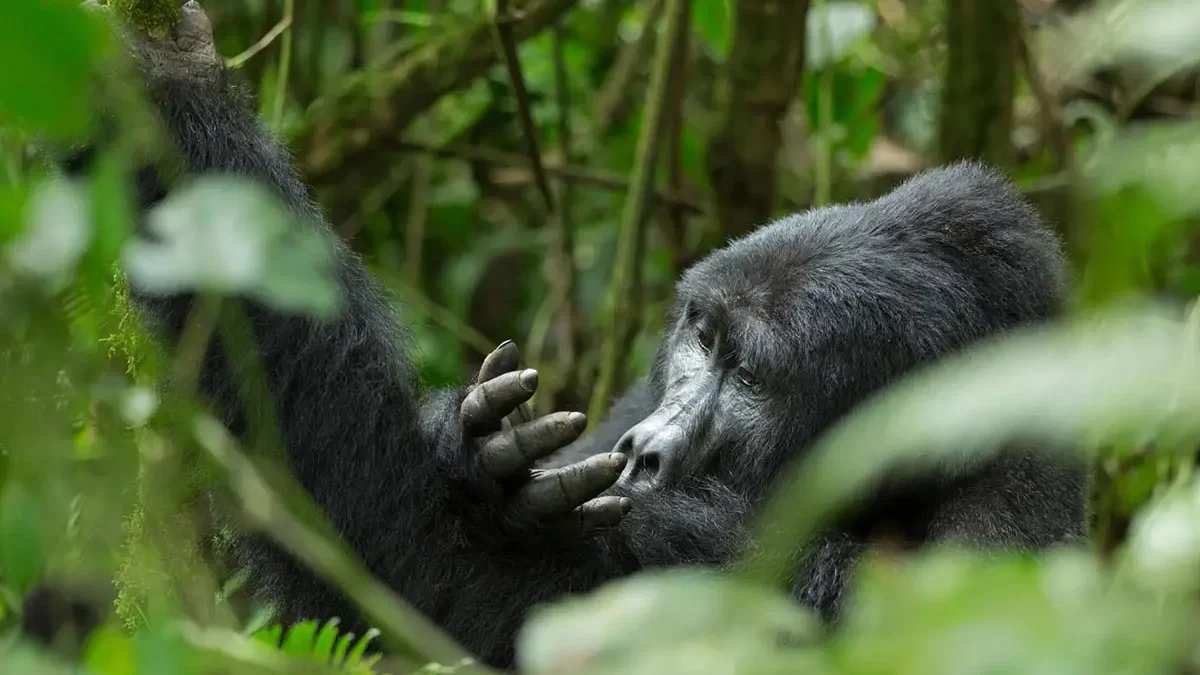
Because at the end of the day, you’re not coming to Uganda to spend your whole trip in a vehicle. You’re coming for that moment. The one where you push through some ferns, look up, and there’s a silverback just… sitting there, eating leaves, like it’s the most normal thing in the world. Like you’re not even there. Like, this isn’t one of the most incredible experiences a human being can have.
You want to arrive for that moment with your eyes wide open, not half-asleep from a ten-hour drive. You want to be present. You want to be excited. You want to have the energy to soak in every single second.
So yeah. If you can swing it? Fly.
You won’t regret it. I promise.