


Can I Do Gorilla Trekking and Chimpanzee Tracking in the Same Uganda Trip?
Can You Really Do Gorilla Trekking AND Chimpanzee Tracking on the Same Uganda Trip?
Let me save you the Google rabbit hole: Yes. Absolutely. And honestly, you’d be kind of crazy not to.
Uganda is one of the only places on the planet where you can lock eyes with a mountain gorilla and have a chimpanzee swing branches over your head—all in the same vacation. No flying to different countries. No crazy logistics. Just pure, unfiltered primate magic.
And here’s the best part: it’s not some complicated, super-expensive bucket list fantasy. Tour operators do this combo all the time. It’s practically their specialty.
But Why Do Both? Won’t One Primate Be Enough?
That’s what I thought too before I went. I figured, “Gorillas are the main event, right? Why add chimps?”
Then I did both. And oh man, they are night and day.
Picture this:
Day one: You’re in Bwindi. It’s misty, quiet, almost sacred. You push through thick vines, your heart pounding, and then—there they are. A whole gorilla family just… chilling. A massive silverback is lying on its side, casually peeling a branch like it hasn’t a care in the world. A baby tumbles over its mom’s lap. Nobody’s in a hurry. You sit there for an hour, barely breathing, just watching. It’s peaceful. It moves you in a way you didn’t expect.
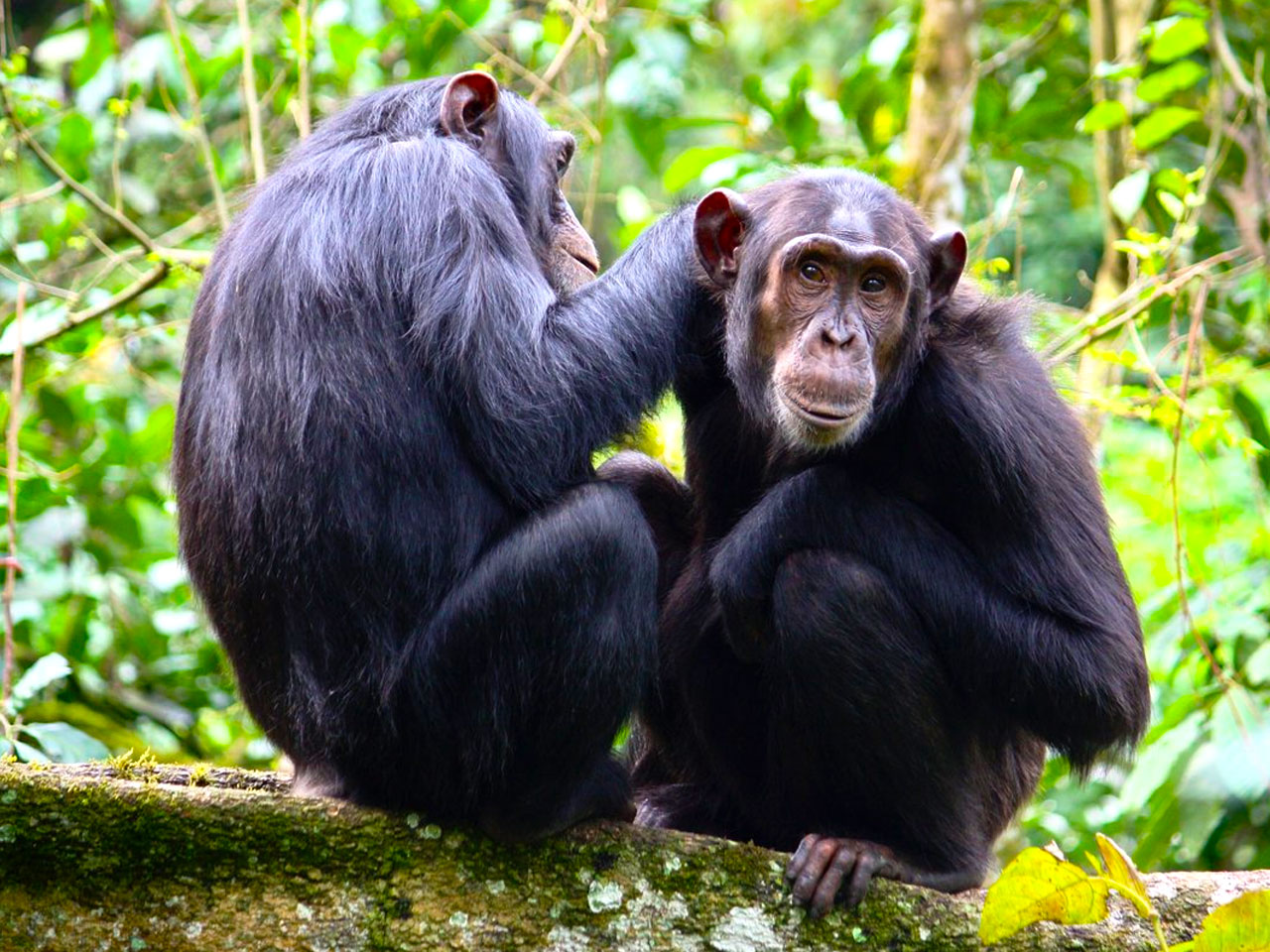
Day two: You’re in Kibale. Completely different vibe. You hear them before you see them—loud pant-hoots echoing through the trees. Then chaos (the fun kind). Chimps are flying through the canopy, swinging, screaming, drumming on tree roots like they’re in a rock band. You’re craning your neck, laughing, trying to keep up. It’s energetic, unpredictable, and ridiculously entertaining.
If gorillas are a slow, soulful acoustic set, chimps are a mosh pit. Both are incredible. But together? That’s the full concert.
Okay, So Where Do I Actually Go?
For gorillas: You’re heading to Bwindi Impenetrable Forest or Mgahinga Gorilla National Park.
Bwindi is the superstar. It holds over half the world’s mountain gorillas. The jungle is so thick you can barely see the sky sometimes, and the hills are no joke—you will sweat. But that’s part of the magic. Mgahinga is smaller and has these epic volcanic views. Fewer people go there, so it feels more off-the-grid. Either way, you’re going to have a story to tell.
For chimps, Kibale National Park is the crown jewel. Seriously, your chances of seeing chimps there are over 90%. That’s as good as it gets in the wild. Plus, Kibale is packed with other monkeys—red colobus, black-and-white colobus, mangabeys—so even the hike in is like a primate parade.
If Kibale’s booked, check out Budongo Forest (quieter, very lush) or Kyambura Gorge (a stunning hidden forest inside Queen Elizabeth Park). But honestly? Kibale is the crowd-pleaser for a reason.
How Many Days Do I Need? I Don’t Have Forever.
I get it. Not everyone has two weeks to burn. Good news: you can pull this off in just 5 days.
-
5 days: Fly in → chimp trek → drive to Bwindi → gorilla trek → fly out. It’s tight, but totally doable.
-
7 days: Now you’ve got breathing room. Add a safari drive through Queen Elizabeth National Park between the two treks. Lions, elephants, hippos—the whole savanna vibe.
-
10+ days: This is the sweet spot. You can add boat safaris, visit Murchison Falls, or just take it slow. More days = more wildlife = fewer regrets.
Trust me, even the short version will leave you buzzing.
What’s the Classic Route Everyone Takes?
Here’s what most people do, and it flows beautifully:
-
Start in Kibale for the chimps.
-
Drive through Queen Elizabeth National Park—stop for a game drive or a boat cruise on the Kazinga Channel.
-
End in Bwindi for the gorillas.
The drives aren’t brutal, the scenery is stunning, and you get a killer mix of forest and savanna. It’s popular because it works.
How Different Are They, Really?
Let’s break it down—this is what actually happens on the ground:
| Gorilla Trekking | Chimpanzee Tracking |
|---|---|
| You move slowly and quietly | You’re jogging to keep up |
| Gorillas sit on the ground, munching leaves | Chimps are flying through the treetops |
| You get incredible, steady photos | You’ll need a fast shutter speed—and patience |
| You get one magical, intimate hour | You follow them as they roam—could be 2 hours or more |
Doing both back-to-back is like watching two totally different nature documentaries in real life. You really see their personalities shine.
The Permit Drama—How Bad Is It?
Here’s the truth: gorilla permits are pricey, and they sell out fast. If you’re traveling between June and September or December and February, you need to book months ahead. Like, don’t wait until the last minute, you will be disappointed.
Chimp permits are cheaper and easier to get, but they still fill up during busy times. The good news? Any reputable tour operator will handle all this permit stress for you. You just show up and enjoy.
I’m Not Super Fit—Can I Still Do This?
Gorilla trekking can kick your butt.
I’m not going to sugarcoat it—you might be climbing steep, muddy slopes at high altitude while the guide randomly stops to machete a path through thick vegetation. Some days it’s a 20-minute stroll. Other days it’s a 4-hour slog.
But here’s what I loved: they don’t expect you to be an Olympian. Guides are incredibly patient. You get a walking stick. You can hire a porter to carry your daypack—or literally carry you in a sedan chair if the trail gets rough. Old travelers, families, even folks with bad knees do this every single day.
Chimpanzee tracking is generally easier. Kibale’s terrain is gentler, so you get a bit of a break there. Just wear sturdy boots, long pants, and pack a raincoat. The forest doesn’t care about your outfit.
When’s the Best Time to Go?
Honestly? The gorillas and chimps are there year-round. But the experience changes with the seasons:
-
Dry season (June–Sept, Dec–Feb): Trails are decent, hiking is easier. This is prime time—more tourists, but better conditions.
-
Rainy season (March–May, Oct–Nov): Muddy, slippery, but way fewer people. The forest looks insanely green and dramatic. Rain adds to the atmosphere. Just embrace the dirt and bring good waterproofs.
I went during the rainy season and actually loved it. Fewer crowds, lush scenery, and the rain cooled things down.
Okay, But Is It Worth the Money and Effort?
One hundred million percent yes.
Look, gorilla trekking alone is life-changing. I’ve seen grown adults cry when a silverback looks them in the eye. It’s that powerful.
But adding chimps? That’s the secret sauce. You get two completely different flavors of wildness. One is deep and emotional. The other is pure, unfiltered joy and chaos. Together, they tell the full story of Uganda’s incredible wildlife.
And here’s the thing, Uganda isn’t just about the animals. The people are warm, the food is surprisingly good, and the landscapes will make you pinch yourself. You’ll come home with stories that sound made up.
“Oh yeah, a chimp threw a branch at me.”
“I was three feet from a silverback while he ate his breakfast.”
Your friends will be jealous. Your Instagram will explode.
If you’re even thinking about doing this, stop overthinking and start planning. Whether you have 5 days or 2 weeks, a combined gorilla and chimp safari is one of the best decisions you’ll ever make.
Got questions? Hit me up. I could talk about this all day. And if you’re ready to book, find a local operator who knows their stuff, grab those permits early, and get ready for the adventure of a lifetime.