


Best Time to Visit Tanzania for a Safari
Tanzania is a year-round safari destination, but the quality of the experience changes significantly depending on the month, the region, and what you want to see. Unlike typical travel planning where weather is the main factor, safari timing in Tanzania is driven by wildlife movement, rainfall cycles, and ecosystem behavior—especially in places like Serengeti National Park.
Understanding how these variables shift across the year is essential if you want to align your safari with specific goals such as the Great Migration, predator action, photography, or lower travel costs.
January to March: green season and calving period
This period is often underestimated, but it is one of the most rewarding times to visit Tanzania.
The southern Serengeti and Ndutu plains become the focal point of the Great Migration during these months. Large herds of wildebeest gather to give birth, creating the calving season.
Thousands of calves are born within a short period.
This attracts predators such as lions, cheetahs, and hyenas, leading to frequent hunting activity. The interaction between newborn animals and predators creates one of the most dynamic wildlife phases of the year.
Landscapes are green, skies are dramatic, and visitor numbers are relatively low compared to peak migration months.
This is one of the best times for:
Predator-prey interaction
Photography with lush scenery
Lower crowd levels
April to May: long rains and low season
April and May mark the long rainy season in Tanzania.
Rainfall is heavier and more consistent, especially across the Northern Circuit. Some lodges close temporarily, and road conditions can become challenging in certain areas.
Wildlife is still present, but it is more dispersed due to abundant water and vegetation.
Game viewing becomes less predictable.
However, this period offers unique advantages:
Very low tourist numbers
Significantly reduced pricing
Rich, green landscapes
For experienced travellers or photographers, this can be a rewarding time if expectations are adjusted.
June: transition into the dry season
June is one of the most strategic months for safari travel.
The rains begin to fade, vegetation starts to thin, and wildlife becomes easier to locate again. The Great Migration begins moving north through the Serengeti.
Conditions improve rapidly, but crowds have not yet reached peak levels.
This makes June ideal for travellers who want strong wildlife viewing without peak-season pressure.
July to October: peak safari season and river crossings
This is widely considered the best time to visit Tanzania for a safari.
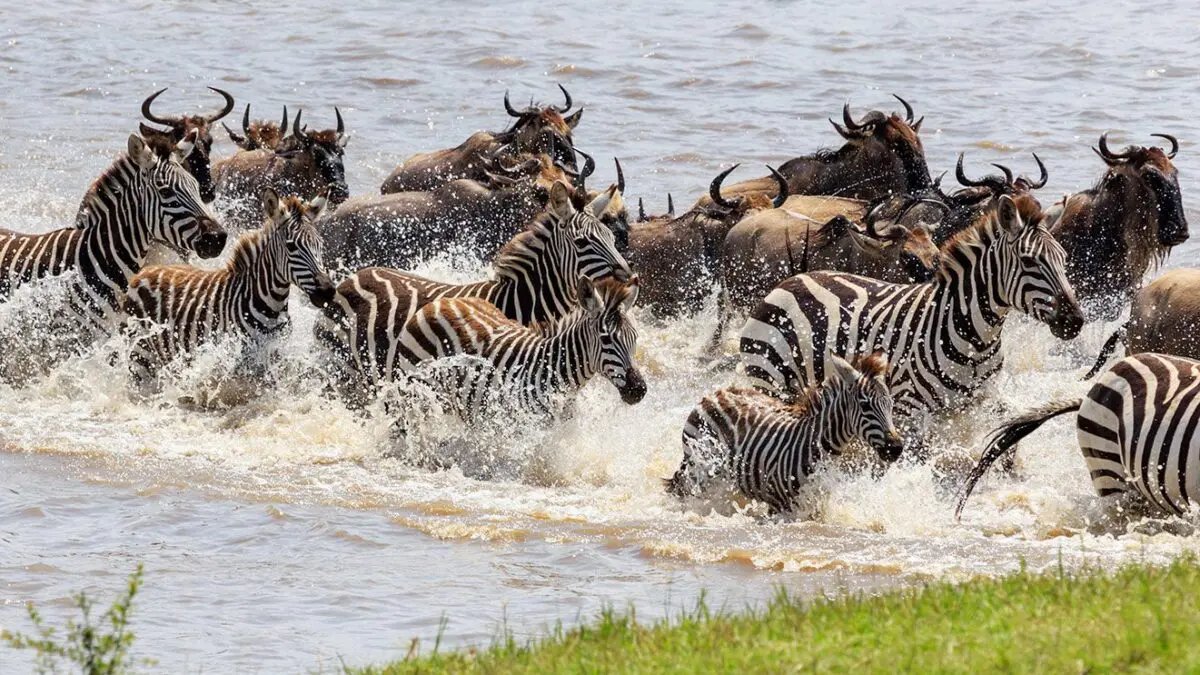
During these months, the Great Migration moves into the northern Serengeti, near the Mara River. This is when dramatic river crossings occur.
Large herds attempt to cross crocodile-filled rivers, creating some of the most iconic wildlife scenes in Africa.
Predator activity also increases due to the concentration of prey.
Conditions during this period are:
Dry and clear
Excellent for wildlife visibility
Highly reliable for sightings
However, this is also the busiest and most expensive time of year.
Accommodation fills quickly, especially in prime locations, and advance booking is essential.
August: peak migration intensity
August is often the most dramatic month for river crossings.
Herds gather along riverbanks, and crossings can happen multiple times a day—or not at all for several days.
The unpredictability is part of the experience.
Wildlife density is at its highest, and predator activity is constant.
This is the peak of the peak season.
September: stability and high-quality viewing
September continues the strong conditions of August but with slightly more stability.
Herds remain in the northern Serengeti, and wildlife viewing remains excellent.
Crowds begin to ease slightly compared to August, making this one of the most balanced months overall.
October: transition and dispersal
By October, the migration begins to shift southward again.
Wildlife is still abundant, but herd density gradually decreases in the north.
Conditions remain dry, and visibility is still strong.
This is a good month for travellers who want strong wildlife viewing with slightly fewer crowds.
November to December: short rains and renewal
The short rains begin in November and continue into December.
The landscape becomes green again, and wildlife begins to disperse.
The migration moves toward the southern Serengeti, preparing for the next calving season.
This period offers:
Fewer tourists
Improved availability
Good value pricing
While wildlife is less concentrated, the experience is quieter and more relaxed.
Regional differences across Tanzania
While the Serengeti dominates seasonal discussions, other regions behave differently.
The Ngorongoro Crater offers strong wildlife viewing year-round due to its enclosed ecosystem.
Tarangire National Park is best during the dry season when animals gather around the Tarangire River.
In the Southern Circuit, parks like Nyerere National Park and Ruaha National Park are at their best from June to October, when wildlife concentrates around water sources.
This regional variation allows Tanzania to offer strong safari experiences across most of the year.
Choosing the best time based on your priorities
The best time to visit Tanzania depends on what you want from your safari.
If your priority is the Great Migration and river crossings, July to September is ideal.
If you want predator action and calving season, January to March is highly effective.
If you prefer fewer crowds and better value, June and November are strong options.
If you are focused on photography and landscapes, the green season offers dramatic scenery and softer light.
Why timing shapes the entire safari experience
In Tanzania, timing affects more than just wildlife.
It influences:
Travel costs
Crowd levels
Availability of camps
Quality of photography
Type of wildlife interactions
A well-timed safari in a single region can outperform a poorly timed itinerary that tries to cover multiple parks.
This is why safari planning always begins with seasonality rather than location alone.
The strategic approach to planning
Instead of asking “when is the best time,” a more effective question is “what kind of safari experience do I want.”
Each season delivers a different version of Tanzania.
Dry season offers intensity and predictability
Green season offers color, space, and value
Migration periods offer spectacle and drama
Aligning your travel dates with your priorities is what ultimately defines the success of the safari.