


Are There Malaria Risks in the Gorilla Trekking Areas of Uganda and Rwanda?
Should You Worry About Malaria When Gorilla Trekking in Uganda or Rwanda?
Let’s be real: when you’re planning a gorilla trekking trip, you’re probably thinking about misty forests, silverback stares, and that once-in-a-lifetime moment when a mountain gorilla wanders past. But for many travellers, health worries sneak in right alongside the excitement. And one of the biggest questions is: what about malaria?
The short answer is yes, malaria does exist in both Uganda and Rwanda. But before you cancel your trip, here’s the good news: the risk isn’t the same everywhere. It depends a lot on where you are, how high up you go, and what time of year you visit.
The forests where mountain gorillas live are high in the mountains, and those cooler altitudes make life tough for malaria-carrying mosquitoes. So while you still need to be sensible, you can breathe a little easier (literally).
How Malaria Works in East Africa
Malaria spreads through the bite of infected female Anopheles mosquitoes. And yes, these mosquitoes are around in Uganda and Rwanda. But they’re not everywhere. Altitude, temperature, and rainfall – all of this affects how likely you are to get bitten.
Higher up = cooler. And cooler means fewer mosquitoes and a lower chance of malaria transmission. That’s why gorilla trekking areas – which sit in high-altitude rainforests – are naturally lower-risk than lowland areas.
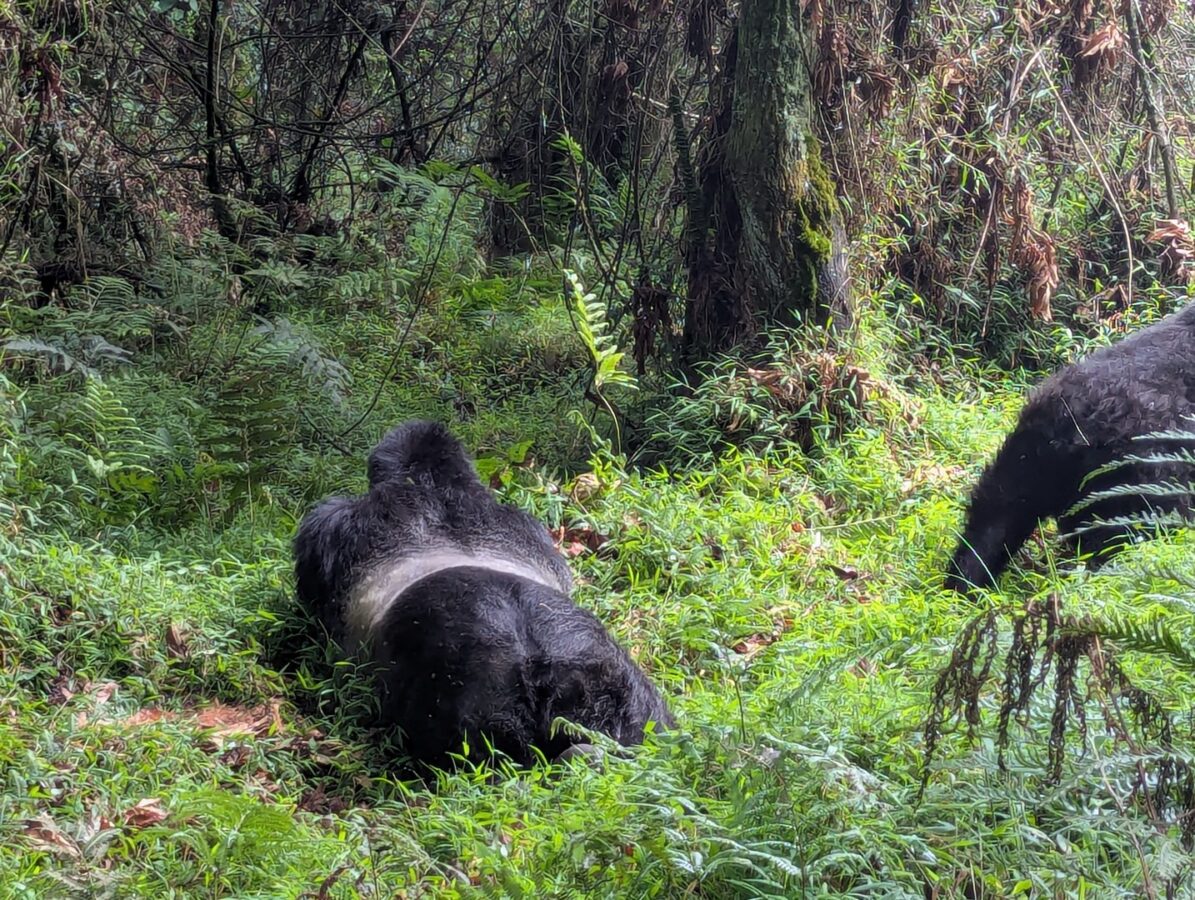
Malaria Risk in Uganda’s Trekking Spots
Uganda’s gorilla trekking happens mainly in Bwindi Impenetrable National Park and Mgahinga Gorilla National Park, both in the southwest.
Bwindi Impenetrable National Park
Bwindi ranges from about 1,160m to over 2,600m above sea level. Those cooler temperatures mean fewer mosquitoes than you’d find in Uganda’s lowlands. That said, the risk isn’t zero. In the lower parts of the park and nearby communities – especially during the rainy season – you might still come across mosquitoes, particularly around lodges at night.
Mgahinga Gorilla National Park
Mgahinga sits even higher, in the Virunga volcanic mountains. It’s cooler still, so malaria transmission here is generally low. But keep in mind: you’ll likely travel through lower-altitude areas to get there, so precautions still make sense.
Malaria Risk in Rwanda’s Trekking Areas
In Rwanda, gorilla trekking happens in Volcanoes National Park in the northwest. The park sits between roughly 2,400m and 4,500m. Those are serious altitudes, and temperatures stay cool year-round. That means mosquito populations are pretty low.
Many first-time trekkers are surprised to learn that the trekking area itself has a relatively low malaria risk. During those early morning hikes, you’re unlikely to be bothered much by mosquitoes. However – and this is important – you’ll probably pass through higher-risk areas when you first arrive, spend time in Kigali, or travel between destinations.
Why Altitude Matters So Much
Mosquitoes like warmth. They breed faster in warm conditions, and the malaria parasite itself needs warmth to mature inside the mosquito. As you go higher and temperatures drop, both of these processes slow way down.
That’s why mountain gorilla habitats are naturally safer. Still, lower risk doesn’t mean no risk. Weather can vary, and mosquitoes can sometimes show up where you least expect them.
Do You Need Malaria Medication?
Most travel doctors will recommend that you chat with them about preventive medication before visiting Uganda or Rwanda. There are several good options, and the right one for you depends on a few things:
-
How long are you staying – a long trip might mean different advice than a short trekking safari.
-
Where else are you going – many itineraries also include low-altitude parks, lakes, cities, or neighbouring countries where malaria risk is higher.
-
Your health history – your doctor will check for allergies or interactions with other meds.
Best bet? Visit a travel health clinic several weeks before you leave.
Practical, No-Nonsense Ways to Lower Your Risk
Whether or not you choose to take preventive medication against mosquito-borne illnesses, avoiding bites remains your single most effective everyday defence.
This is not just a supplementary measure—it is the foundation of staying safe and comfortable in mosquito-prone regions, particularly during trekking or rural travel. One of the simplest yet most powerful strategies is to cover up. Wearing long sleeves and long trousers made from lightweight, breathable fabric provides a physical barrier that significantly reduces exposed skin.
This is especially important during the evening hours when many mosquito species become most active. Fortunately, if you are already planning to go trekking, you will likely want long clothing anyway—not only for bite protection but also because forest vegetation can be rough and scratchy against bare skin.
In addition to covering up, using a reliable insect repellent on any exposed skin works wonders, particularly when you are staying at lodges or passing through lower-altitude areas where mosquitoes tend to be more abundant.
Repellents containing DEET, picaridin, or oil of lemon eucalyptus are widely available and highly effective. Furthermore, whenever a mosquito net is provided—and most well-managed trekking lodges do offer them over the beds—make sure to use it properly.
Tuck the edges under your mattress and check for any holes before sleeping. This creates a protective cocoon that allows you to rest without being disturbed by buzzing or bitten during the night.
Another surprisingly useful tip is to wear lighter-coloured clothing. Mosquitoes are naturally drawn to dark colours like black, navy, and deep red, which retain heat and help them locate hosts.
By choosing light-coloured shirts, trousers, and hats, you not only make yourself less visible to mosquitoes but also stay cooler under the sun during long hiking days. Finally,
pay attention to your immediate indoor environment. In the evening, keep your room’s doors and windows closed as much as possible to stop mosquitoes from entering. If ventilation is needed, consider using a fan or an air conditioner if available, as moving air also makes it harder for mosquitoes to land on you. Taken together,
these five habits—covering up, using repellent, sleeping under a net, wearing light colours, and sealing your room—form a powerful, practical, and chemical-free-or-friendly defence that works whether or not you are on preventive medication.
When Is the Risk Highest?
Malaria risk tends to go up during and just after rainy seasons, because standing water is a mosquito nursery. In Uganda and Rwanda, you’ll see more mosquito activity after heavy rains. If you’re travelling in wetter months, be extra careful. But honestly, gorilla trekking runs year-round, and it’s smart to take precautions no matter the season.
But the Trek Itself Is During the Day, Right?
That’s true – gorilla treks happen in daylight. And the main malaria mosquito (Anopheles) prefers biting at night. But other mosquito species are active during the day, and more importantly, you’ll be spending nights at lodges before and after your trek. So prevention needs to be a 24-hour habit.
Symptoms to Watch For
It’s good to know what malaria can feel like:
-
Fever
-
Chills
-
Headache
-
Muscle aches
-
Fatigue
-
Nausea
-
Sweating
Symptoms can show up days or even weeks after a bite. If you get flu-like symptoms during or after your trip – and you’ve been to East Africa – see a doctor straight away and tell them where you’ve been.
Should Malaria Stop You From Gorilla Trekking?
For almost everyone, no. Absolutely not.
Thousands of travellers go gorilla trekking in Uganda and Rwanda each year without a problem. The high-altitude trekking zones are naturally lower-risk than many other parts of Africa. And with some common-sense habits – repellent, long clothes, nets, and a chat with your doctor about meds – you can reduce your risk to a very low level.
The chance to spend time with mountain gorillas in their wild, misty home is one of the most incredible wildlife experiences on Earth. With the right preparation, malaria doesn’t have to be a deal-breaker.
Yes, malaria is present in Uganda and Rwanda. But the specific gorilla trekking areas – Bwindi, Mgahinga, and Volcanoes National Park – have lower risk thanks to high altitudes and cooler weather. That doesn’t mean zero risk. Talk to a travel doctor, take sensible precautions, and be smart about avoiding bites.
Do that, and you’ll be free to focus on what really matters: the unforgettable moment when a mountain gorilla looks your way, then calmly goes back to munching a leaf in the mist.