


Kibale vs Bwindi: Chimpanzees or Gorillas, Which Should You Choose?
The decision most travelers overthink
At some point in planning a Uganda safari, you reach a decision that feels simple on paper but complicated in real life. You have time for one primate experience, maybe two if you stretch your budget, and you start asking the same question many travelers ask.
Should you go to Kibale Forest for chimpanzees or Bwindi for mountain gorillas?
The more you research, the harder it gets. One person calls gorilla trekking the most emotional wildlife moment they have ever had. Another says chimpanzee tracking felt more alive, more unpredictable, and more fun than anything else on their trip.
Both are right in their own way. They just experienced different worlds inside the same country.
What makes this choice tricky is that you are not comparing two similar activities. You are choosing between two completely different ways of experiencing wildlife in Uganda.
The forest changes everything before the animals appear
Before you even think about chimpanzees or gorillas, you notice the forest itself.
In Kibale National Park, the first impression is energy. The forest does not feel quiet or still. It feels active. Birds call from all directions. You hear rustling in the canopy. Monkeys move through the trees above you. Even the air feels busy, like the forest is always doing something in the background.
You walk through it and realize quickly that you are not alone in the experience. Everything around you is moving, calling, reacting, and interacting. Even moments of silence do not feel empty. They feel temporary.
Bwindi is different in a way that visitors often struggle to describe clearly.
Inside Bwindi Impenetrable National Park, the forest feels heavier and deeper. The vegetation is thick, sometimes almost overwhelming. Trees rise above layers of green that seem to go on forever. Mist often settles between the hills, especially in the morning, and it softens everything you see.
There are moments when you stop walking just to take it in. The forest feels ancient, like it has existed in the same form long before people ever arrived.
Many travelers say Bwindi feels less like a park and more like a world that continues on its own rules.
That difference in atmosphere matters more than most people expect because it sets the tone for everything that follows.
Chimpanzee tracking feels like following constant movement
Chimpanzee tracking in Kibale rarely feels slow.
You begin by walking with guides who know the forest extremely well. They listen for calls, watch for movement, and communicate quietly with trackers ahead. At first, it feels like a normal forest walk. You are observing, listening, and trying to understand what might happen next.
Then everything changes very quickly.
A loud call cuts through the forest.
Another answer follows it from a different direction.
Suddenly the forest becomes active in a way that pulls your attention in all directions.
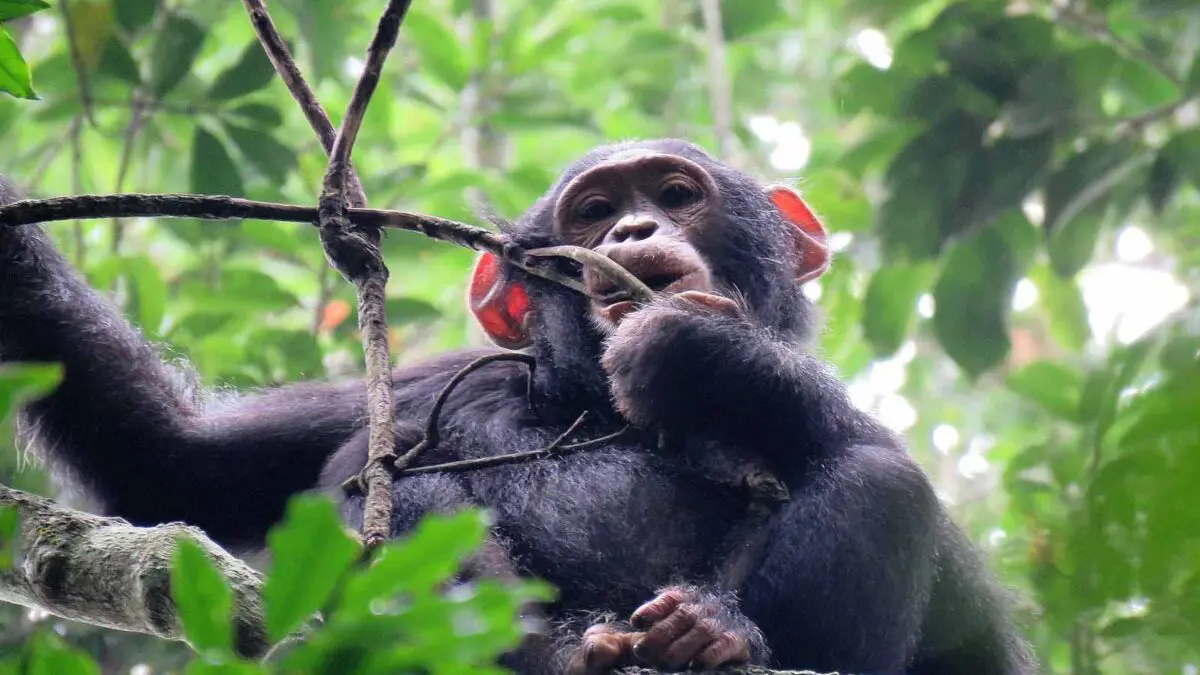
You move closer and start to see them. Chimpanzees appear high in the trees, sometimes in groups, sometimes scattered. One is feeding, another is climbing quickly, another is swinging between branches with surprising strength and speed.
The biggest challenge during chimpanzee tracking is not seeing them. It is following them. They rarely stay still long enough for you to settle your focus. Just when you start watching one behavior, something else happens somewhere else in the canopy.
There is a constant sense of movement. Your attention keeps shifting because the story keeps changing.
That is what makes chimpanzee tracking feel exciting. It does not pause for long. It keeps you alert the entire time.
Many travelers leave Kibale feeling like they were part of something happening in real time rather than simply observing wildlife from a distance.
Gorilla trekking feels slower but more intense
Gorilla trekking in Bwindi moves at a completely different rhythm.
The hike itself can be unpredictable. Some days you walk for an hour. Other days it takes much longer. The terrain changes constantly, and the forest can feel steep and dense. You follow guides who understand the movements of the gorilla families, but there is always an element of uncertainty.
That uncertainty builds anticipation.
You know the gorillas are somewhere ahead. You just do not know when the moment will come.
Then the atmosphere changes.
The group stops moving. Conversations drop to whispers. Even the forest feels quieter.
You step forward carefully and suddenly they are there.
A family of mountain gorillas sitting in the forest as if you had simply walked into their daily routine.
The first reaction is often silence.
Not because people are told to be quiet, but because they naturally become quiet.
A silverback might be resting nearby, watching everything calmly. A mother gorilla might be feeding while her infant clings closely. Young gorillas play for a moment, then settle again without urgency.
Nothing feels rushed.
Nothing feels performed.
You are not watching a show. You are witnessing life happening naturally.
That is what makes gorilla trekking so different from many other wildlife experiences.
The energy is not in movement. It is in presence.
The emotional response is not the same
Chimpanzees tend to create excitement.
Their behavior is expressive, noisy, and fast. You see social interaction everywhere. They chase, communicate, argue, and play. It feels familiar in a strange way because so much of their behavior mirrors human behavior.
Many travelers find themselves smiling or even laughing during chimpanzee encounters because there is so much personality in their actions.
Gorillas create a quieter emotional reaction.
People often do not realize how affected they are until later. During the encounter, they simply stand and watch. There is less talking. Less movement. More focus.
Something about standing close to a silverback gorilla changes how people feel in that moment. It is not dramatic. It is steady and grounded.
For many travelers, the emotional weight of gorilla trekking becomes clear only after they leave the forest. The memory stays longer than expected.
Physical effort and unpredictability
Chimpanzee tracking in Kibale is generally more accessible. The walks can be muddy or uneven, but most people with basic fitness manage it comfortably. The experience feels active, but not exhausting.
Gorilla trekking in Bwindi can be very different depending on the day. Some groups find gorillas relatively quickly. Others hike for several hours through steep and challenging terrain.
The uncertainty is part of the experience. You do not know how long the journey will be, and that shapes the way you approach it mentally.
For many travelers, the effort becomes part of the story they tell afterward. Reaching the gorillas after a long trek often makes the encounter feel even more meaningful.
Budget and value in real terms
Chimpanzee tracking is significantly more affordable, which makes Kibale an attractive option for travelers who want a strong wildlife experience without high permit costs.
Gorilla trekking is more expensive, but that cost reflects both conservation needs and the rarity of mountain gorillas. There are only a small number left in the wild, and Uganda is one of the few countries where they can be seen safely in their natural habitat.
For many travelers, the price is not just about the activity. It is about the uniqueness of the opportunity.
What people remember after they leave
When travelers talk about chimpanzee tracking later, they usually describe movement. They remember calls echoing through the forest, sudden appearances in the trees, and the feeling of trying to follow fast-changing activity.
It is an experience full of action.
When people talk about gorilla trekking, the memory is often more specific.
It is not a sequence of events. It is a moment.
A silverback looking in their direction. A baby gorilla holding onto its mother. A quiet hour where time felt slower than usual.
That moment tends to stay clear in their memory long after other parts of the safari fade.
So which one should you choose?
There is no single answer that fits everyone.
If you enjoy energy, movement, and watching animals interact in a constantly changing environment, Kibale National Park will feel rewarding from start to finish.
If you are looking for something quieter, more personal, and deeply memorable, Bwindi Impenetrable National Park offers an experience that many travelers describe as unforgettable.
The interesting thing is that people who do both rarely compare them afterward in a strict way. They see them as different experiences that serve different purposes.
Chimpanzees show you movement, energy, and social complexity in real time.
Gorillas show you stillness, family connection, and presence in a way that feels grounded and calm.
Choosing between Kibale and Bwindi is not really about picking the better safari. It is about choosing what kind of memory you want to carry with you.
Some travelers want excitement and constant action. Others want a quiet, powerful moment that stays with them for years.
Uganda gives you both options within the same journey.
And whether you end up watching chimpanzees moving through the canopy or standing quietly in front of a mountain gorilla family, you will likely leave with the same realization many travelers have had before you.
The experience felt real, unfiltered, and closer than anything you expected before arriving.