



How Many Gorilla Trekking Permits Are Available Per Day in Bwindi?
For many people planning a trip to see mountain gorillas in Uganda, excitement comes first. You start imagining the experience long before it happens. You picture walking through thick rainforest trails, hearing birds in the distance, feeling the cool forest air, and eventually standing face to face with a giant silverback and his family in the wild.
Then somewhere during trip planning, reality interrupts the daydream.
You begin reading travel guides, talking to tour operators, or watching videos online and suddenly one phrase keeps appearing over and over again: gorilla permits.
Then another phrase follows: book early.
And another: availability is limited.
That is usually when travelers pause and ask the question almost everyone asks:
“Exactly how many gorilla trekking permits are available each day in Bwindi?”
The answer sounds straightforward, but understanding why the number matters tells a much bigger story.
Bwindi Impenetrable National Park currently offers around 152 to 200 gorilla trekking permits each day, depending on how many habituated gorilla families are available for tourism at that particular time.
On paper, more than one hundred permits may seem like a lot.
But once you understand how the system works, you quickly realize why travelers are often encouraged to reserve early.
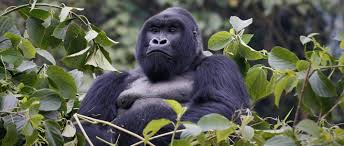
Tourists trekking through Bwindi rainforest toward mountain gorillas during early morning adventure.
It All Starts With The Gorillas, Not Tourism
Many people assume permit numbers are limited simply because demand is high or because authorities want exclusivity. But the real reason has very little to do with creating scarcity.
The gorillas come first.
Everything revolves around protecting them.
Mountain gorillas are among the world’s most carefully protected animals. Years of conservation work have gone into helping their populations recover, and tourism has become part of that success story. However, tourism only works if it remains controlled.
Unlike animals seen during ordinary game drives, gorillas are incredibly sensitive to human interaction.
They share a close genetic relationship with humans, which means they can also be vulnerable to some of the illnesses we carry. Something as ordinary as a cold can become a serious concern.
Because of this, conservation authorities cannot simply allow endless groups of visitors into the forest every day.
Strict rules exist for a reason.
Why Only Small Groups Are Allowed
This is where permit numbers begin to make sense.
Each habituated gorilla family can only be visited by eight people per day.
Not eight people every few hours.
Not eight in the morning and eight in the afternoon.
Just eight visitors total.
When travelers first hear this, they are often surprised.
Considering how famous gorilla trekking has become worldwide, eight people feels like an incredibly small number.
But that limitation is actually one of the reasons the experience feels so special.
You are not entering a crowded wildlife attraction filled with large tour groups.
Instead, you hike with a small group of people, often strangers who quickly become companions during the journey. You follow rangers through narrow forest paths while trackers search ahead for signs of the gorillas.
There is anticipation in every step.
Sometimes the hike is short.
Sometimes it feels long.
Nobody knows exactly where the gorillas will be that day.
And somehow that uncertainty makes reaching them even more exciting.
How Bwindi Reaches More Than 150 Permits Per Day
People sometimes hear the eight-person rule and immediately wonder how the park reaches more than 150 permits daily.
The explanation is fairly simple.
Bwindi has multiple habituated gorilla families available for tourism.
Each family contributes eight permits.
As additional gorilla groups become available, permit numbers increase.
The interesting part is that gorilla groups are not simply added overnight.
Habituation is a slow process.
Researchers and wildlife teams spend years gradually helping gorillas become comfortable with limited human presence. The goal is never to tame them or change their natural behavior.
The gorillas remain completely wild.
The process simply allows people to observe them safely without causing stress.
That takes patience.
Sometimes years of patience.
Many Travelers Do Not Realize Bwindi Has Different Trekking Sectors
One of the biggest surprises for first-time visitors is discovering that Bwindi is not just one entry point with one trekking area.
The park is divided into four sectors:
Buhoma
Rushaga
Ruhija
Nkuringo
This becomes important because each area has its own gorilla families and permit allocation.
Some sectors naturally have more gorilla groups than others.
As a result, one area may have more permits available while another fills quickly.
Travelers often learn this during booking.
Someone may fall in love with a lodge after seeing beautiful photos online, reserve accommodation immediately, and only afterward discover their trekking permit is assigned somewhere completely different.
Suddenly a peaceful safari morning turns into a long drive before sunrise.
That is why experienced travelers often secure permits before choosing accommodation.
It saves confusion later.
Why Permits Seem To Disappear So Quickly
A lot of travelers underestimate how global gorilla trekking has become.
People travel from all over the world for this experience.
Wildlife photographers plan special trips around it. Families build entire vacations around it. Honeymoon couples include it in East African safari itineraries.
Demand becomes even stronger during the dry seasons.
June through September and December through February often attract larger numbers of travelers because trekking conditions can be easier.
During those periods, availability can change much faster than people expect.
Someone planning months ahead may still discover limited options.
That catches many travelers by surprise.
The Permit Becomes More Than Just A Ticket
At first, a gorilla permit sounds like a simple entry pass.
But as your trip gets closer, it starts to feel like much more than that.
It becomes the thing that turns plans into reality.
Flights, lodges, transportation, and safari schedules often end up arranged around permit dates.
Many travelers eventually realize the permit becomes the center of the entire journey.
Everything else fits around it.
Bwindi currently offers roughly 152 to 200 gorilla trekking permits each day, but those numbers tell only part of the story.
Behind every permit is a careful conservation effort designed to protect mountain gorillas while still allowing people to experience one of Africa’s most unforgettable wildlife encounters.
And perhaps that is exactly what makes the experience feel so meaningful.
Only a limited number of people enter that forest each day.
Only a few small groups get that opportunity.
Then somewhere deep inside Bwindi, among the trees and thick vegetation, a moment happens that many travelers remember for the rest of their lives.


