

What Is Included in the Rwanda $1,500 Gorilla Trekking Permit?
Most people meet this trip as a number first. You read about mountain gorillas in the Virunga volcanoes, you start pricing it out, and then you hit a single line item that costs more than your flight. One permit. One morning. One hour. It is enough to make anyone pause, and it should be, because $1,500 is real money in any currency.
So before you decide whether the trip is worth it, get clear on what is included in the Rwanda $1,500 gorilla trekking permit. Once you see how that fee is put together and where it goes, the number stops feeling arbitrary. You are not paying for a ticket. You are paying for a place in a system that has kept an endangered species alive.
The Price That Stops Most People
The Rwanda Development Board sets the permit fee, and it has held at $1,500 per person per trek for international non-residents since 2017, when it doubled from $750. That jump shocked the travel industry at the time. Operators predicted empty lodges and cancelled bookings.
What happened instead is that Volcanoes National Park kept selling out in peak season, and the mountain gorilla population kept climbing. There are now roughly 1,000 mountain gorillas alive in the wild, split between the Virunga Massif and Uganda’s Bwindi forest. They are the only great ape whose numbers are going up. The species moved from critically endangered to endangered in 2018, which almost never happens.
Rwanda chose a deliberate model here. Fewer visitors, higher fees, tighter rules. Only about 96 to 112 permits are released per day across the habituated families, with a hard maximum of eight trekkers per group. The gorillas see a small number of humans for a short window and then are left alone. Your $1,500 buys scarcity on purpose.
What Is Included in the Rwanda $1,500 Gorilla Trekking Permit: The Full Breakdown
Here is what the fee actually covers on the day you trek.
Park entry to Volcanoes National Park
Your permit is your entry pass. There is no separate gate fee, no conservation levy added at the barrier, no daily park charge layered on top. You arrive at the Kinigi headquarters, your name is on the list, and you are in. This matters more than it sounds, because in many African parks the entry fee is a separate line that catches travellers by surprise.
A professional guide assigned to your group
Every group of eight gets a park guide who stays with you from the briefing to the moment you return. These are not seasonal hires. Many of them have worked in the same forest for over a decade and know individual gorillas by face and by name. They know which silverback tolerates a slightly closer approach and which mother is protective of a new infant.
Your guide also sets the pace, reads the group, and decides when to stop. If someone is struggling on a steep section of bamboo slope, the guide adjusts rather than pushing on.
The tracking team that leaves before sunrise
This is the part most people never see and rarely think about. Trackers set out at dawn, hours before your group starts walking, and locate each gorilla family from where it nested the previous night. By the time you get your briefing at 7am, the park already knows roughly where your family is and how far you will have to walk.
Without that advance work, a trek could take all day with no guarantee of a sighting. With it, success rates sit above 95 percent. That team is paid out of your permit fee.
An armed ranger escort
Rangers accompany every group. The rifles are not for the gorillas. Volcanoes National Park sits in a forest that also holds buffalo and forest elephant, and the border area has a long history that Rwanda takes seriously. The escort is standard, it is included, and after ten minutes you stop noticing it.
One full hour with a habituated gorilla family
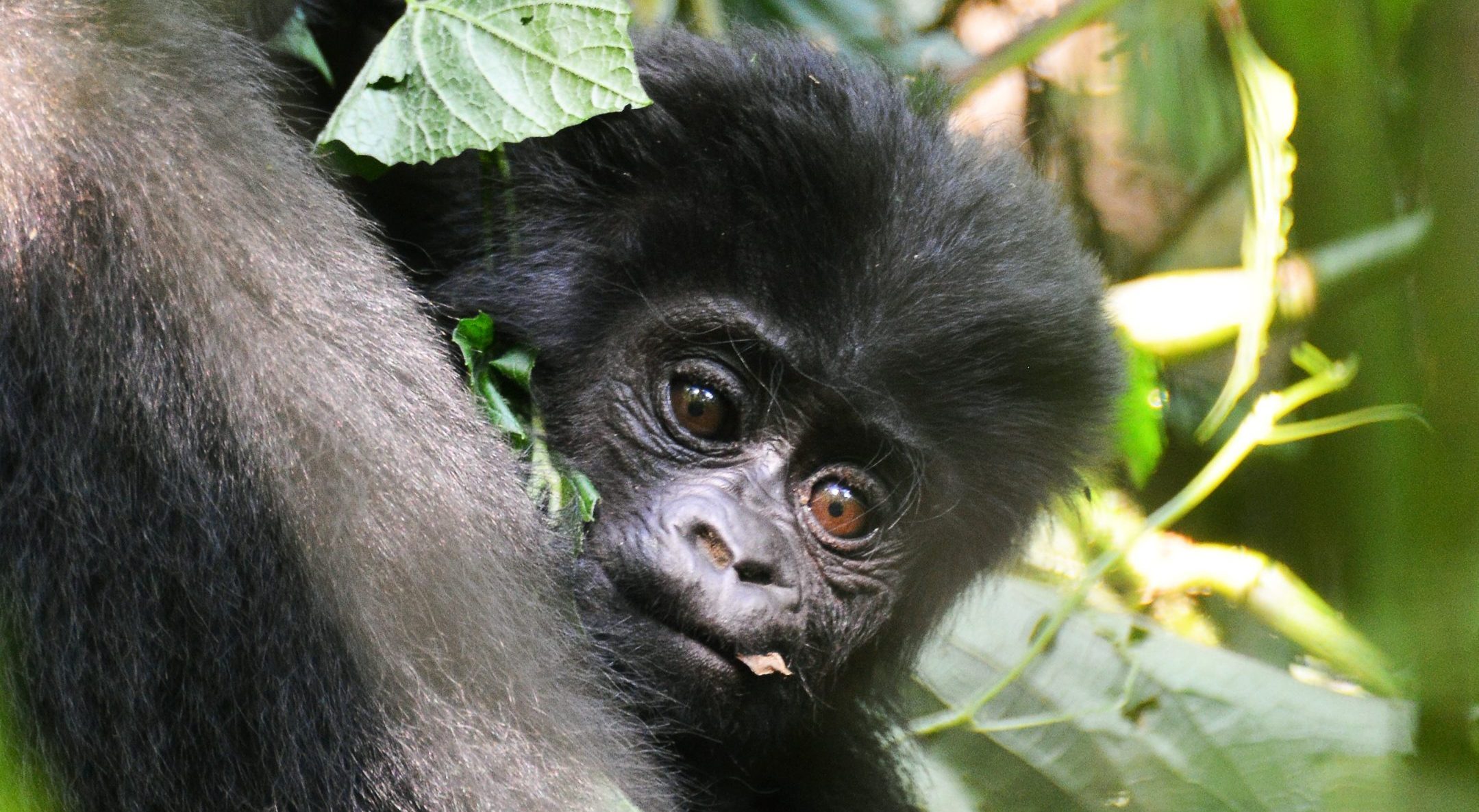
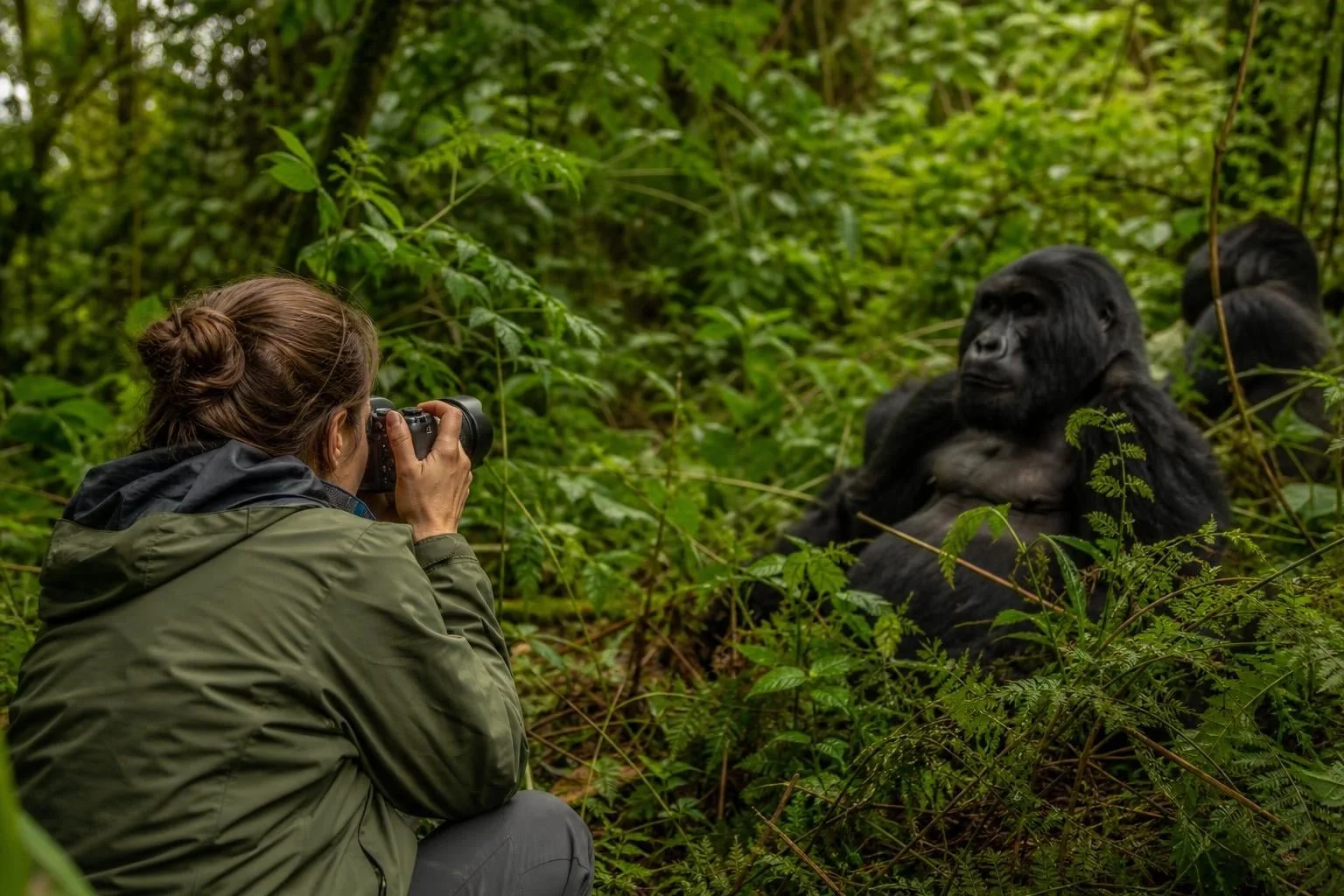
Sixty minutes, timed, starting when your group makes visual contact. You stay at a distance of seven metres where the terrain allows, keep your voice down, and watch a family go about an ordinary morning. Infants wrestle. A blackback strips bamboo. The silverback usually ignores you completely, which is its own kind of compliment.
The hour is fixed and it is protected. Guides end it on time, every time, because the limit exists to reduce stress and disease risk for the gorillas. That single hour is the core of what is included in the Rwanda $1,500 gorilla trekking permit, and it is the reason the fee is structured the way it is.
A gorilla family matched to your fitness
At the morning briefing, guides sort trekkers into groups based on age, fitness, and what you tell them. Some families feed close to the park boundary and need a 40 minute walk. Others range high on the volcano slopes and need four to six hours of climbing through nettles and mud. Be honest at the briefing. Nobody wins if you claim to be fitter than you are and then hold up seven other people at 3,000 metres.
Your certificate
A small thing, but included. You get a signed certificate at the end with the name of the family you visited. People frame these.
What the Permit Does Not Cover
This is where budgets go wrong, so be precise about it.
Your permit does not include transport from Kigali to the park, which is a two to three hour drive and usually costs $150 to $250 for a vehicle and driver. It does not include accommodation near Musanze, which runs from about $60 a night at a simple guesthouse to well over $1,500 a night at the top lodges. It does not include meals, your Rwanda visa, travel insurance, or hiking gear.
It also does not include porters. Hiring one costs $15 to $20 plus a tip, and you should do it. A porter carries your daypack, pulls you up the slippery sections, and pushes from behind when your legs give out on the steep parts. Most porters are from villages bordering the park, and several are reformed poachers who now earn more from tourism than they ever did from snares. Twenty dollars is the single highest-value spend of your whole trip.
Budget another $10 to $20 per person for tips to your guide, trackers, and rangers.
Where Your Money Actually Goes
Rwanda shares 10 percent of park revenue directly with communities living around Volcanoes National Park. That money has built schools, health centres, water systems, and housing in Kinigi and the surrounding sectors. The logic is straightforward. A farmer who gets a clinic and a job from gorilla tourism has a reason to report a snare instead of setting one.
The rest funds ranger salaries and patrols, veterinary intervention by the Gorilla Doctors team, habitat monitoring, and land acquisition to expand the park. In 2022 Rwanda began a major expansion project to add around 3,700 acres back to the park, relocating and compensating thousands of households in the process.
You can question how any of this is executed. You cannot really argue with the population curve.
Who Pays Less Than $1,500
The $1,500 rate applies to foreign non-residents. Rwandan citizens and East African Community citizens pay around $200. African citizens and foreign residents living in Africa pay around $500, with proof required, usually a passport, residence permit, or a visa covering at least four consecutive months on the continent.
There are also low-season promotions in some years that drop the international rate to around $1,050 when you combine your trek with visits to Nyungwe or Akagera. These change, so check with the Rwanda Development Board or a licensed operator before you assume one applies.
Rules That Are Worth Knowing Before You Book
You must be 15 or older on the day of your trek. There are no exceptions and no family discount.
You cannot trek with a cold, flu, or any respiratory infection. Gorillas share about 98 percent of our DNA and have no immunity to human viruses. A cough that gives you a rough weekend can kill an infant gorilla. If you turn up sick and report it, the park will usually refund or reschedule. If you hide it, you are gambling with an endangered animal’s life.
Permits are generally non-refundable once issued, though rescheduling is sometimes possible with enough notice. Book three to six months ahead for June to September and December to February. Peak dates sell out.
Making the Hour Count
Put the camera down for at least fifteen of your sixty minutes. Almost everyone who treks says the same thing afterwards, that the photos are fine but the memory they keep is a moment they watched with their own eyes rather than through a screen.
Wear gaiters and gardening gloves. The stinging nettles in that forest are serious, and the bamboo will shred bare hands. Bring more water than you think you need, and eat breakfast even if you are nervous at 5am.
And when you are standing there, muddy and out of breath, with a 200 kilogram silverback lying three metres away in the undergrowth, remember that your permit is one of about 100 sold that day. That number is small by design. It is the reason the forest is still standing and the reason the family in front of you is still here to be counted.