
Great Migration Group Safari vs Private Tour: Which Is Right for You? (Complete Guide 2026)
Choosing between a group safari and a private tour is one of the most consequential decisions you will make when planning a Great Migration experience. This choice does not simply affect your budget—it determines how you interact with the landscape, how much control you have over your time, and ultimately how deeply you experience one of the most dynamic wildlife events on Earth.
In ecosystems such as Serengeti National Park and Maasai Mara National Reserve, wildlife movement is not predictable. The Great Migration is fluid, constantly shifting based on rainfall, grazing conditions, and predator pressure. Because of this, the structure of your safari—whether group-based or private—plays a decisive role in what you actually see.
This guide provides a detailed, practical comparison of both options, focusing not just on definitions but on real-world safari dynamics, behavioral implications, and experience outcomes.
Understanding the Core Difference
At the most basic level, a group safari means shared logistics, while a private safari means exclusive control. However, in the context of the Great Migration, the difference runs much deeper.
A group safari operates on a fixed itinerary with shared decision-making. You travel with other guests, follow a schedule, and rely on a guide managing multiple expectations at once.
A private safari operates on a customized itinerary with full autonomy. You decide where to go, how long to stay, and what to prioritize, with the guide focusing entirely on your experience.
In static destinations, this difference may be minor. In a moving ecosystem like the Serengeti–Mara, it becomes critical.
Group Safaris: Structure, Affordability, and Shared Experience
Group safaris are designed for efficiency and accessibility. By sharing costs among several travelers, they make high-quality safari experiences available at a lower price point.
Cost Efficiency and Accessibility
The most obvious advantage is cost. Vehicle hire, fuel, guide services, and park logistics are distributed across multiple travelers, significantly reducing the price per person.
For many travelers, especially those visiting Africa for the first time, this makes the Great Migration achievable without exceeding budget constraints.
Group safaris also simplify planning. Accommodation, transfers, permits, and schedules are arranged in advance, allowing travelers to focus on the experience rather than logistics.
Social Dynamics
Group safaris introduce a social element that private safaris lack. Sharing wildlife sightings, discussing the day’s events, and experiencing dramatic moments together can enhance enjoyment for certain travelers.
Solo travelers often benefit the most from this setup, as it provides companionship without the need to organize a private trip.
Operational Structure and Limitations
However, this structure comes with constraints. Group safaris follow fixed schedules, which means:
You may leave a sighting earlier than you would prefer
You may spend time at locations that are not your priority
You must align with the group’s pace and interests
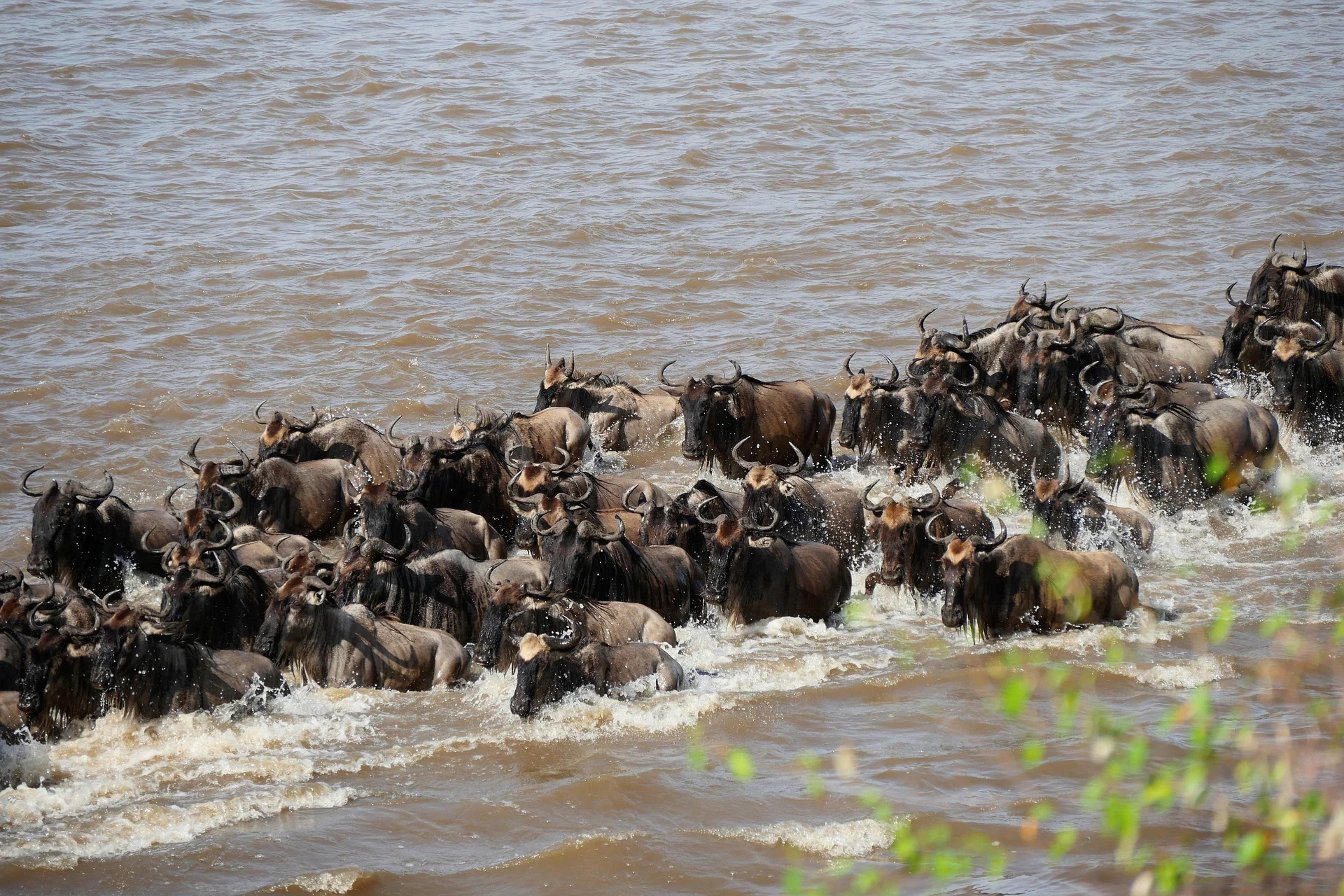
This becomes particularly relevant during migration events. River crossings, for example, are unpredictable. A herd may gather for hours before crossing—or disperse entirely. In a group setting, waiting indefinitely is rarely possible.
Vehicle positioning is another factor. In high-demand areas such as riverbanks, the best viewing spots are limited. A private vehicle can reposition quickly, while a group vehicle may be slower to adapt due to coordination needs.
Experience Outcome in Migration Context
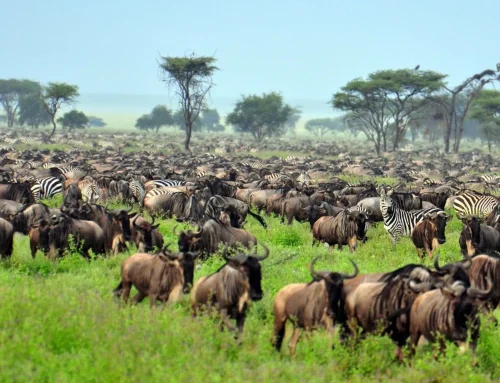
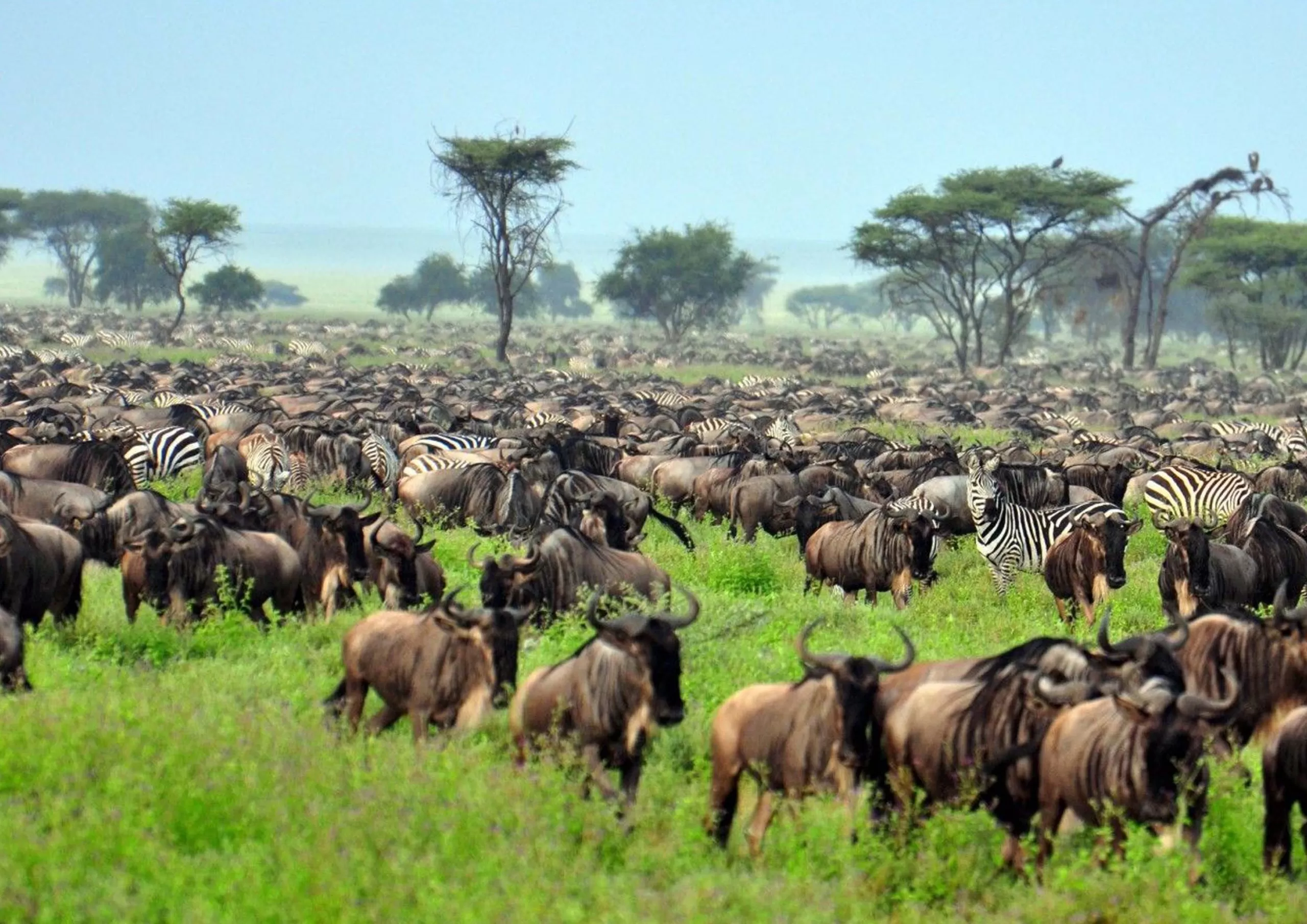
Group safaris can absolutely deliver incredible migration experiences. You will likely see large herds, predator interactions, and classic savannah landscapes.
However, your experience is shaped by the itinerary rather than by the movement of wildlife. You are observing the migration within a structured framework rather than adapting fluidly to it.
Private Safaris: Flexibility, Precision, and Depth
Private safaris represent the highest level of control and customization. They are designed around your specific goals, whether those involve photography, wildlife behavior, or simply a more relaxed pace.
Flexibility as a Strategic Advantage
In migration environments, flexibility is not a luxury—it is a tactical advantage.
With a private safari, you can:
Wait at a river crossing for hours if needed
Adjust your route based on real-time wildlife movement
Start early or extend game drives depending on activity
Revisit locations where significant events are likely
This level of control dramatically increases the probability of witnessing key moments such as crossings, hunts, or rare interactions.
Guide Focus and Interpretive Depth
A private guide works exclusively with you. This allows for deeper engagement, including:
Detailed explanations of animal behavior
Tracking strategies based on spoor and movement patterns
Customized pacing for observation and photography
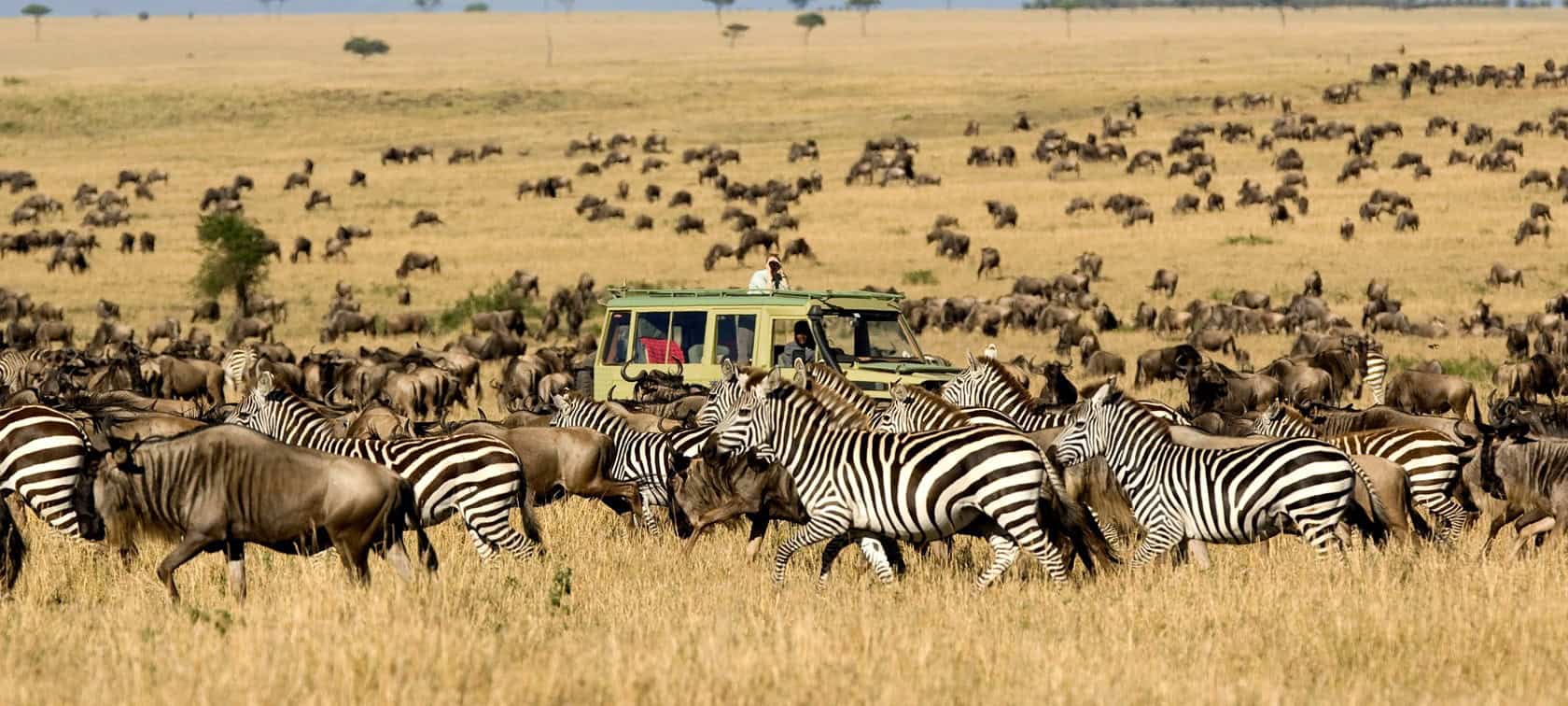
Great Migration Group Safari vs Private Tour
In ecosystems like Serengeti National Park, where understanding behavior enhances the experience, this focused attention adds significant value.
Privacy and Experience Quality
Private safaris offer a more intimate experience. There is no need to compromise on timing, seating, or viewing angles. This is particularly important for:
Couples seeking a romantic or quiet experience
Families needing flexibility with children
Photographers requiring specific positioning and patience
The absence of group dynamics allows you to engage more directly with the environment.
Cost Considerations
The primary drawback is cost. Without shared expenses, private safaris require a higher financial commitment.
However, the value proposition changes when considering experience quality. In many cases, the ability to control timing and positioning results in significantly richer wildlife encounters.
The Migration Factor: Why This Decision Matters More Here
The Great Migration is not a static attraction. It is a moving system influenced by environmental variables.
This means that:
Being in the right place at the right time is essential
Events such as crossings cannot be scheduled
Wildlife density can change within hours
In such a context, flexibility becomes directly linked to experience quality.
A group safari positions you within the ecosystem, but a private safari allows you to move with it.
River Crossings: A Practical Comparison
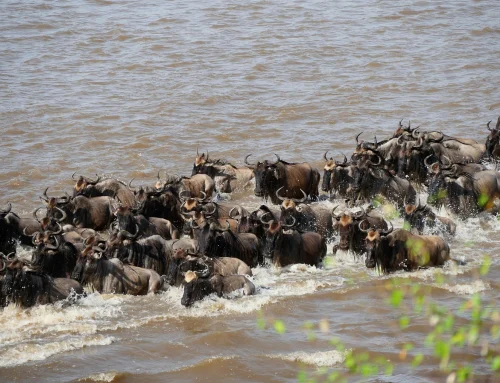
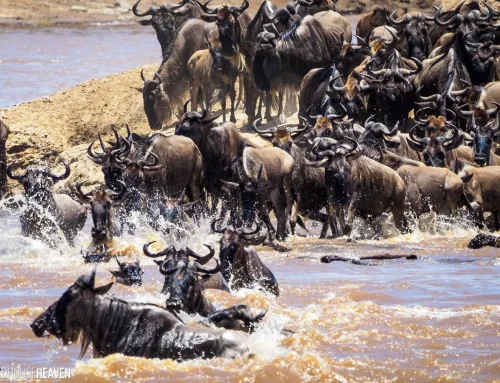
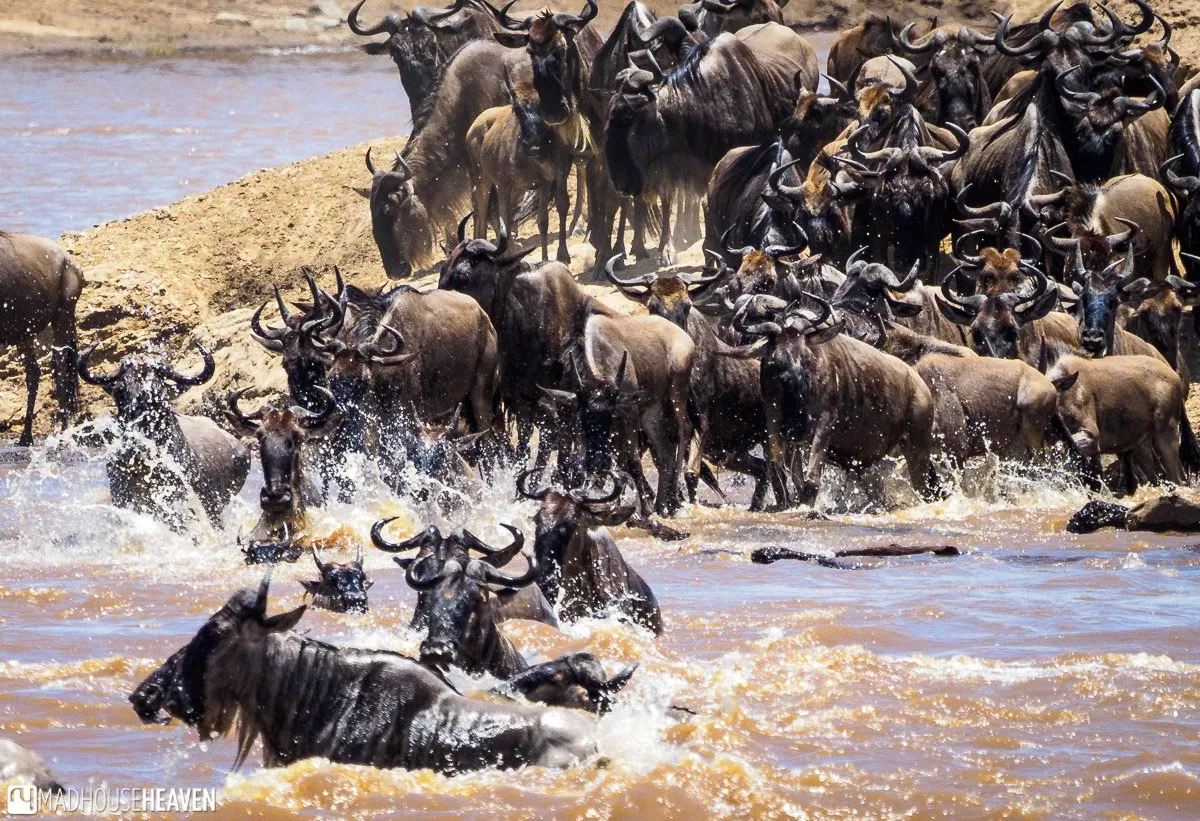
River crossings are often the highlight of a migration safari. They illustrate the difference between group and private experiences clearly.
In a group safari, you may arrive at a crossing point, wait for a period, and then leave according to schedule—even if a crossing seems imminent.
In a private safari, you can remain at that location as long as necessary. This patience often determines whether you witness a crossing or miss it.
Given that crossings can occur suddenly after long periods of inactivity, this flexibility can define the entire safari outcome.
Cost vs Value: A Strategic Perspective
It is tempting to view the decision purely in financial terms, but this can be misleading.
Group safaris offer lower cost but also lower control.
Private safaris require higher investment but provide greater control, adaptability, and depth.
In high-variability environments like Maasai Mara National Reserve, control often translates into better outcomes.
The question is not simply what you spend, but what you gain in return.
Hybrid Options: Small Group and Semi-Private Safaris
For travelers seeking balance, hybrid options are increasingly popular.
Small group safaris limit vehicle occupancy, improving comfort and flexibility while maintaining shared costs.
Semi-private arrangements may involve shared logistics with customized elements, such as private vehicles during key game drives.
These options offer a compromise between affordability and experience quality, particularly in migration-focused itineraries.
Choosing Based on Travel Style
The correct choice depends on how you prefer to travel.
Group safaris are best suited for travelers who prioritize affordability, enjoy social interaction, and are comfortable with structured itineraries.
Private safaris are ideal for those who value flexibility, want deeper engagement, and prefer a more personalized experience.
For photographers, wildlife enthusiasts, and repeat safari travelers, private safaris tend to offer significantly greater satisfaction.
Final Thoughts: Matching Strategy to Experience
The Great Migration is one of the most complex and dynamic wildlife phenomena in the world. Experiencing it fully requires more than just being present—it requires positioning, timing, and adaptability.
Both group and private safaris can deliver meaningful experiences in Serengeti National Park and Maasai Mara National Reserve. The difference lies in how much control you have over those experiences.
A group safari offers access and structure. A private safari offers flexibility and depth.
If your goal is to witness the migration in a general sense, a group safari is sufficient. If your goal is to engage with it on a deeper level—to follow its movement, anticipate its behavior, and maximize your chances of witnessing its most dramatic moments—then a private safari is the more effective choice.
Ultimately, the right decision is not about which option is better, but about which one aligns with how you want to experience one of nature’s greatest spectacles.