



Sibiloi National Park: Turkana Basin Dinosaur Fossil Country
Stand on the shores of Lake Turkana at dawn. You feel something before you understand it. The wind carries dust that has been moving across this basin for millions of years. The ground under your boots holds bones that’re older than language itself. This is Sibiloi National Park. It is a place in Kenya that is very rich in prehistoric remains. Scientists still travel here from every continent to dig and learn.
A Landscape Shaped by Time
People who live here and researchers have a nickname for this region. They call it Sibiloi National Park: Turkana Basin Dinosaur Fossil Country. This name shows just how many prehistoric remains are in the ground. Even if the fossils themselves are not from the time that the word dinosaur suggests.
Sibiloi is on the edge of Lake Turkana. It is in a region that’s very remote. Most visitors need a day just to get here. The park covers 1,570 square kilometers of land. This land is made up of plains, volcanic rocks, and old wood that has turned to stone. The wood is scattered over the earth like broken things. It gets very hot here. The temperature often goes past 40 degrees Celsius. The wind rarely stops. It is not a place to be.. It is a place that has been recording history for a very long time.
What makes this park special is what is under its surface. There are layers of sediment. These layers hold fossils that’re close to four million years old. They show life on Earth from a long time ago. The people who first came here and wrote about it realized they had found something amazing. You can still see tree trunks lying on the ground. They are remnants of a forest that used to be. Now it is a desert.
What Makes This Fossil Country So Rich
The reason fossils are preserved well here is because of the geology. A time ago, volcanoes erupted and covered the basin with ash. This ash sealed the remains before they could decay. Rivers that used to flow into Lake Turkana carried sediment that buried bones quickly. This protected them from animals and weather. Over time, these layers turned into an archive.
Researchers have found remains of elephants, hippos, and crocodiles that are up to eight meters long. They have also found tortoises. Some of the crocodile fossils found near the lake are twice as big as the ones that are alive today. You do not need to be a scientist to understand how big that is. Imagine a reptile as long as a city bus sitting on a beach that does not exist anymore.
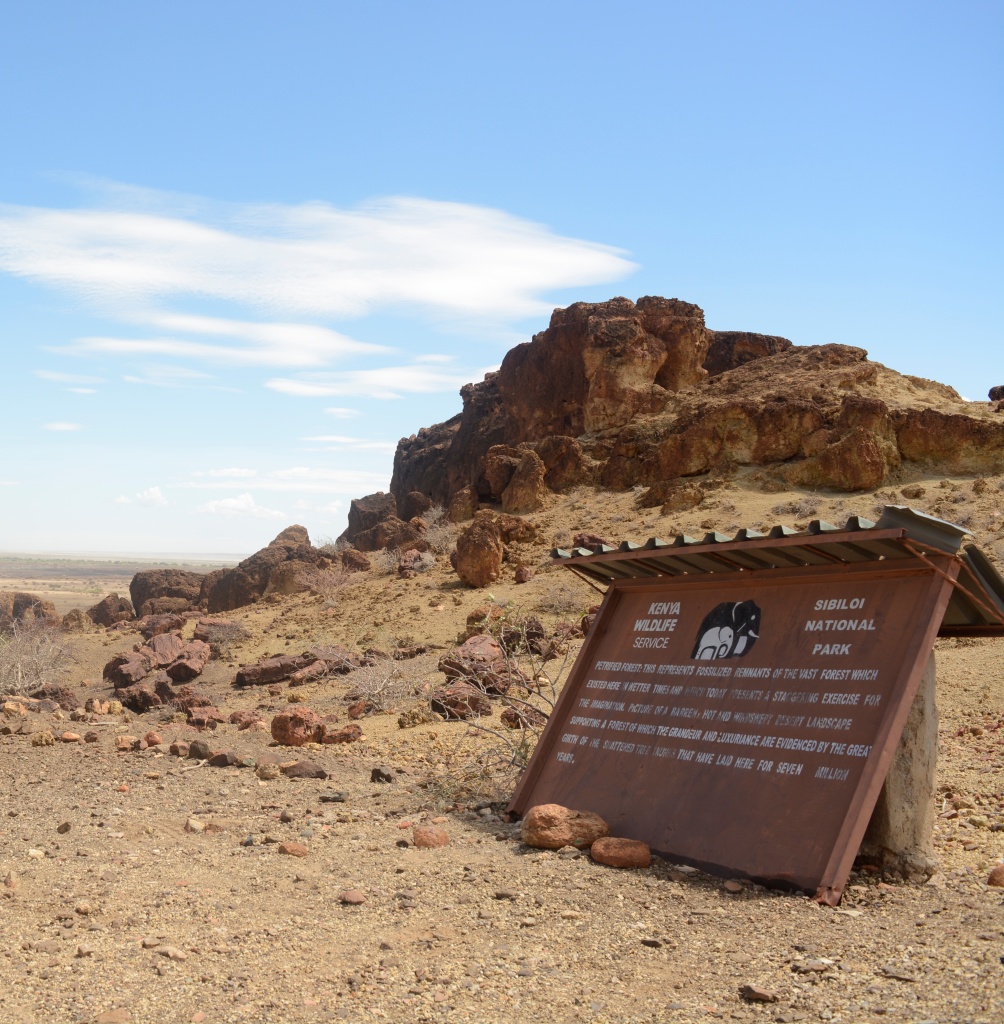
Ancient fossils and volcanic plains at Sibiloi National Park along Lake Turkana, Kenya.
Early Human Ancestors
Sibiloi is very famous among people who study human remains. Fossils found here have included remains of human ancestors that are over two million years old. These include specimens linked to Homo habilis and Australopithecus boisei. These findings have changed how scientists understand how humans evolved. Richard Leakey and his teams worked here for decades. Their discoveries changed what is written in textbooks around the world.
It is worth saying that the fossils that made this basin famous are not dinosaur bones. Dinosaurs died out around 66 million years ago. This was long before this basin was formed. What Sibiloi offers instead is a record of the animals, plants, and early humans that lived and died here. This is during the recent time in Earth’s story. Locals and researchers still call this place fossil country because of how many remains are in the ground. That reputation is well deserved. Sibiloi National Park is a place that’s very rich in fossils. The Sibiloi National Park fossils are what make this place so special.
Exploring Sibiloi National Park
To get to Sibiloi National Park, you need to plan. Most people fly into Loiyangalani or Lodwar. Then take a Four Wheel Drive vehicle because the roads are bad and there are not many services. You should bring fuel, extra water, and a vehicle that can handle sand and volcanic rock. There are no shops in the park, so you need to pack everything you need before you get there.
The Koobi Fora Museum in the park is a place to start. It has exhibits with casts of the fossils that were found nearby. It explains the work that the people who dig up the fossils are doing. The guides can show you where the big discoveries were made, and you can walk in those places. This gives you an idea of how big this project is.
Wildlife Beyond the Fossils
Sibiloi National Park is not about old things. It is also home to animals that’re still alive, like zebras, oryx, and topi. These animals move around the plains in groups. You can also see Nile crocodiles near Lake Turkana. They are related to the crocodiles that used to live there a long time ago. There are also a lot of birds near the lake, like flamingos and pelicans. If you bring binoculars, you should spend a whole morning near the lake.
Lake Turkana is also called the Jade Sea because of its color. This color comes from algae in the water. The lake makes the whole trip very beautiful. It is not often that you see a desert, old fossil beds, and a lake with animals in one place.
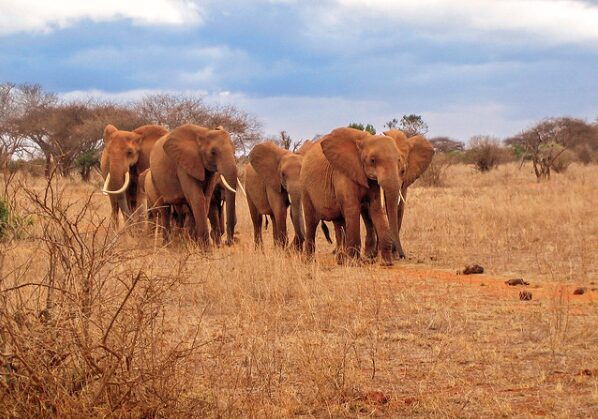
Fossilized ancient elephant remains uncovered in Sibiloi National Park’s Turkana Basin sediment.
Why Scientists Still Come Here
People are still digging up fossils in Sibiloi National Park. They come back every year because the earth is always changing and new things are being uncovered. Every time it rains, new bones are found that were hidden before. This is why Sibiloi National Park is a UNESCO World Heritage Site. It is very special because of all the fossils that have been found there.
The people who study the fossils think that they have only found a part of what is there. This means that when you visit, you might be walking on ground that still has discoveries to be made. Not many places in the world can offer you that.
This is why Sibiloi National Park is still important to scientists. Universities from the United States, Kenya, and Europe send students here to study. They come for months and work in very hot temperatures.
Visiting Sibiloi National Park Today
If you want to visit Sibiloi National Park, you need to be careful and respect the environment. You should bring a lot of water, at least four liters per person per day, and protection from the sun. You should also have an aid kit because medical help is far away. The best time to visit is from June to October. It is not as hot then. The roads are better after the rain.
You need a guide to help you navigate and understand what you are seeing. A good guide can show you where the fossils are and explain what you are looking at. If you want to take photos, you need a permit.
The places to stay near the park are basic. You can camp. There are not many facilities. Some people visit Loiyangalani first. Then go to the park. Whatever you choose, you should plan for days because the weather and roads can be unpredictable.
A Place Worth the Journey
This place is worth the trouble it takes to get. When you stand where the researchers found bones, you start to see things differently. You do not just see a desert; you see a place where everything that has lived and died over millions of years is recorded.
People who visit often say that it changes their perspective. Watching the sun set over Lake Turkana and knowing that you are standing on ground that has kept the story of animals and the first humans gives you a sense of how big and old the world is. This is why scientists keep coming, and why it is a special place.
If you want to learn about where humans came from and see the remains of animals that do not exist anymore, you should visit Sibiloi National Park. It is not like a safari. It takes time and effort but it gives you a direct connection to millions of years of history.


