


Amboseli Swamp Ecosystems: See Elephants At the Wetlands
If you stand at the edge of Enkongo Narok swamp at seven in the morning, you will see why people keep coming to Amboseli. Mount Kilimanjaro is behind you, and its snowcap is catching the first light of the day. In front of you, dozens of elephants are moving through the reeds, pulling up mouthfuls of grass. They look so calm, it is like they are doing it all on purpose. This is the heart of Amboseli Swamp Ecosystems: See Elephants at the Wetlands. This is a place where you will always find water when the rest of the plain is dry.
Amboseli National Park is in Kenya near the Tanzanian border. It is not very big. It only covers 392 kilometers. But what it lacks in size, it makes up for in one thing: it always has water. The parks’ swamps are fed by rivers that start as snowmelt on Kilimanjaro. The water travels through rock for years and comes out here as clear, cold springs. When the surrounding areas turn brown in July, the wetlands here stay green. This one fact affects everything you will see when you visit Amboseli National Park.
Why The Wetlands Draw Much Wildlife
You might think Amboseli is a dry park. For the most part, you would be right. Most of the land is covered in ash soil and thin vegetation. The swamps are different. Enkongo Narok Longinye Olokenya and Namelok are all wetlands that have water all year round. Animals know this. They come to these swamps.
During the season, which is from June to October, animals travel a long way to get to these swamps. You will see elephants standing in the water using their trunks to pull up plants that other animals cannot reach. Buffalo are grazing along the edges. Hippos are in the water. They come up to the surface now and then, making a loud noise that you can hear from far away. Some birds come to the swamps, including pelicans, herons, and African fish eagles. They all come for the same reason: the water.
What makes Amboseli National Park different from other parks is that you can see the animals very clearly. The swamps are in the grassland, and there are not many trees to block your view. You can watch the animals from afar and still see everything. A herd of animals crossing Longinye swamp at sunset with Kilimanjaro behind them is a famous sight. Many people take pictures of it. Once you see it, you will understand why it is so famous.
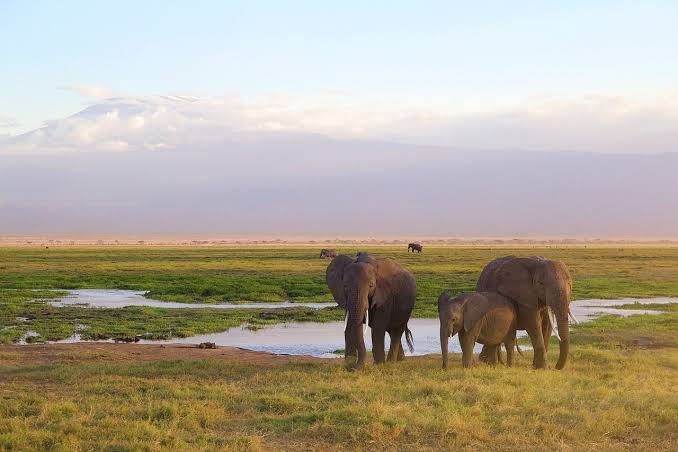
Elephant herd wading through Amboseli’s green swamp wetlands beneath Mount Kilimanjaro
Amboseli Swamp Ecosystems: Get Up Close To Elephants In The Wetlands
There are no places where you can see elephants so close. Amboseli is one of them. The elephants at Amboseli have been studied for a long time, since 1972, by a researcher named Cynthia Moss. Because of this, the elephants are used to people and vehicles, so they do not get scared easily. This is great for people who want to see elephant behavior.
You can see baby elephants that’re only a few weeks old. They are still learning to walk and stay close to their mothers. The older female elephants are in charge. Decide what the herd does. The male elephants usually stay alone. In small groups and eat for hours near the swamp. Amboseli is also home to male elephants with very long tusks.
A good guide can help you see the small things that elephants do. You can see them using their trunks to feel the wind or taking baths. These things happen all the time at the wetlands. It is very special.
Birds And Other Animals In The Swamps
Everyone loves elephants. There are many other animals in the swamps too. Over 400 kinds of birds live in Amboseli. Many of them need the wetlands to survive. You can see grey crowned cranes walking in the marshes with their feathers. African jacanas are also very cool to watch; they have toes and can walk on lily pads. Yellow-billed storks are fun to watch; they wade in the water and catch fish and frogs.
Hippos are animals, but they are hard to see during the day because they stay in the water. At night, they come out to eat. You can see how big they really are. There are also animals like frogs, otters, and fish that are important to the birds and the ecosystem.
Zebras and wildebeests also come to the swamps to drink water. They do not fight with the elephants; they just drink together. It is nice to see many different animals sharing the water.
Planning Your Trip To The Wetlands
The time of year you visit Amboseli is important. During the seasons from June to October and January to February, many animals come to the swamps because there is not much water elsewhere. If you want to see elephants and take good pictures, these are the best months to visit. During the seasons from April to May, the landscapes are green, and the skies are beautiful, but the animals are spread out and harder to see.
There is a hill in Amboseli called Observation Hill that’s a great place to see the swamps and the animals. If you climb it early in the morning, you can see the herds moving towards the water. There are also lodges near the swamps where you can watch elephants from your room. Ol Tukai Lodge and Tortilis Camp are two of them.
It is a good idea to bring binoculars to see the birds that are far away. A local guide can also help you learn more about the elephants and the other animals. They can tell you which herd you are watching and about the animals, which makes the experience even more special.
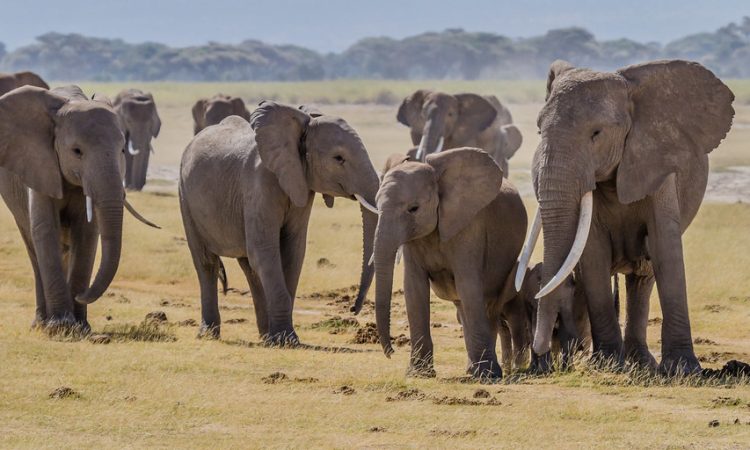
Elephant family grazing at Amboseli’s swamp wetlands with Kilimanjaro rising behind
A Landscape Worth Protecting
The swamps of Amboseli are in trouble. The water that flows into the swamps is decreasing because people are using it outside the park, and the rain is not coming like it used to. This has been happening for twenty years. Now, the people who want to protect the animals and the Maasai communities are working together to make sure the swamps are healthy for the animals and the people who live near them. They are making plans to share the water and the land so that everyone can use them.
The people who take care of the land near the park are also helping the elephants by giving them space to move around. This way, the elephants do not get into trouble with the farms and the villages.
If you want to visit Amboseli, you should do it in a way that does not hurt the animals or the land. You should stay in lodges that help the people who are protecting the land, and listen to your guide when they tell you how to behave around the animals. This will help keep everything in balance. The swamps of Amboseli are special because the water is still flowing and the people are working hard to protect it.
It is a special thing to see a family of elephants walking through the swamp where their grandparents and great-grandparents used to live. The mountain, in the background, makes it even more beautiful. Amboseli is a place to see this because it is easy to find. You just have to go and be quiet and let the swamp do its thing.


