


The Ngoswani River: A Great Place to See Predators in the Mara Ecosystem
There is a river in Kenya that is not very well known, but it is a great place to see predators like lions and leopards. The Ngoswani River goes through fields and thick bushes in the Mara, and if you spend a few days near it, you will see why guides like it so much. This is not a place for groups of people. It is a place where you need to be patient, have eyes, and really appreciate how predators live and hunt.
Most people who visit the Mara go to the big river crossings to see the wildebeest migration. That is a thing to see, but it does not tell you much about the daily lives of the big cats and other predators that live there all year. The area around the Ngoswani River is different. You can see lions sleeping under trees in the middle of the day and then waking up and getting ready to hunt when the sun starts to set. You can see leopards sneaking along the trees at dusk and hyenas walking together in groups looking for something to eat.
Why the Ngoswani River is So Popular with Predators
Water is very important for animals. They need to drink, and predators know that. The trees and bushes near the Ngoswani River give lions and leopards places to rest and hide. Then they can hunt when the time is right. There are always impalas, warthogs, and topis moving through the area, coming to drink from the river and eat the grass.
The river is not very wide. Its banks are always green and have trees and grass that you do not see in the rest of the plain. This makes a lot of animals come to the river. That is why predators like it so much. They know they can find food there.
Guides who work in the Mara say that you can see a lot of predators in one week near the Ngoswani River. Lion families use the riverbank as a border. They walk along it to make sure everything is okay. Cheetahs like the fields near the river where they can run fast and catch their prey. Hyenas live on the riverbanks, where they can hide their babies from the lions and leopards.
The Ngoswani River is special because it has different types of habitats in a small area. You can see bushes, open fields, and water all in one place, and that makes it a great place to see many different animals in just one day. You can see a lioness teaching her babies how to hunt a cheetah looking for prey from a termite mound, and a group of hyenas fighting over food. There are no places in the Mara where you can see so many different things in such a small area.
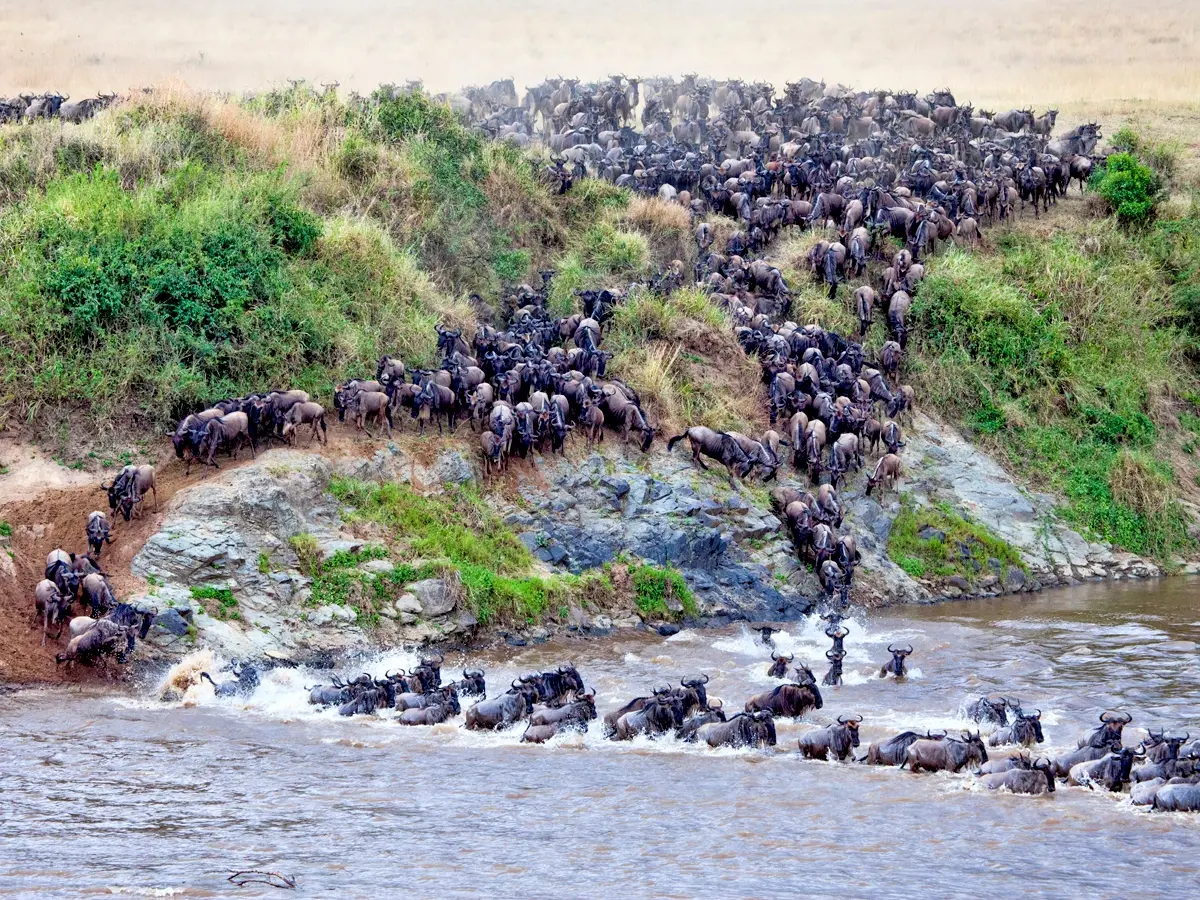
another alt text of 12 words using wild beast crossingWildebeest crossing the Ngoswani River as predators watch closely from the grassy banks
A Typical Morning by the Water
Imagine you are on a trip. You wake up before sunrise. Leave your camp. The air is still cool, so you wear a jacket. Your guide stops the engine near a bend in the river. You sit quietly for a few minutes. Listen. A hippo makes a noise. You can’t see it. Birds start singing. Then your guide. You see a group of eight lions, including babies, walking in a line along a path near the water.
People who visit often get to know the lions. One group of lions has a male who likes to climb on termite hills to look around. Another group has a lioness with a hurt ear who still leads her family. These are moments, not staged ones. The lions are just living their lives. That’s what makes it feel real.
Planning Your Visit for the Best Predator Sightings
When you visit matters. The dry season, from June to October, is best. The animals gather near the water, so you see them more often. The grass is shorter, so you can see them better. During the months from November to May, the animals spread out, but the river is still a good place to see them.
Early morning and late afternoon are the times to see predators. They rest during the part of the day, so plan your trip around dawn and dusk. A three-night stay is good because your guide can find out where the animals are. Don’t rely on luck during a trip.
Choose a camp near the river. Drive times matter. If you stay away, you won’t have as much time to see animals. Ask your tour company if their camp is near the river. Not all camps are close, even if they say they are in the Mara.
What to. What to Expect
Binoculars are very important. Many animals are away, so you need binoculars to see them. A good pair will help you see more. Bring a camera with a zoom lens if you want to take pictures. Don’t forget batteries because cold mornings use them up fast.
Wear layers of clothes. Mornings can be cold. It gets warm quickly. Bring a hat and sunscreen for the middle of the day. Wear shoes, even if you’re in a vehicle most of the time.
Be patient. Sometimes you won’t see many animals eating grass and vultures flying around. Sometimes you see a real hunt and its exciting. The animals aren’t acting; they’re just living their lives. That’s what makes it special.
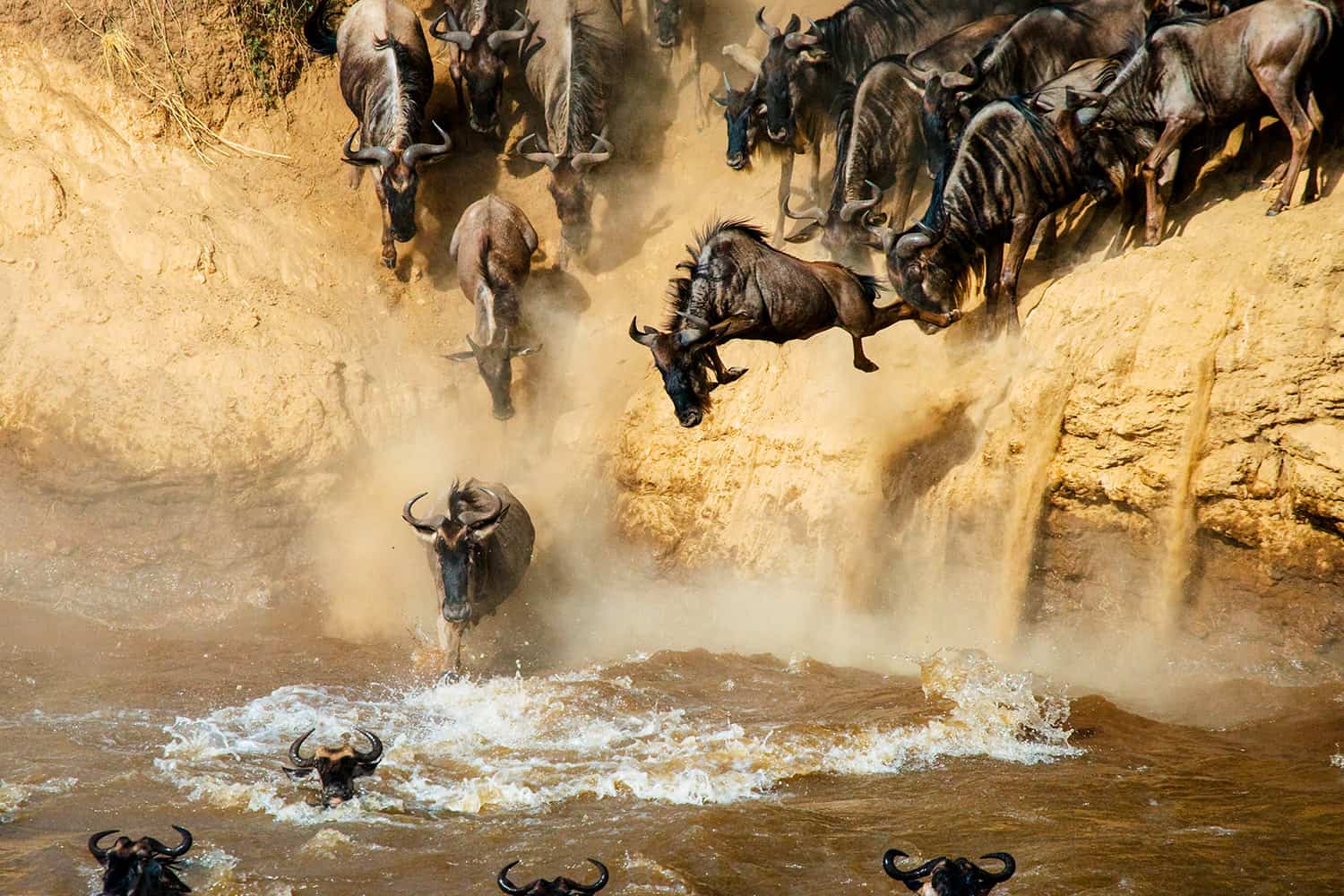
Herd of wildebeest crossing the river as a lioness watches from nearby grass
The Bigger Picture
When you visit Kenya, you should know that taking care of the environment in this area really depends on money from tourism. This money goes to people and conservation groups. When you stay near the river, some of the money you pay helps pay for people to stop poaching, for schools, and for agreements that keep animals and livestock separate. This way of doing things has really helped keep the number of predators in areas where people are moving in.
The local Maasai guides are really good at tracking animals. They know how to read footprints and listen to birds and antelope to figure out where the predators are. They even watch the vultures flying overhead to predict where the predators will show up next. Traveling with someone who knows the land well teaches you a lot of things that you cannot learn from a book. It also puts money directly into the hands of the people who take care of these animals every day.
If you want to go on a safari that’s more than just a pretty picture, you should spend some real time here. Sit quietly in the morning. Learn to recognize the different animals. Watch how the hyenas work together to hunt without fighting. The Ngoswani River will not give you an exciting moment just because you want one, but it will show you what the predators are really like, and that is really rewarding.
You should talk to the people who are organizing your trip before you go and ask them some questions. Find out how many vehicles will be driving around the Ngoswani River at the time, because if there are fewer vehicles, the animals will be calmer and you will see more. Ask how close the camp is to the river and if the guides know the area well. These things will make your trip really special. You will still be talking about it years later.
If you come with plenty of time and a guide who knows the area, this quiet part of the Mara will give you memories that will last a time. You should plan your trip for the season if you want to see a lot of predators and bring warm clothes for the cold mornings.. You should not expect to see the animals at a certain time because they do what they want, and that makes it more exciting when you do see them. The animals are, in charge here. Once you accept that every time you see them is special.


