


Naboisho Conservancy: A Place to Avoid Mara Crowds
Have you seen pictures of the Maasai Mara with lots of cars surrounding a lion? That’s why many travelers want something. They want to see wildlife without the crowds. That’s what draws people to this place east of the reserve. Here, there are more animals than tourists, and it’s quiet enough to hear the grass move.
This place works on an idea: give land back to nature, share the benefits with the owners, and keep visitor numbers low. That way, both humans and animals have space.
You don’t need weeks of planning or a big budget to have this experience. You just need to find the place. This lands owners decided years ago that wildlife and community income could grow together. That changed this part of Kenya. It’s still working for both animals and families.
Why Naboisho Conservancy Feels Like Your Own Private Mara
The name “Naboisho” means “coming in the Maa language. That history shapes everything. In 2010, over 500 Maasai landowners agreed to pool their land and lease it to tourism operators. This created a wildlife corridor connecting the Masai Mara to the area. It also gave families a steady income from conservation.
What makes this work for visitors is simple. Nine camps operate here, and there’s a limit on the number of vehicles. Compare that to the national reserve, where many vans can gather around a cheetah. Here you might watch lions feed without another vehicle in sight for 20 minutes. Your guide can also drive off-road to get closer to the action.
The land covers about 145 square kilometers. It’s bordered by the national reserve and two private conservancies, Olare Motorogi and Ol Kinyei. Together they form a block of protected land. This gives animals space to move freely. For you, that means fences and barriers. You have a chance of following lions or elephants across a continuous landscape.
It is a place with more animals than tourists.
The landowners work together to protect wildlife and their community.
Visitors can have an experience with fewer crowds.
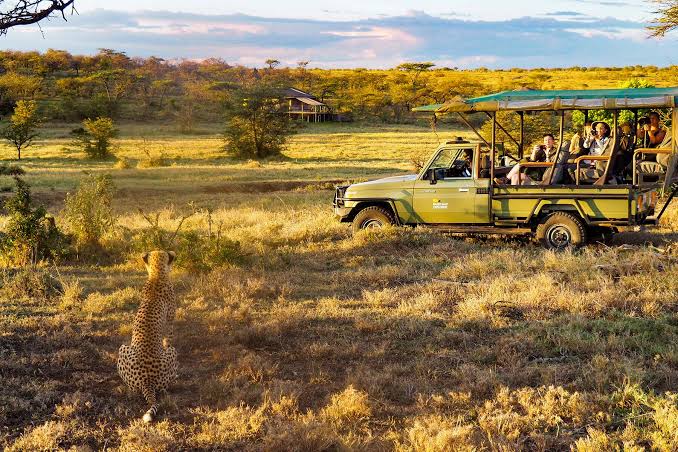
Leopard pride resting on open savanna grass inside Naboisho Conservancy, Maasai Mara
The Wildlife That Makes Naboisho Conservancy Worth the Trip
When you look at the numbers, it is clear that Naboisho Conservancy is a place. The Mara-Naboisho Lion Project has found that there are more than 70 lions that call Naboisho Conservancy home. Some people think that there may be as many as 100 lions when you include the ones that move between Naboisho Conservancy and other areas. One group of lions that lives in Naboisho Conservancy has grown to more than 20 lions, which is one of the biggest groups in the whole Mara-Serengeti region. If you spend a day on safari in Naboisho Conservancy, you will probably see lions hunting, fighting, or playing with their babies near a termite mound.
Naboisho Conservancy is not about lions. You can also see leopards walking through the trees along the rivers and cheetahs running across the grass to catch Thomson’s gazelles. Elephants come to Naboisho Conservancy in family groups, and giraffes eat leaves from the tall trees. During the months, big groups of zebras and wildebeests come to Naboisho Conservancy as part of the big migration that happens in this region. People who like birds will love Naboisho Conservancy because there are over 300 kinds of birds, including the white-headed buffalo weaver and the pygmy falcon, which are hard to find in other parts of the Mara.
All of this happens because of the work of the guides and the people who take care of Naboisho Conservancy. The guides who work in Naboisho Conservancy go to the Koiyaki Guiding School, which’s a special school that teaches them how to find and understand the animals. When you are on safari with a guide, they will not just show you the animals. They will also explain what the animals are doing and why they are doing it. They can even predict where the animals will go, based on the wind and the movement of their prey.
There are also groups of buffalo that move through Naboisho Conservancy with hundreds of animals. If you come to Naboisho Conservancy during the season between July and October, you might see wildebeests crossing the rivers. Even when it is not migration season, there are always a lot of animals in Naboisho Conservancy, so the lions and other predators always have food. This is why the number of lions in Naboisho Conservancy keeps growing.
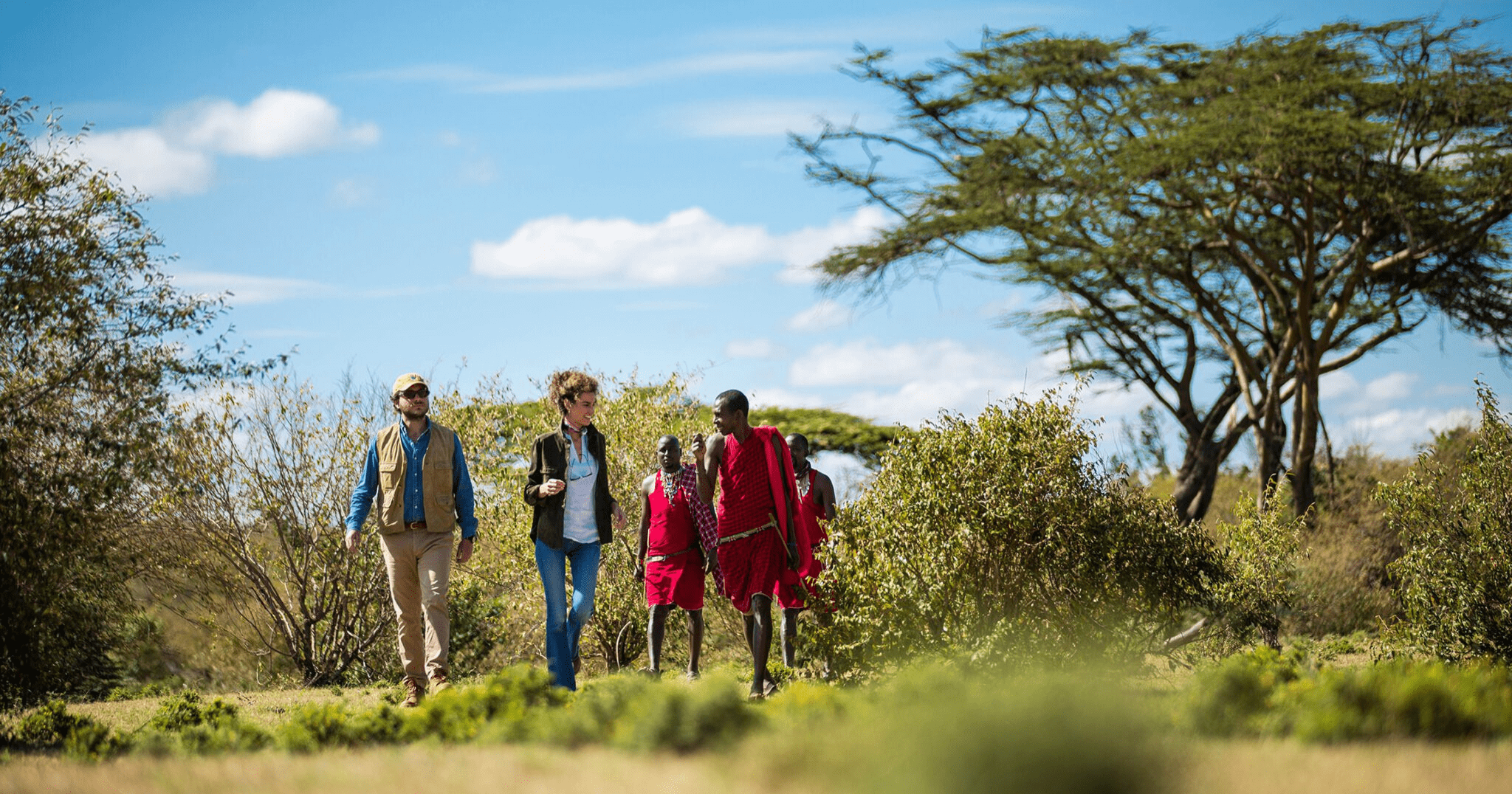
Maasai guide leading tourists on a cultural walking safari through Naboisho Conservancy grasslands
A Naboisho Conservancy Safari Day From Dawn to Dusk
A day in Naboisho Conservancy starts before the sun comes up, when the light is soft, and the predators are still active. In the morning, you will go on a game drive when the temperatures are cool, and the lions are moving around. Because there are no cars in Naboisho Conservancy, your guide can follow the tracks of the animals or wait quietly near a den without another car disturbing you.
In the middle of the day, things slow down. You can rest at the camp or go on a walking safari with a guide. When you walk in Naboisho Conservancy, you will see things that you would not see from a car, like tracks in the mud and plants that the local people use for medicine. You will also see dung beetles rolling their balls of dung across the trail. It is a way of experiencing Naboisho Conservancy, and it can be very memorable.
In the evening, you will go on another game drive. This is when Naboisho Conservancy is really special. You can go on a night drive with lights that do not disturb the animals. This is a time to see leopards, hyenas, and genet cats, which are hard to find during the day. Some camps in Naboisho Conservancy also offer fly camping, where you can sleep in a tent away from the camp and listen to the sounds of the animals at night instead of the noise of a generator.
The Naboisho Conservancy is doing something great for both the wildlife and the Maasai community. It is worth thinking about why the Naboisho Conservancy exists in this place. Some time ago, the Maasai people who owned the land had to make a tough decision. They could divide their land into parts for farming, sell it to people from outside, or just watch as the number of wild animals decreased because their homes were getting smaller.
Then the conservancy idea came along. Gave them another option. The people who own the land get to keep it. They also get money from tourists who come to visit. This money comes from the people who visit the Naboisho Conservancy. It is used for good things like clean water, renewable energy, and schools for the local communities. The Naboisho Conservancy also helps the women in the community by giving them money for their projects.
When you visit the Naboisho Conservancy and you pay the fee, you can see where your money is going. It is going to the families who decided to protect the land from being used for something else. The Maasai people are still allowed to take their cattle to areas of the Naboisho Conservancy so they can still traditionally use the land. You might even see them when you are on a tour of the Naboisho Conservancy.
If you ask your guide about their family, they will probably tell you that they have a connection to the land. A lot of the guides used to take care of cattle on the Naboisho Conservancy before they became guides. They know the land well. They care about it, which helps keep the Naboisho Conservancy safe and makes sure that the community supports taking care of the wildlife.
The Naboisho Conservancy is doing a job of taking care of the wildlife. The number of lions has actually increased since the Naboisho Conservancy was started. The Naboisho Conservancy and the other conservancies around it have some of the lions of any place in Africa. This would not have happened if the people who live on the Naboisho Conservancy did not really care about taking care of the land and the wildlife.
If you are planning a trip to the Mara and you want to see the wildlife in a natural way, you should consider visiting the Naboisho Conservancy. You will not see many cars, and you will have more time to look at the animals. The guides are also very knowledgeable. They can tell you a lot about the land and the wildlife. When you visit the Naboisho Conservancy, you are directly helping the community that lives there. You should stay at the Naboisho Conservancy for a day, and then you can visit the national reserve for a day to compare the two. Many people who visit the Mara come back to the Naboisho Conservancy because they love it so much.


