Why Do Wildebeest Cross the River Despite the Crocodiles?
Overview of the Survival Paradox
Wildebeest cross the crocodile-infested Mara River because the drive to survive through food access overrides the immediate risk of predation. This behavior is not a calculated choice but a deeply embedded evolutionary survival response shaped by thousands of years of migration across East Africa’s ecosystem.
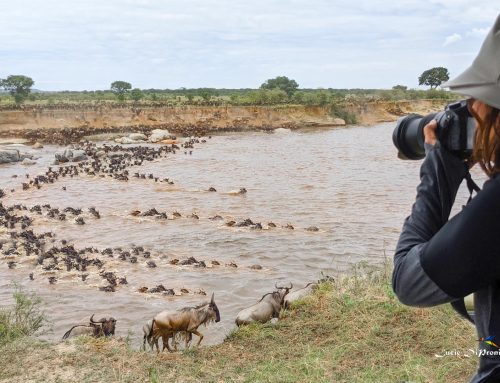
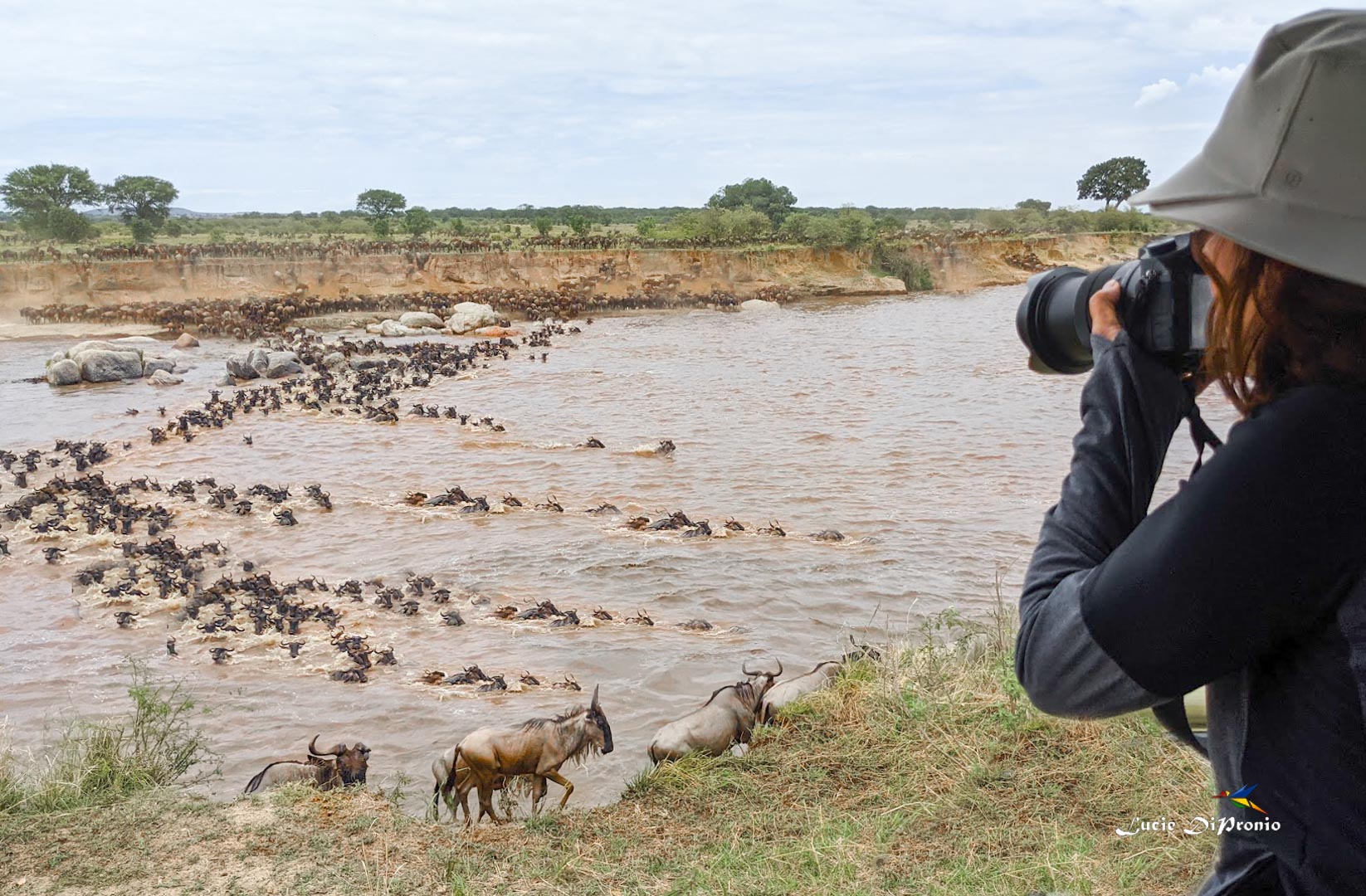
The crossings take place within the broader Great Migration system between the northern Serengeti National Park and the Maasai Mara National Reserve, where over a million wildebeest move in a continuous cycle following rainfall and fresh grazing.
At the core of the behavior is a biological trade-off: starvation and dehydration on one side versus predation risk on the other. The river crossing represents the most extreme expression of this life-or-death balance.
The Primary Driver: Food and Water Pressure
The most important reason wildebeest cross the river is access to fresh grazing pastures. As dry season conditions intensify in one region, grass quality deteriorates rapidly, forcing herds to move toward greener areas.
The Mara River acts as a natural barrier separating depleted grazing zones from nutrient-rich savannahs. Once herds reach the riverbanks, they are essentially trapped between diminishing resources and a dangerous crossing.
Without crossing, the herd faces starvation or severe energy depletion. This long-term survival pressure outweighs the short-term risk posed by crocodiles.
Instinct Over Individual Decision-Making
Wildebeest do not make individual rational decisions when crossing the river. Instead, they operate under herd intelligence, a collective behavioral system driven by instinct and group dynamics.
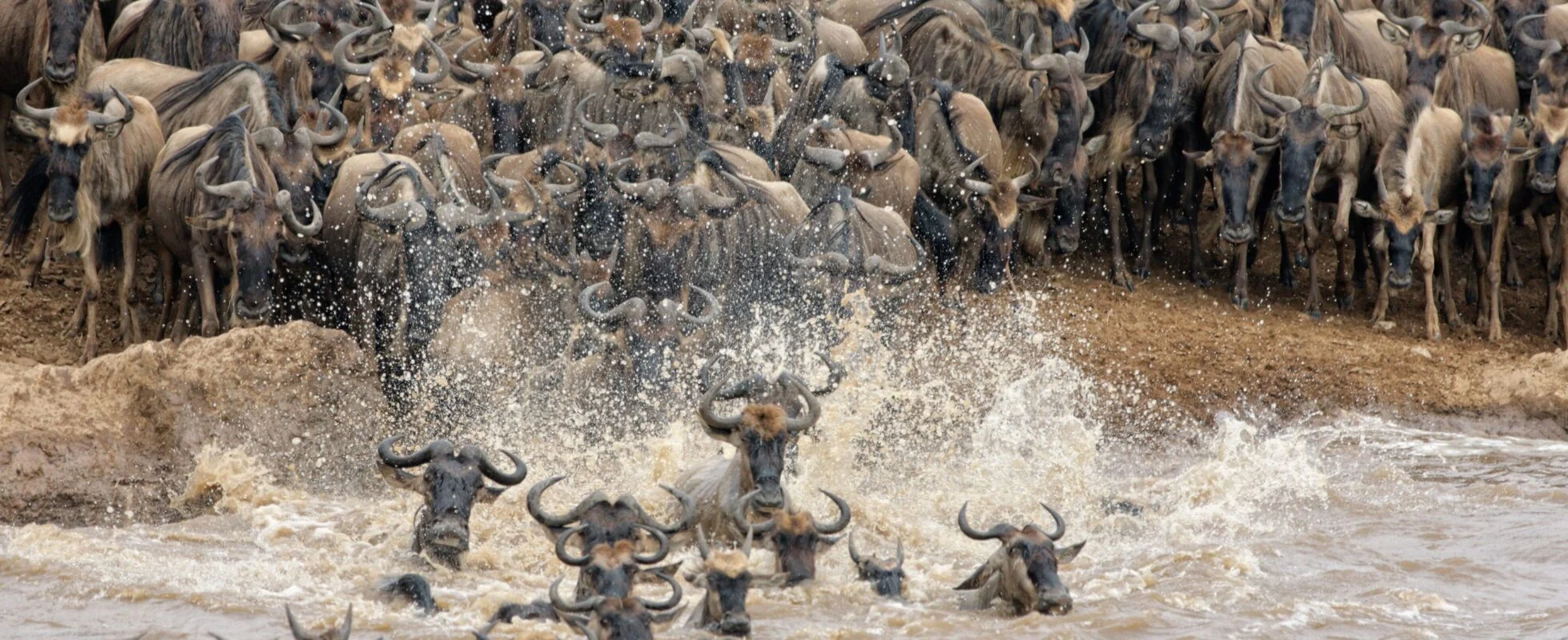
Each animal responds to the movement of others rather than assessing risk independently. This creates a cascading effect where hesitation by a few individuals is overcome by the pressure of the larger group.
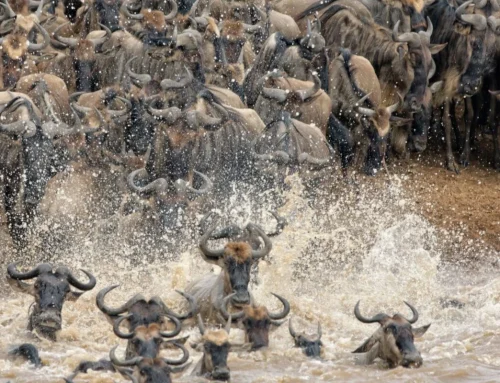
Once a critical mass begins moving, momentum takes over, and the entire herd follows. This reduces the influence of fear and increases the likelihood of mass crossing events.
Evolutionary Conditioning and Migration Memory
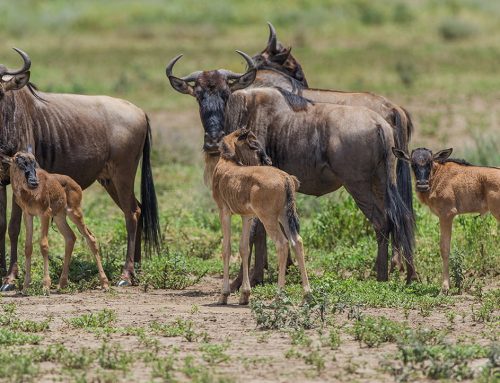
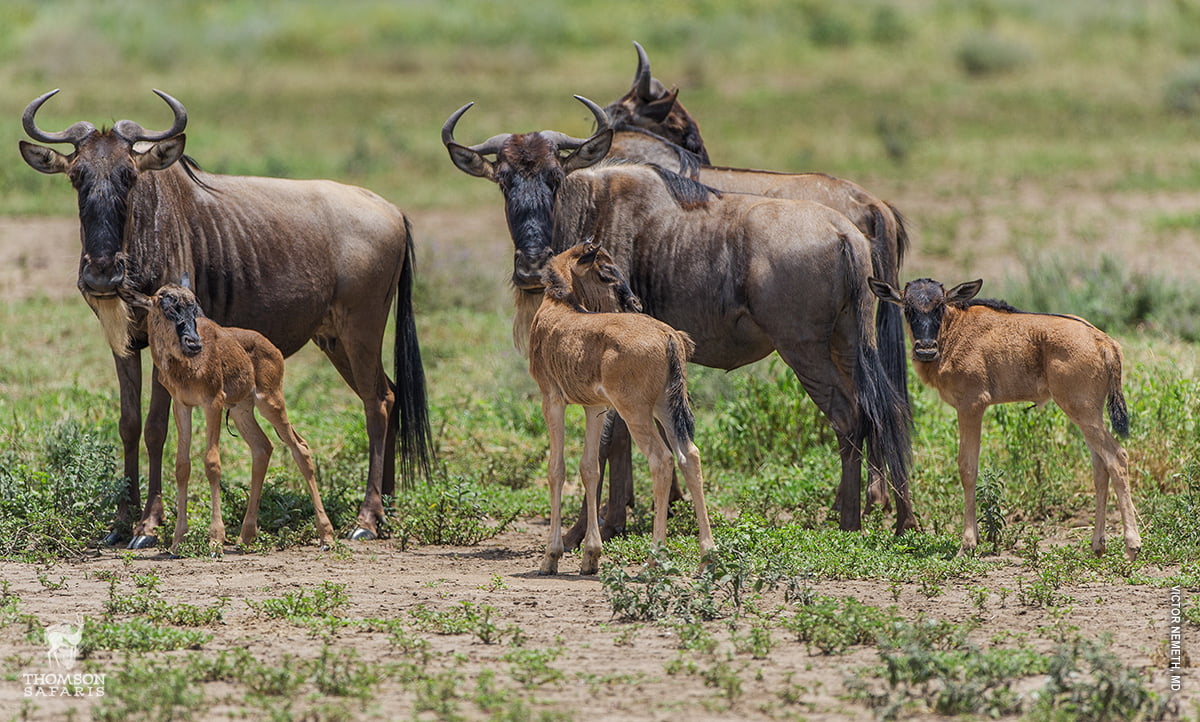
The Great Migration is an ancient behavioral pattern encoded through generations of survival. Wildebeest calves learn migration routes by following adults, reinforcing traditional pathways year after year.
Over time, natural selection has favored individuals that continue migrating despite danger. Those that avoid crossing entirely would historically face lower survival odds due to starvation or competition.
This evolutionary pressure has shaped a population that is highly tolerant of risk when it is linked to essential survival resources.
Why Crocodiles Do Not Stop the Migration
Nile crocodiles are a significant predator during river crossings, but they do not eliminate enough individuals to outweigh the benefits of migration. Their hunting strategy is opportunistic rather than exhaustive.
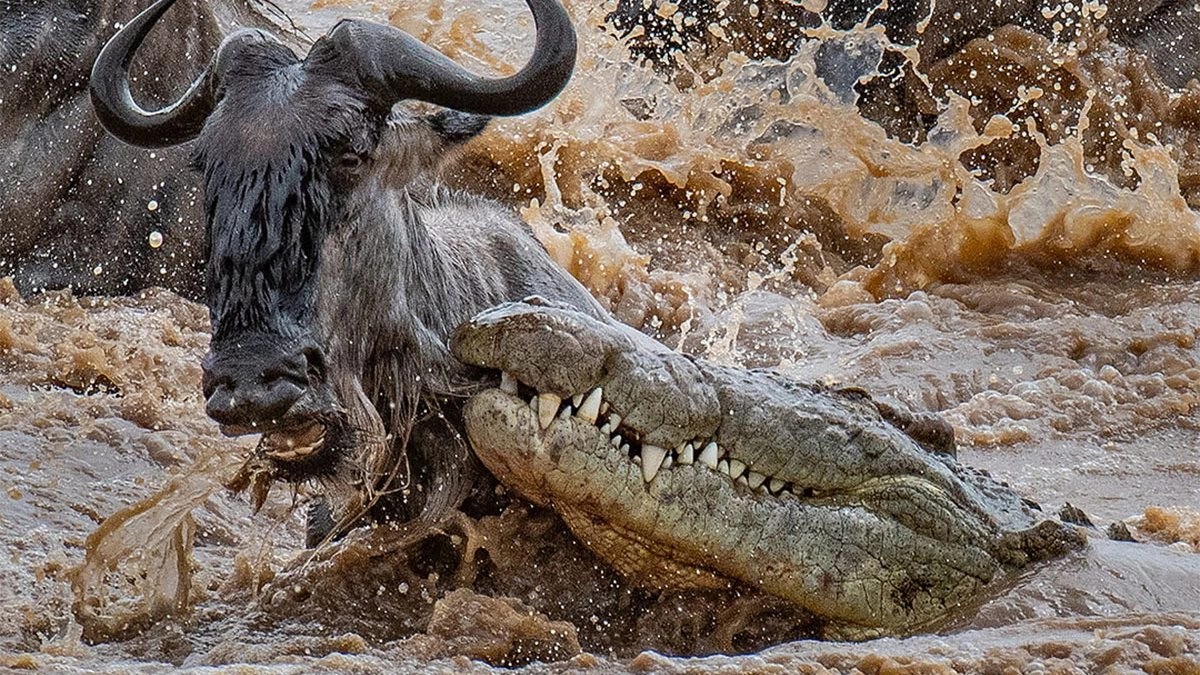
Crocodiles rely on ambush tactics, targeting vulnerable or isolated animals during the chaos of the crossing. However, they cannot control or stop the movement of thousands of animals simultaneously.
From an ecological perspective, predation is part of the system rather than a deterrent. It influences behavior but does not prevent migration from continuing.
The Role of Fear and Group Pressure
Fear is present but does not dominate decision-making at the herd level. Wildebeest exhibit hesitation at riverbanks, often gathering for hours before crossing.
However, group pressure eventually overrides fear. As more individuals move forward, the psychological barrier breaks down, triggering a mass movement response.
This phenomenon is similar to collective behavior seen in other herd animals, where safety is achieved through numbers rather than avoidance of risk.
Risk Distribution Strategy
Crossing in large groups reduces individual risk through statistical dilution. While some animals will be taken by predators, the majority successfully cross.
This “safety in numbers” strategy is a key evolutionary advantage. It ensures that even with losses, enough individuals survive to maintain population stability.
If wildebeest attempted to cross individually or in small groups, predation rates would be significantly higher.
The River as a Necessary Obstacle, Not Just a Threat
The Mara River is not simply a danger—it is also a critical ecological boundary that must be crossed to maintain the migration cycle. It separates seasonal grazing ecosystems that are essential for long-term survival.
Without crossing, herds would become trapped in depleted regions, leading to mass starvation events that would be far more destructive than river predation.
In this sense, the river is both a barrier and a gateway to survival.
Physiological Limits and Urgency
Wildebeest have high energy demands and require continuous access to nutritious grass. Their digestive systems are adapted for rapid intake of fresh vegetation rather than long periods without feeding.
Extended exposure to dry, low-quality grazing leads to rapid physical decline. This creates urgency in movement decisions, pushing herds toward crossing despite risks.
Hydration needs also contribute, as water availability fluctuates across the ecosystem.
Environmental Timing and Pressure Cycles
Crossing behavior is closely linked to seasonal rainfall patterns. As rains shift across the Serengeti-Mara ecosystem, grass growth follows, pulling herds northward.
The Mara River becomes a necessary checkpoint during this migration cycle. Herds reach it because they are following ecological gradients, not because they are choosing to enter danger zones.
Once at the river, the accumulated pressure of movement forces a decision point.
Why Hesitation Happens Before Crossing
Despite instinctive movement, wildebeest often hesitate for long periods at riverbanks. This reflects the internal conflict between fear and necessity.
Hesitation occurs because the river presents visible danger, including crocodiles, strong currents, and steep banks. These cues trigger avoidance behavior.
However, prolonged hesitation is unsustainable because environmental pressure continues to increase. Eventually, movement resumes due to collective momentum.
The Role of “Pioneer” Individuals
Crossings often begin when a small number of animals take the first risk. These individuals act as catalysts for the larger herd.
Once pioneers successfully enter the river, others rapidly follow. This reduces uncertainty and accelerates the crossing process.
Without these initial movers, herds could remain stationary for extended periods.
Ecological Balance Between Predator and Prey
The interaction between wildebeest and crocodiles is a stable ecological system rather than a one-sided threat. Both species have evolved within the same environment for thousands of years.
Crocodile predation helps regulate herd health by targeting weaker individuals. Meanwhile, wildebeest migration sustains predator populations through seasonal food availability.
This balance ensures that neither population collapses despite intense interaction during crossings.
Survival Beyond Fear
Wildebeest cross the Mara River despite crocodiles because survival depends on movement, not avoidance. The decision is not based on individual risk assessment but on collective instinct shaped by evolutionary necessity.
The river crossing represents a fundamental ecological truth: in nature, survival is often about choosing the least dangerous path rather than avoiding danger entirely.
For wildebeest, staying put is ultimately more lethal than crossing—making the river not just a threat, but a required passage toward life-sustaining resources.